It was an odd feeling waking up at my AirBnB and knowing I didn’t need to walk 25km that day. The night before I had treated myself to a meal out and two glasses of Swiss wine. After all, I had to work out how the Chasselas compared to the Pinot Gris!
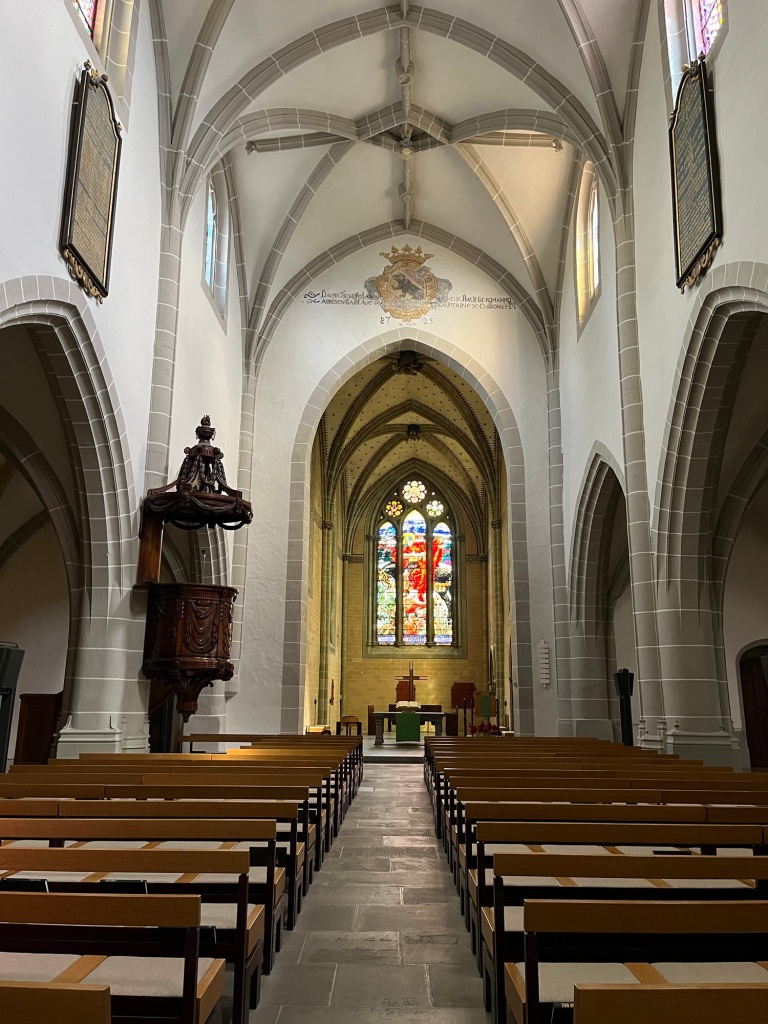
St Martins Church in Vevey was a a beautifully simple church with impressive stained glass. At the east end is a huge depiction of St Martin, cloak and sword in hand.
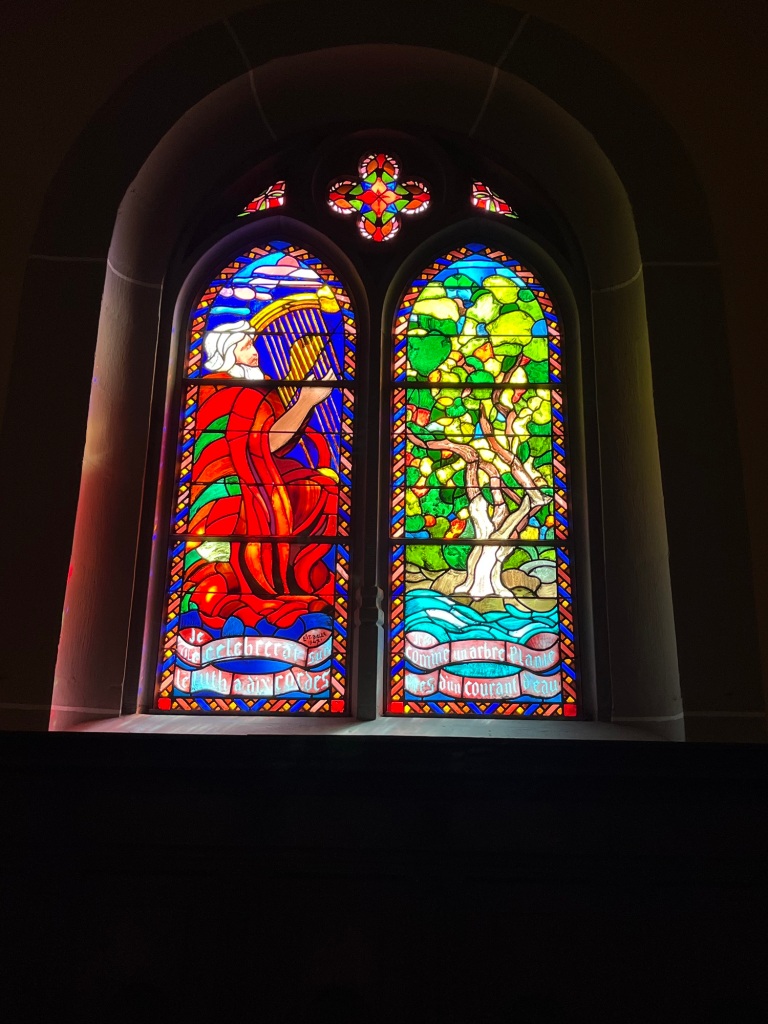
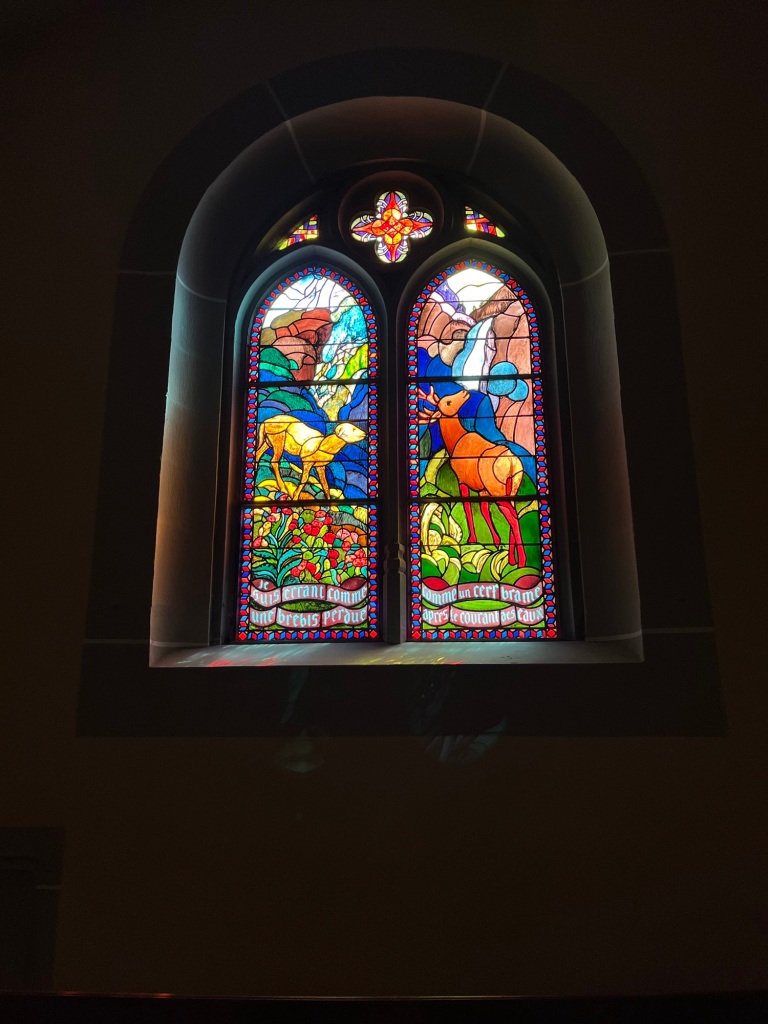
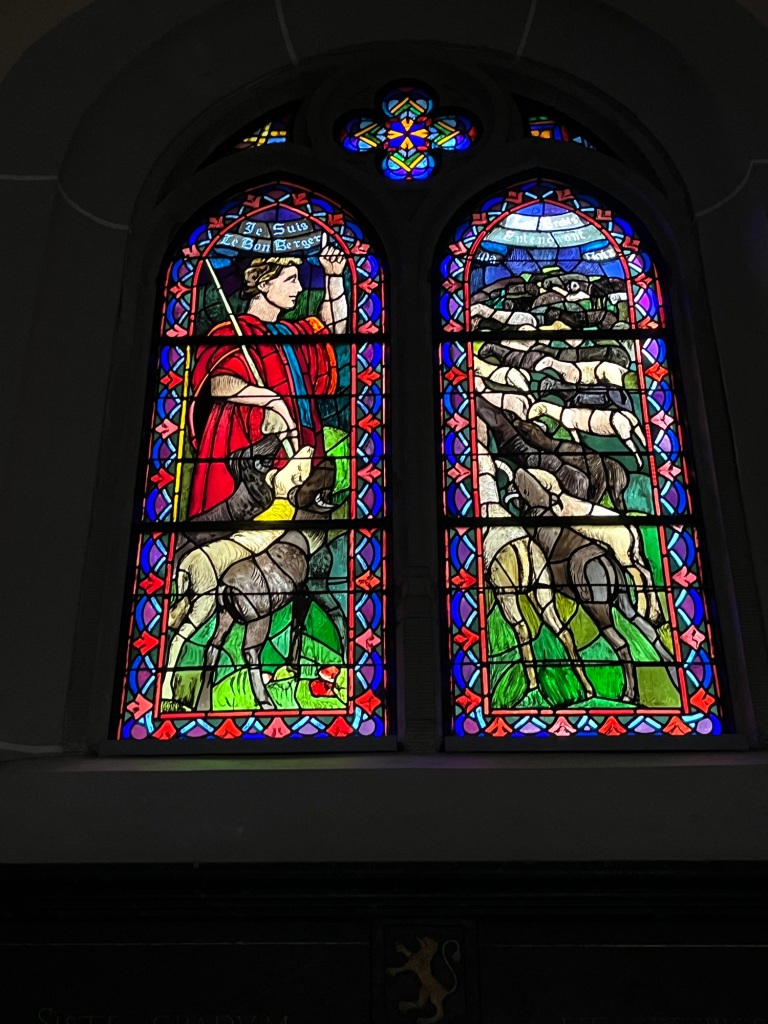
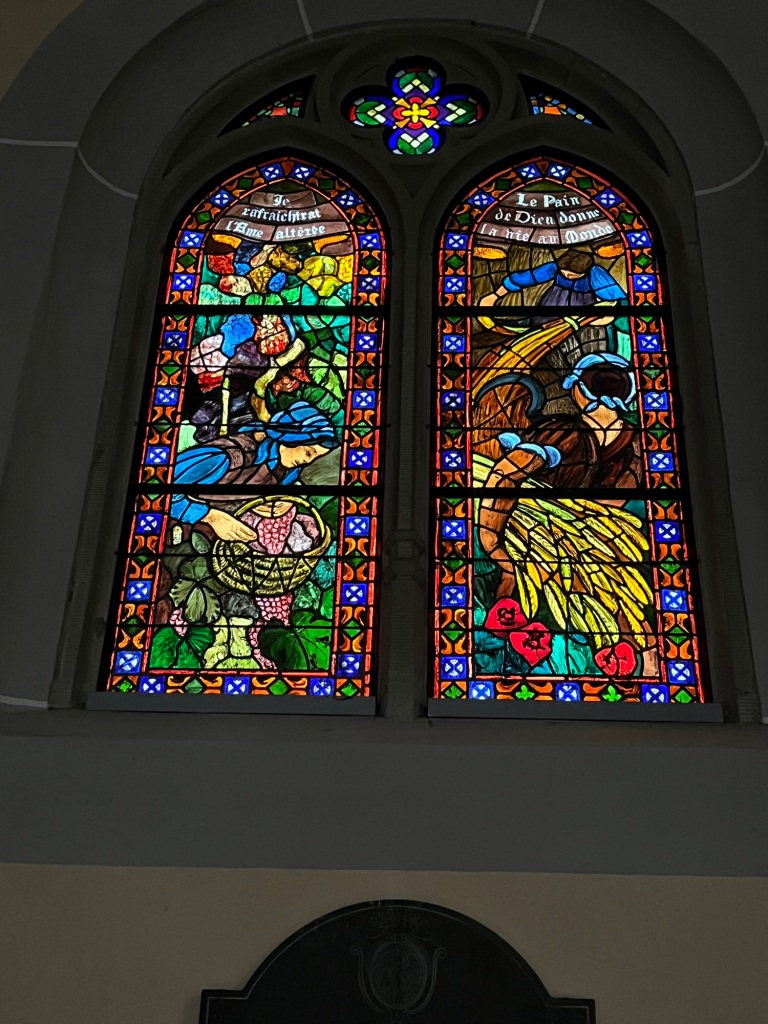
Images illustrating the psalms and the gospels featured in windows in the side aisles.
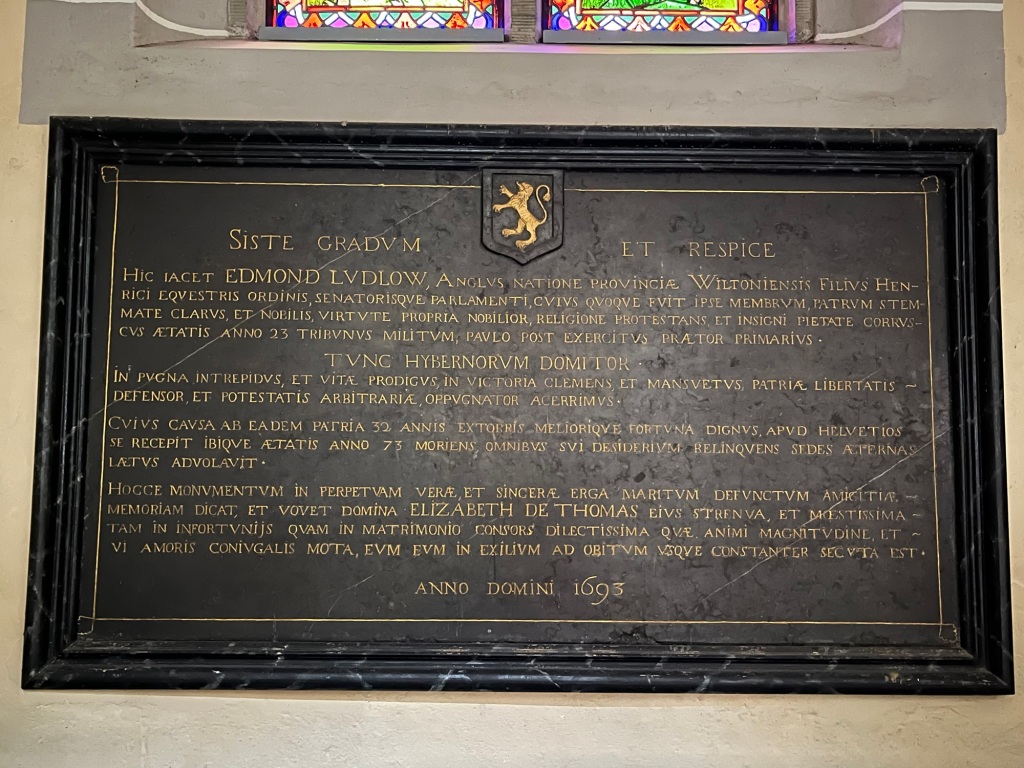
Memorials in the church showed links with England. Puritans took sanctuary in Vevey with the Restoration of Charles II.
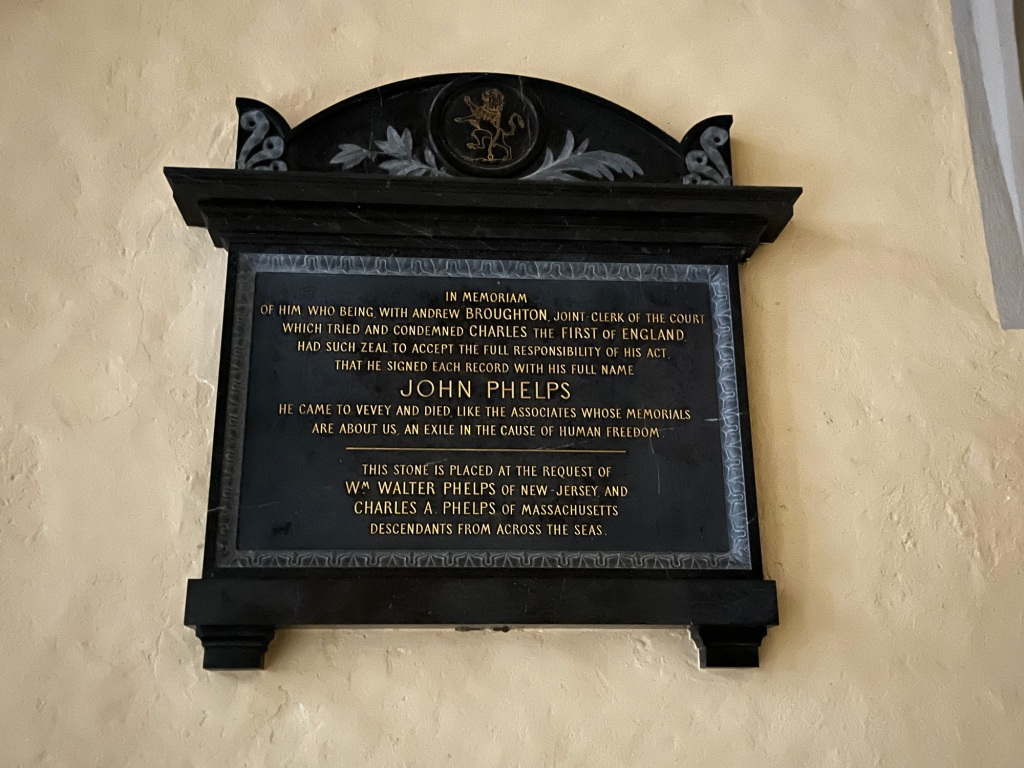
John Phelps was the Joint Clerk of the Court who tried King Charles I, according to his memorial he had “such zeal to accept the full responsibility of the act that he signed his full name.” He sought sanctuary in Vevey and died “…in exile in the cause of human freedom.”
I find it amazing that there are links between countries spanning time and distance; some political, some personal.
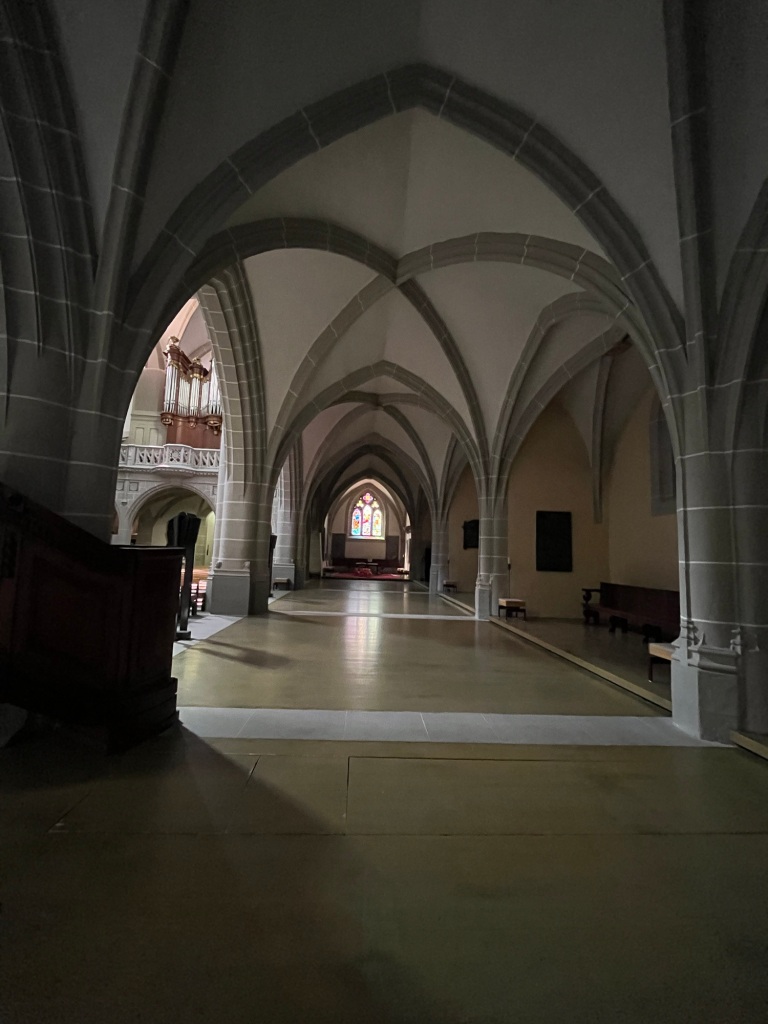
I wanted to explore one more connection before I returned to France. For a while I have been researching the life of Canon Cyril Heywood. He was for five years Vicar of Titley in Herefordshire and also served in St Albans, where my wife is from. However, in 1936, following a period at the English Church in Rome, Mr Heywood was appointed to be Chaplain of the English Church in Montreux (and Rural Dean of Switzerland). Before I left Switzerland, I wanted to visit St John’s Church and see where he ministered.
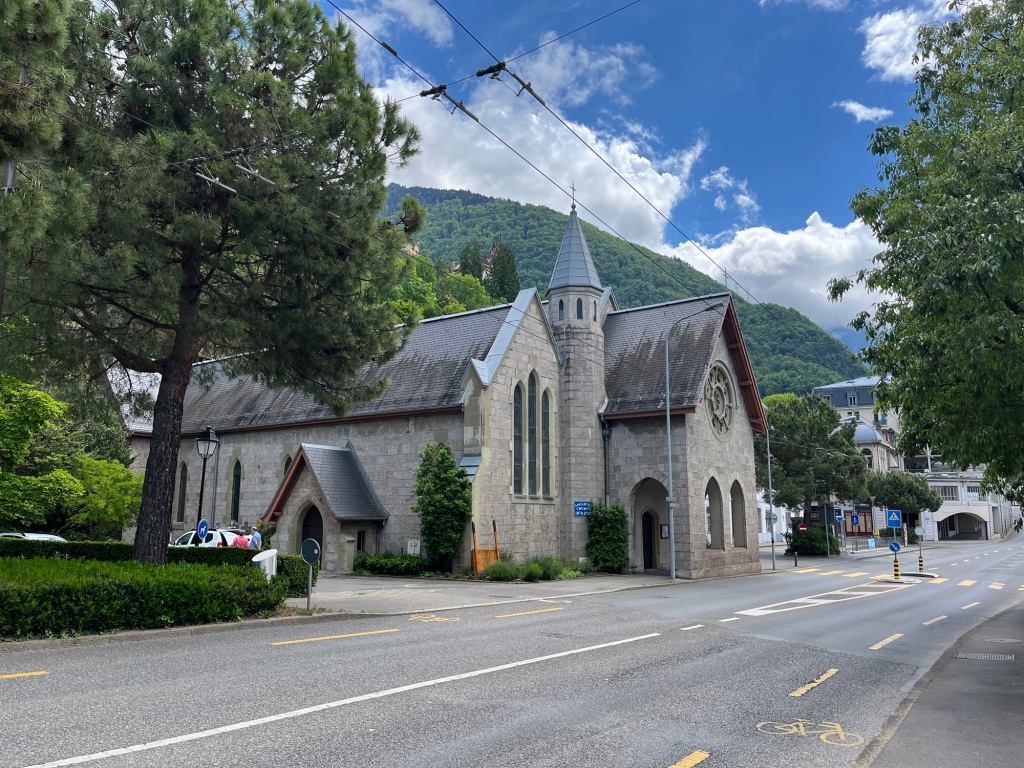
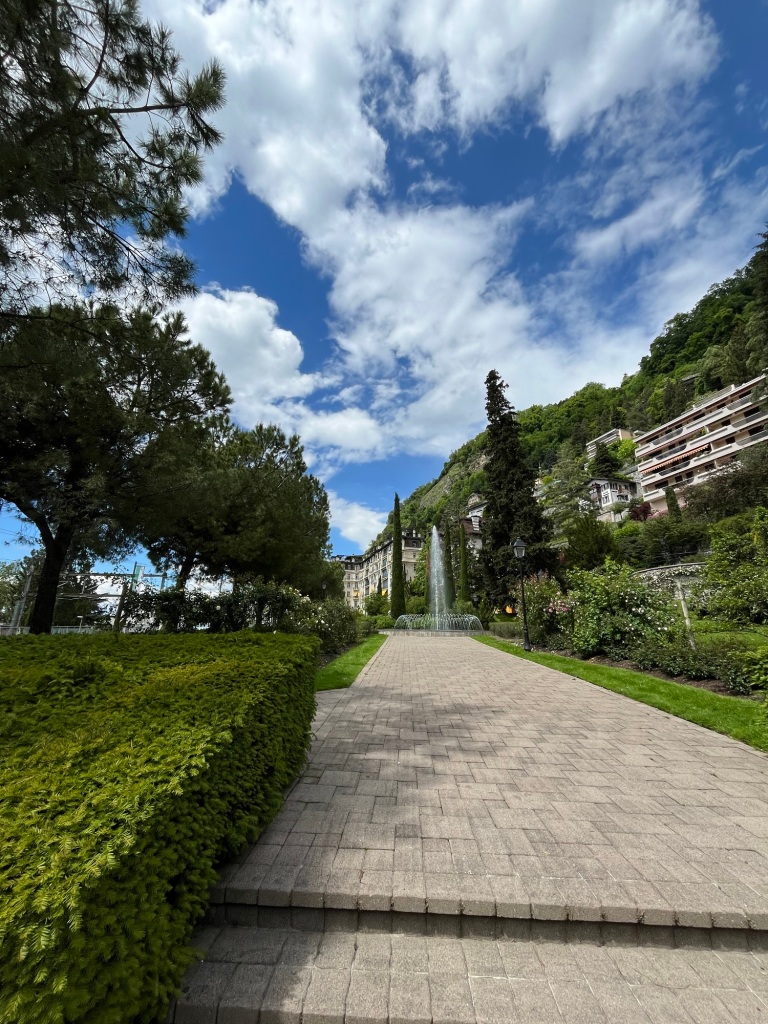
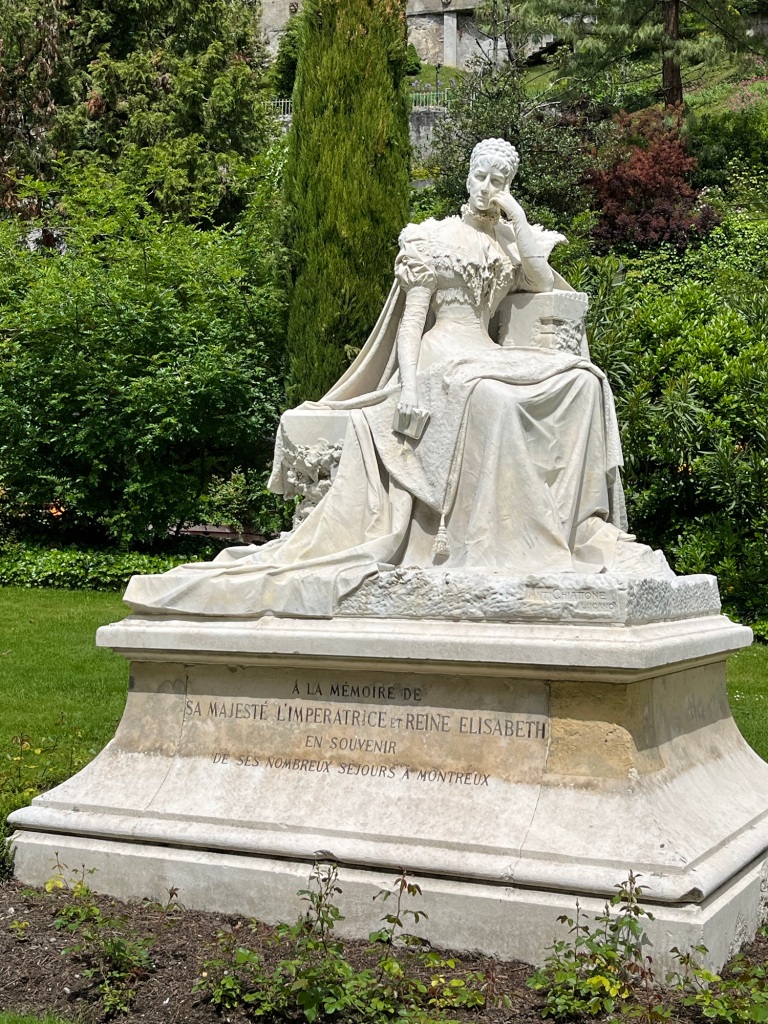
I caught the train to Montreux and then walked out to Territet where the church is located, opposite the local railway station. St John’s is a charming Victorian church, typically English in my view, and pleasingly incongruous against the large 19th Century hotels along the front, and Swiss buildings on the hillside behind. A well cared-for park lies next to the church, with a fountain and seated statue Empress Isabella of Austria-Hungary, who was a frequent visitor to Montreux.
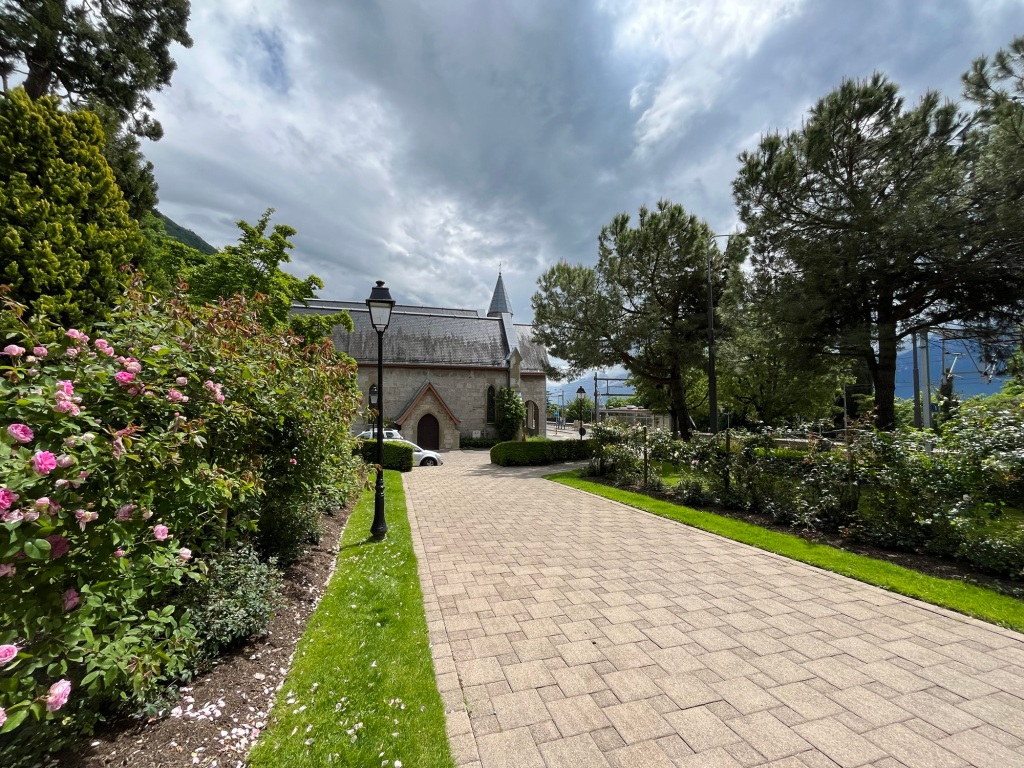
As I performed my usual ritual of circling the church building and trying locked doors, I spotted a couple who had just parked up next to the church and were carrying out a box of photocopying paper. We exchanged “bonjours”, but I was certain I knew who these folk were.
From a respectful distance, I followed them round the house next to the church and rang the door bell. I was greeted by the paper carrier, Canon Paul Ormerod, the present Chaplain who kindly showed me round the church.
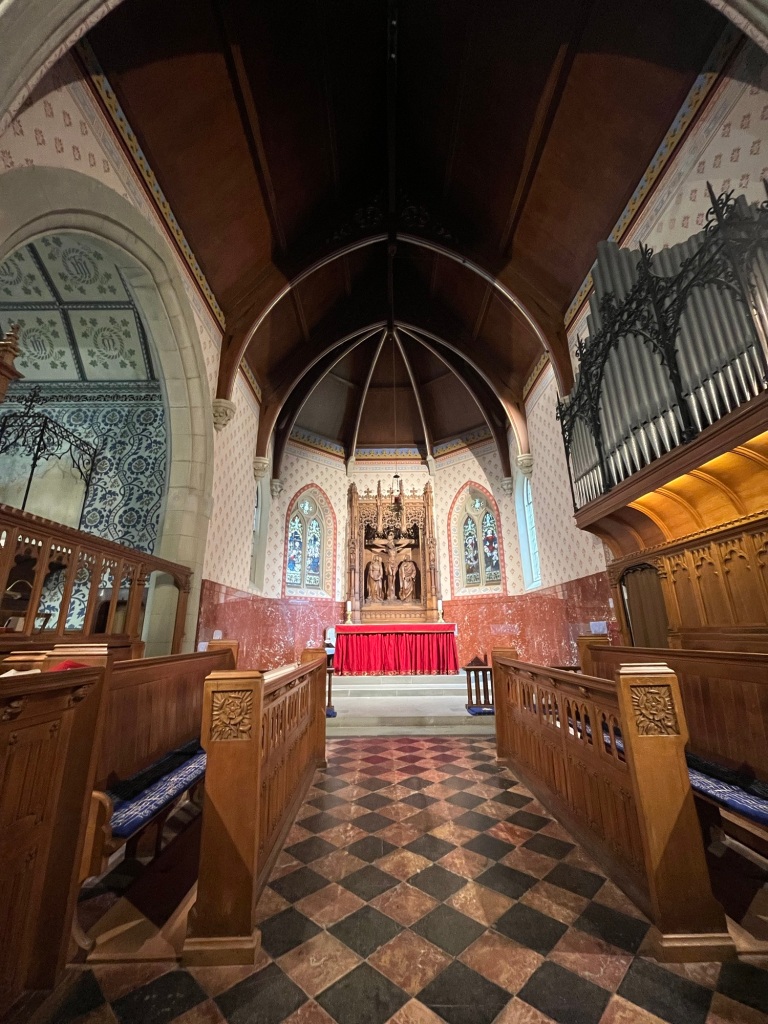
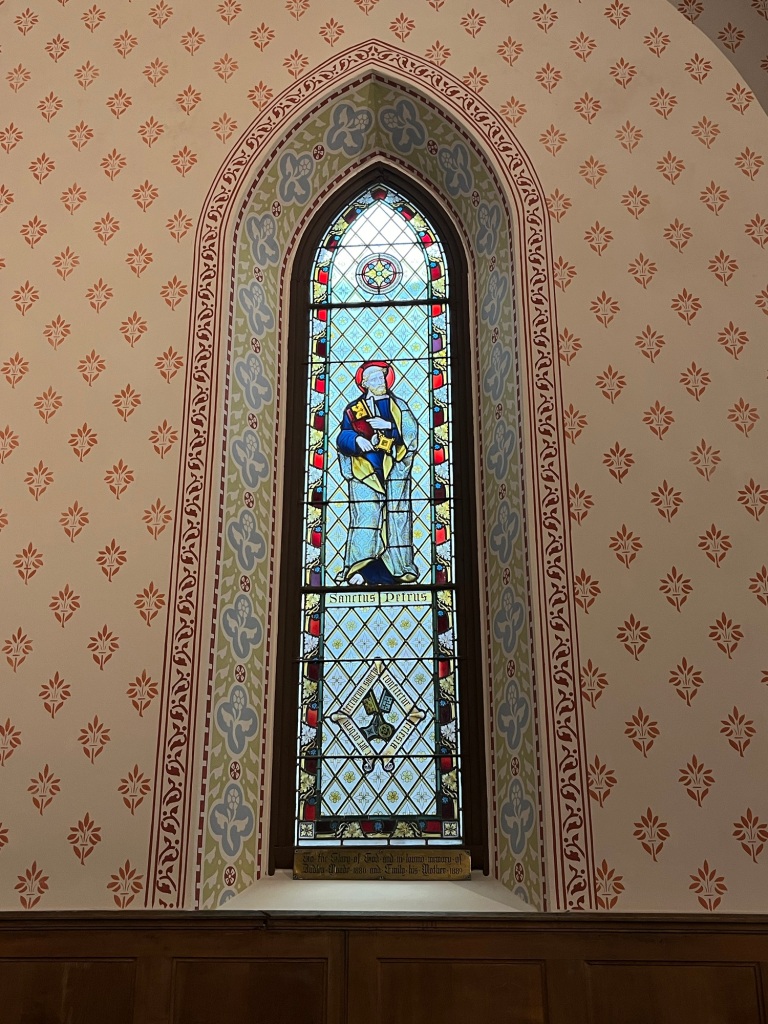
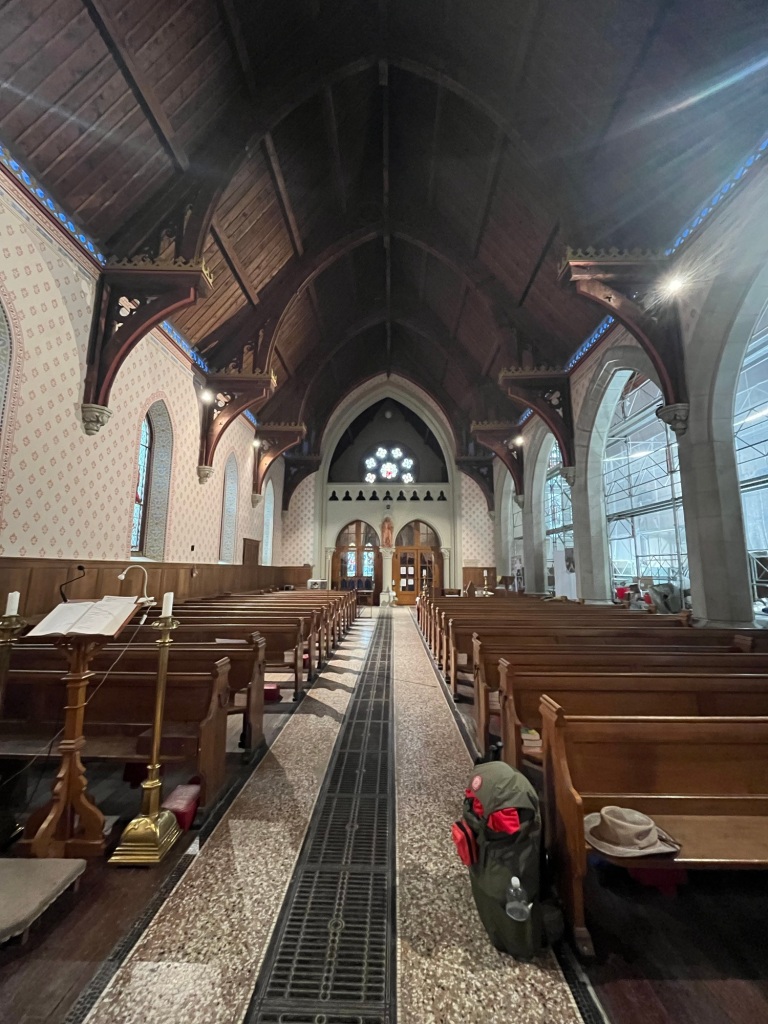
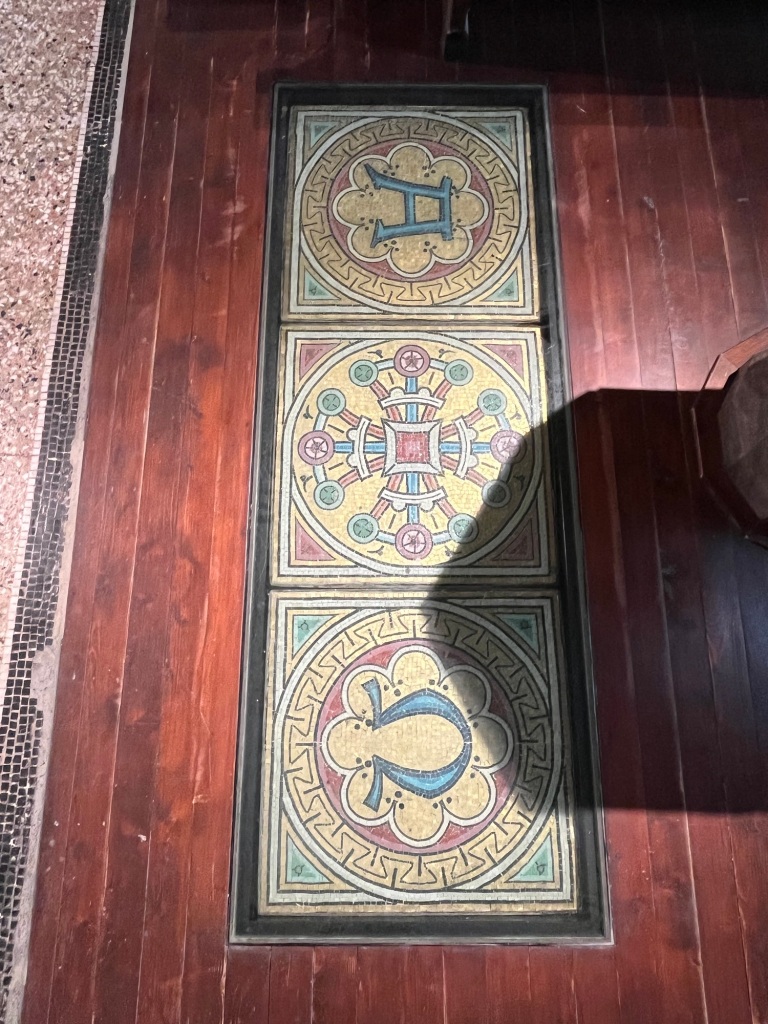
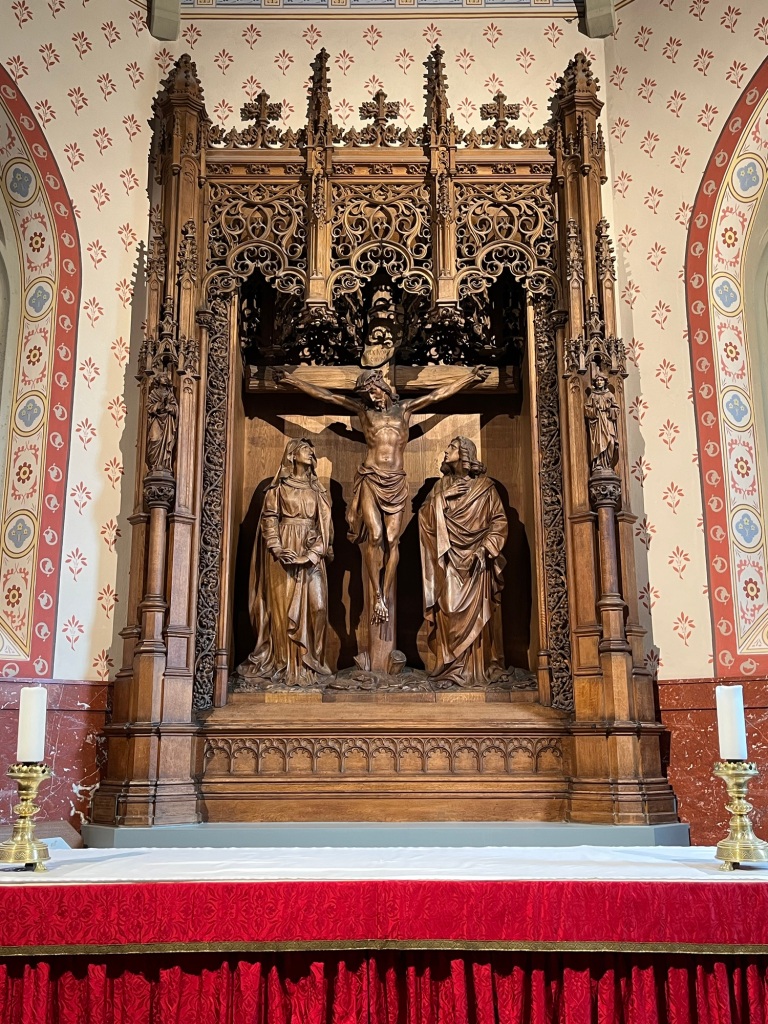
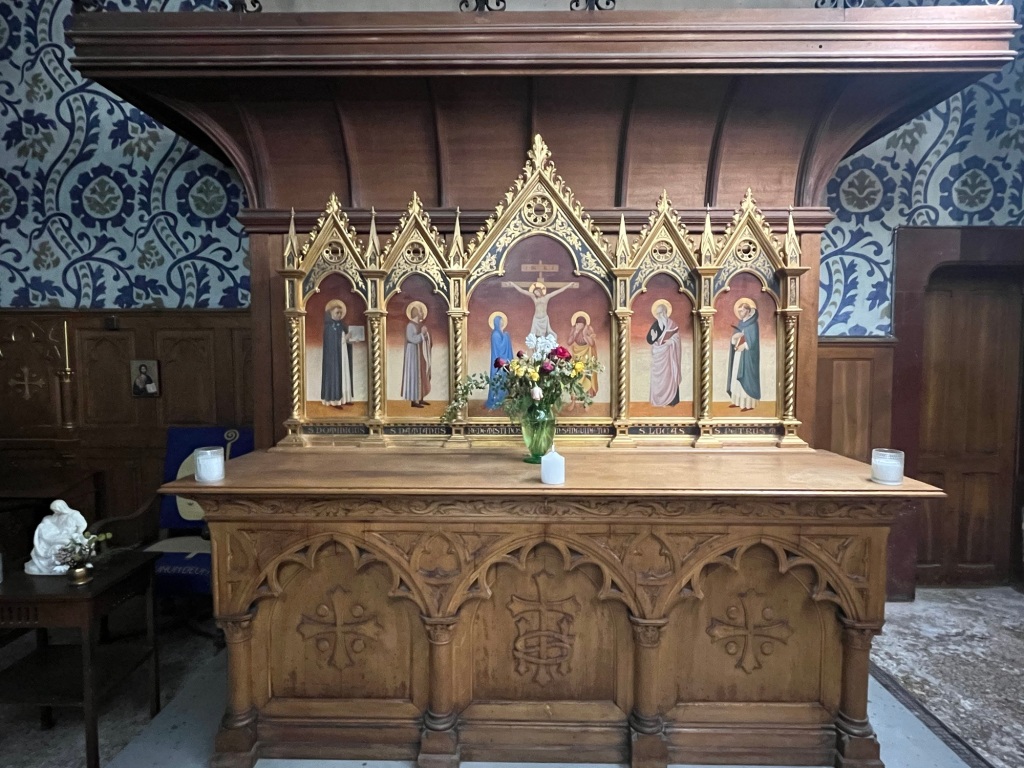
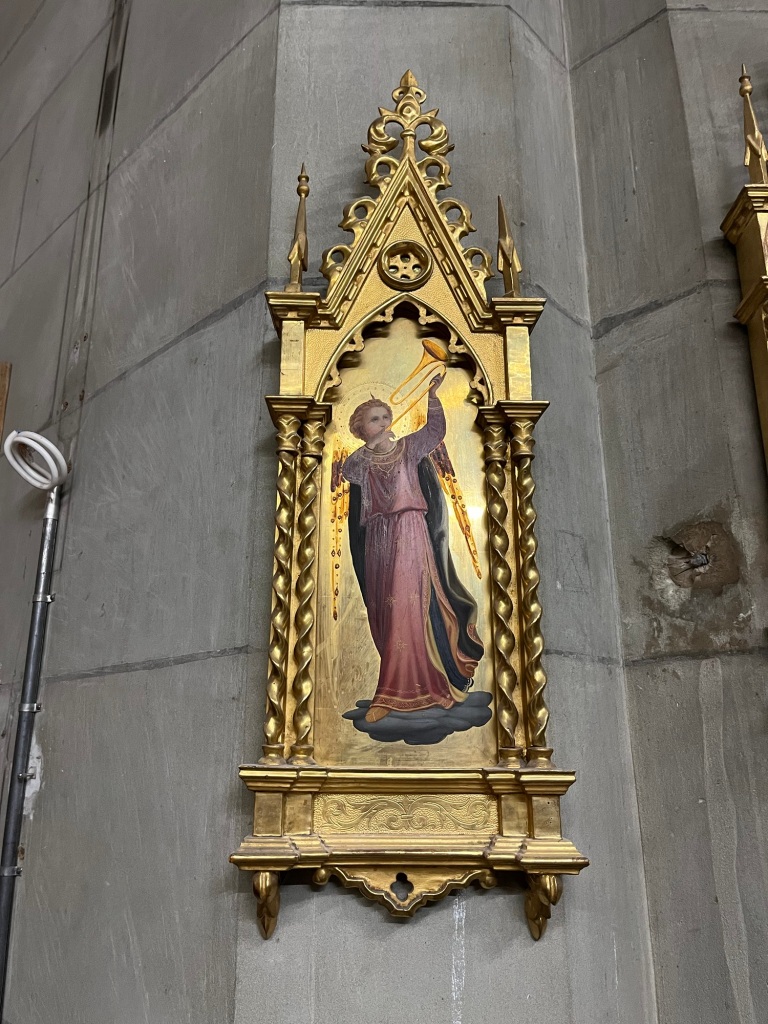
St John’s is a church building that has been richly endowed by wealthy visitors and residents for over a century. Paul explained that up until the First World War, Switzerland was very popular with British visitors – many of whom who had served careers in India and on retirement discovered that they didn’t like the UK climate. Most lakeside towns had English churches and almost as soon as St John’s was built, it was found to be too small and a side aisle added. Not often a problem with which we are faced today!
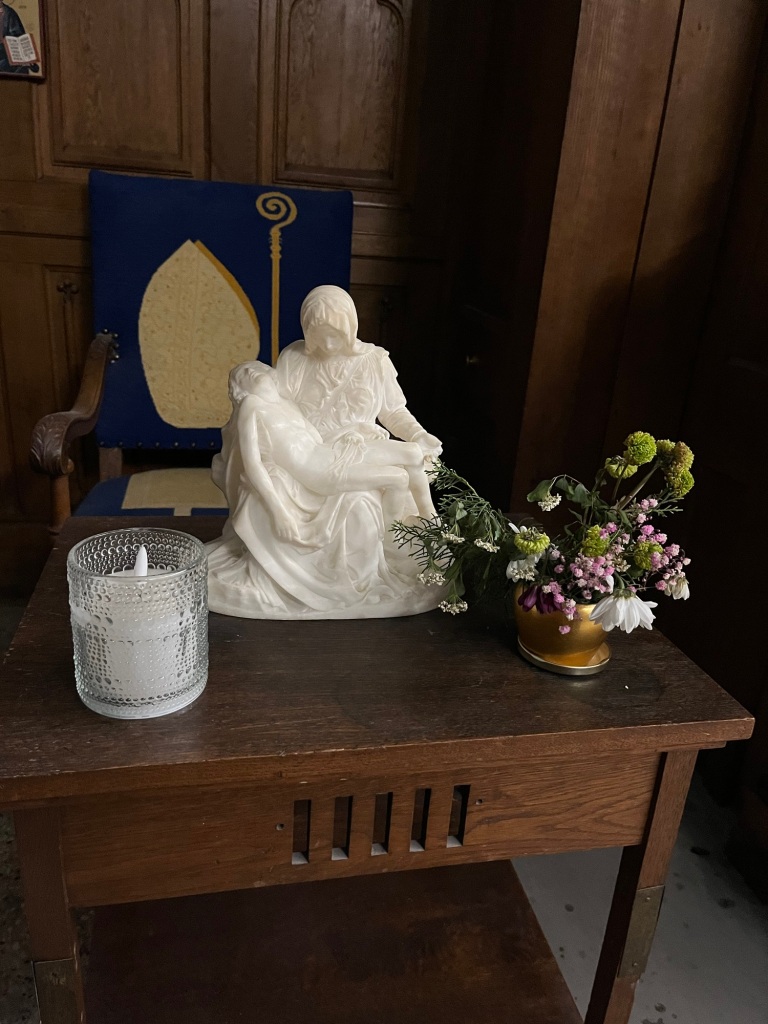
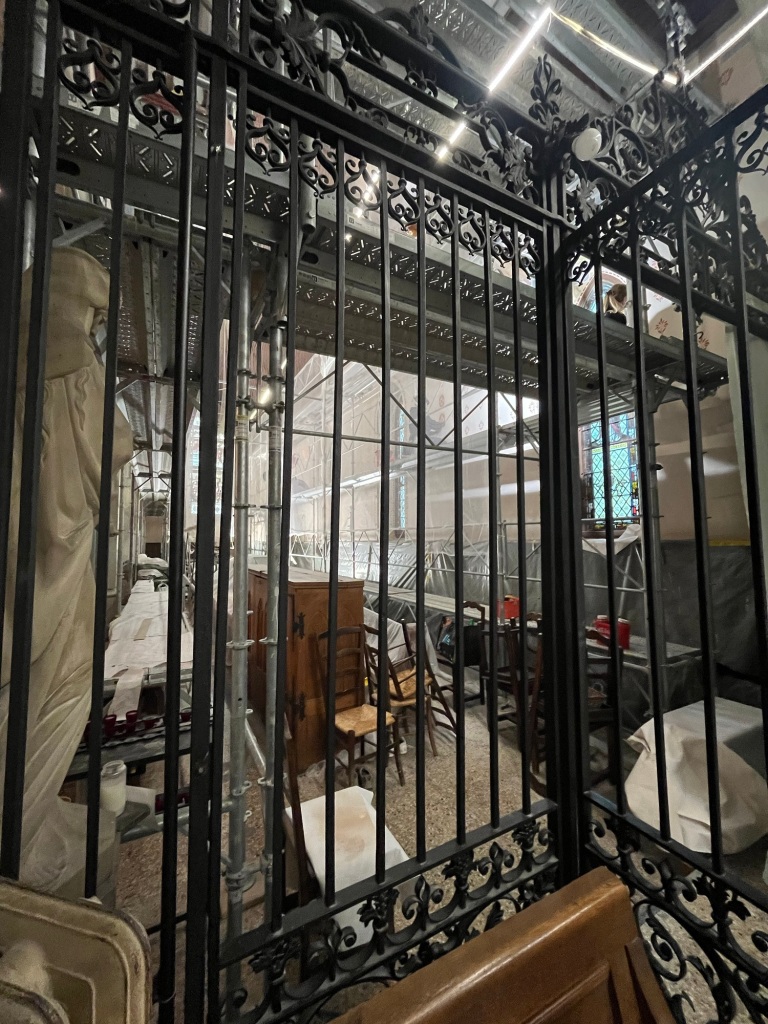
Today, there is a restoration project undergoing, the nave having already been repainted and the side aisle now being restored. There is no Diocesan Advisory Committee here for such works, which some might feel to be a relief, but of course leaves the incumbent and the church without any specialist support.
Since the First World War the number of British residents in Switzerland fell and today the congregation is smaller and looks very similar to many of our congregations at home. The make-up of the congregation today is less bound to nationality and more to language and tradition.
I was very kindly invited to lunch with Paul and his wife Jill (showing that the gift of clergy turning up at mealtimes is alive and well). It was a wonderful way to finish my time in Switzerland, hearing about the varied ministry within the Diocese of Europe – Paul and Jill had previously been in Madrid. Many things were the same as at home – services, bible study groups; but Remembrance Services with ambassadors and other dignitaries were very different!
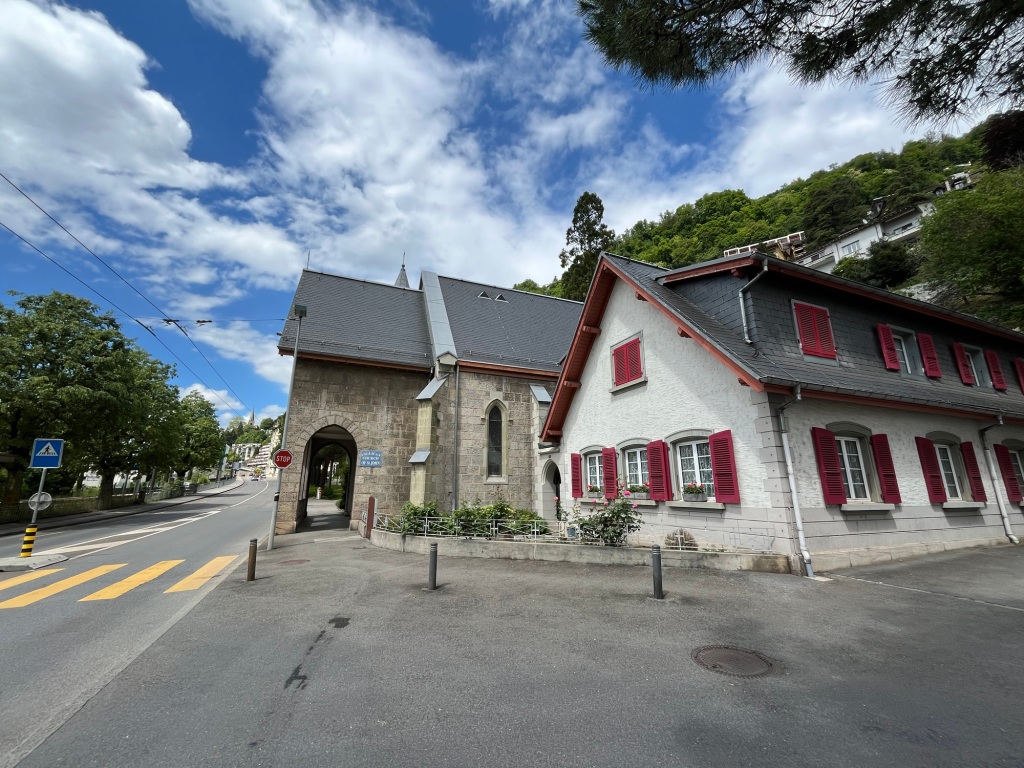
We spoke of Paul’s predecessors – many had also been the Archdeacon of Switzerland, which included the south of France and sometimes Italy. My Canon Heywood was somewhat before Paul and Jill’s time, and was in the period after many of the Victorian heyday chaplains. Paul commented though that being Chaplain during wartime it have been difficult. Sealed transports of Jewish deportees regularly passed the church on the railway between France and the east. At this time the vicarage was a library for the English speaking community and must have been an important hub given the influx of internees in the country during the Second World War.
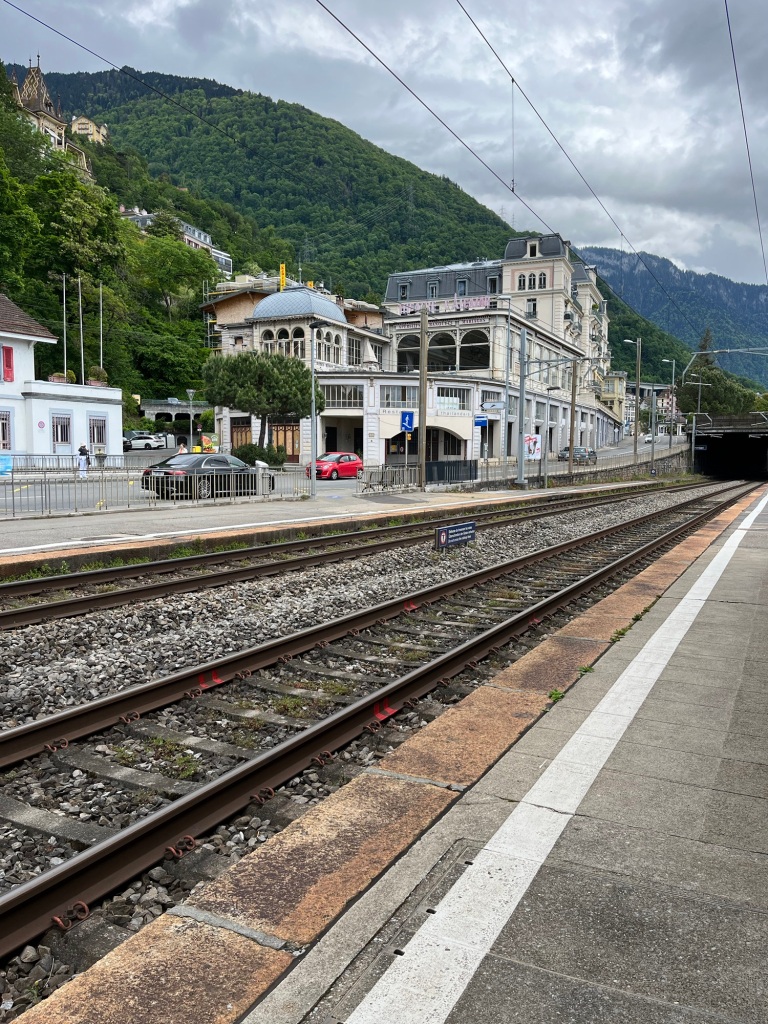
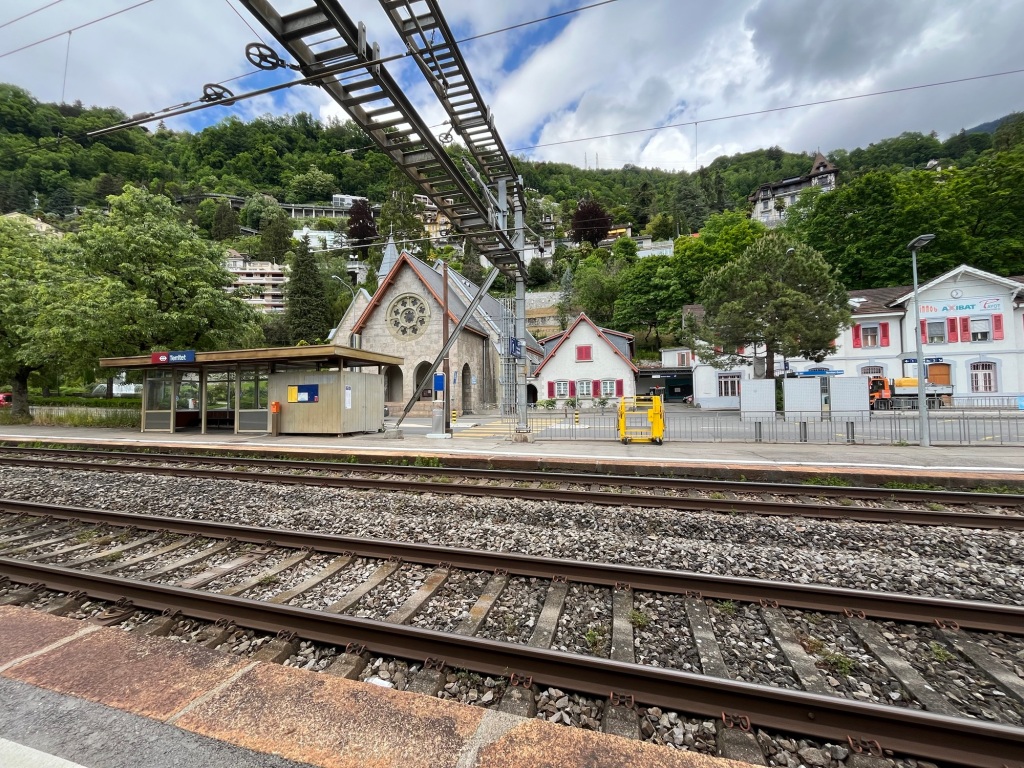
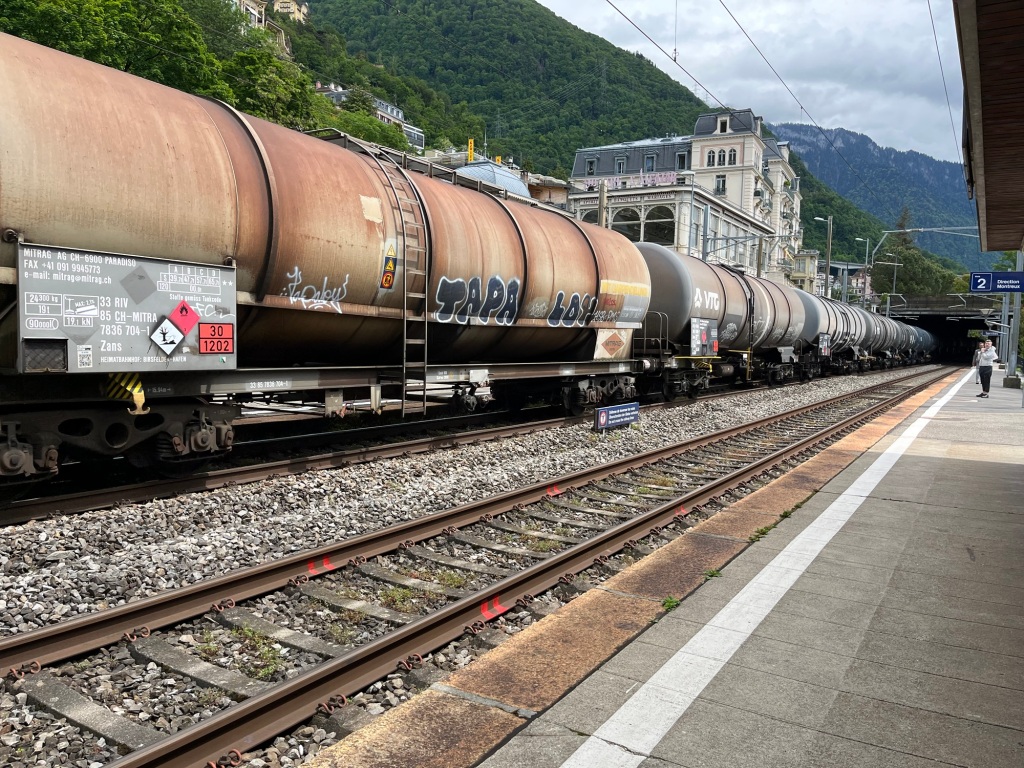
Following my first cup of proper English tea in seven weeks, I bid Paul and Jill farewell and crossed the road to wait for my first of two trains to Geneva airport to pick up a hire car. I re-read my research notes on Canon Cyril Heywood. I came across a newspaper report in the Skegness Standard:
“On 9th October 1938 the 1st Skegness Company of the Boys’ Brigade attended the morning service at
the English Church, Montreux. The service was led by Rev C P Heywood. This was part of a week’s
holiday in Switzerland which took in much walking, a tour of the League of Nations headquarters at
Geneva and entertainment by a yodeller.”
During my week in Switzerland, I had missed out on entertainment by a yodeller, but I had seen much else and done much walking. It was now time for a few days of little walking in the French ski resort of Morzine and much pondering on my days of loafing.


Leave a Reply