Pentecost Sunday dawned sunny and bright at Cossonay. My hotel breakfast did not start until 8am, so I tried to be ready for the off once I had tackled the morning nosebag. My bag was packed and Magda and Zbigniev were found leaning eagerly against the door when I returned replete.
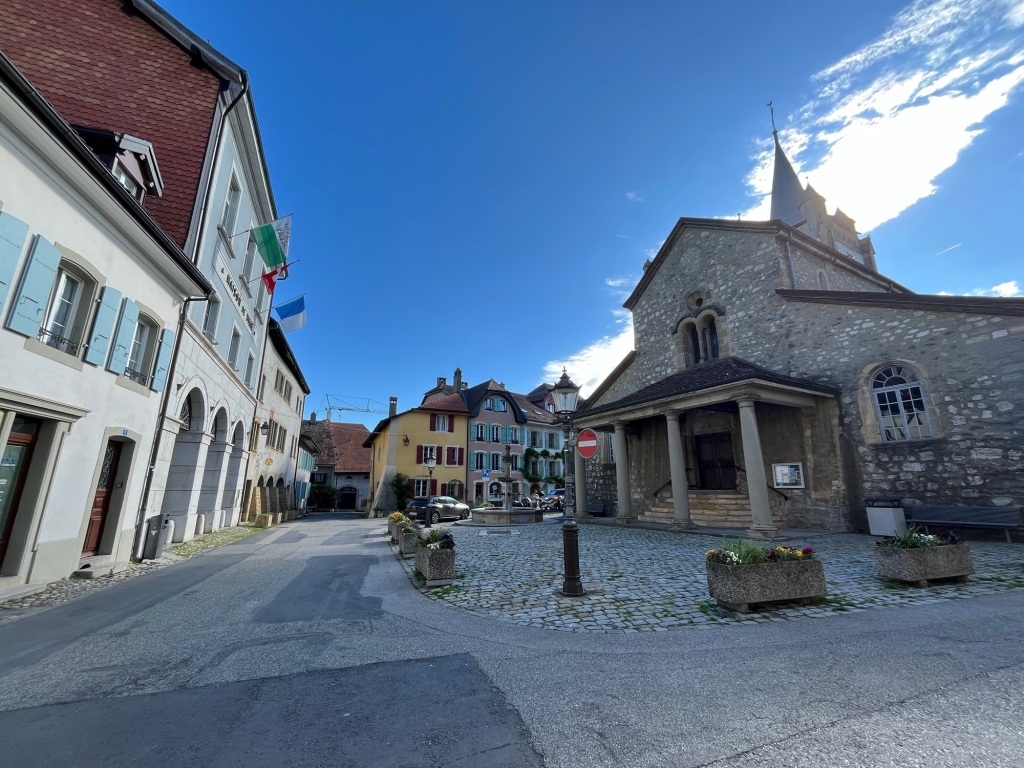
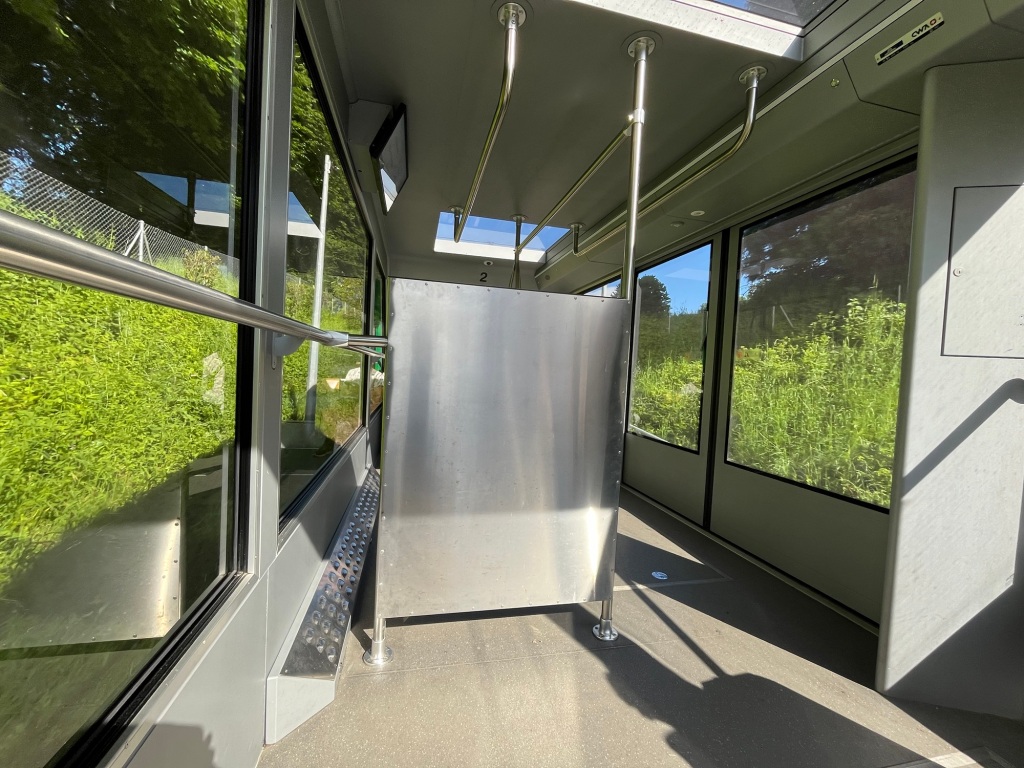
I had a brief wander around the medieval heart of Cossonay before catching the funicular railway to begin the route. It is a wonder of the well-resourced Swiss public transport system, at home a funicular railway will have been installed by the Victorians and may now be operated by volunteers as a tourist attraction, it is operates at all. Here, thousands of Schweitzers are transported up and down steep hillsides by modern, efficient counter-balanced carriages.
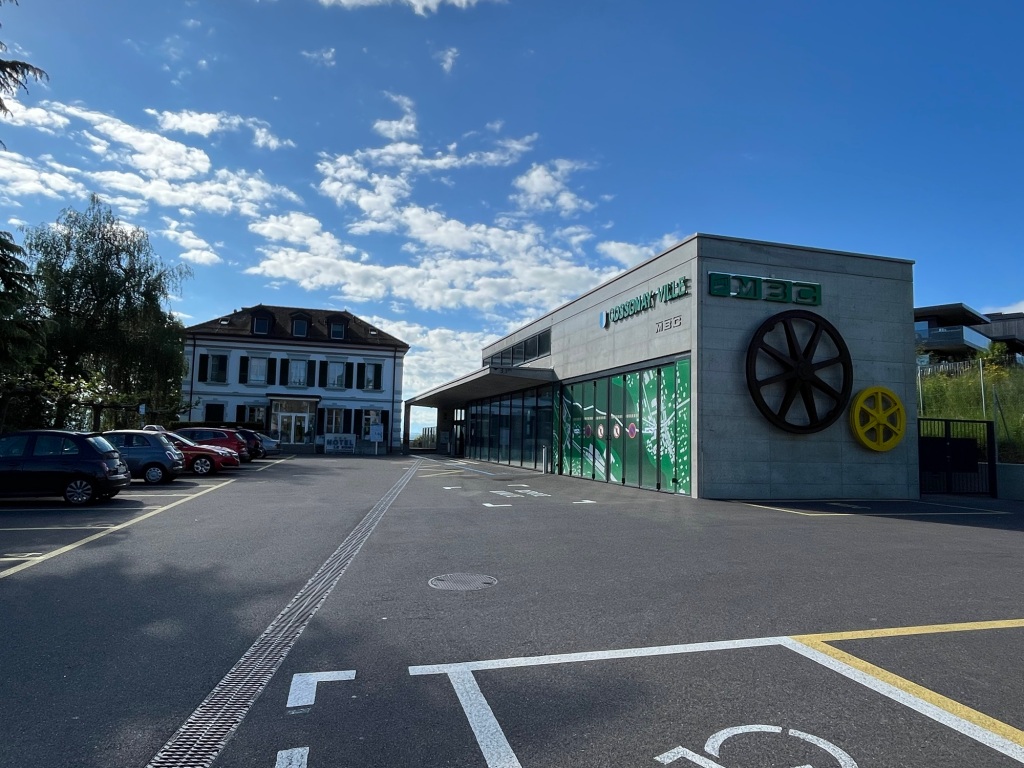
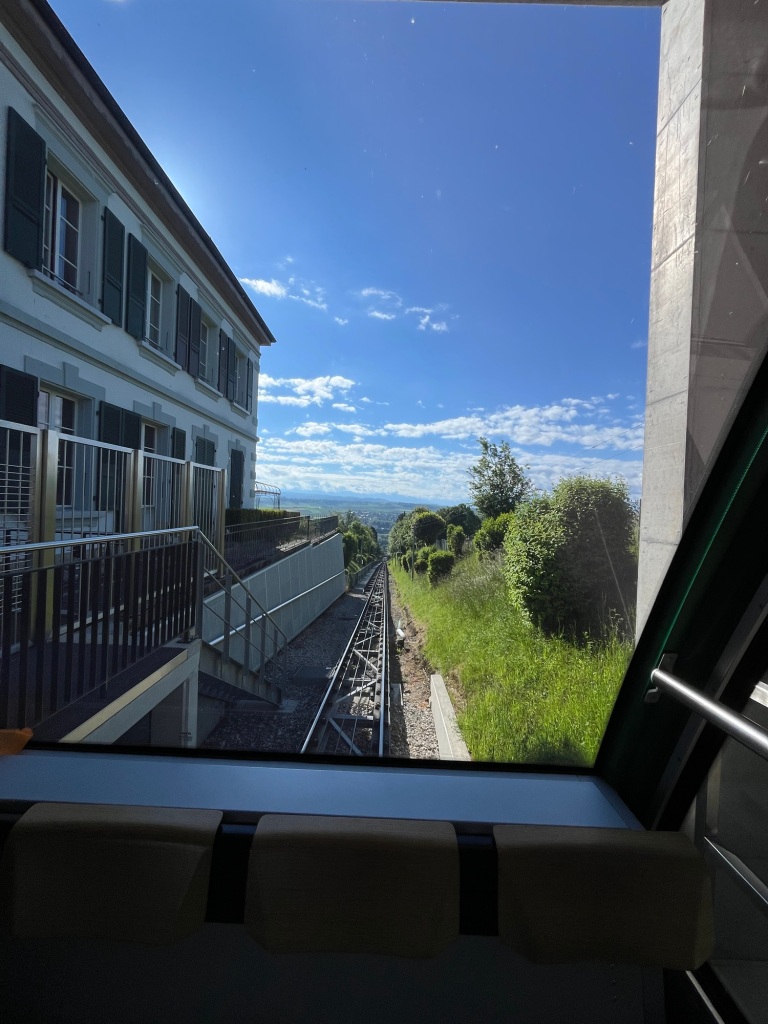
At Penthalaz, the foot of the funicular, I bought some bread for lunch, checked the route and strode out. The route took me over the river Venoge, through fields of wildflowers and then into woodland.
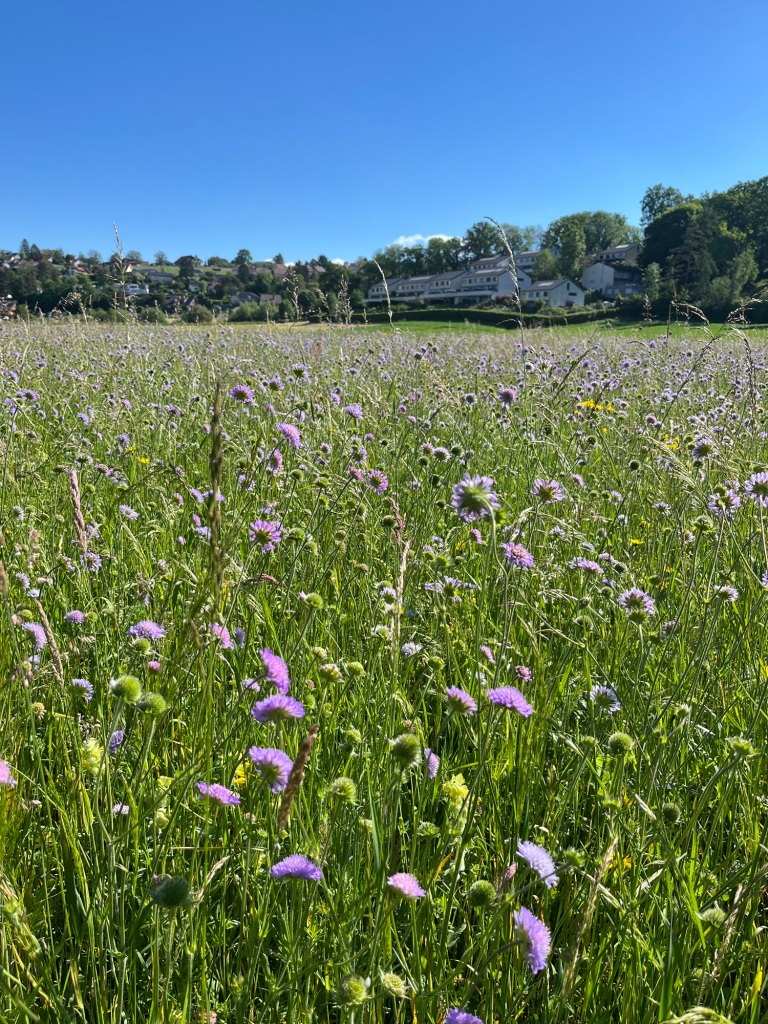
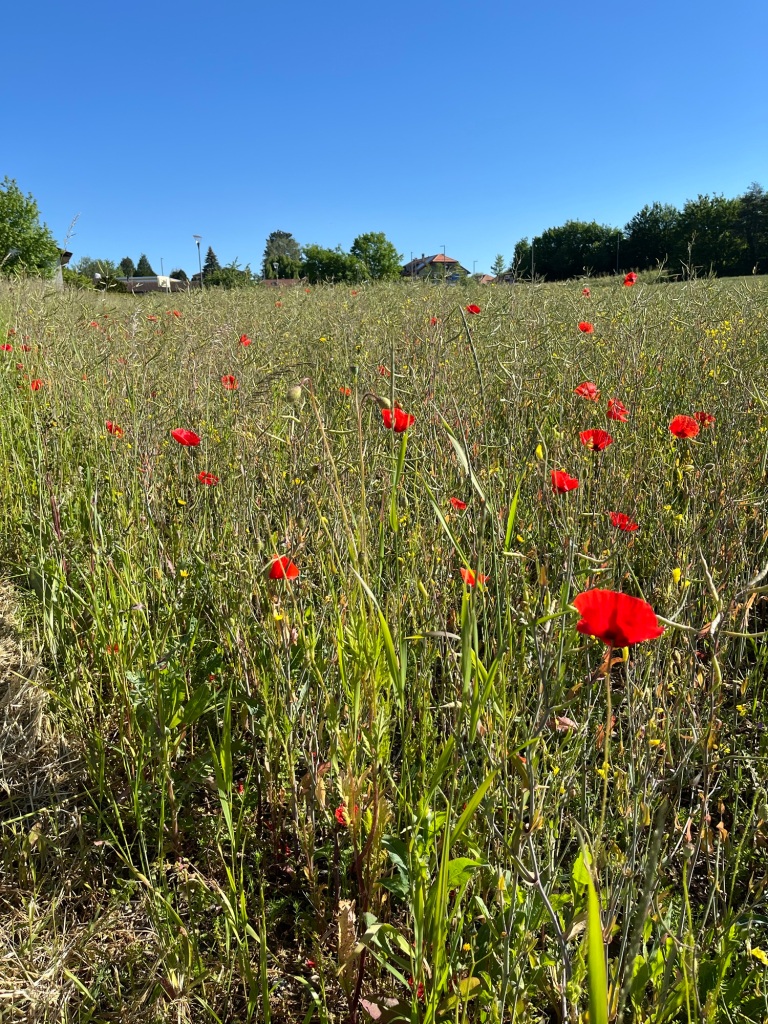
It was not yet hot, but with a clear blue sky and strong sun, the temperature was on the rise. I thought back to those days through northern France when it had been dry but cold. Everyone I met complained about the temperature – for me it was heavenly. More recently I had either endured drenching, or broiling!
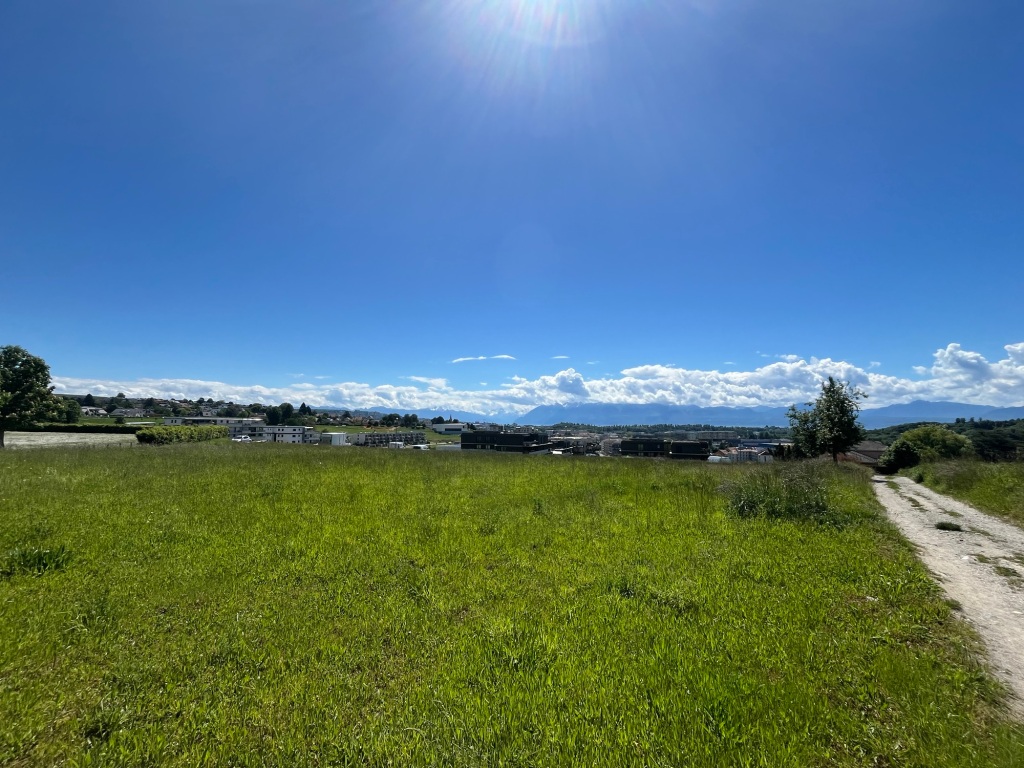
On approaching Bussigny, I got my first clear view of Lake Geneva (or Lac Léman as it is known here) and the mountains beyond. Flat, lakeside walking beckoned… I couldn’t wait!
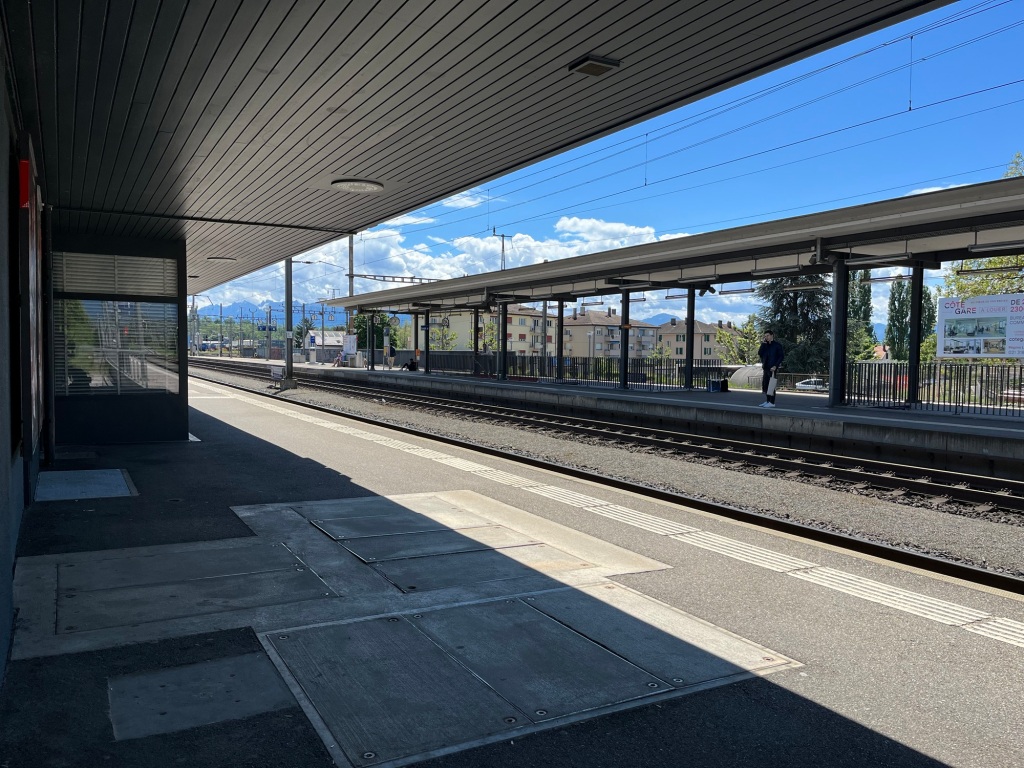
By lunchtime I was in Bussigny itself and I stopped at a branch of Migronos, a seemingly Swiss only supermarket. As a company they seem to often occupy railway buildings, and so it was, after buying the necessary vittels, I sat in the shade afforded by the station platform canopy and watched the world go by – frequently, and with frightening Swiss punctuality.
I now had a choice. The official route continued almost due south until it met the lake, where a shape left turn was performed to walk along the lakeside. Fans of geometry know that a shorter distance could be obtained by walking along the hypotenuse. There was a road that would perform this function.
However, on this hot and sunny day walking alongside a busy road, with little or no shade did not appeal. I opted to walk the official route through woodland alongside the river Venoge. And what a good idea this proved to be.
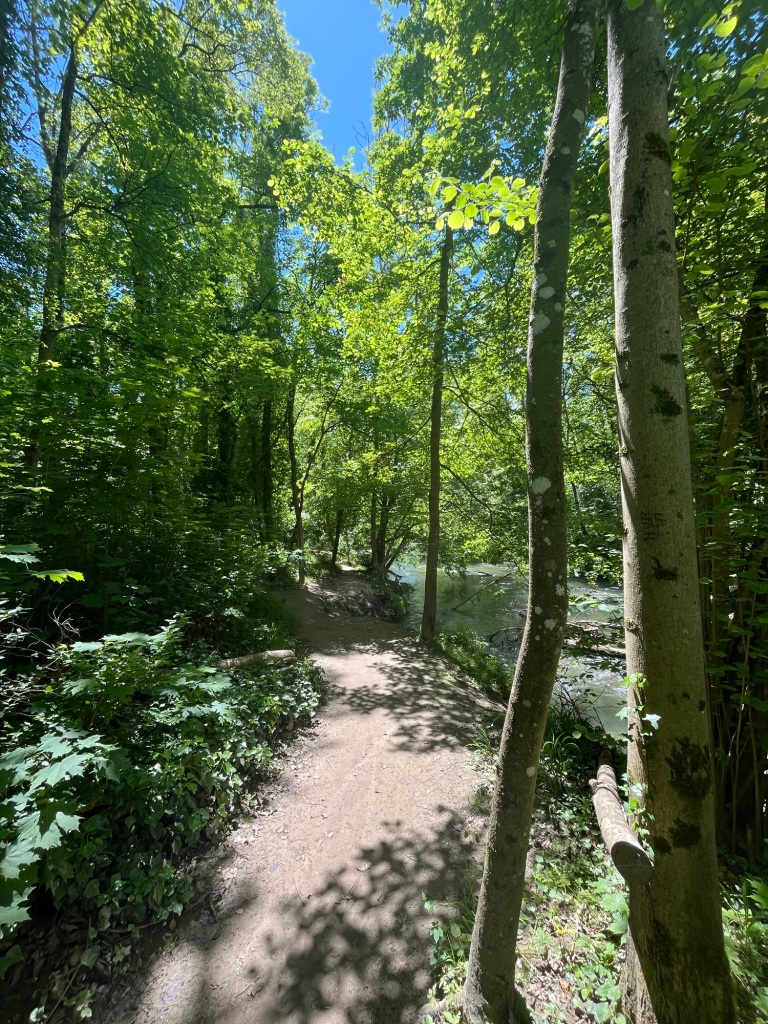
With a gentle descent towards the lake, the river running by and the dappled sunlight, it was something straight out of a C.F. Alexander hymn. In the distance, I could hear the strain of music; twee hymnody it was not though. I felt I needed to waggle a finger in my ears to check that I was actually hearing the strains of the Colonel Bogey March. The unmistakable whistled theme was accompanied by shouting, adolescent shrieks and the occasional ringing of a bell. As I rounded a corner, I was not faced with the sight of a wooden POW-built bridge over the river, but a relay race being run over the river on a raft constructed from a wooden pallet, poles and barrels.
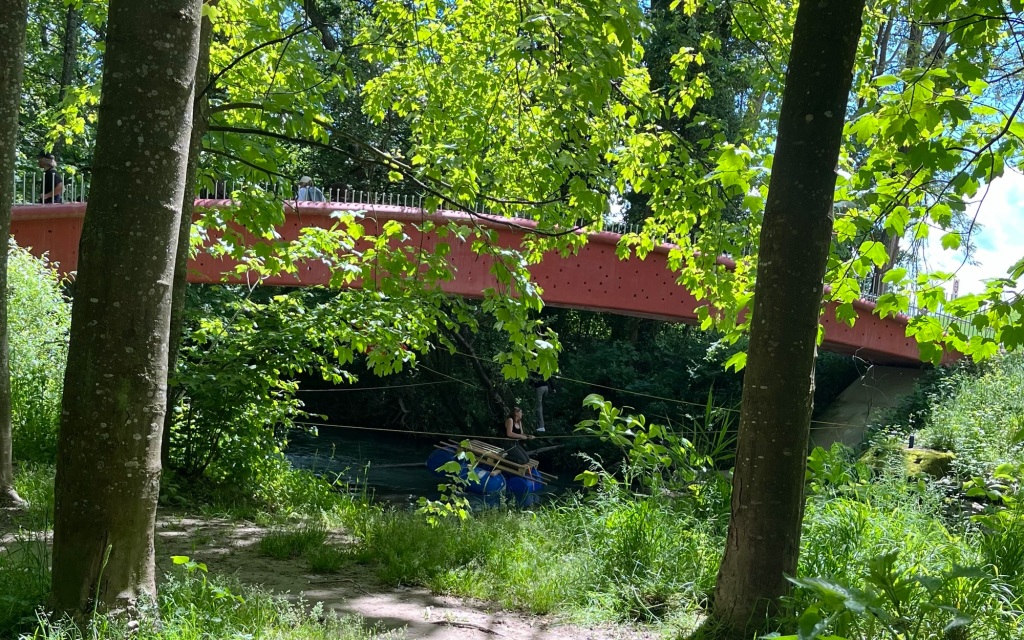
It looked like a youth club, and everyone was having a great time. Parents stood on and there were refreshments and a barbecue in full swing. I rather wished I could have a go – instead, I had to be content with whistling Colonel Bogey as I marched away.
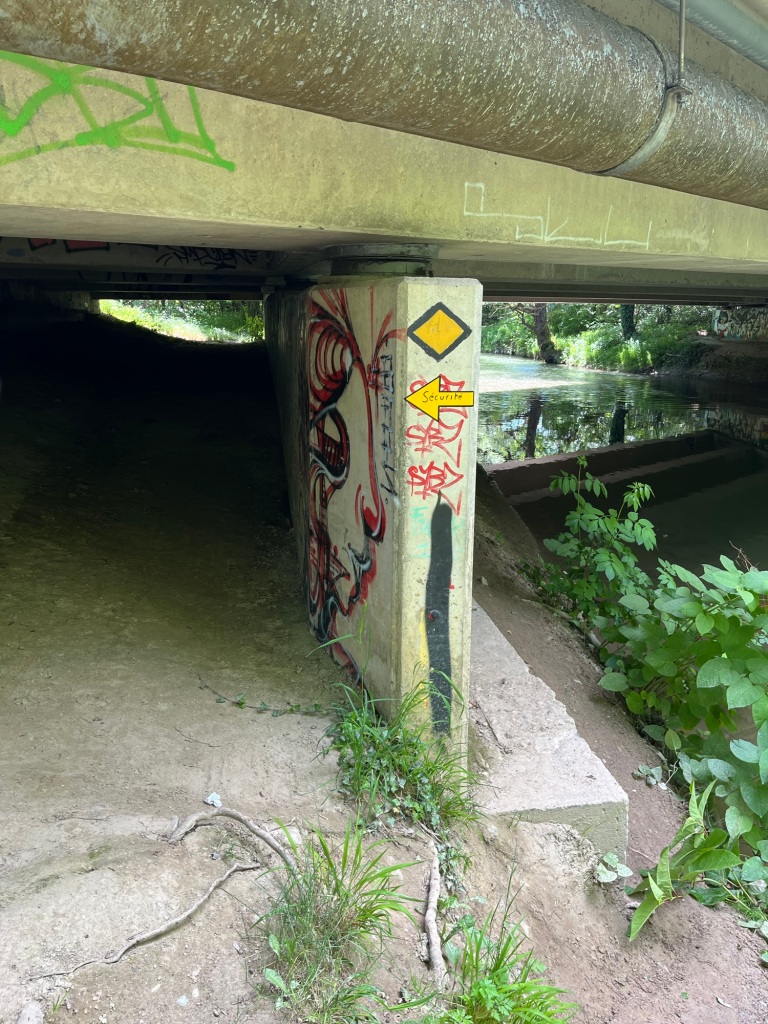
The edge of the lake now beckoned, but first there was the network of roads and railways that run along it to navigate. This road bridge was particularly challenging for those of any stature. Thankfully my hobbit DNA proved helpful in bending low under this obstacle.
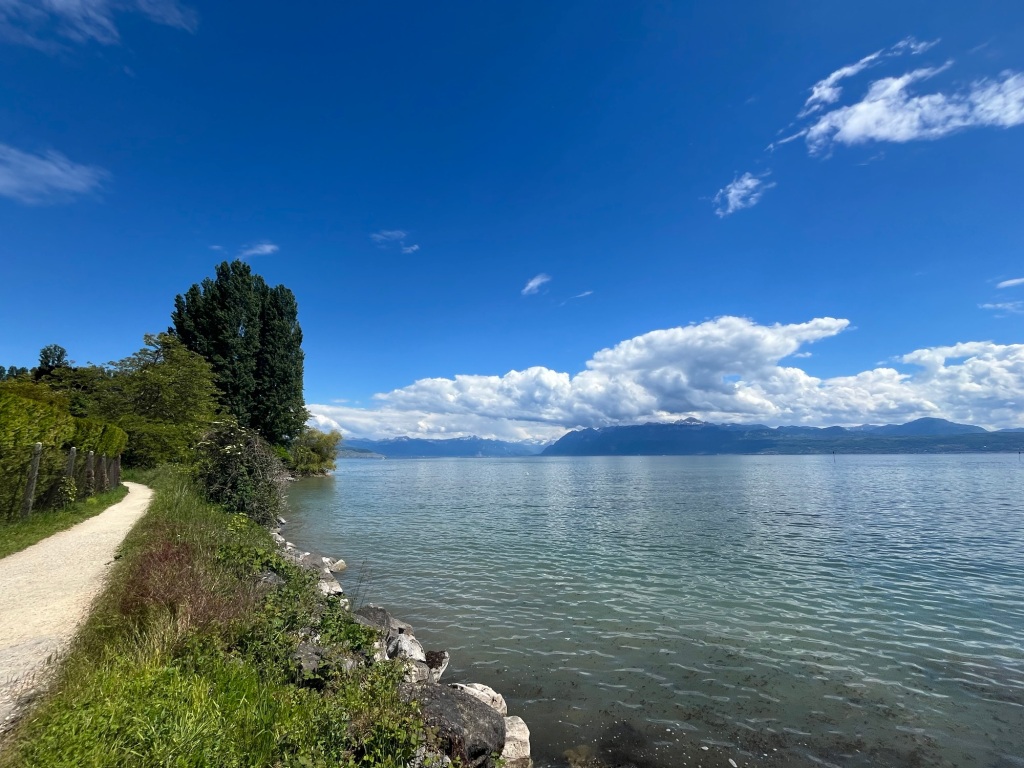
But the discomfort was worth it as I arrived out on the lake, near Saint Sulpice. The views were stunning, the water crystal clear. My accommodation was to be a little way inland in the Lausanne, but for the moment I would have the pleasure of walking alongside these still waters. My mind turned to those lakeside encounters of Jesus and the disciples at Galilee. The stillness, the calm, the Sabbath rest and quiet of hills above. I was soon disabused of these peaceful pictures painted by John Greenleaf Whittier, when I rounded a corner into Saint Sulpice itself. The place was heaving with people.
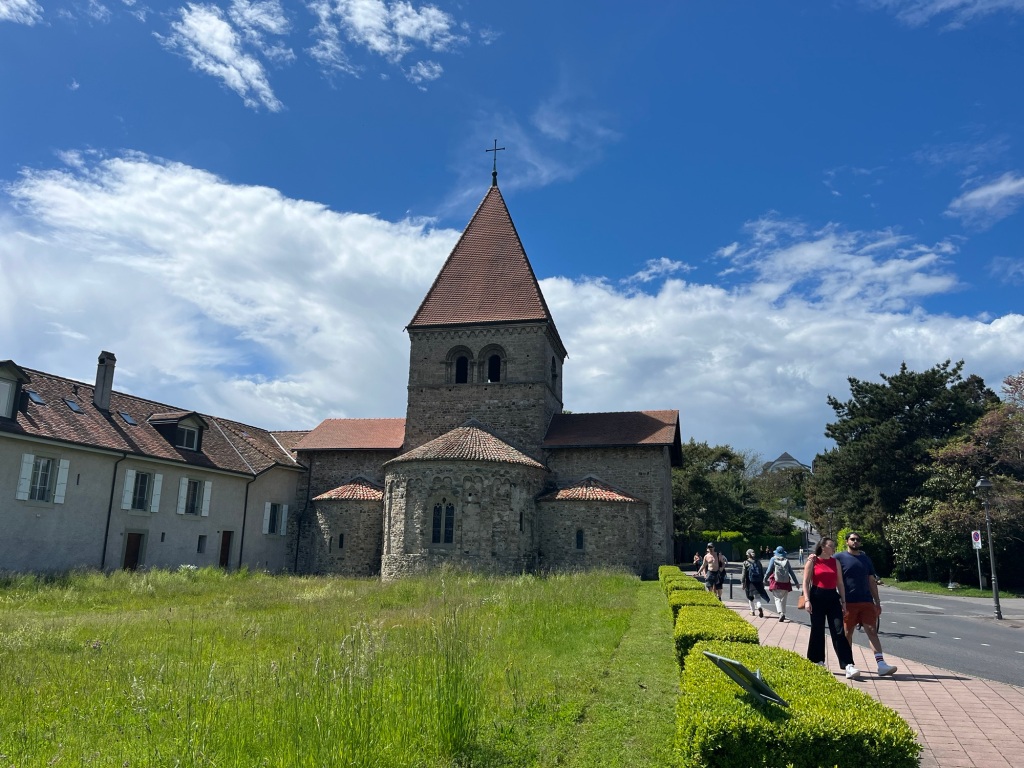
The ancient church was sadly locked, but a nearby ice cream seller was doing a good trade… and a more chocolatey cornet I am yet to taste! People were clearly out enjoying the sunshine. I chuckled, thinking of the crowds on the lakeside at Galilee that Jesus took to a boat to preach.
It was a curious walk, beach fronts and parks, alternated with narrow dense hedged paths between gardens and private lakefronts and sailing pontoons. The path being a narrow sliver of common ground slicing through enormous private wealth and privilege.
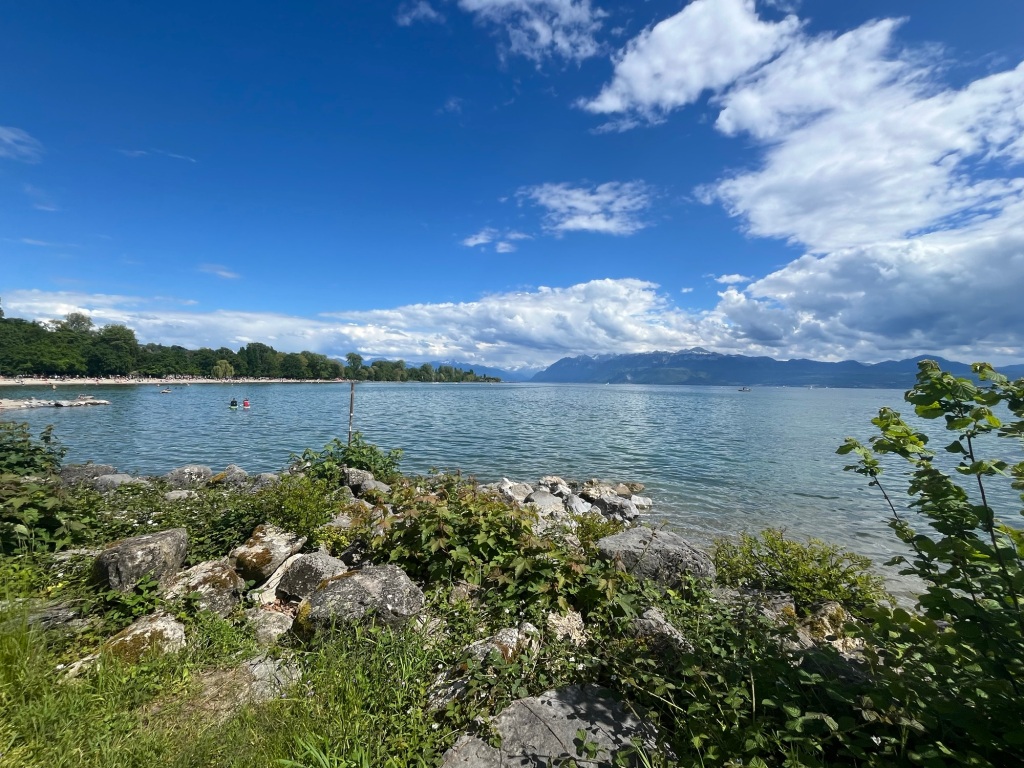
As I walked on the number of people increased exponentially. By the time I got to the Plage de Vidy, the scene resembled what I imagined Scarborough or Cleethorpes to have looked like during factory fortnight, though perhaps with fewer donkeys and knotted handkerchiefs. There was barely a space free on the grass or shingly beach. The queue for the ladies toilets was longer than the queue for ice cream. This place was my cue to head inland and up hill.
Past the international headquarters of the Olympic Committee, through the large cemetery in the oddly named Vallée de la Jeunesse (Valley of Youth) and eventually onto the Rue du Genevre where my allotment block was.
It appears that Lausanne is getting a new tram system and the part of the city I needed to navigate was key to the works to implement this.
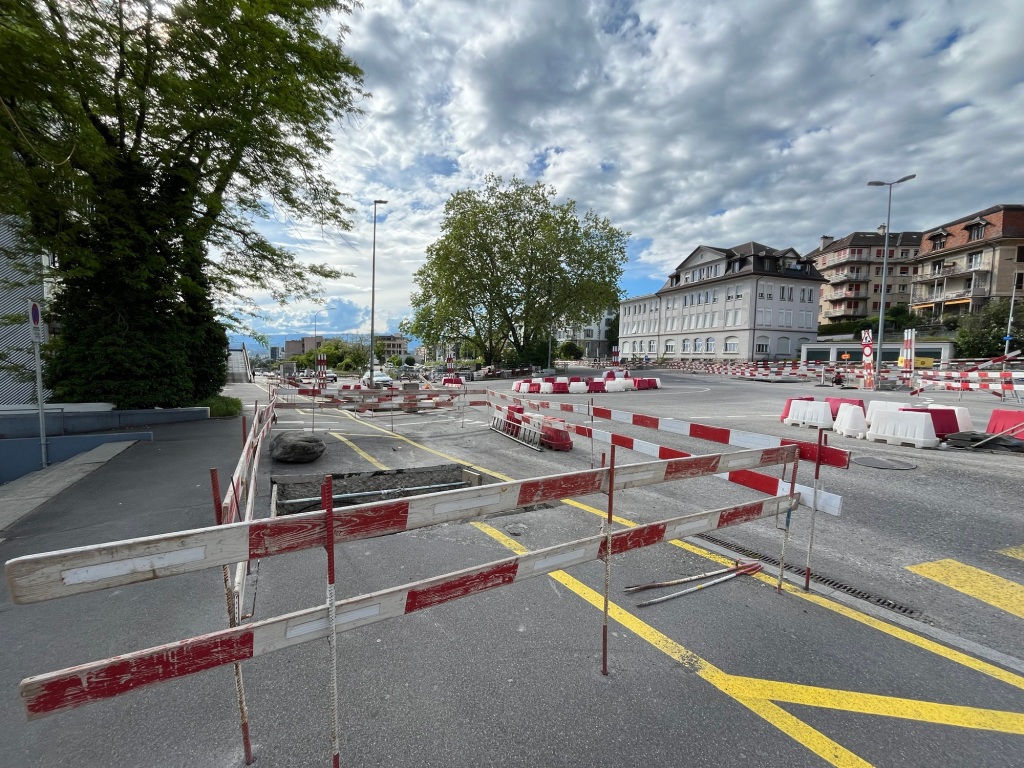
Confusing barriers lay everywhere, admitting access to certain buildings then promptly barring any further movement along streets. I was hot and rather grumpy by the time I finally found my way through the maze: a ball of string might have helped!
On arriving at my room in the shared flat I was soon met by the cleaner who explained that previous occupants had left very late, and could she now prepare the room.
This meant an early explore of the city – but without my bag, which came as a relief. I headed out into the city, ostensibly to find the cathedral and a stamp for my credential, but also to see if there was anyone left about, given the multitude by the lakeside.
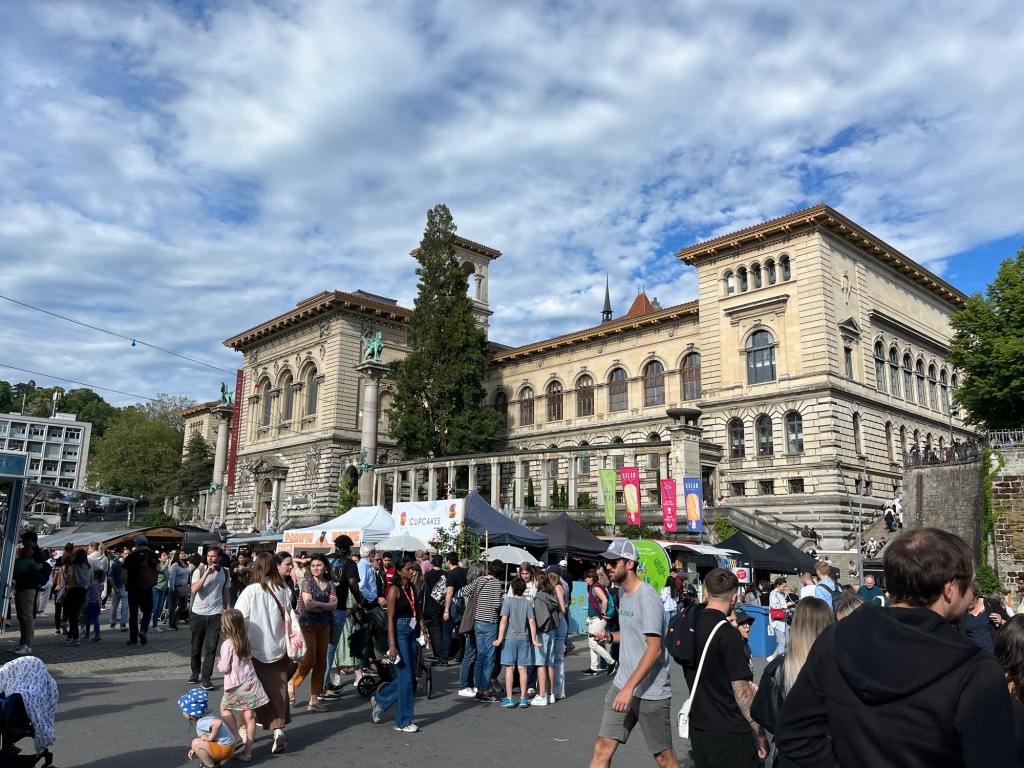
I needn’t have worried: there were plenty of people left around! A large food market had set up outside the famous university; in previous days famous for training Protestant reformers.
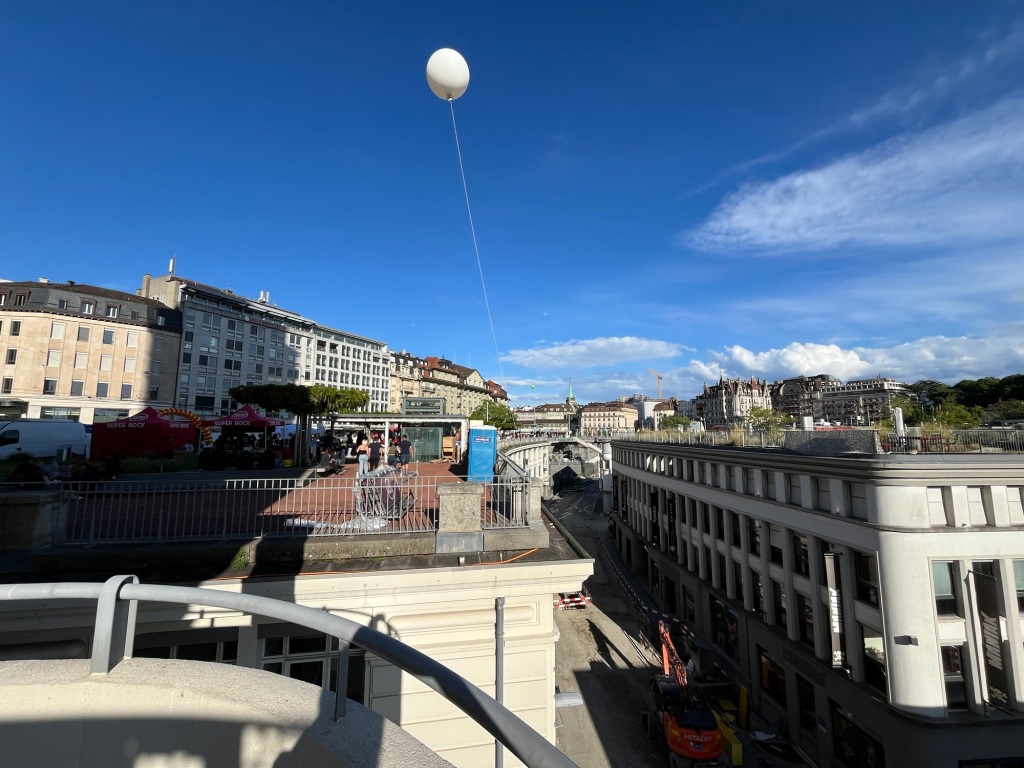
The city here has developed on different levels, with one pleasing area linked from street level, to the tops of buildings below to form an almost continuous plaza.
I had picked up a review on Tripadvisor describing Lausanne Cathedral as “the most boring cathedral ever.” True that the Protestant Reformation had done away with much of the gold, statuary and chintzy trimmings often associated with Roman Catholic cathedrals, but there was a refined beauty. I liked the place very much.
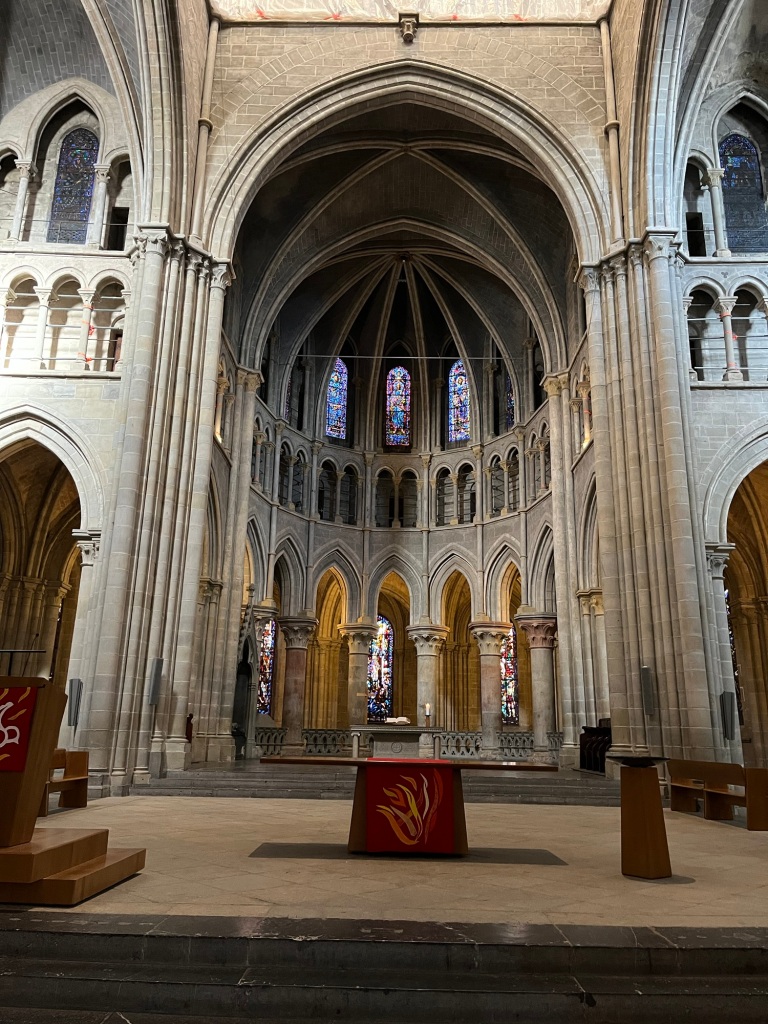
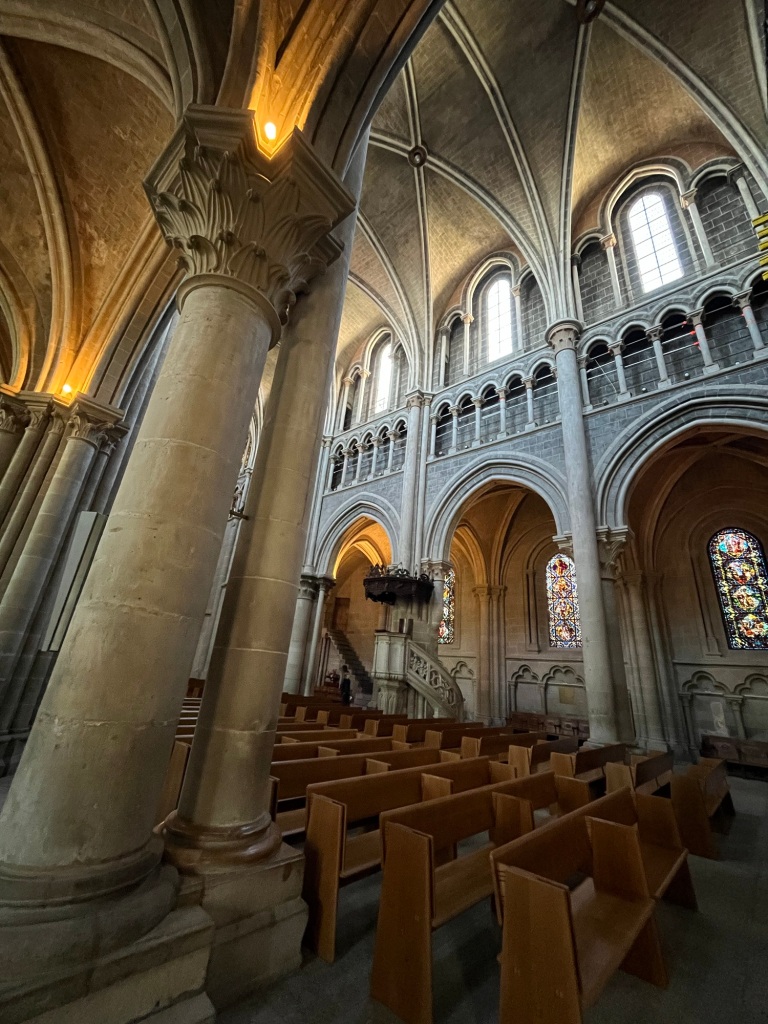
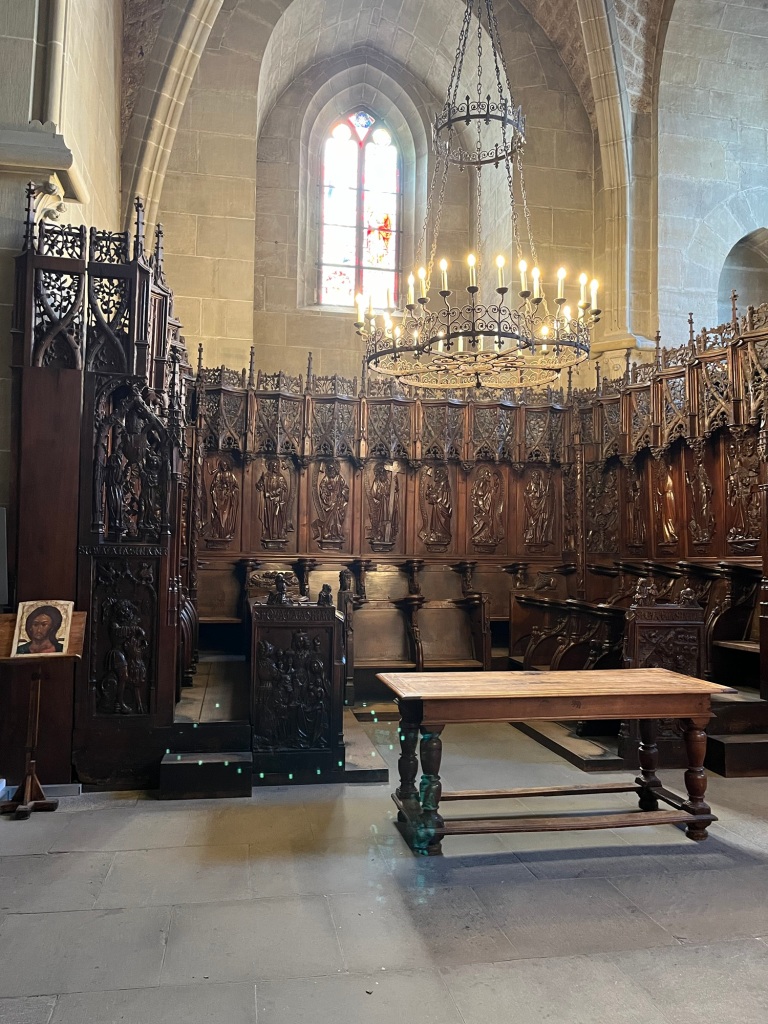
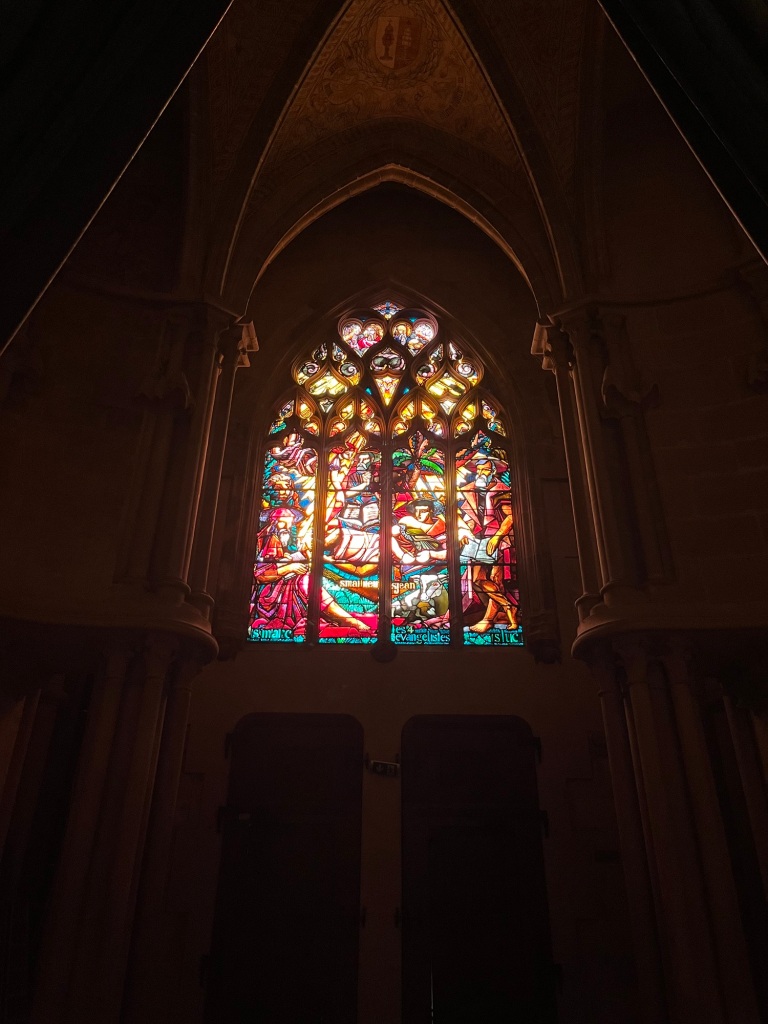
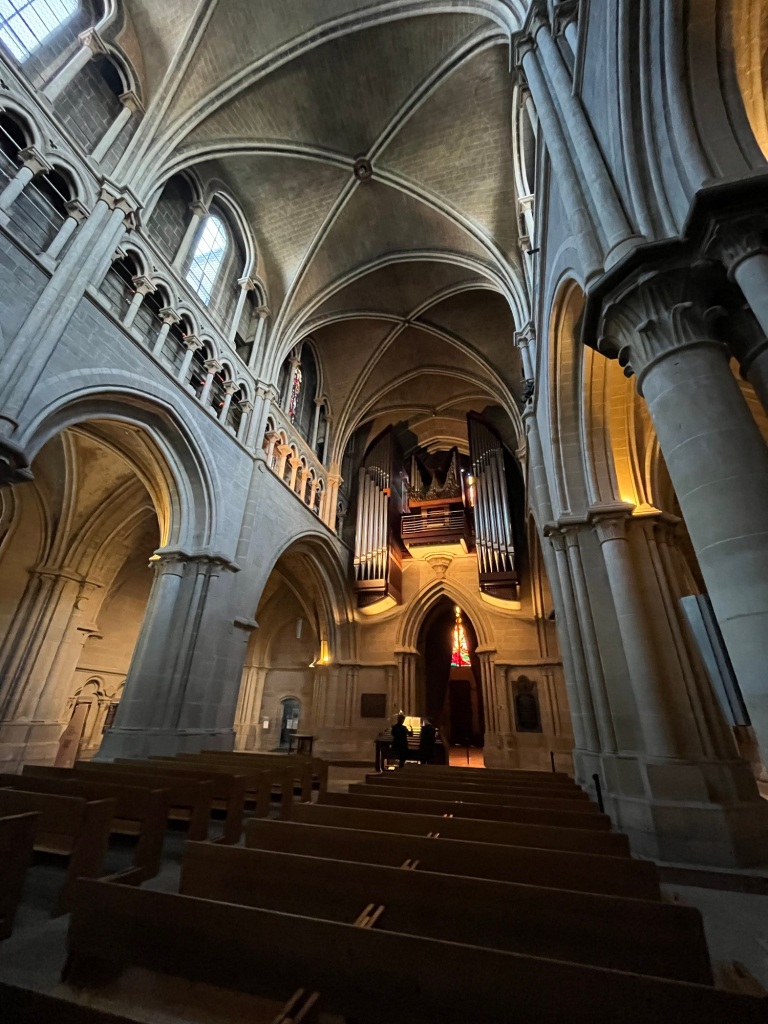
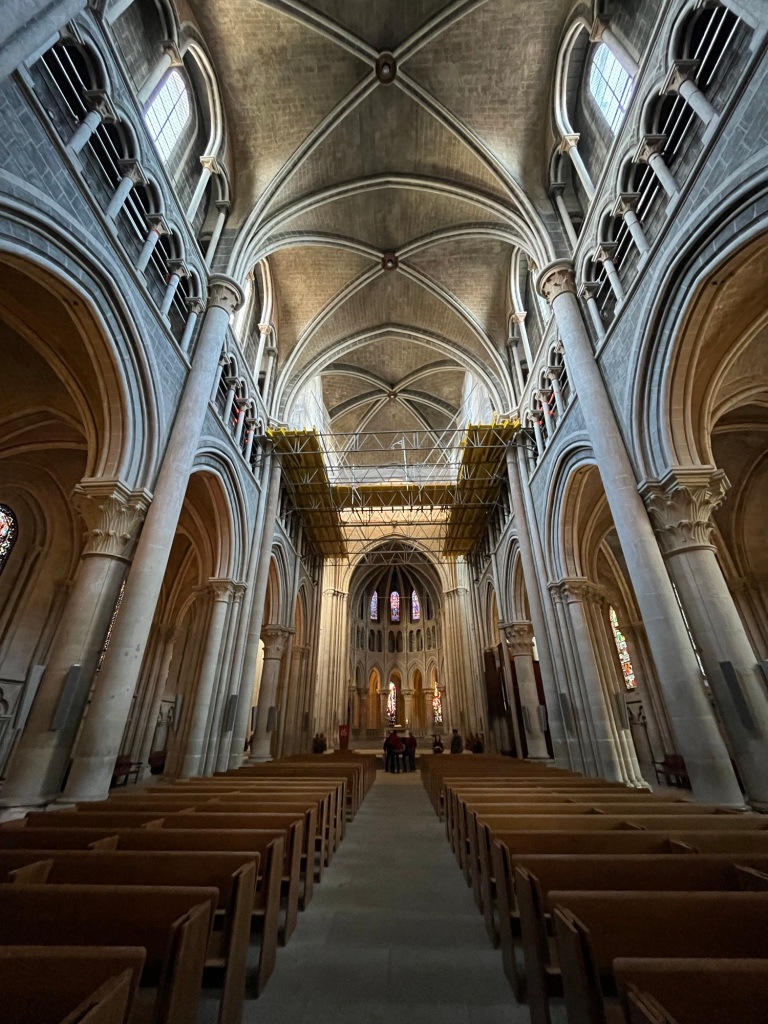
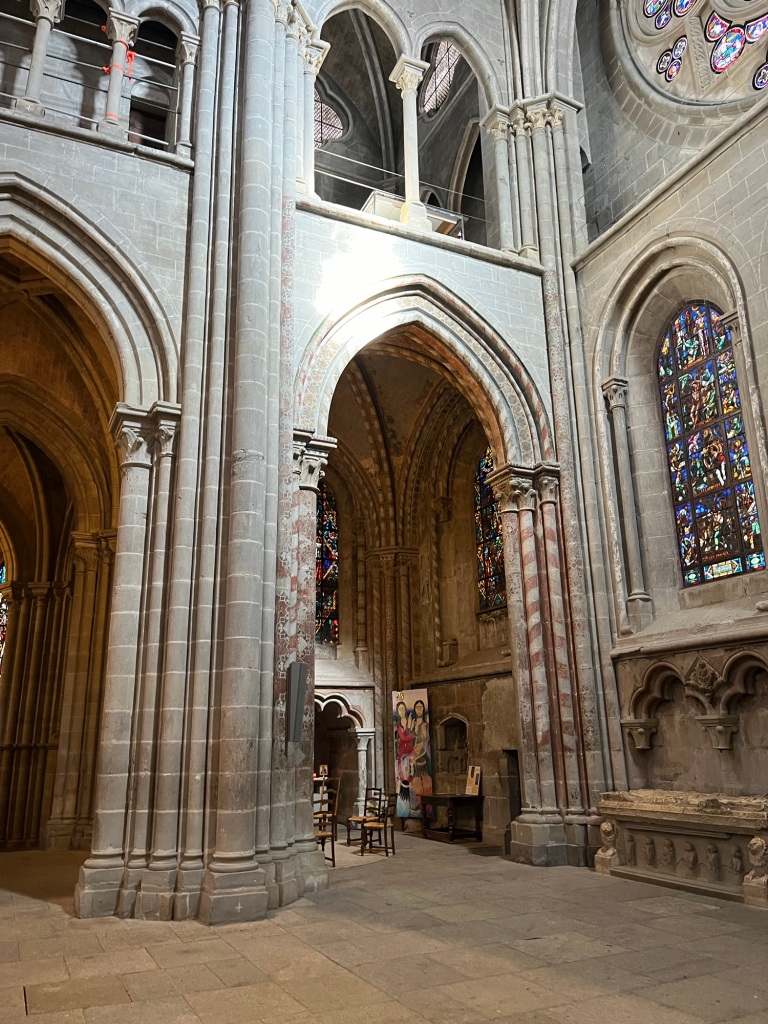
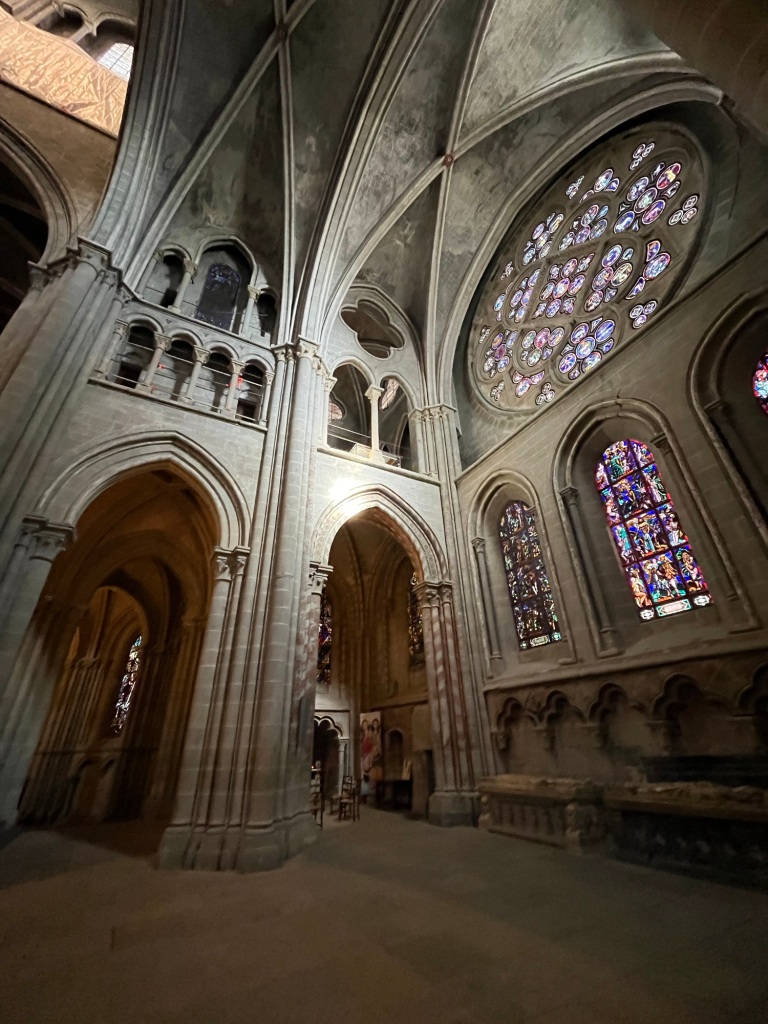
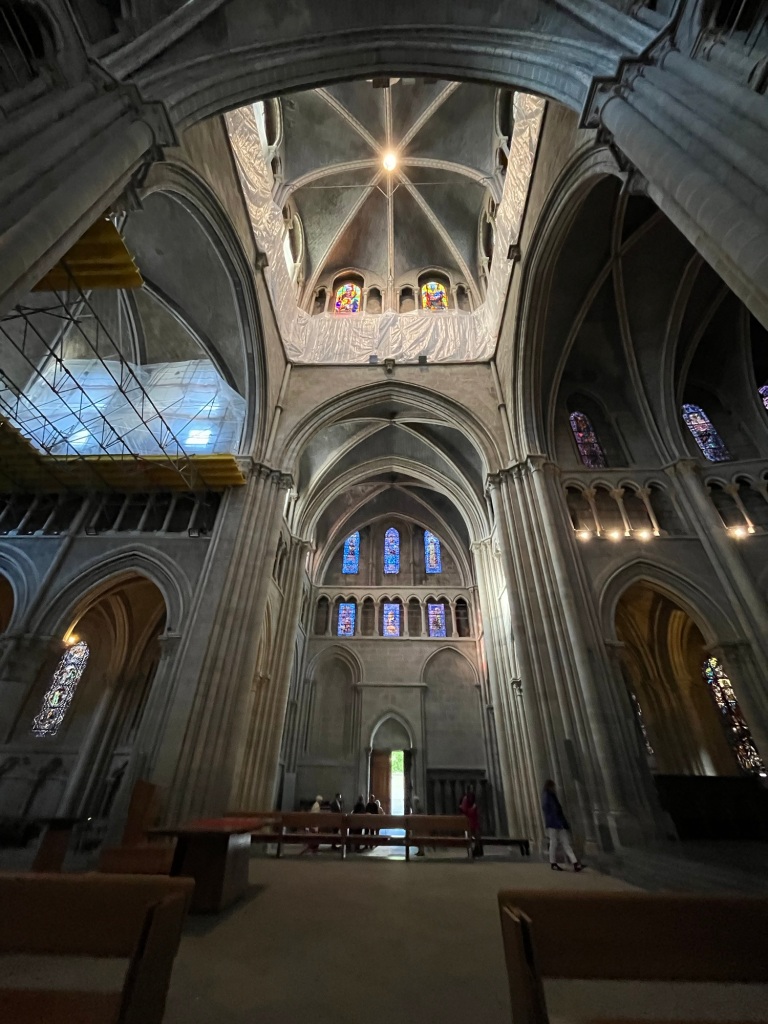
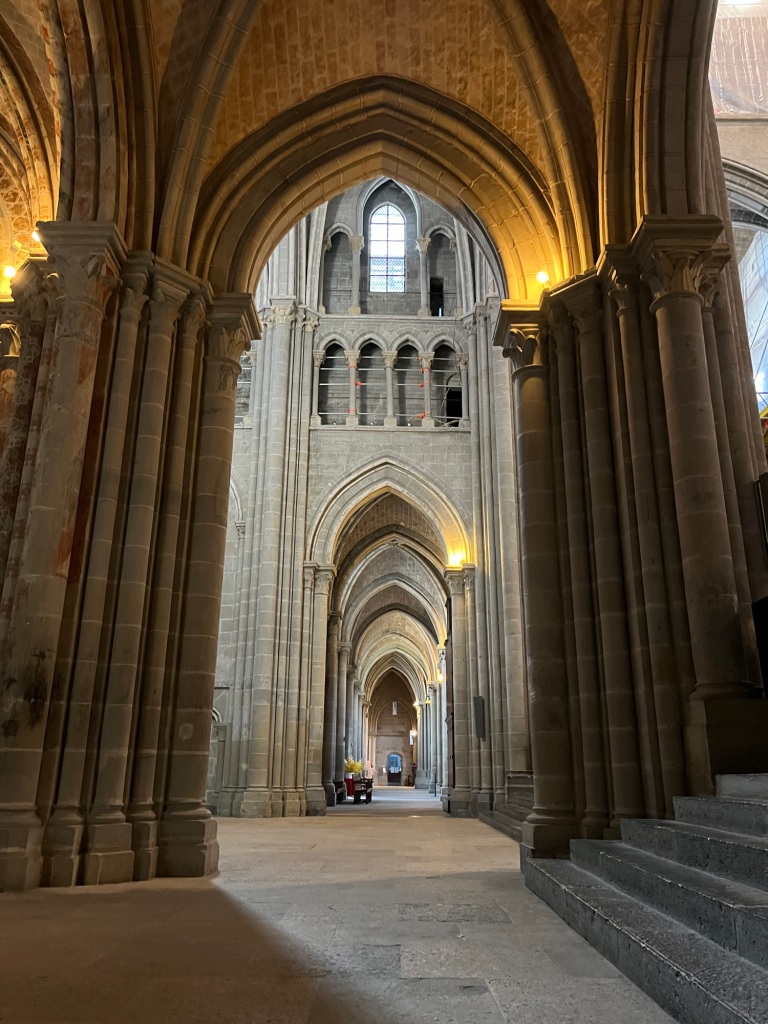
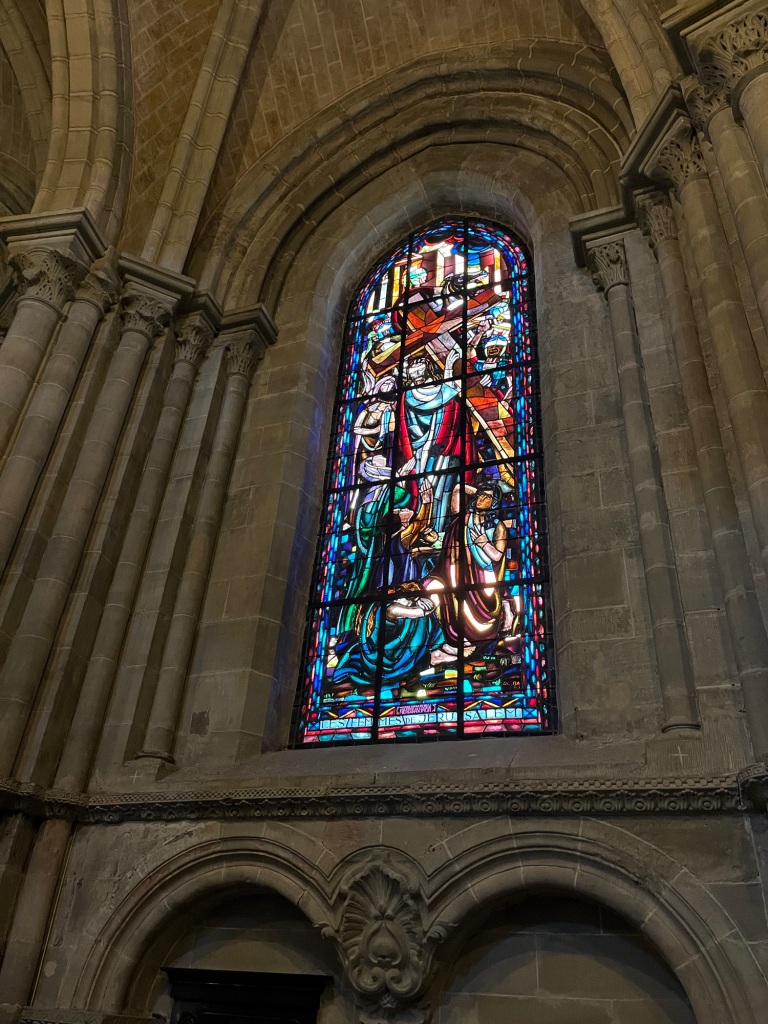
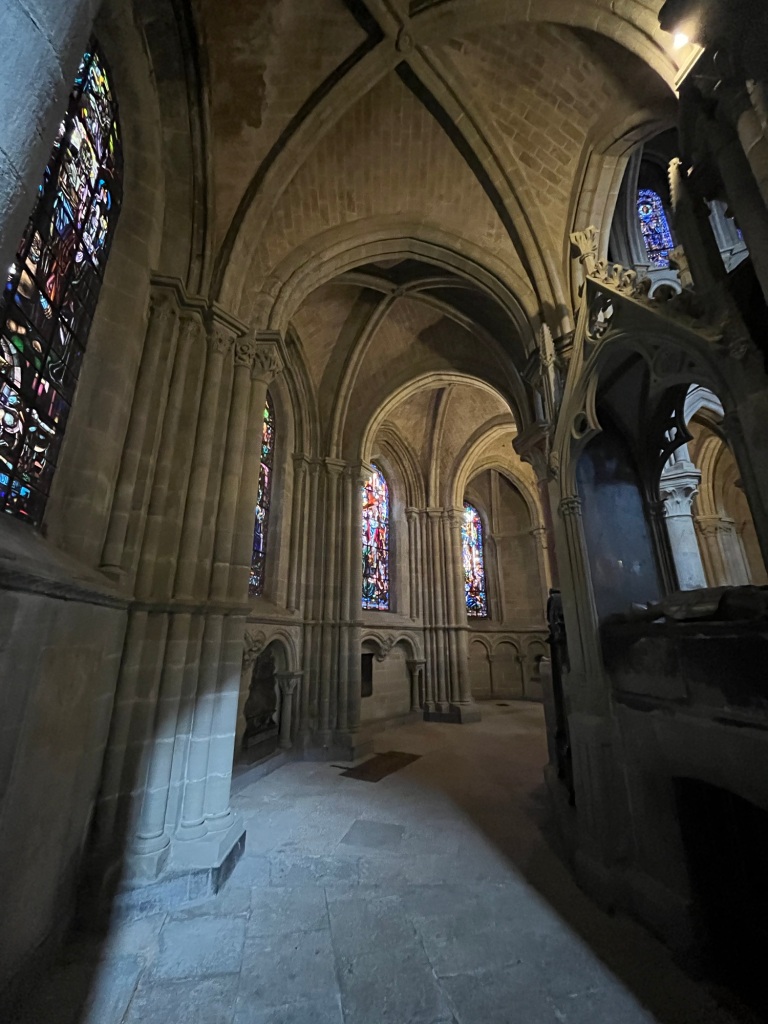
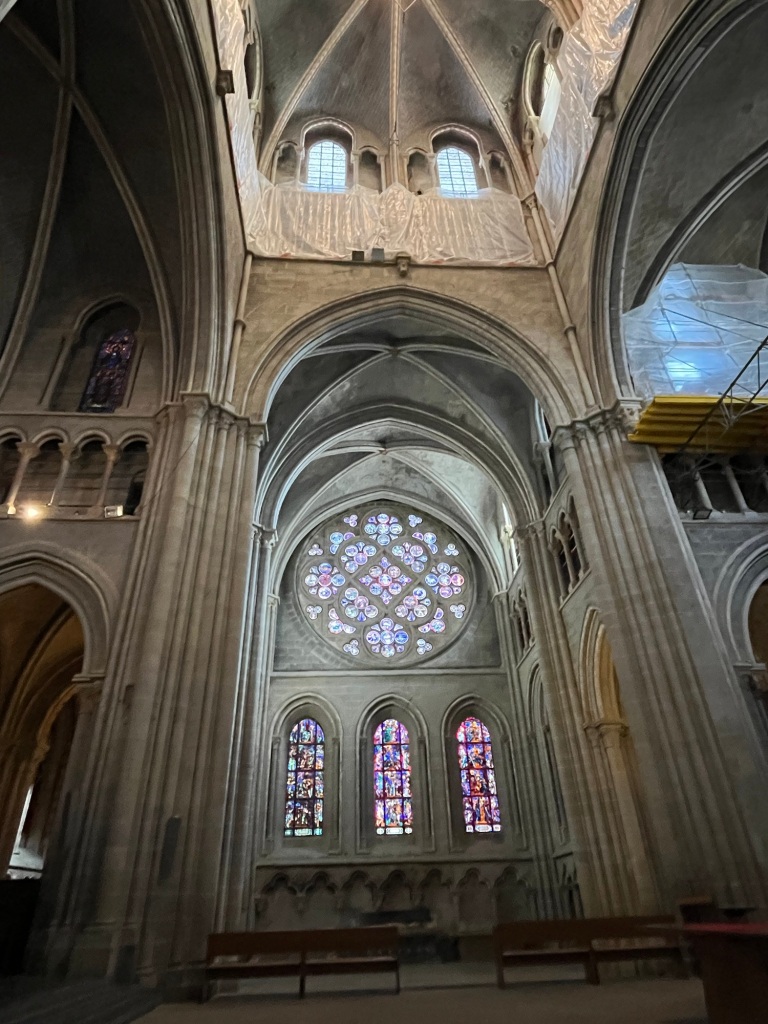
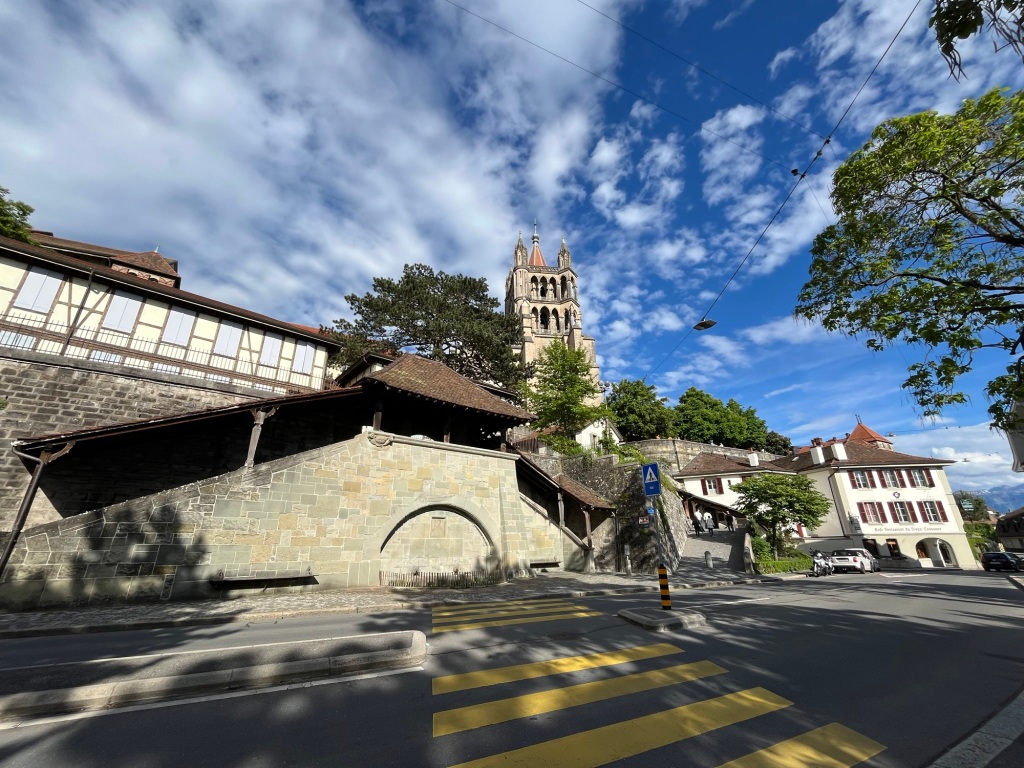
I could not get in straight away, as I approached I heard the booming strains of Bach’s Toccata in D minor rattling the glass and reverberating through the stone of the building. An organ concert was coming to a conclusion. A broad, inclusive programme I suspected as the Toccata was not followed by the accompanying Fugue.
I let myself in and a volunteer at the door gave me a stamp. I knew the building was soon to close, so I disappeared off into the ambulatory behind the high altar hoping to see a good portion of the building before I was asked to leave in the language of the politest verger.
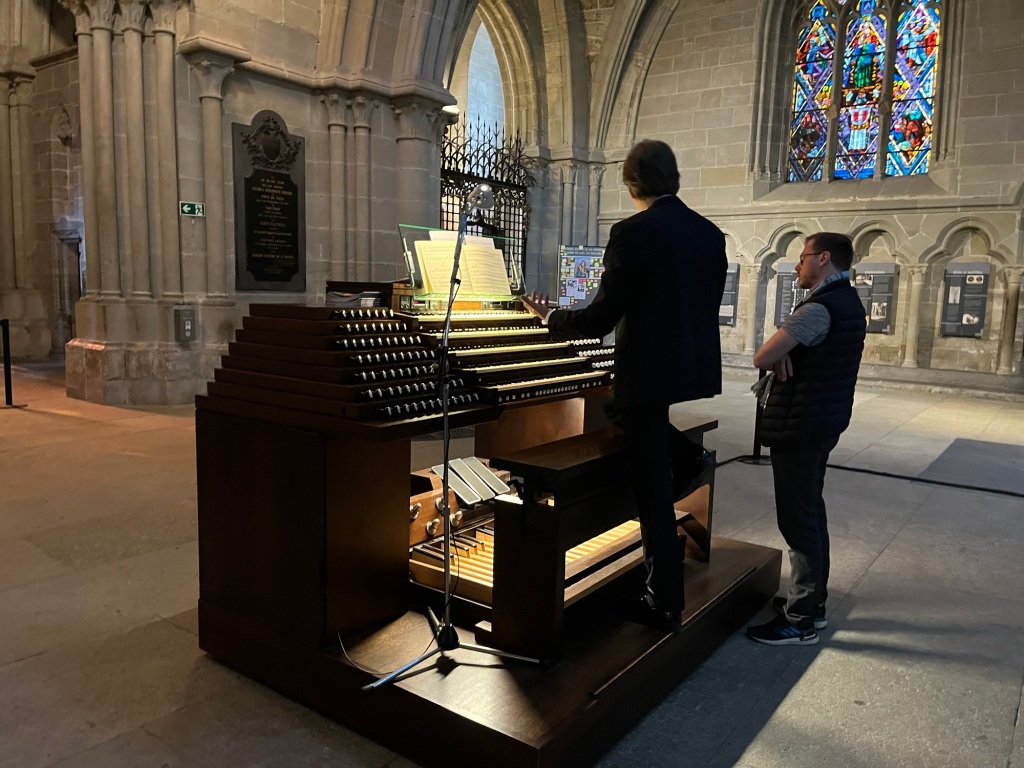
I needn’t have worried. There were still plenty of folk around and the organist was giving a private demonstration of the instrument to a particularly keen member of the audience.
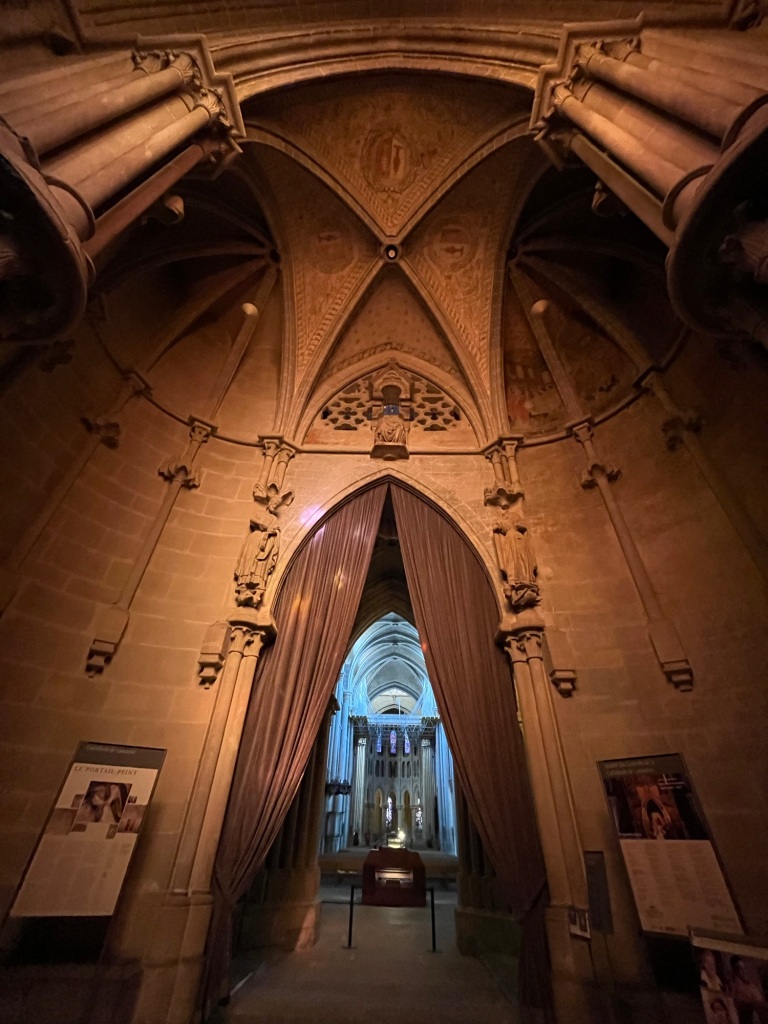
On the south side was the medieval entrance to the cathedral, formerly dedicated to the Blessed Virgin Mary. Inside the porch were two Dutch costume historians marvelling at the medieval sculptured figures there. I mentioned that the Reformation had done away with much decoration within the cathedral, but unlike the iconoclastic movement in England which unceremoniously chipped off the heads of saints and generally trashed most medieval art, here the Swiss was was to paint over everything in white. This meant that medieval paint was preserved underneath and today, following restoration can still be seen underneath.
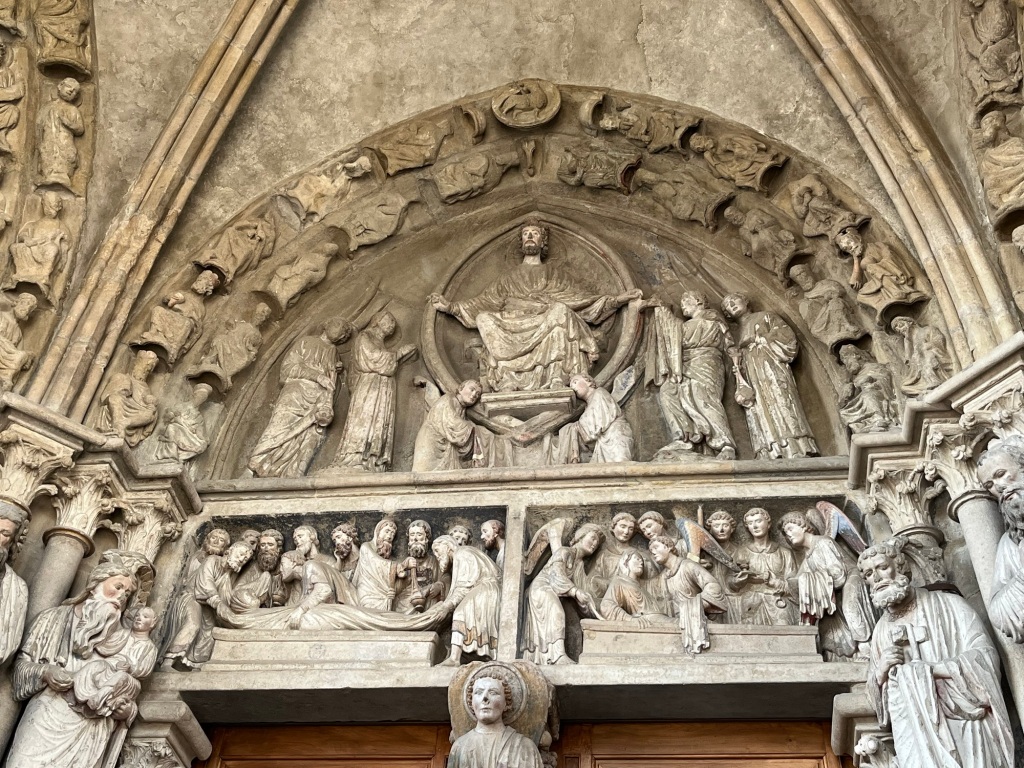
Angels with red, orange and blue wings were clearly in evidence. Me new costume historian friends marvelled at the colours and patterns, giving insights into fashions and styles at the time.
This scene above shows the Dormition of Mary on the left and her Assumption in heaven to the right. It is beautifully conceived, with the composition being the same in both scenes; the gathered disciples being replaced by angels in the same positions.
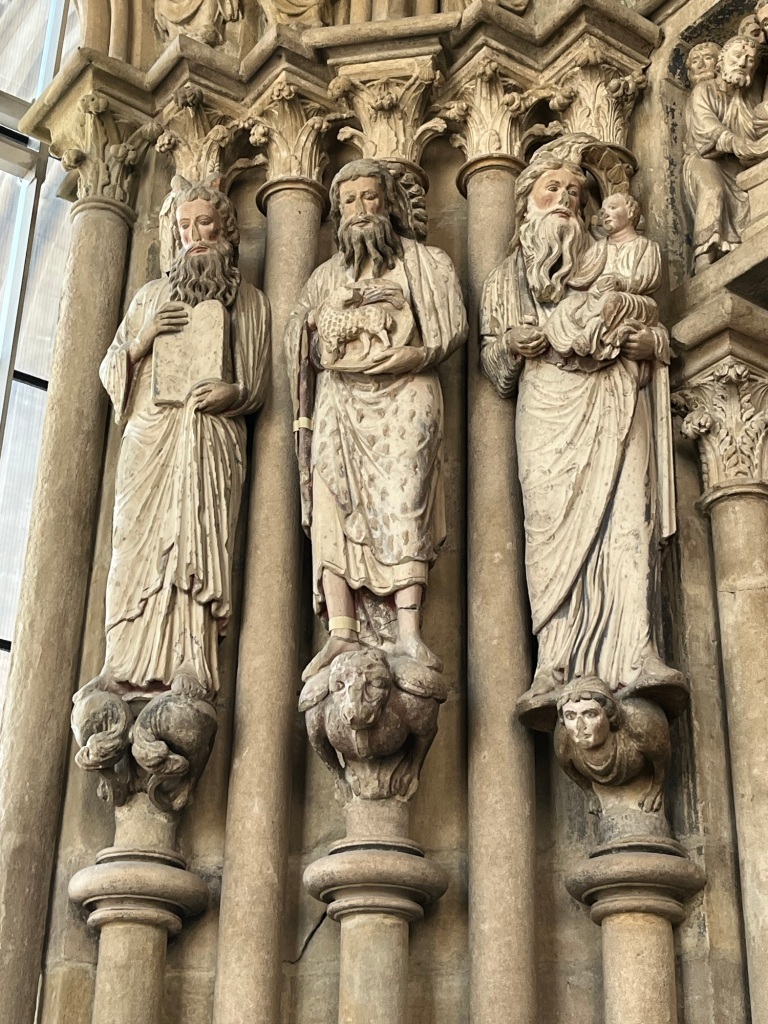
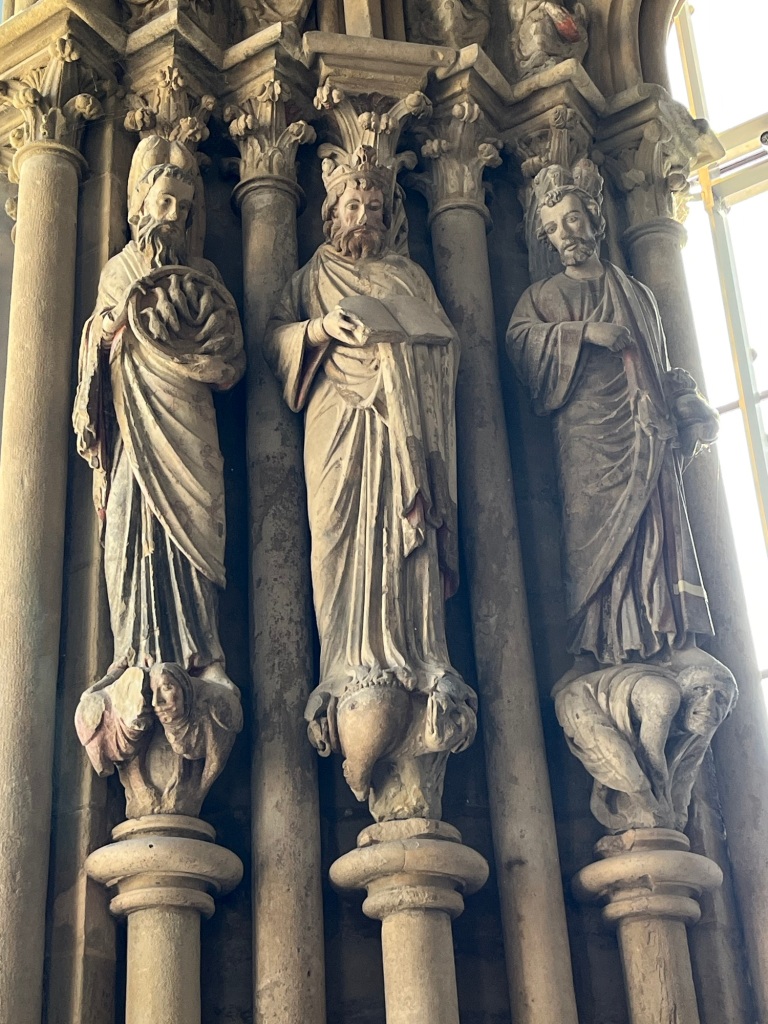
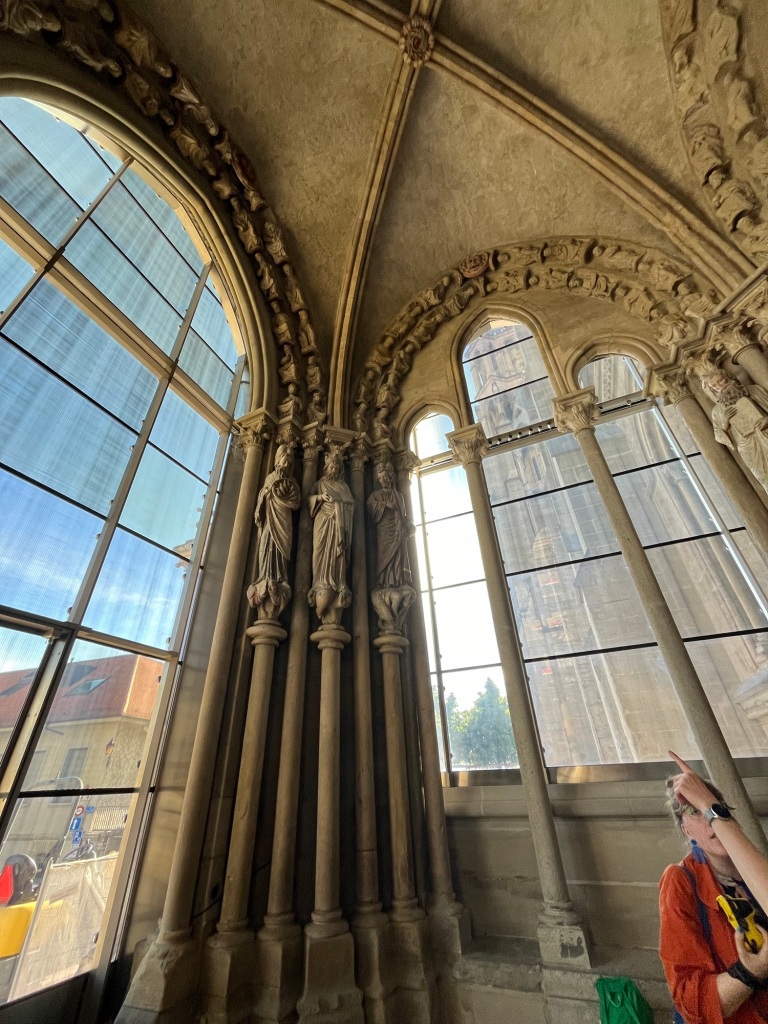
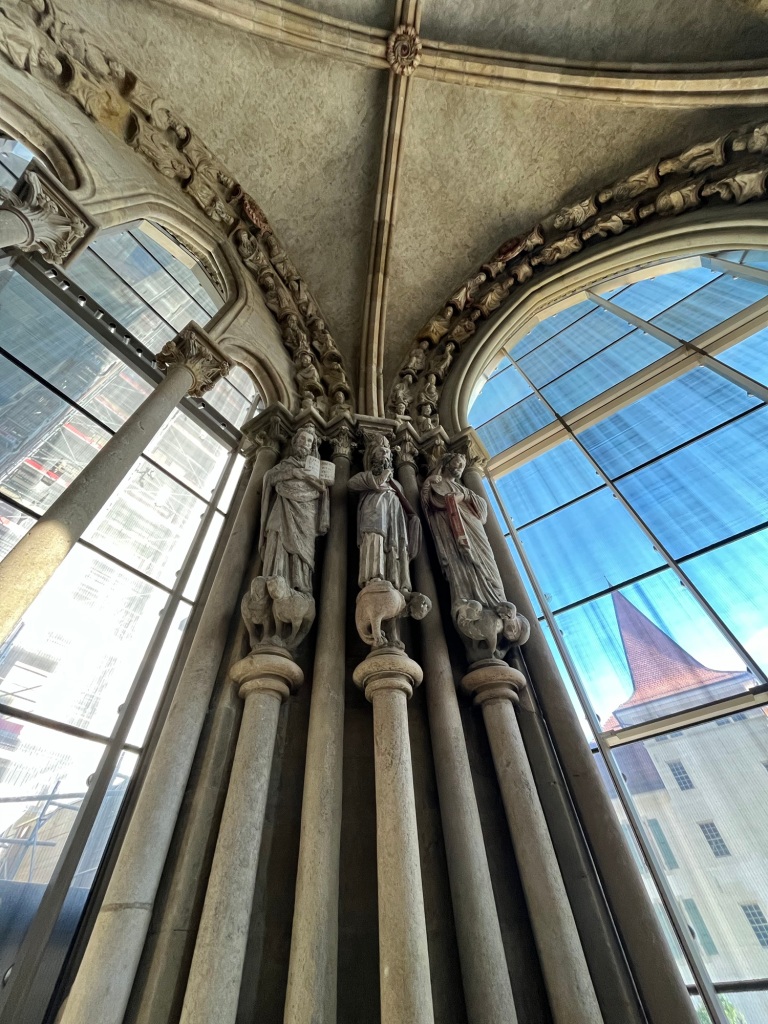
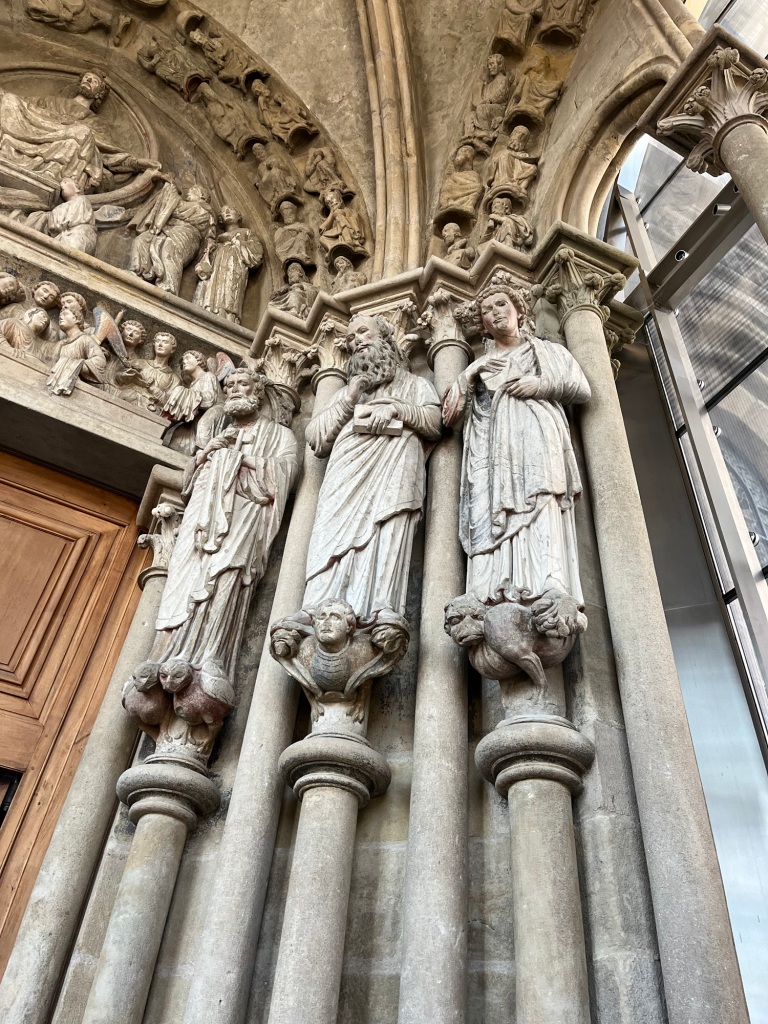
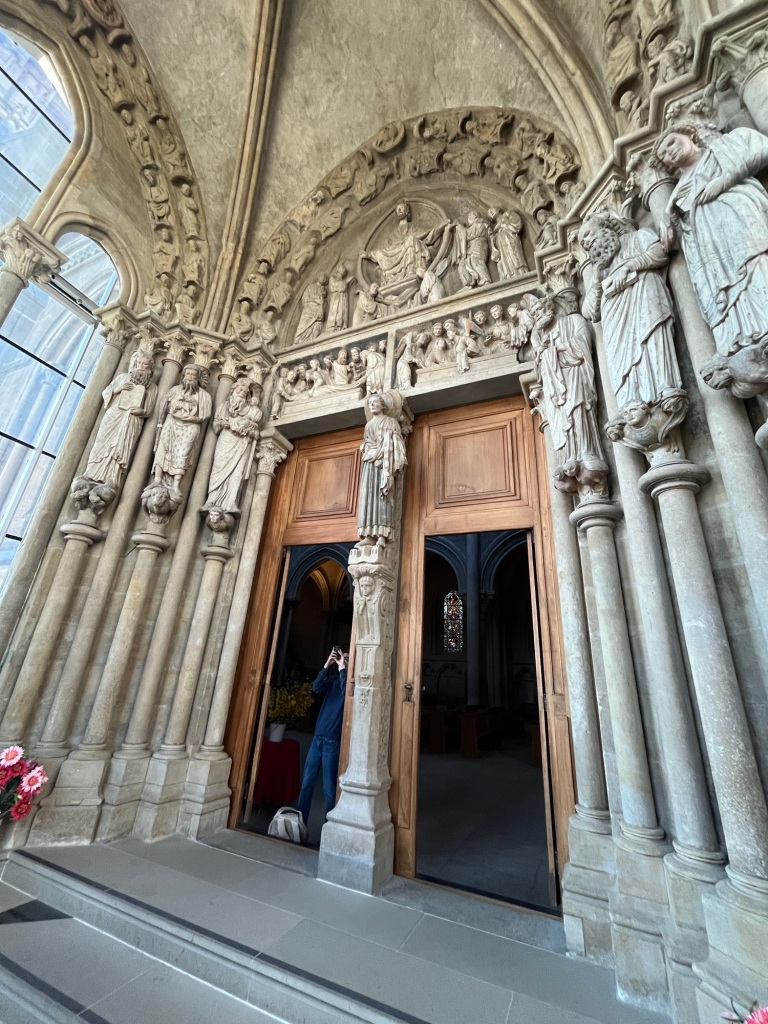
Figures of Patriarchs, Prophets, Apostles and Saints flanked the corners of the porch. A truly breathtaking medieval survival, and something I didn’t expect to see in Protestant Lausanne.
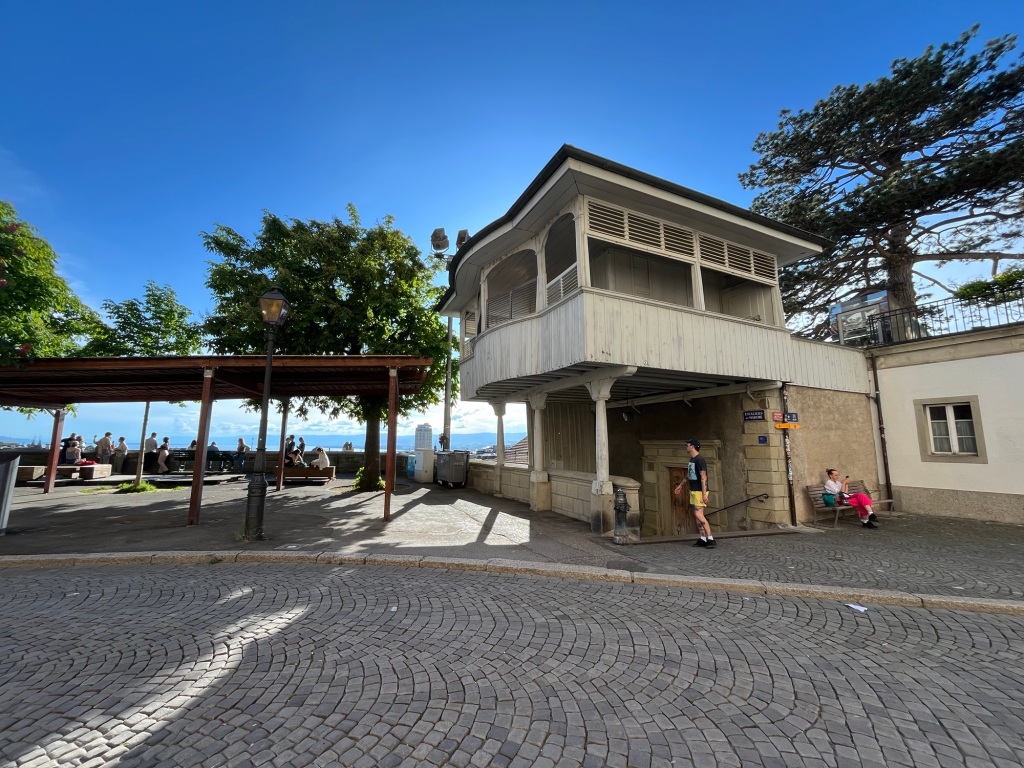
It was time to return home for dinner. I paused outside the cathedral to gaze out over the bustling city and still lake.
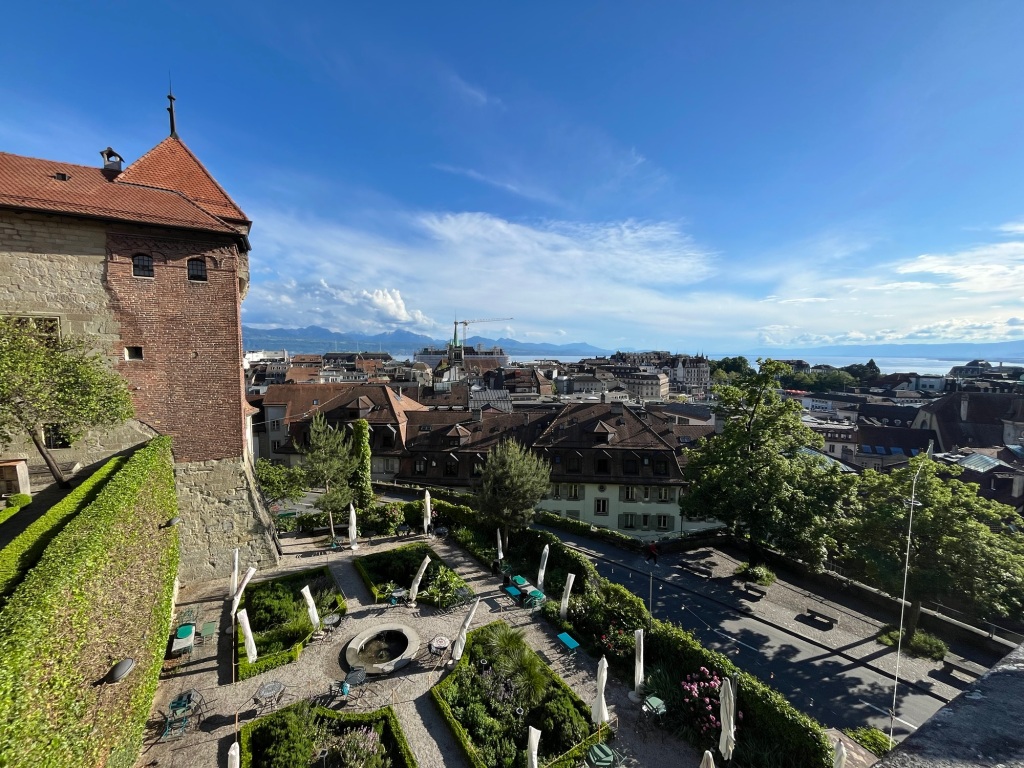
The place was abuzz with folk. As I sat there a woman in her twenties lit the most enormous spliff. Not quite Camberwell Carrot proportions, for those that remember the film Withnail & I but getting on that way. My preconceptions of Switzerland were certainly being challenged to tonight. First a breathtaking tableaux of the Virgin Mary and now a breathtaking joint. With what multitudes do we pilgrims contend!


 The Loafing Pilgrim
Leave a reply to mickymousecourse Cancel reply