Firstly, apologies to any readers who worry that something has happened to me if there isn’t a usual daily post. If I miss a post it is usually owing to a very long day and / or good hospitality. Yesterday featured both these occurrences!
But let me start the day before that. I had a very jolly rest day in Besançon.
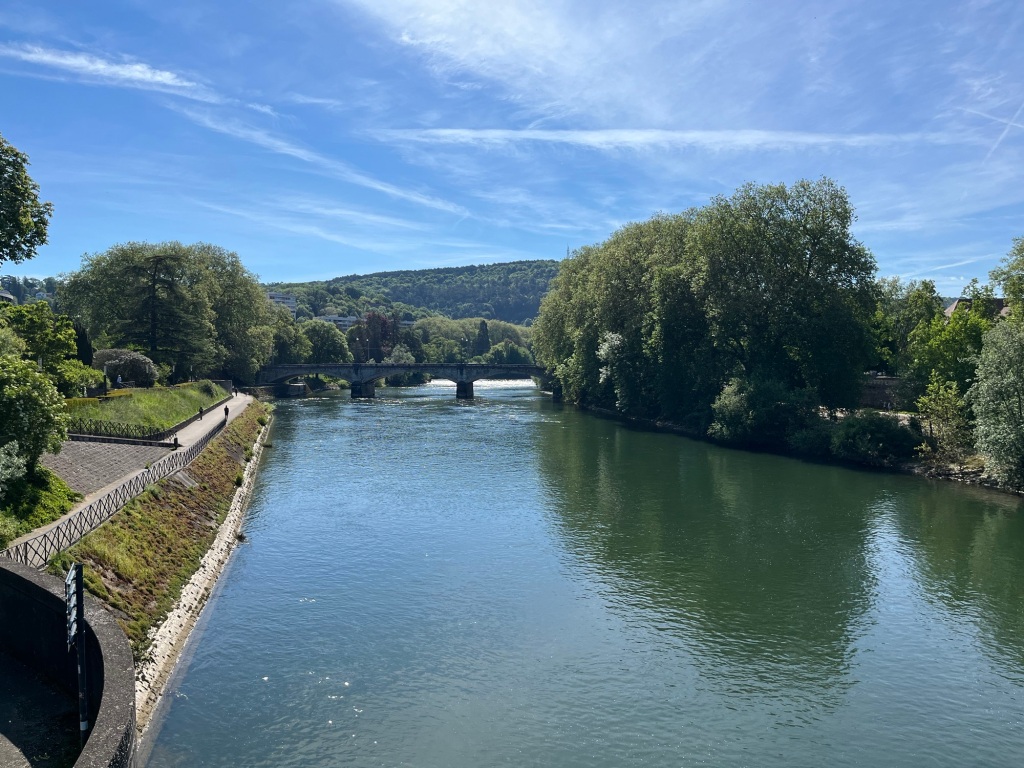
After a lazy start, I sauntered into town with a pain au raisin, and found a café for a coffee. The sun was already hot, and as I crossed the river Doubs, I counted myself glad not to be walking that day.
The old part of the city is enclosed on three sides by a giant loop of the river – the boucle or buckle as it’s known.
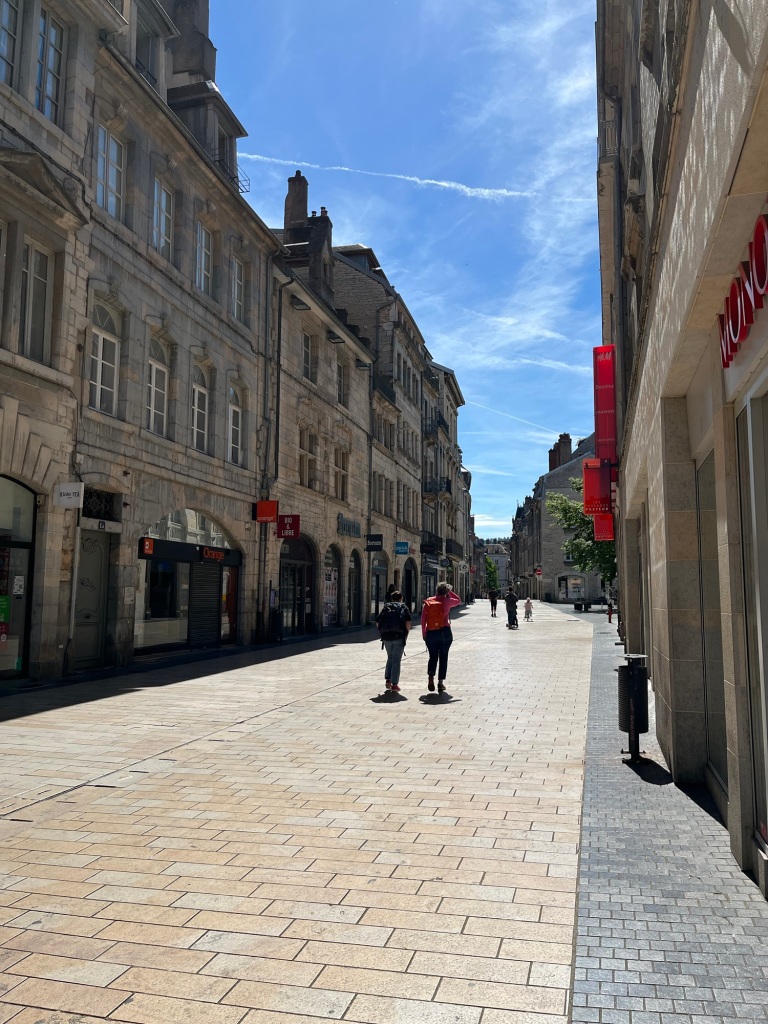
The Grande Rue runs through the centre up to the cathedral and the famous Porte Noir. There are a number of squares off this main thoroughfare, as well as museums, churches, shops and restaurants.
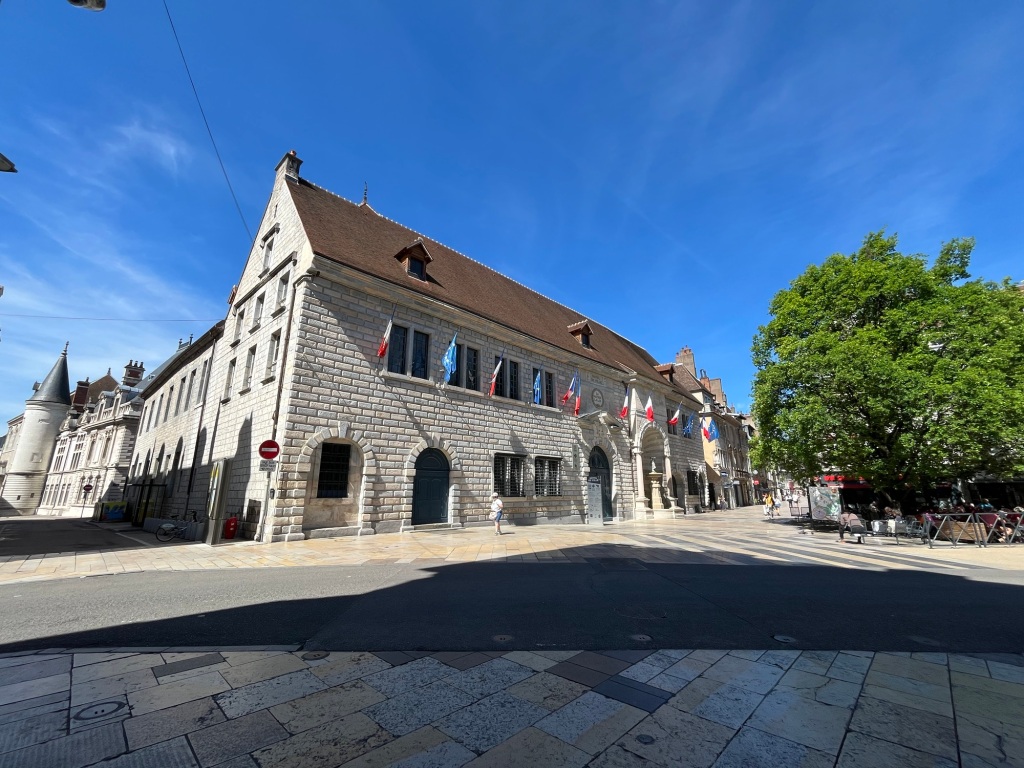
I loafed around for a bit, finding the tourist information office which was open until 1pm on a Sunday. I found it shut: no credential stamp there!
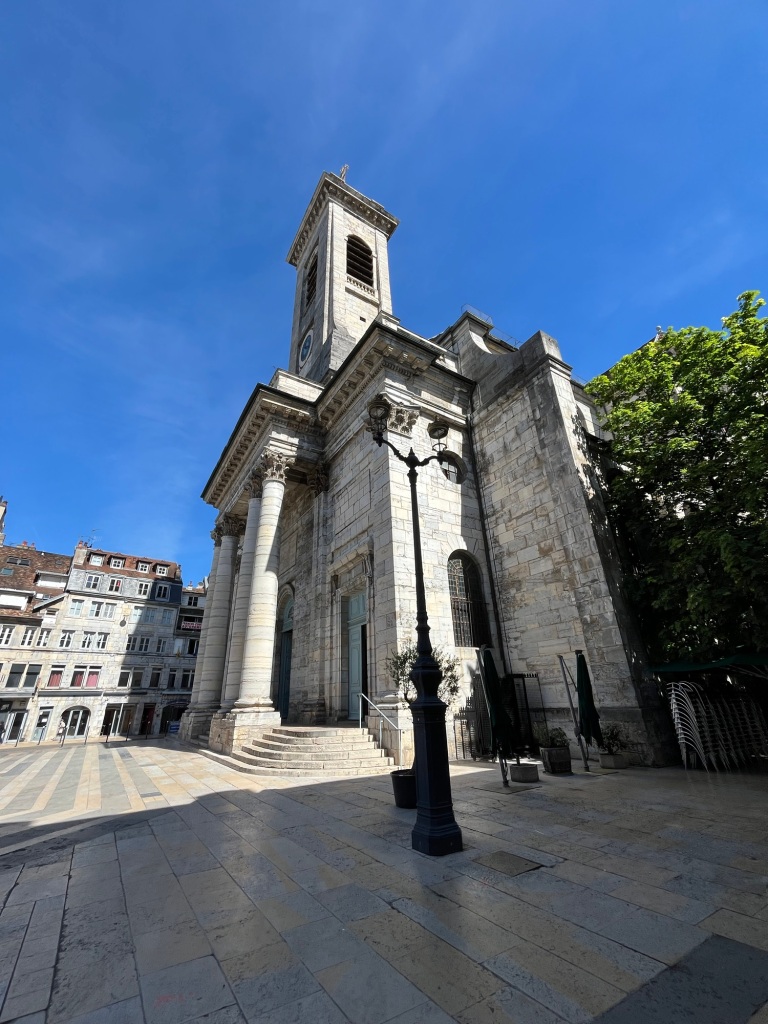
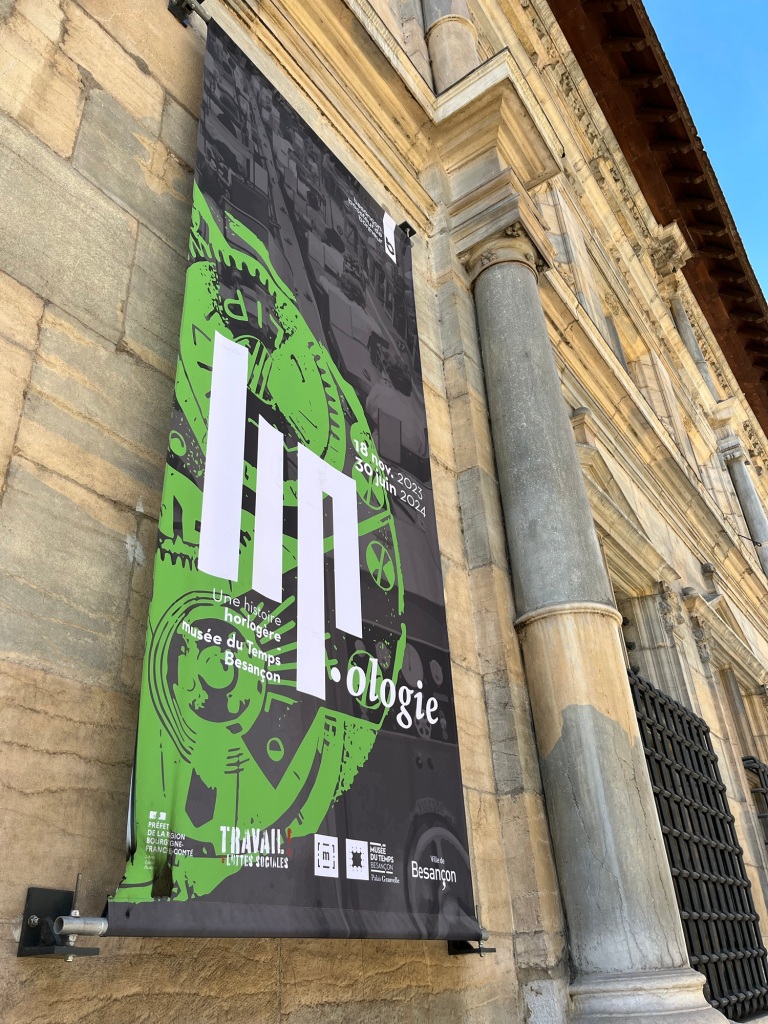
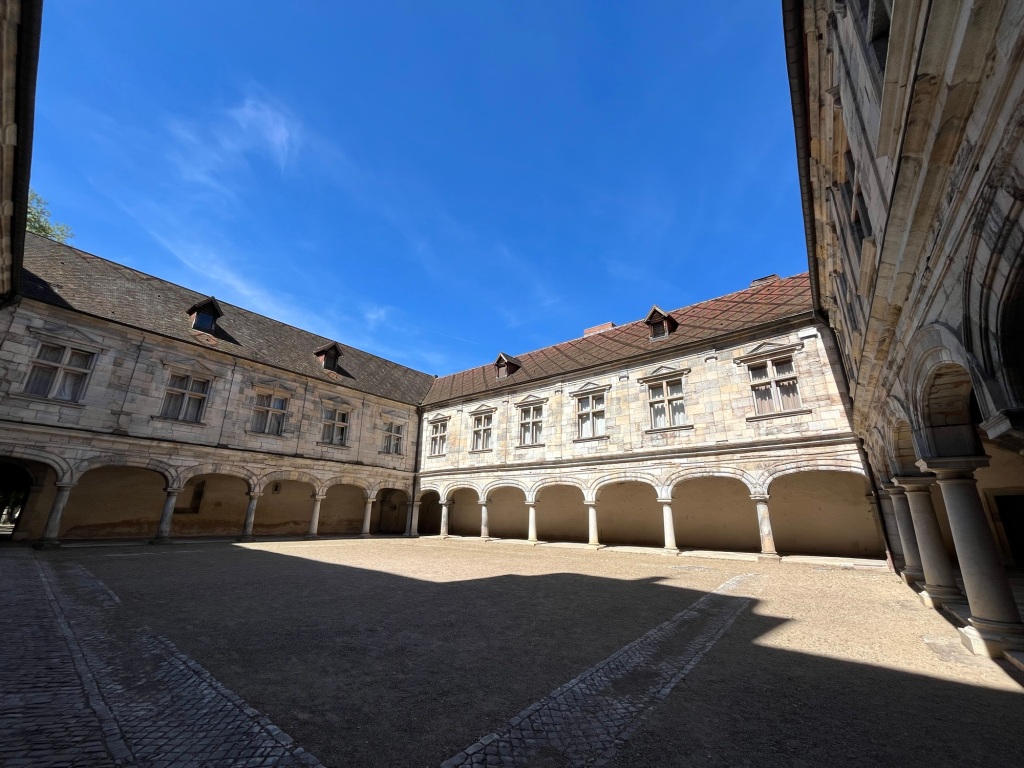
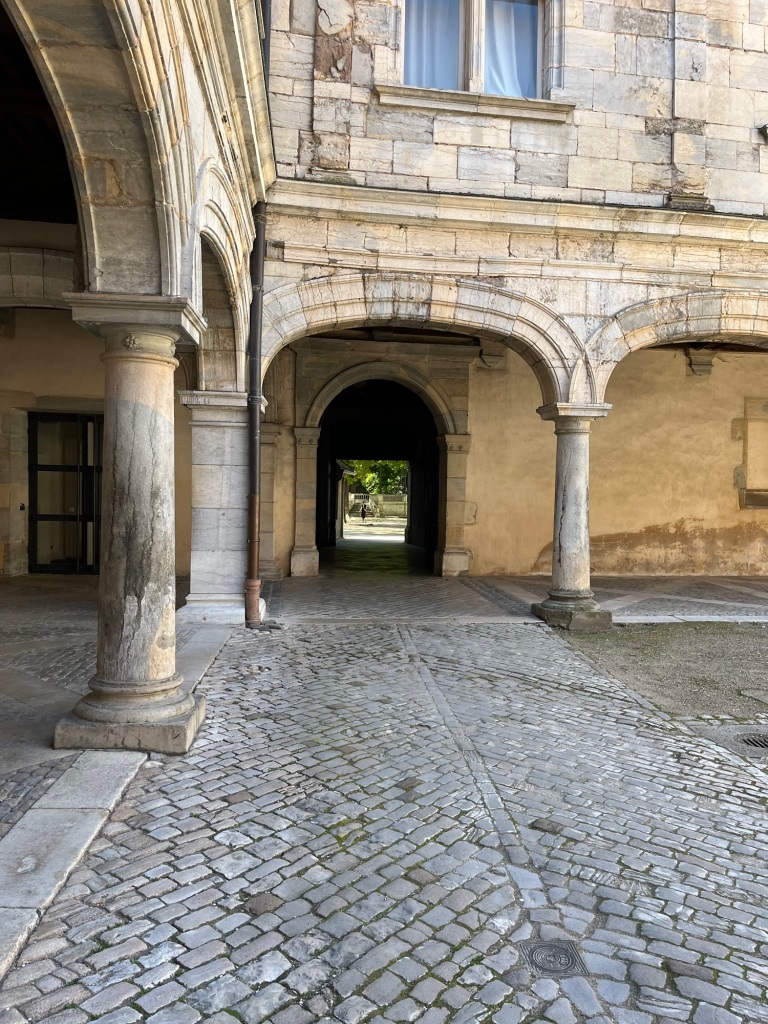
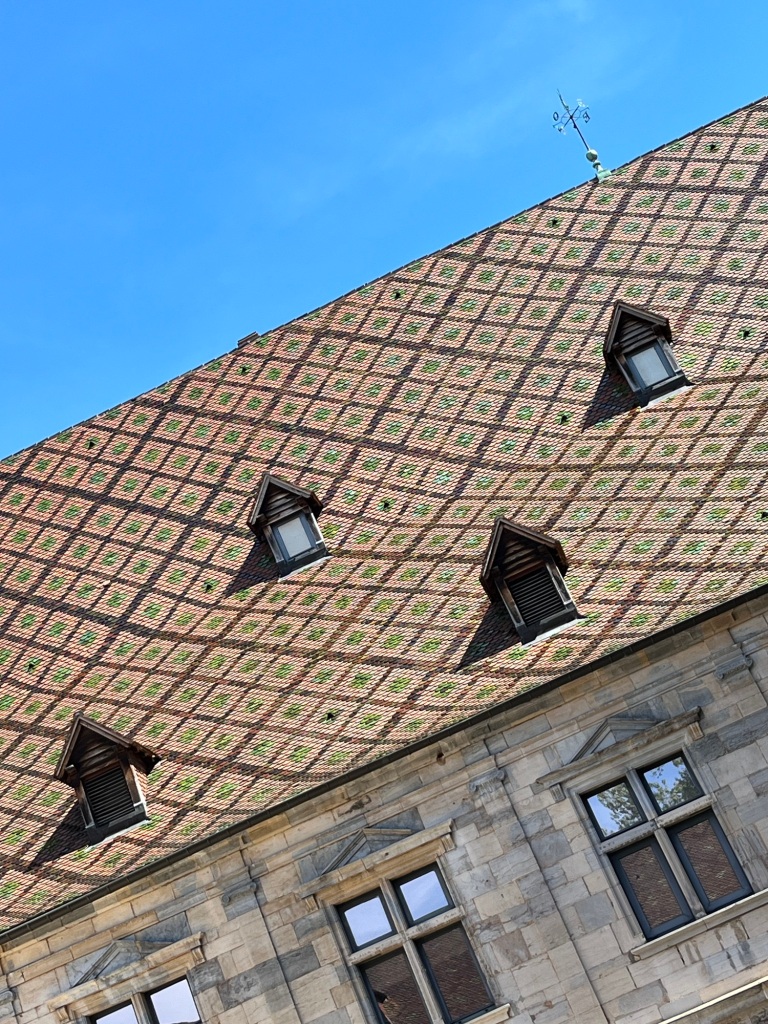
A little further up the Grande Rue was the Museum of Time. It would probably be more accurately described as the Museum of Timekeeping, but this is rather dull. Again, closed but housed around a wonderful 16th Century courtyard.
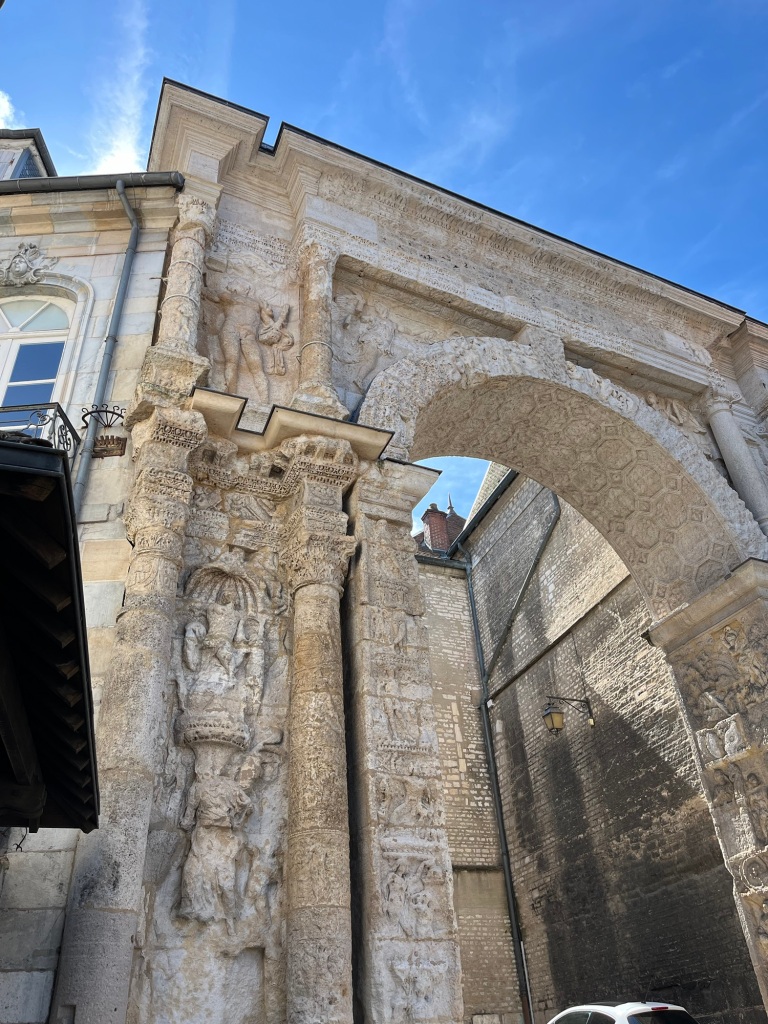
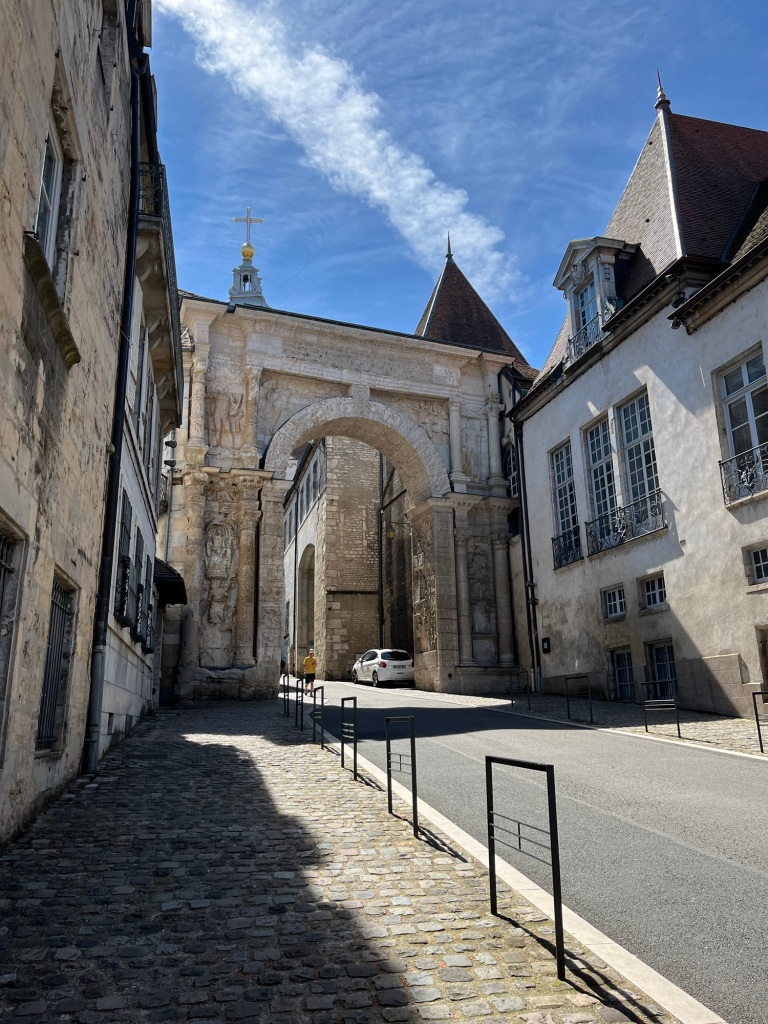
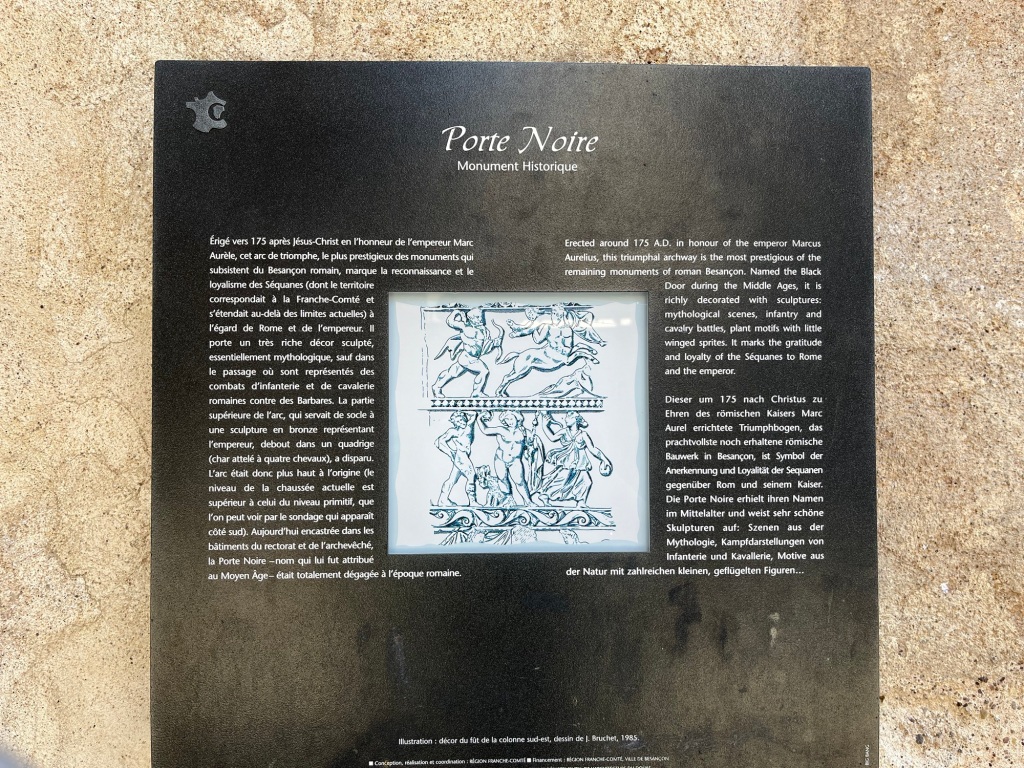
Further up I came to the Porte Noire, or Black Gate, which dates from a mind-boggling 174AD.
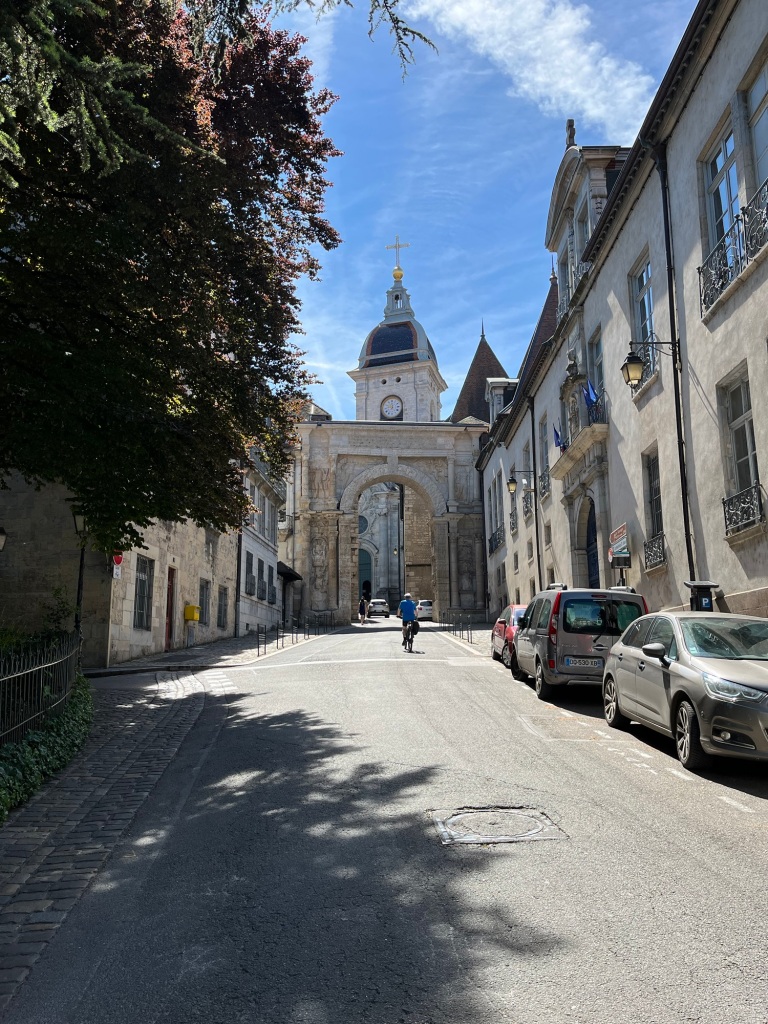
Erected in honour of Emperor Marcus Aurelius, it’s the finest remaining Roman monument in the city. It features wonderfully fine carving of mythical creatures, plants, battle scenes. It’s a real survivor!
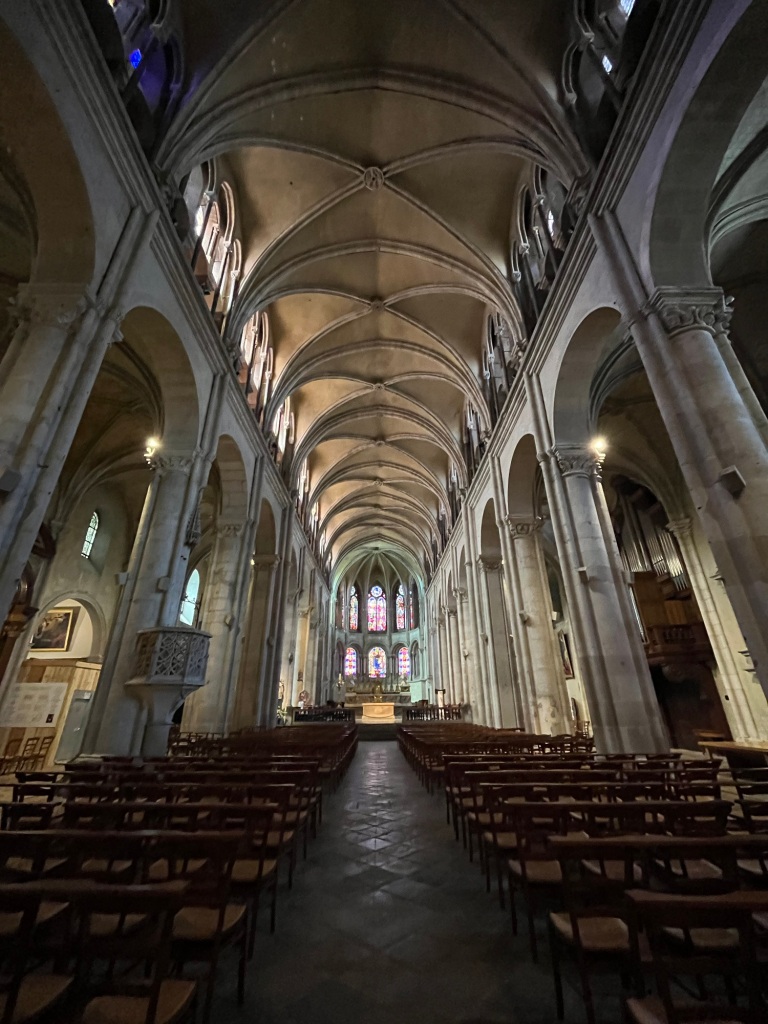
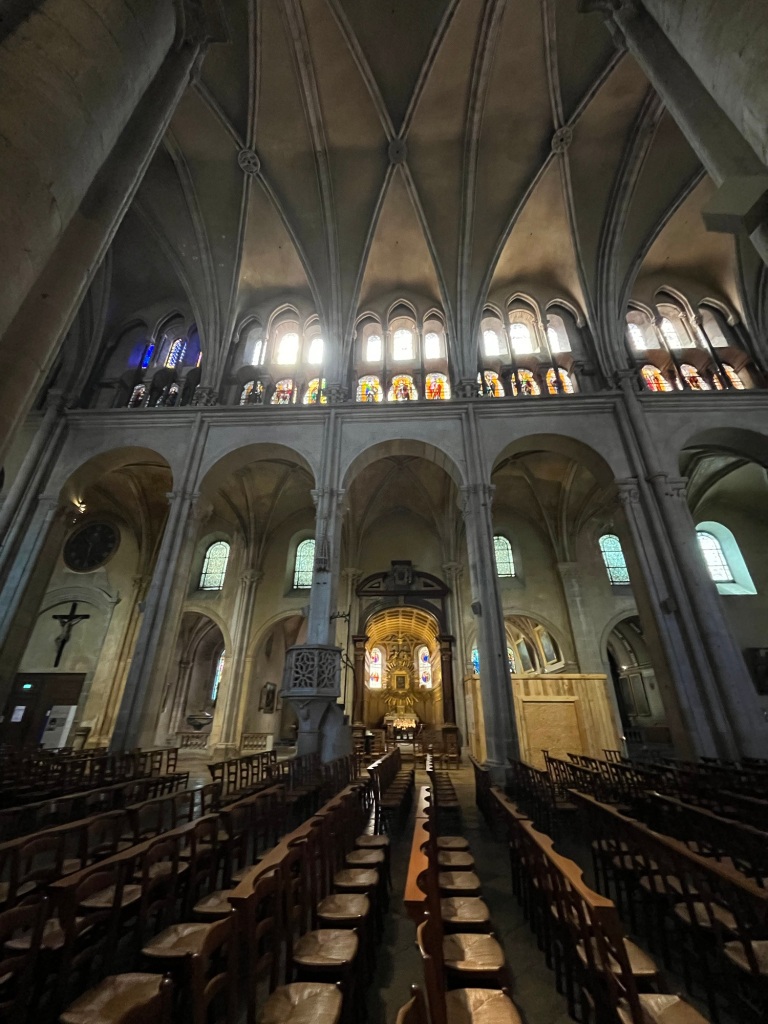
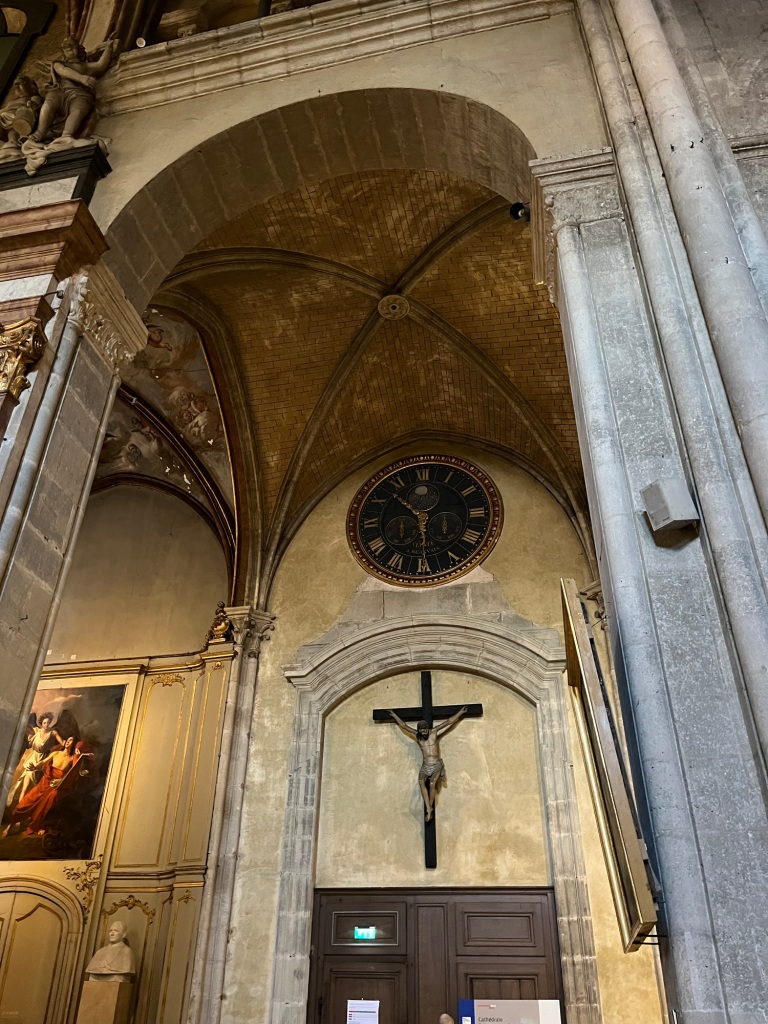
Beyond this is the Cathedral. I shall of course feature a myriad of pictures of this fine church, but there were a few things that stood out for me. Firstly there was an altar at both ends. At the west end, was an altar dedicated to Jerusalem with fine mosaic tiles.
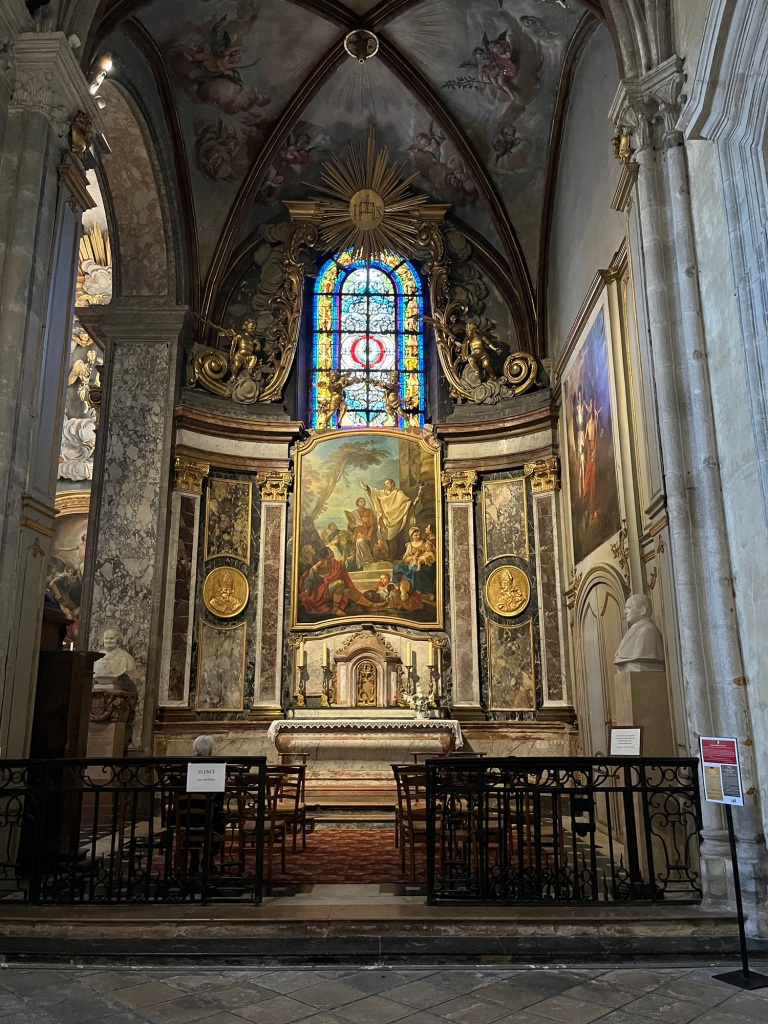
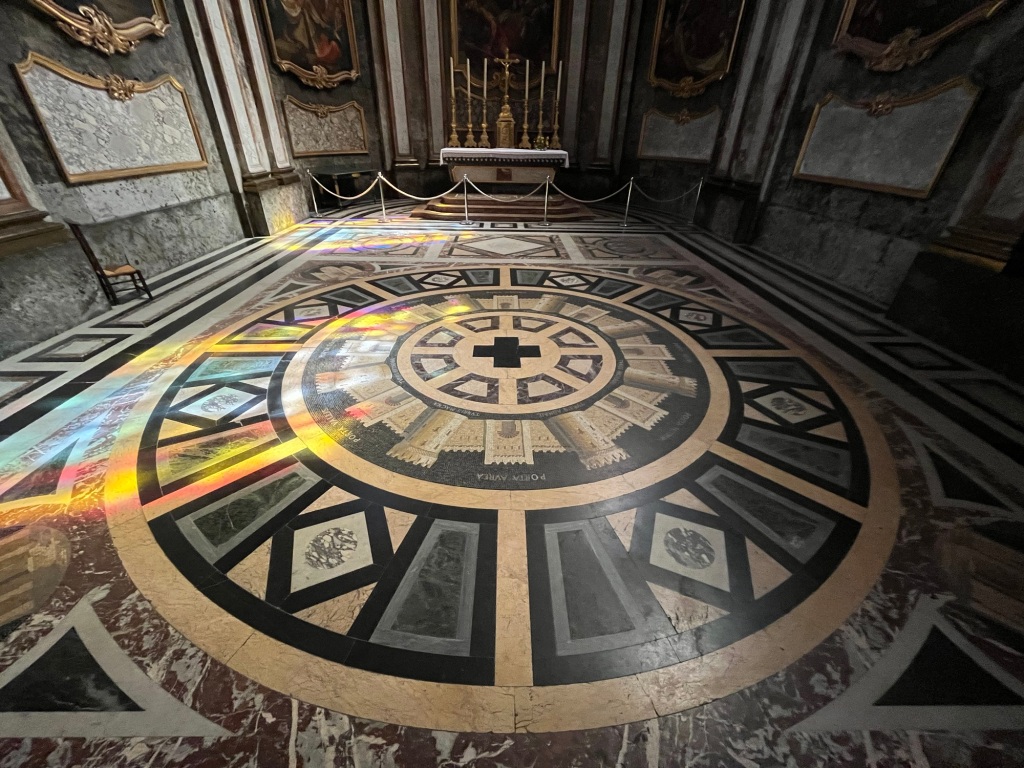
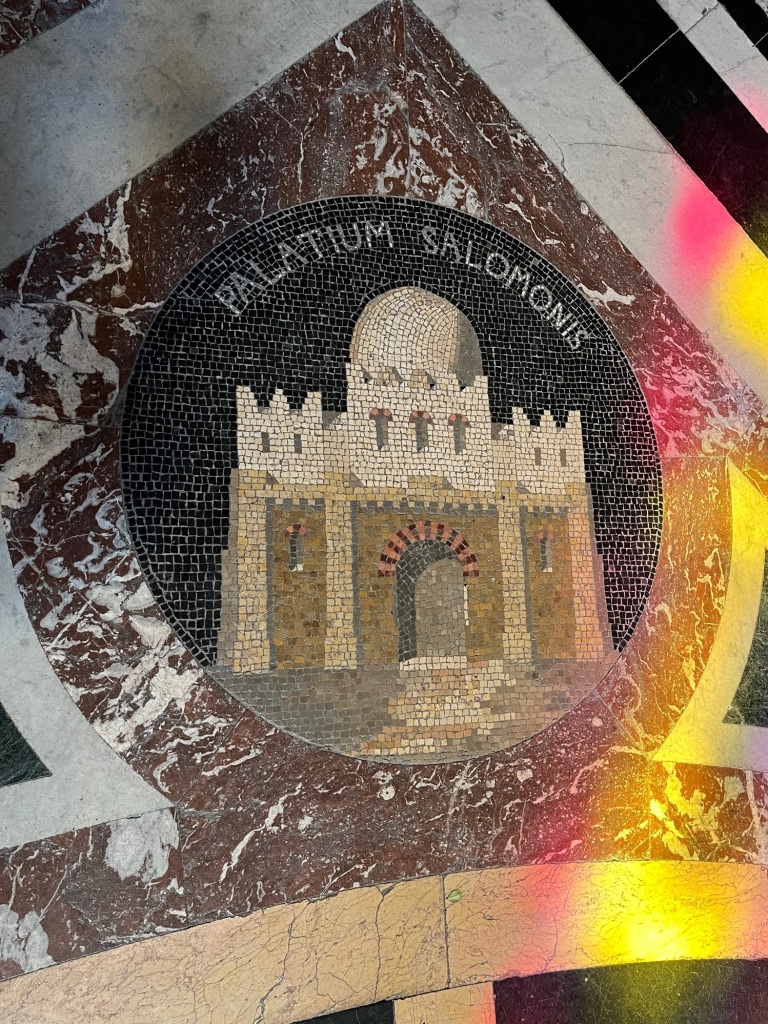
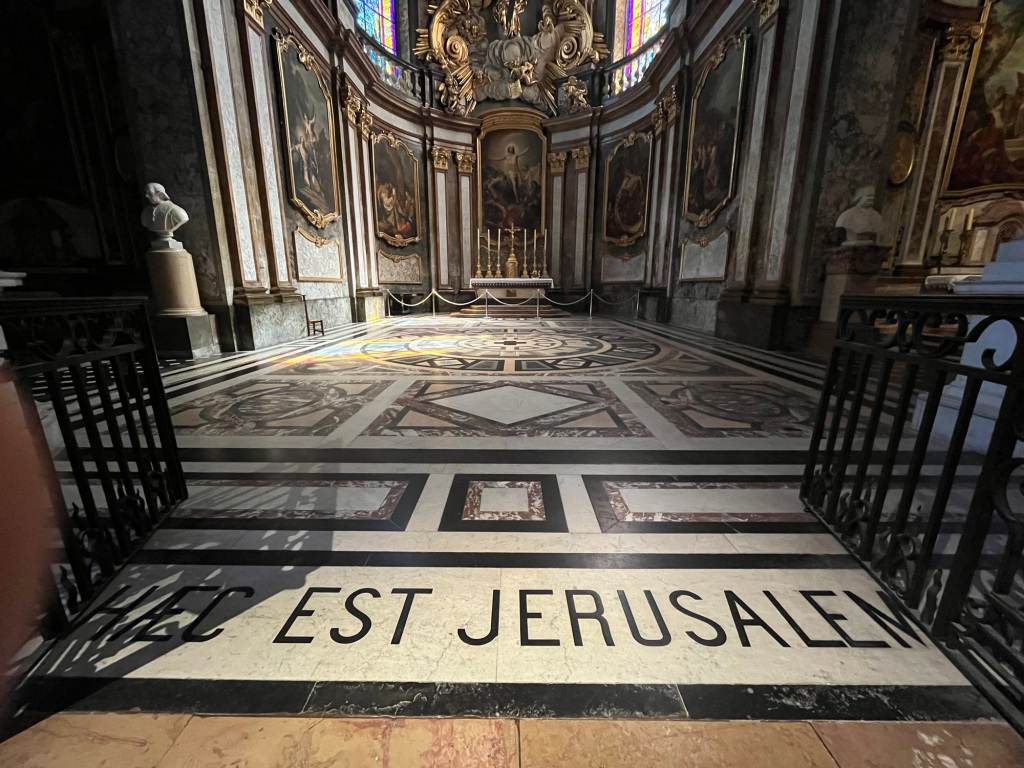
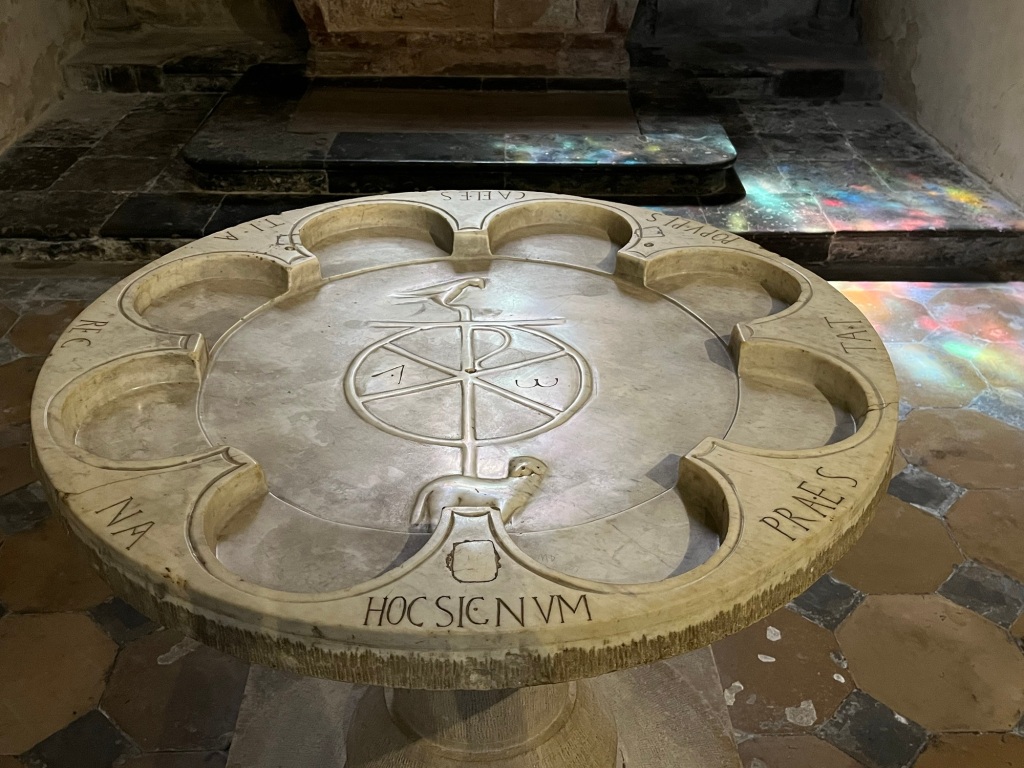
There was also a beautiful early carved circular altar, of the kind I’ve never seen before. One imagines the people stood around it. This marble altar is thought to date from the 11th Century.
Here are a few more pictures of the cathedral.
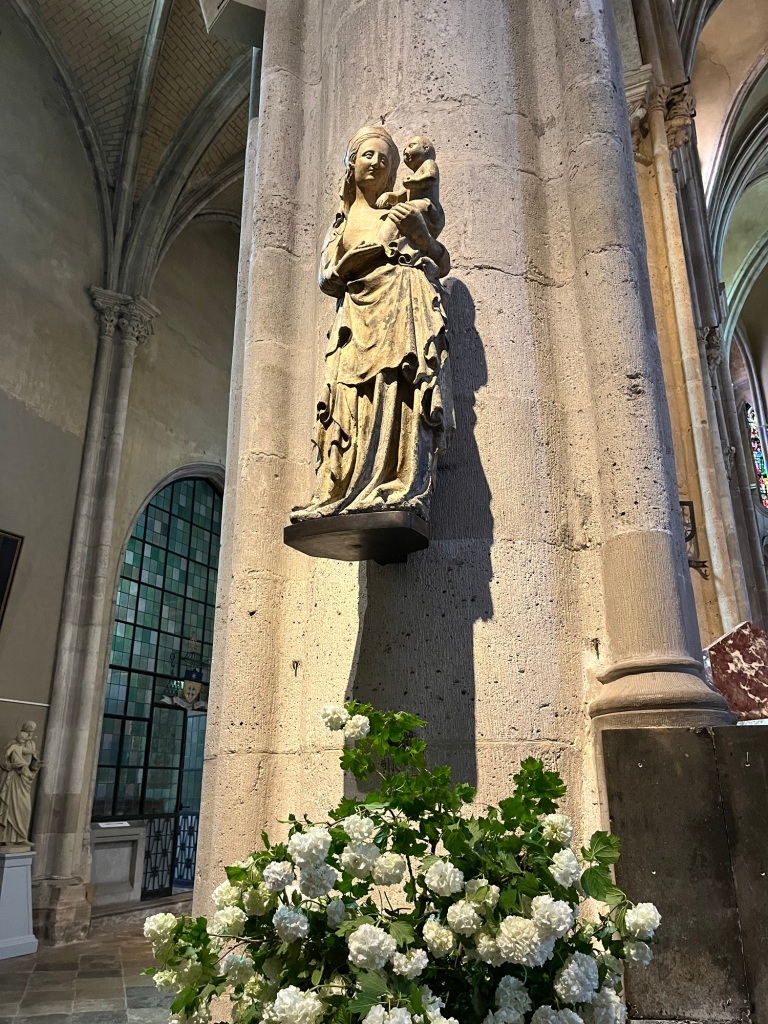
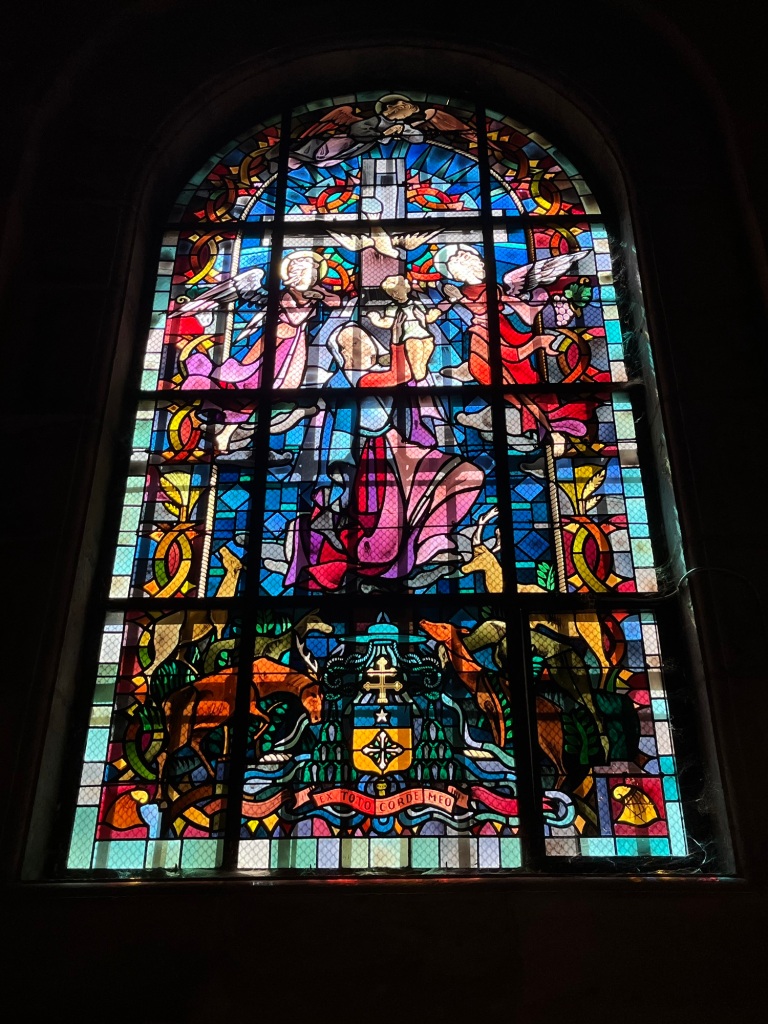
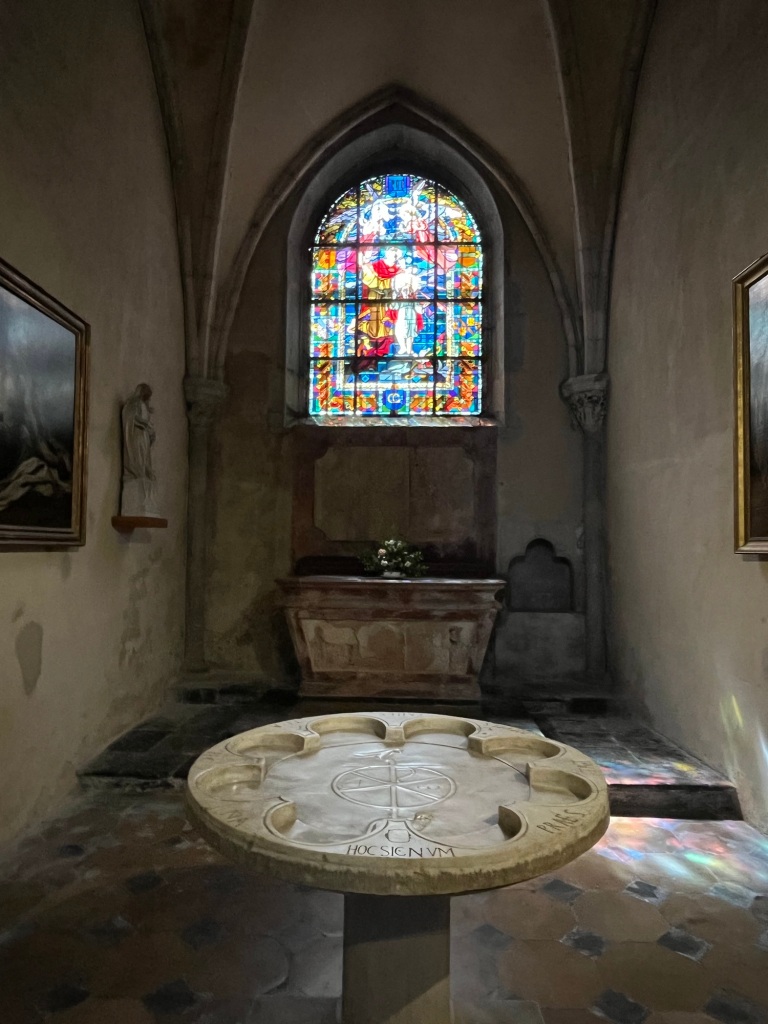
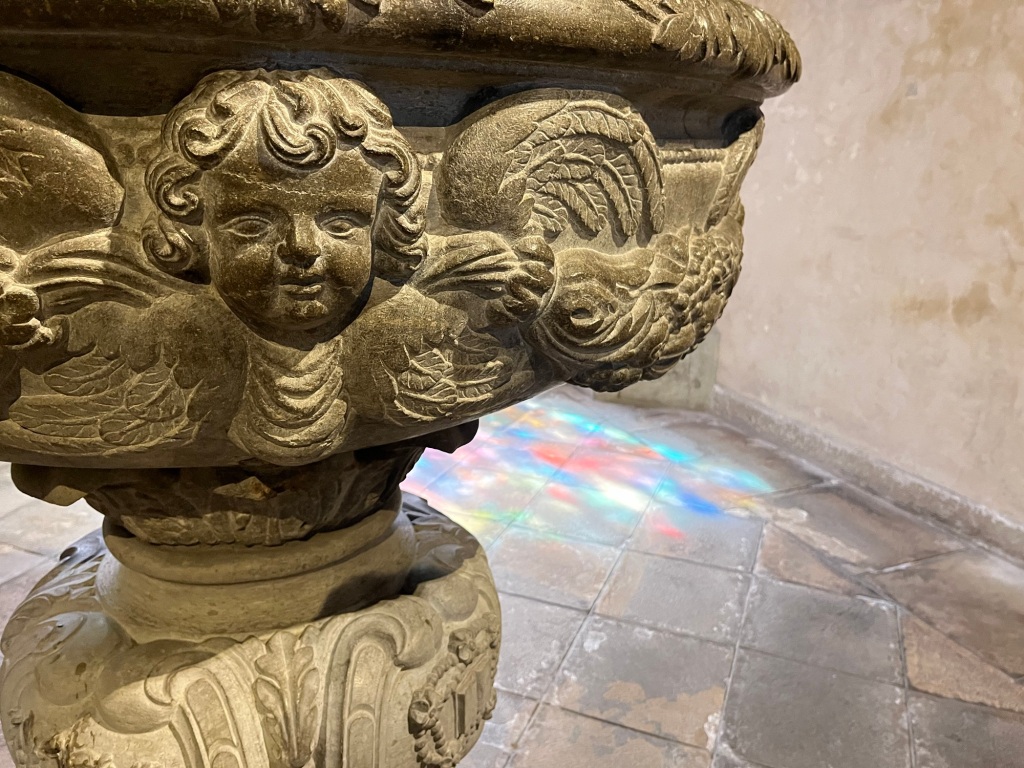
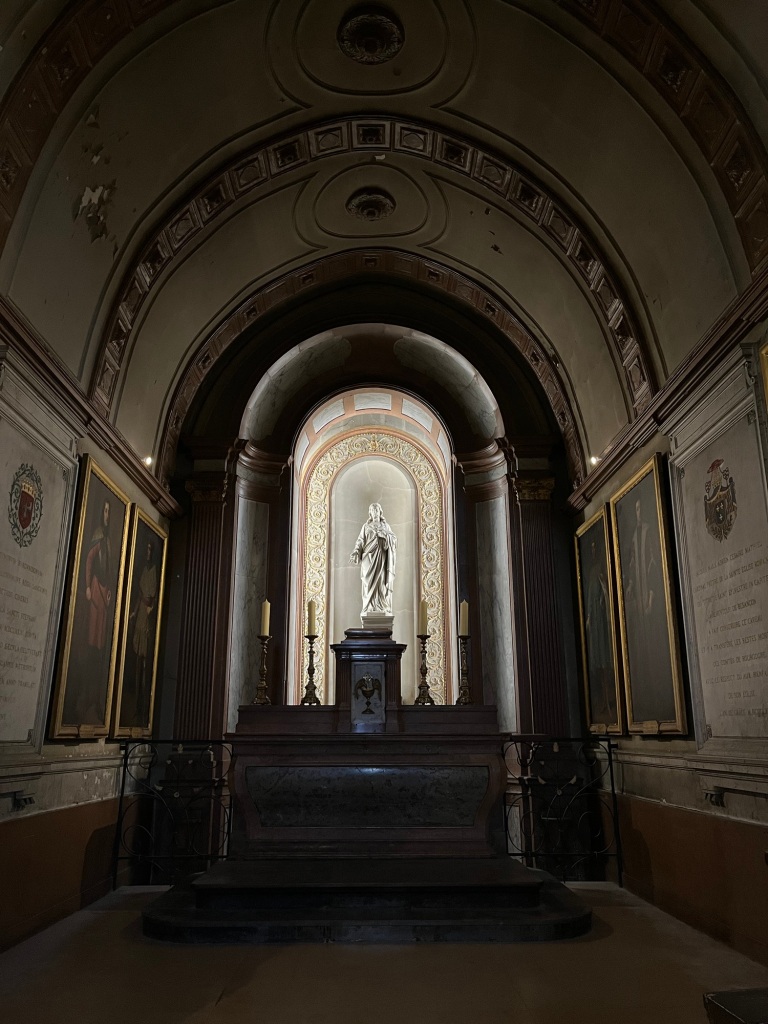
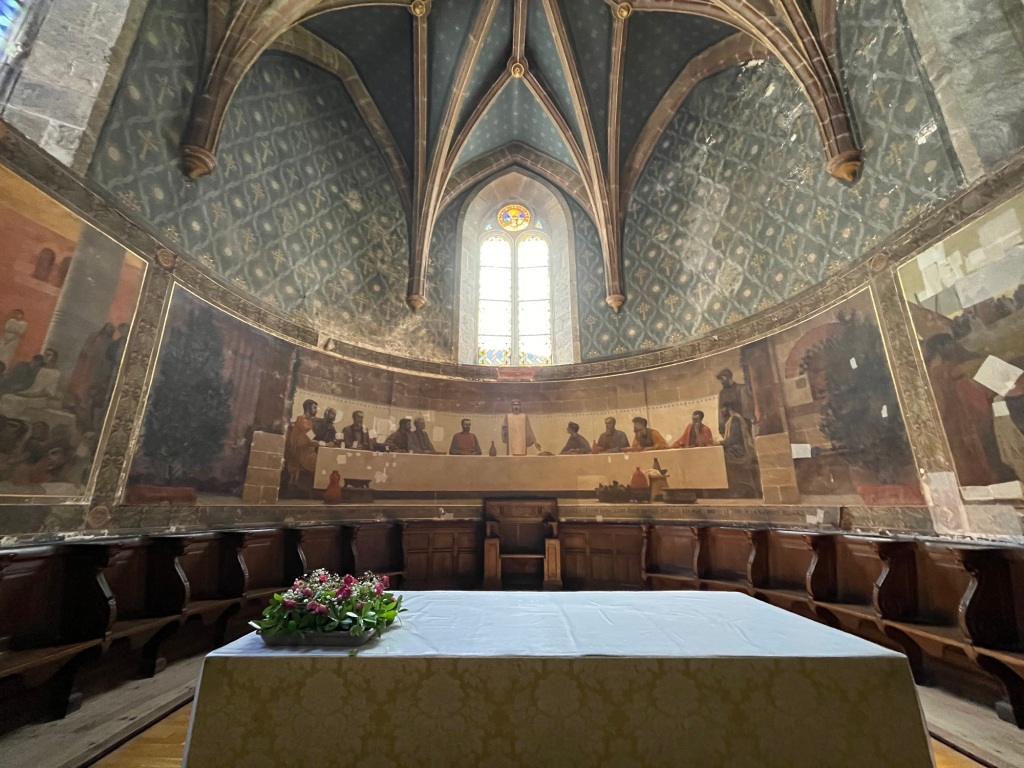
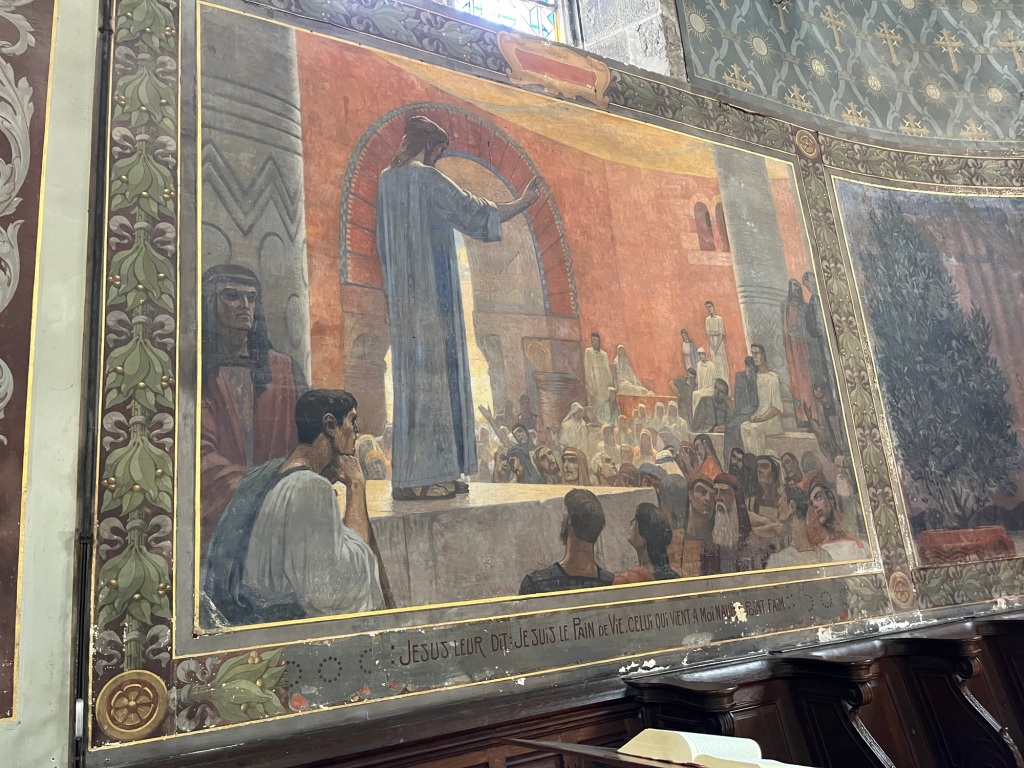
I splashed out on a nine day candle and prayed for my remaining journey. It should burn for the rest of the time I am on the Via.
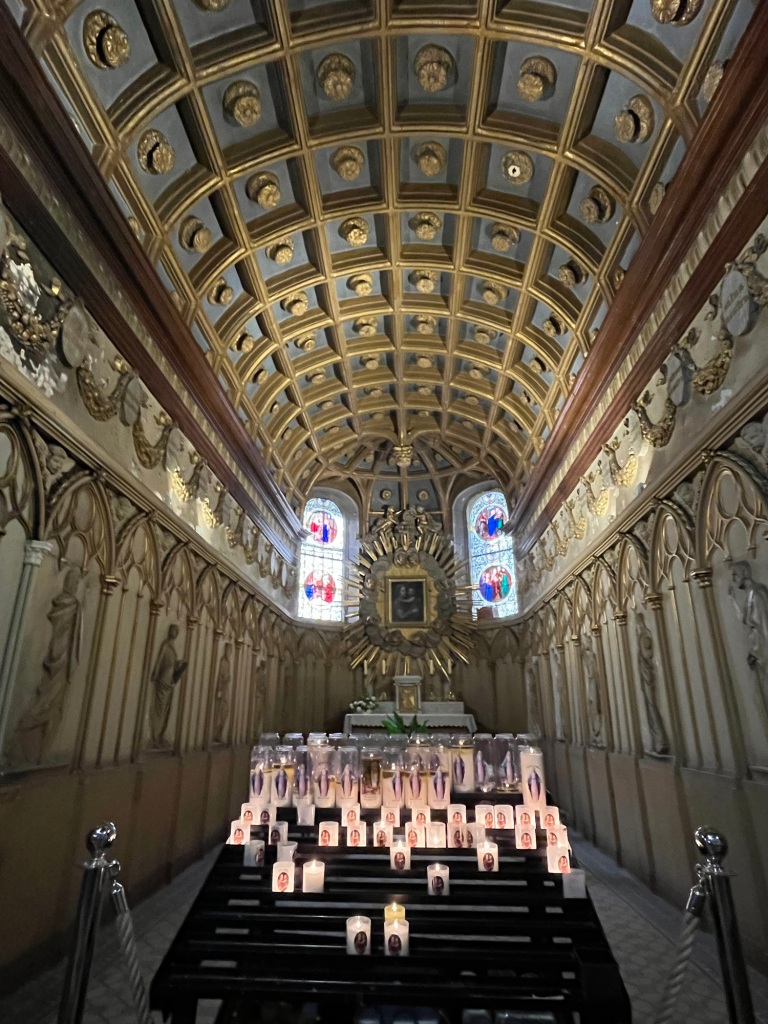
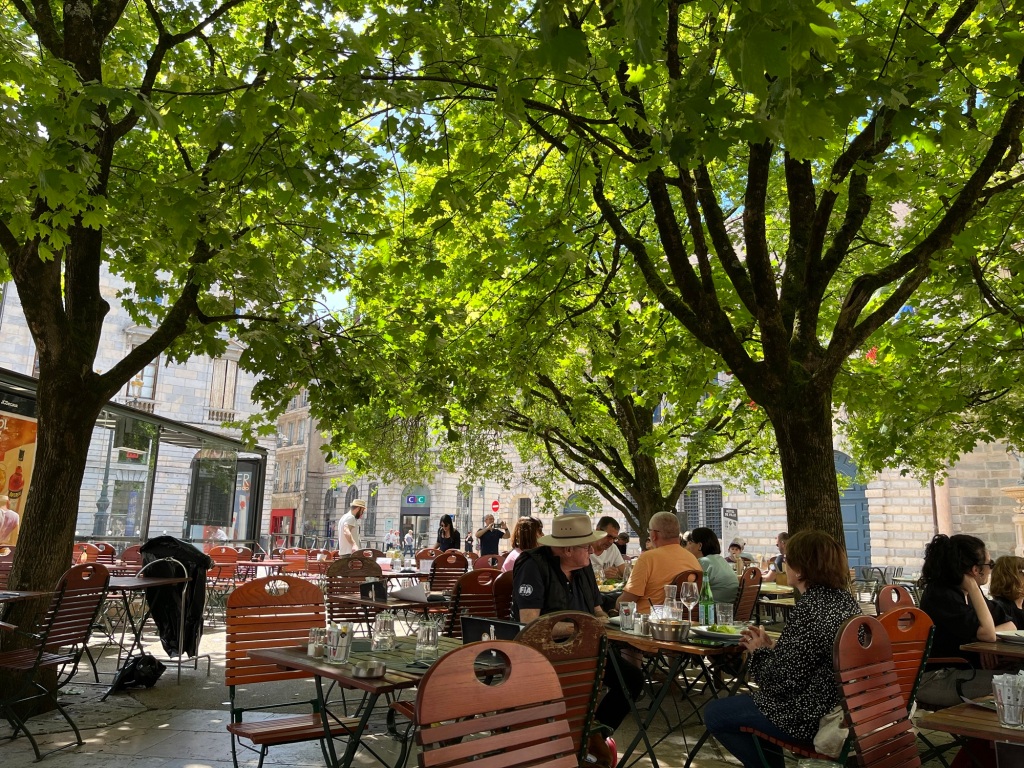
It was now lunchtime, so I headed back down the Grande Rue and installed myself in the Place du 8 Septembre. In a master stroke of upselling, the waiter told me that my chosen beer (the suitably named Paix Dieu) was unavailable and suggested an even stronger beer and brought me a large glass for good measure.
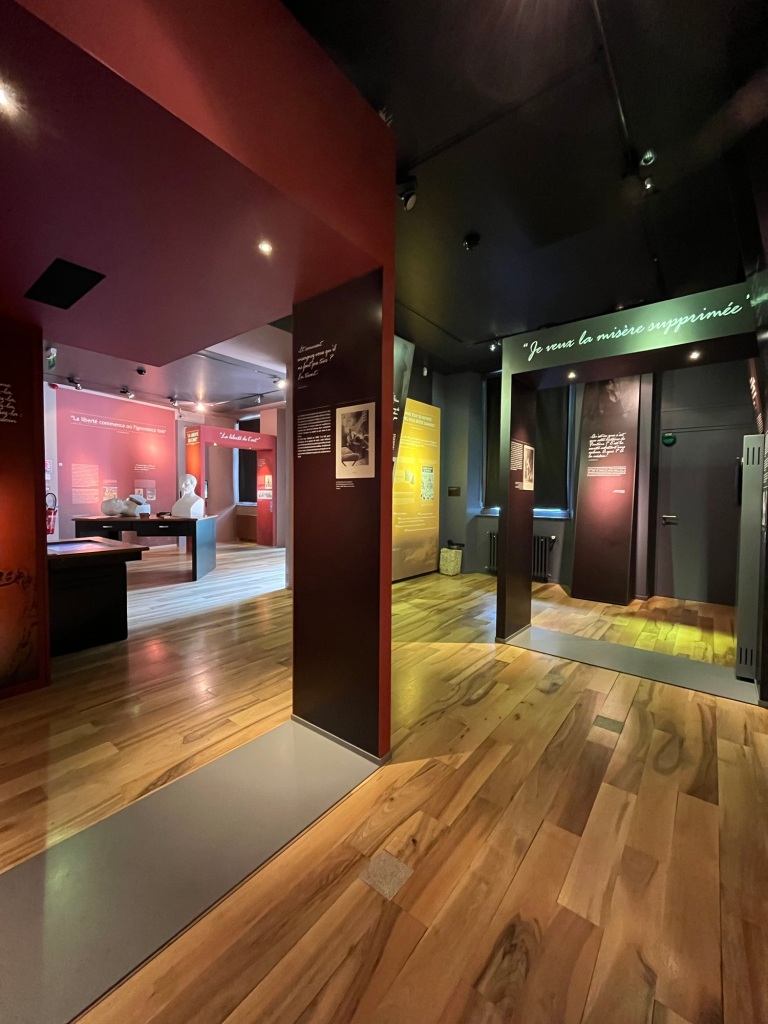
The next few hours passed in a hazy blur, however I did manage to visit the Victor Hugo Birthplace Museum. The radical author and rights campaigner was born within a stones through of the Porte Noir. As indeed were the Lumiere Brothers, who in a perfect case of nominative determinism, developed some of the earliest cinema equipment.
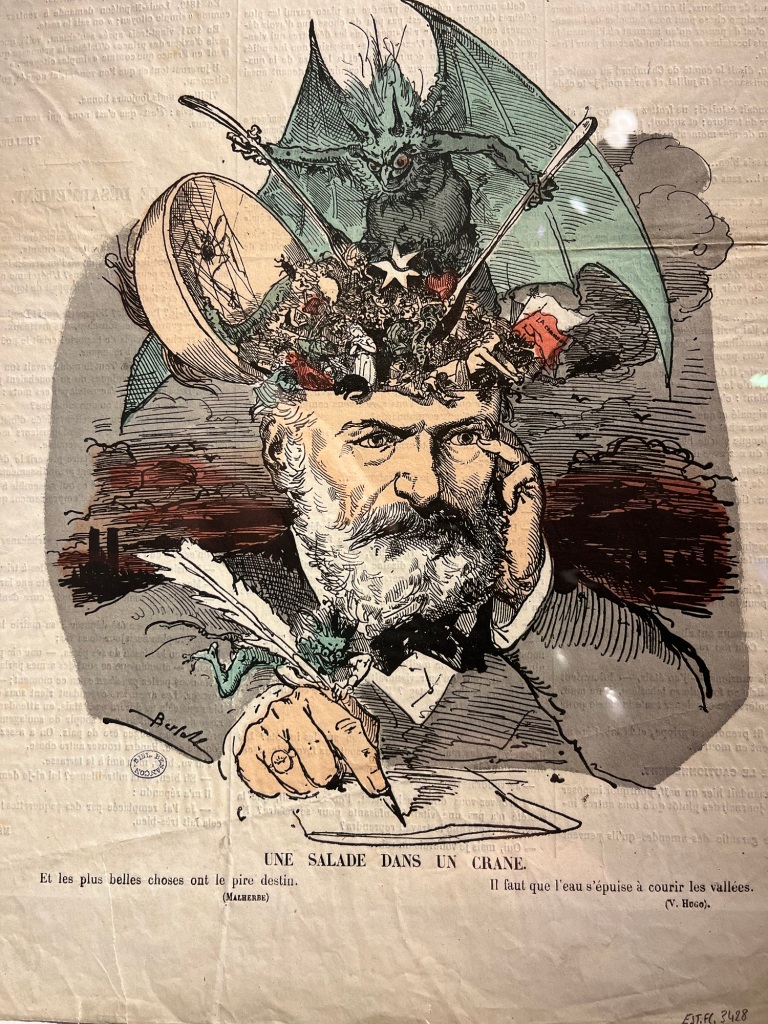
In addition to getting a stamp for my credential, I learned that Victor Hugo had written Les Miserables while in exile on Guernsey, having refused to support the latest Napoleon to declare himself Emperor. It was a fascinating little museum – and free on Sundays!
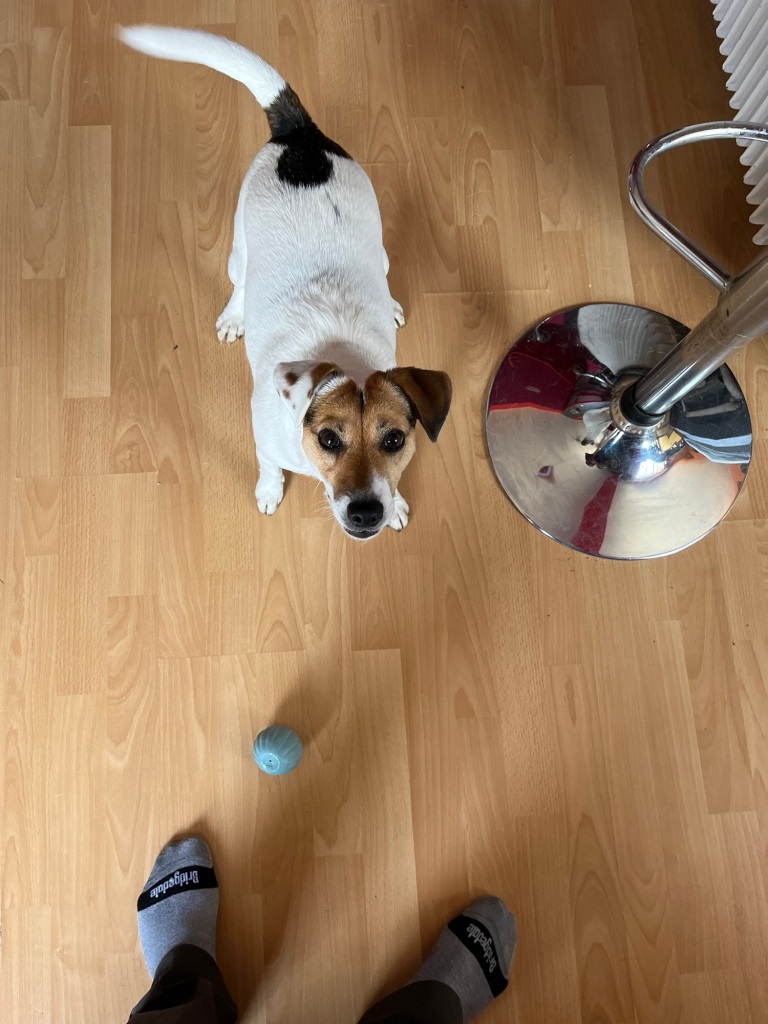
I felt I had had enough culture for one day, and felt a period of horizontal contemplation coming on. I found my way home, communed with my host’s spirited Jack Russell Rebelle and prepared for the following day.
The following day felt a little cooler, but was still sunny.
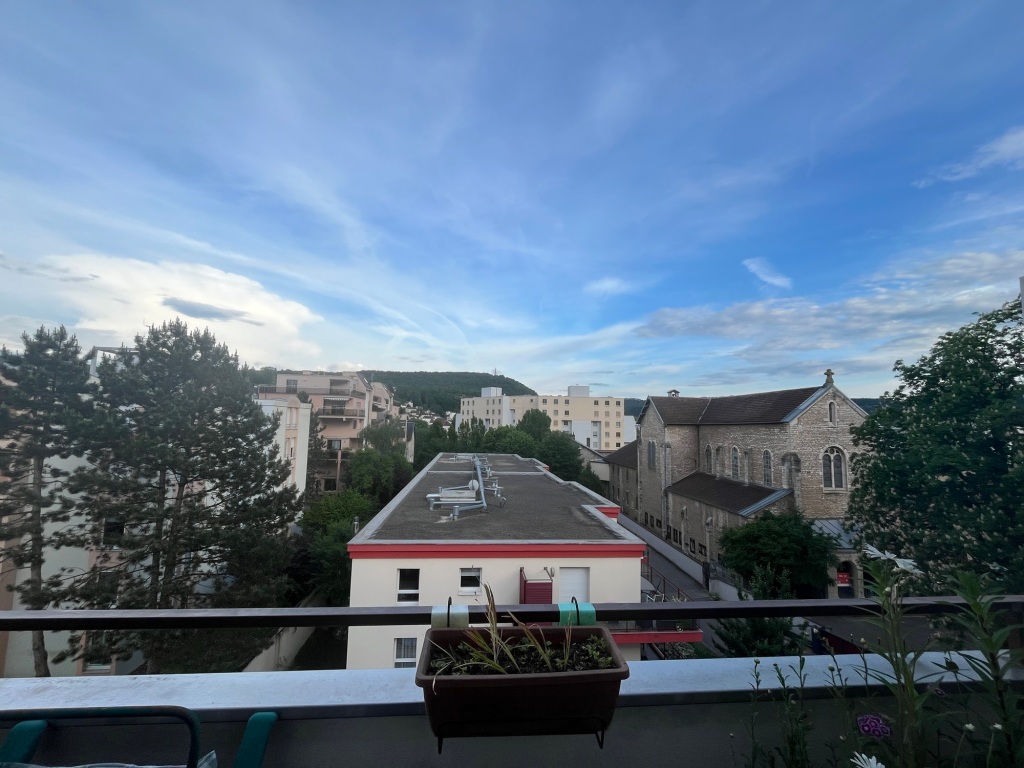
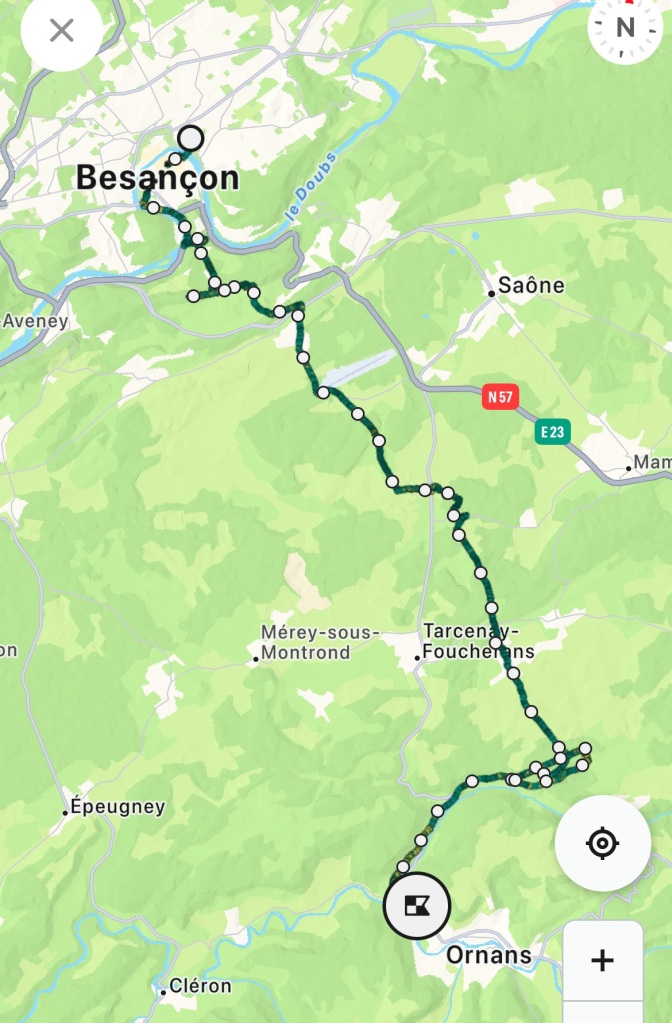
Paul Chinn, in his Lightfoot Guide for this section, comments that the steep climb out of Besançon would be very challenging for those carrying heavy packs, and suggests that a bus can be caught up to the Monument to the Liberation at the top or to Veze. This sounded like a good idea to me, and there was a bus at 9.30am. With this in mind, I felt that I could press on to the town of Ornans, which would be about 27km walk from the top of the ridge.
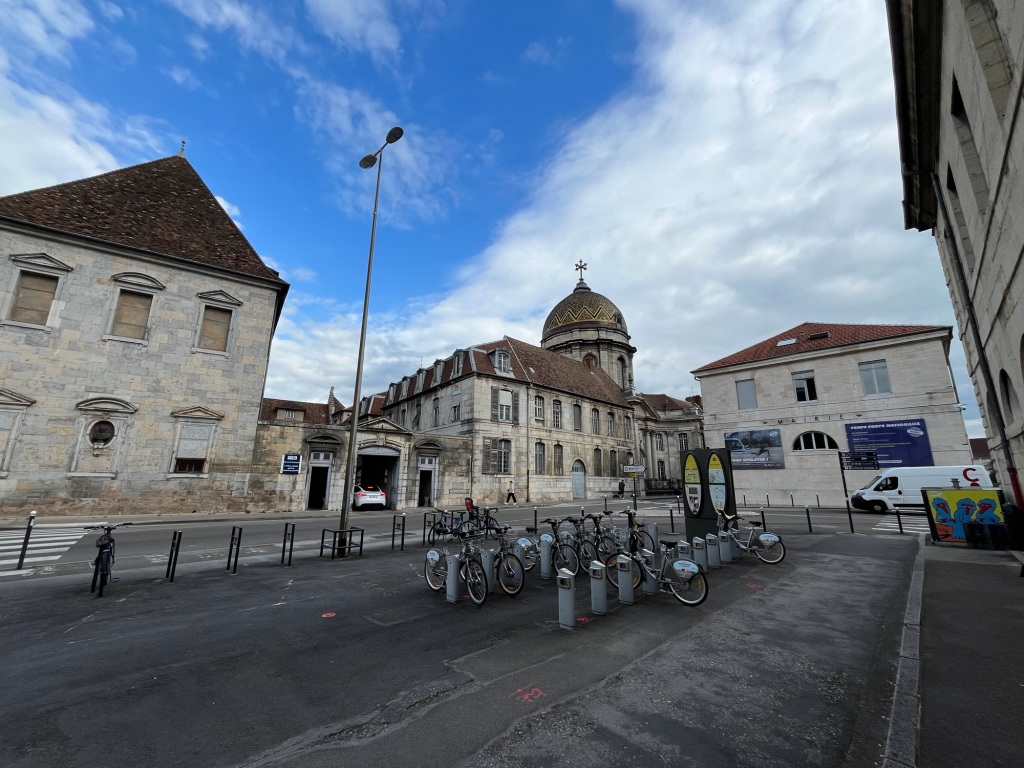
So it was that I stood at the bus stop, opposite Chamars Park and waited to be whisked away. Whisked away, I was not. At 9.45am the other gentleman waiting for the bus rang the helpline. Helpfully for me, he repeated everything he was told. Unhelpfully at the crux of the conversation a loud lorry drove past and I didn’t catch what was said. With a sigh, the man strode off before I could ask him what was happening. However, if the bus was on its way he would surely have waited, I told myself.
So with a slight sense of foreboding that I had wasted nearly two hours walking time, I set out to do the climb that I knew to be “very challenging.”
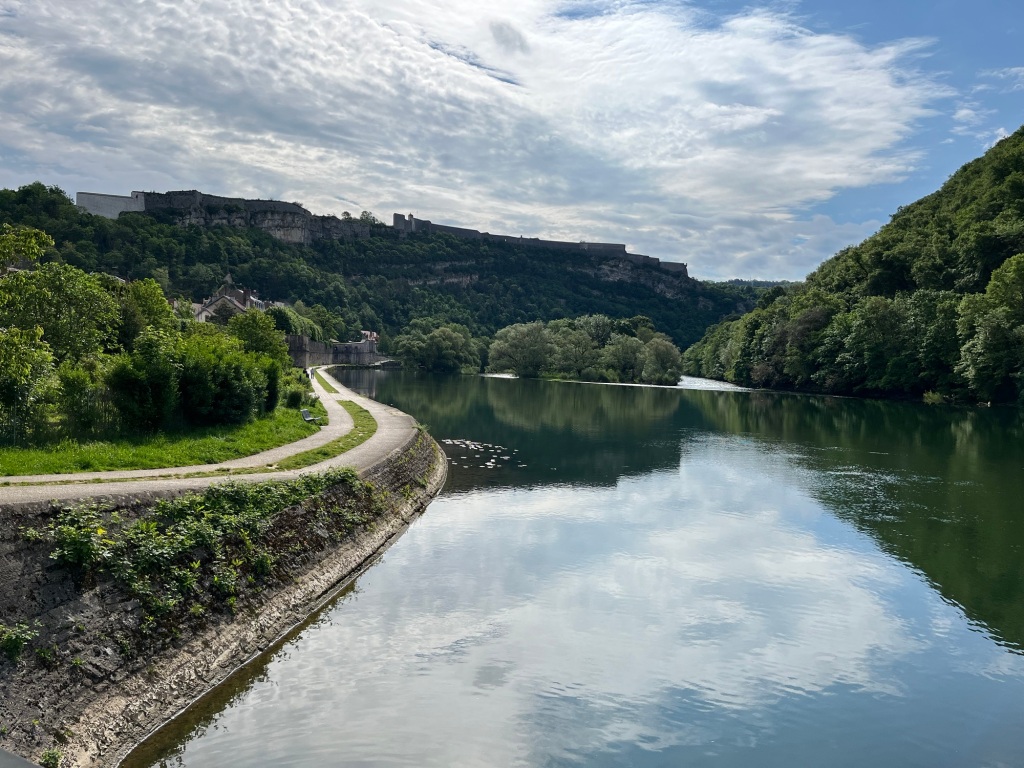
In truth, I was glad not to have missed this section. The water park, the citadel dominating the scene. As the large river meander continued, a river gorge opened up, not dissimilar to the Wye at Symonds Yat.
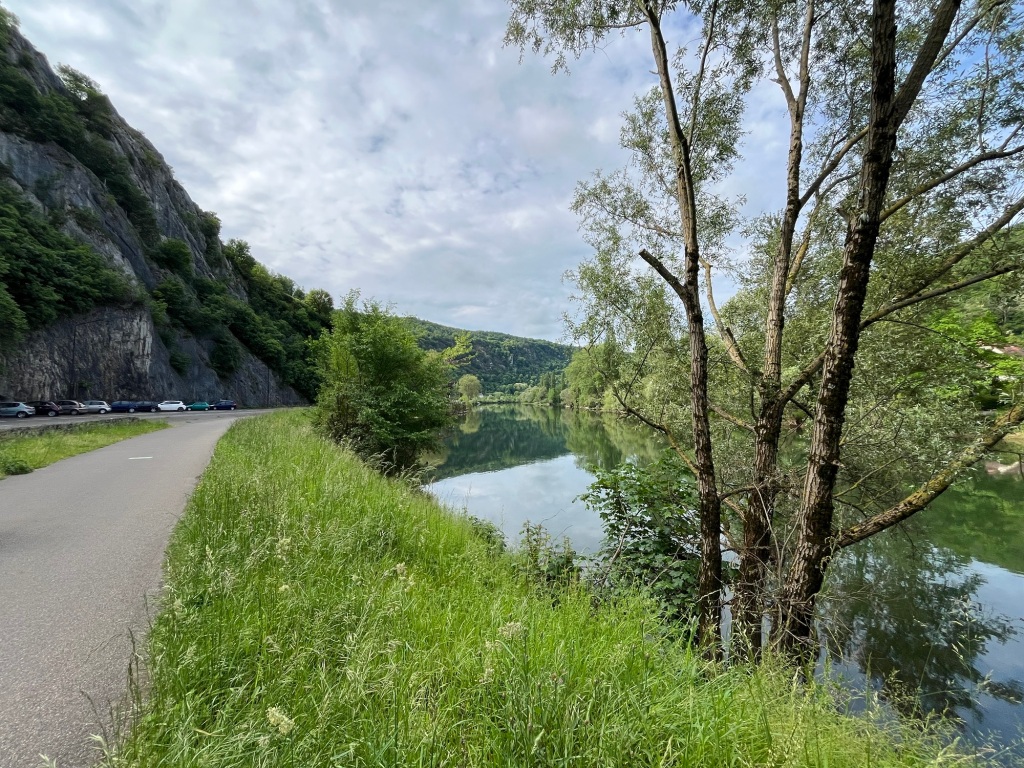
Yes, the climb was challenging. Steps to begin with, then some road sections and more steep paths through woodland.
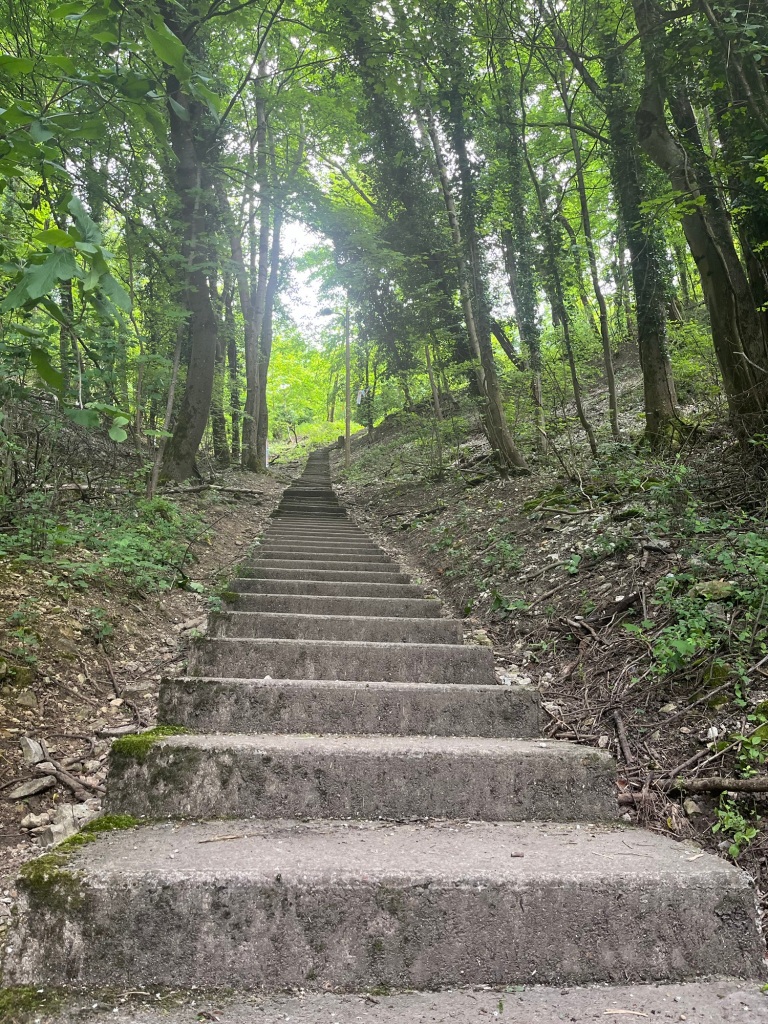
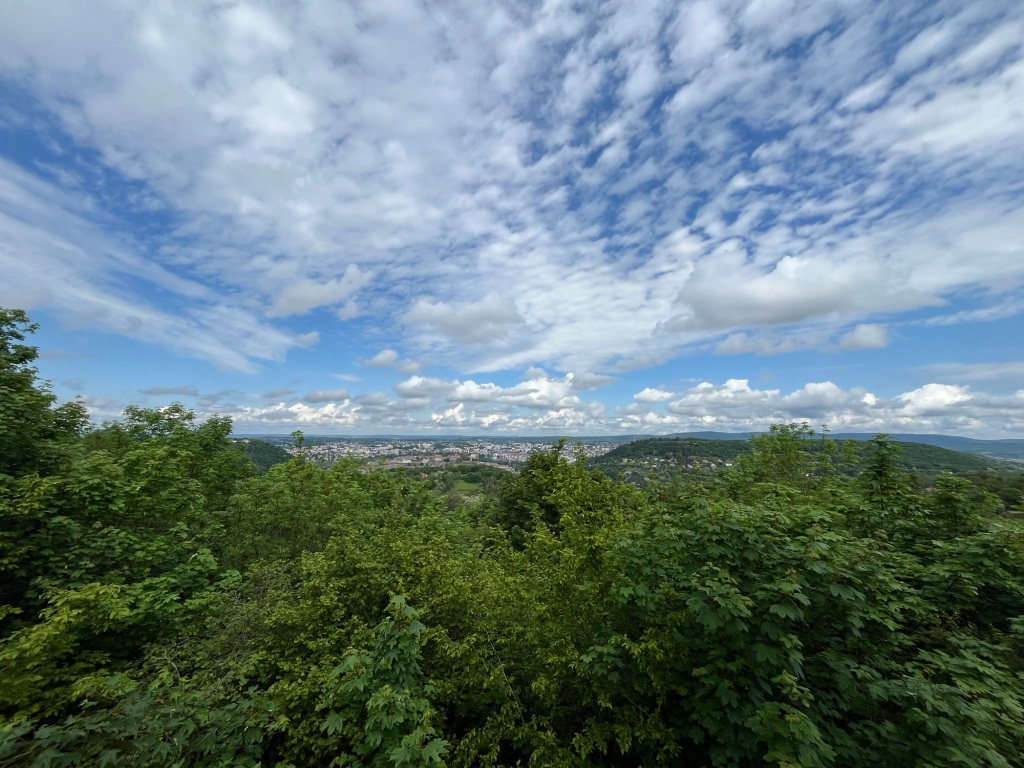
The reward was the view (and the sense of achievement).
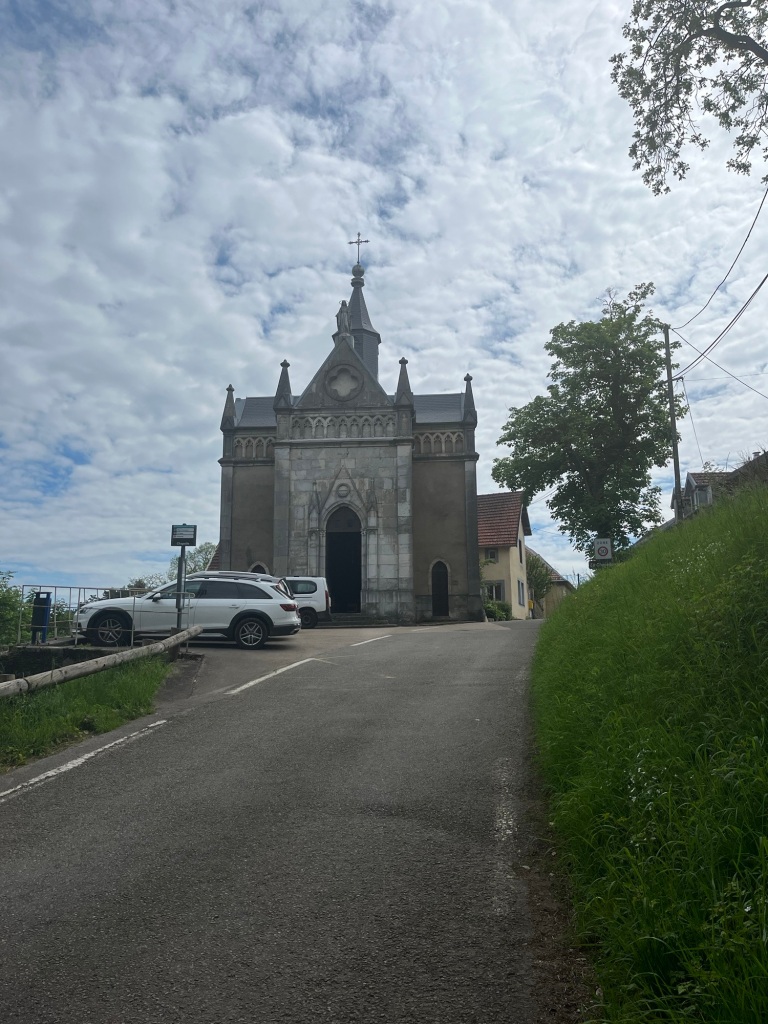
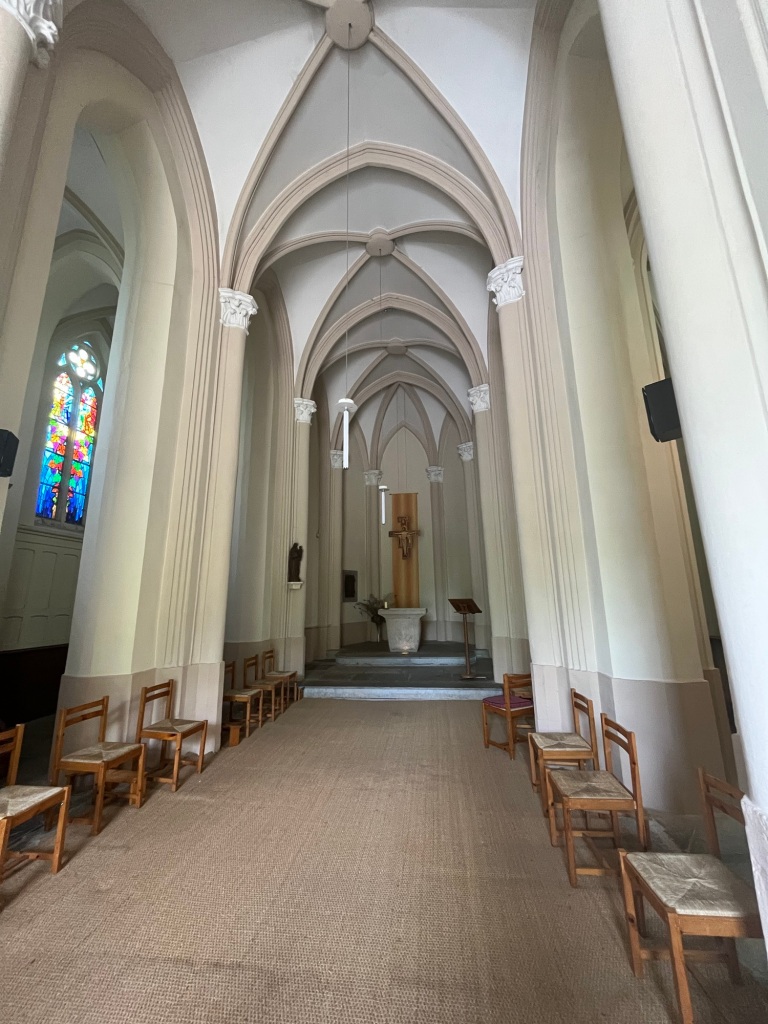
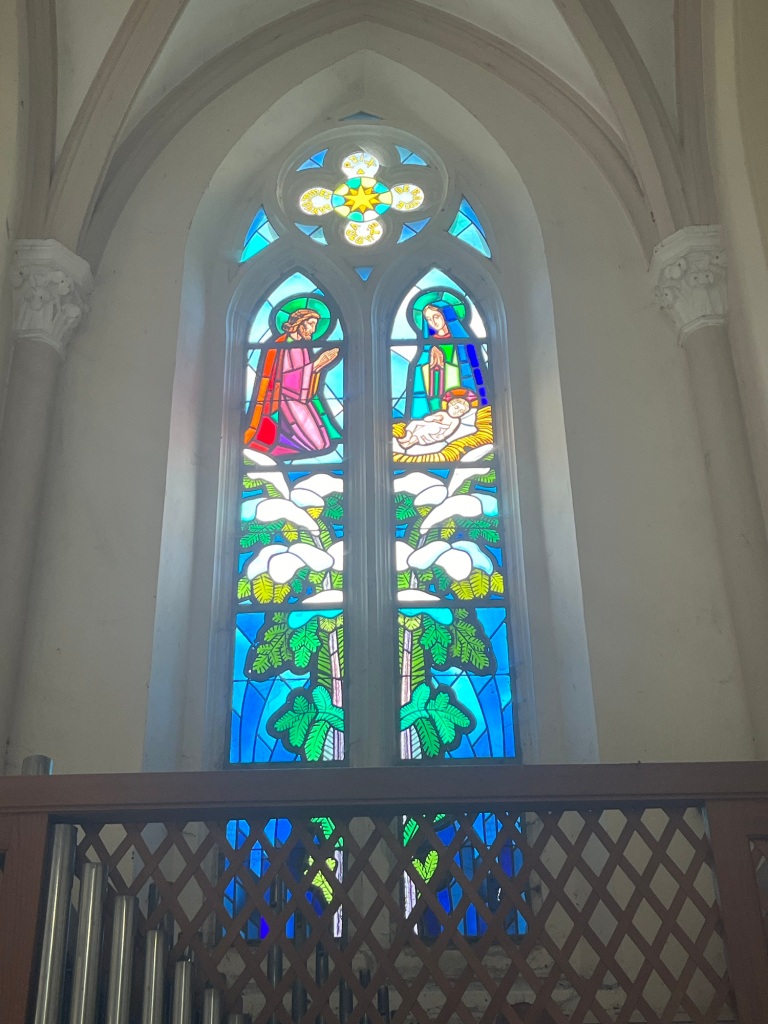
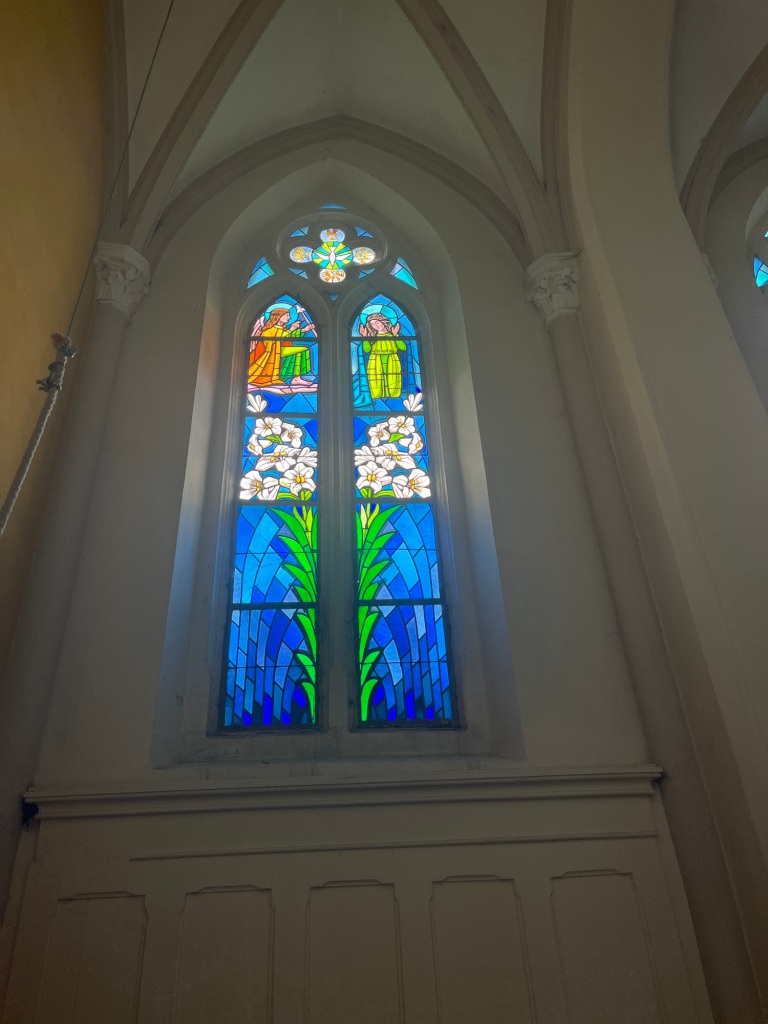
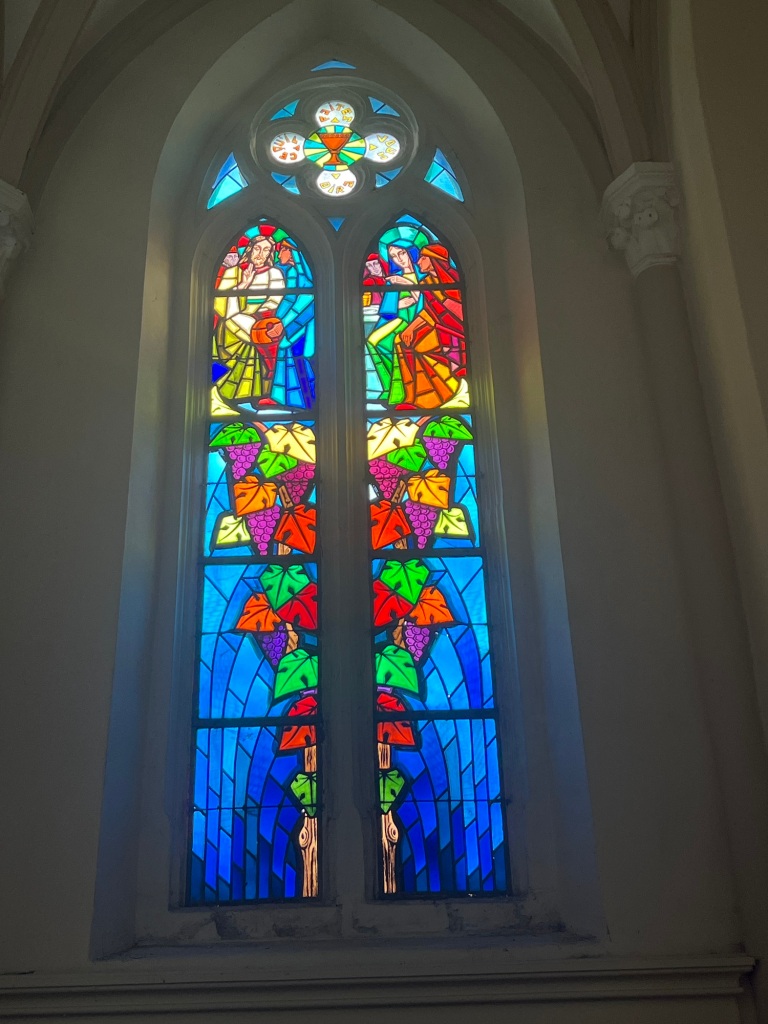
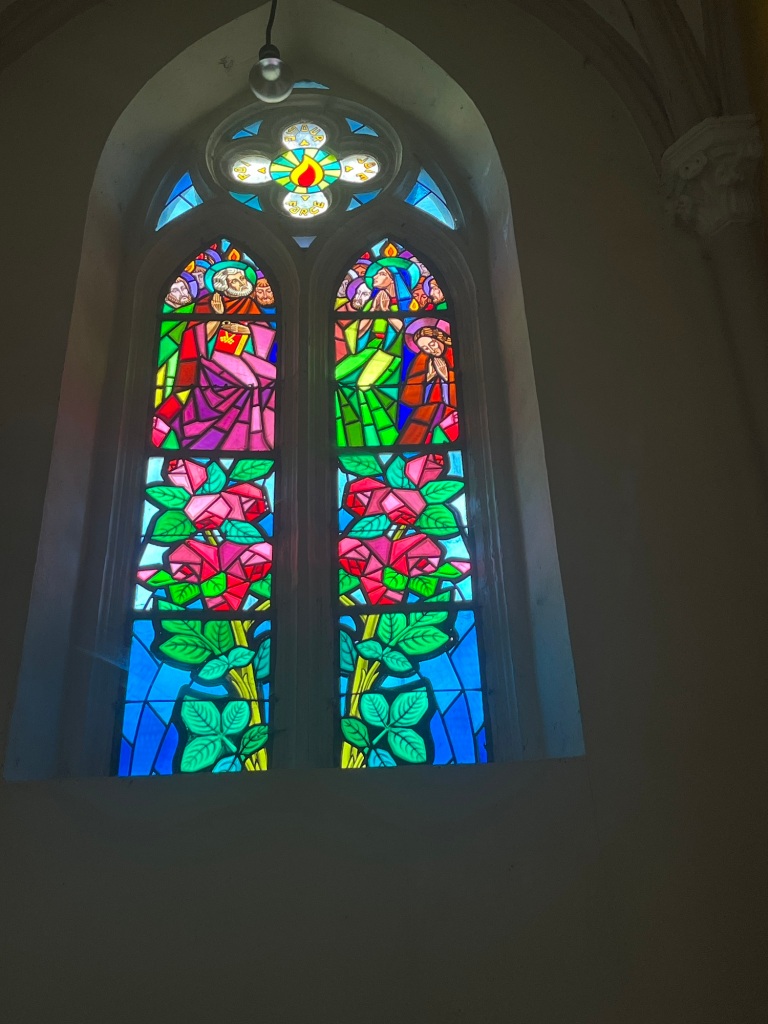
At the top of the ridge was a chapel dedicated to the Virgin Mary. It was gloriously simple in design and featured some wonderful stained glass windows telling Mary’s story, from Annunciation to Assumption.
From here I picked up the red and white flash signs of the route and set off through woodland. After at least a kilometre, if not two, I became concerned about the direction I was travelling in. A check of the app proved that I was off course. I had forgotten that red and white flashes denote all long distance footpaths, and had blithely joined the wrong one. A little annoyed with myself, after nearly an hour, I found myself back at the chapel.
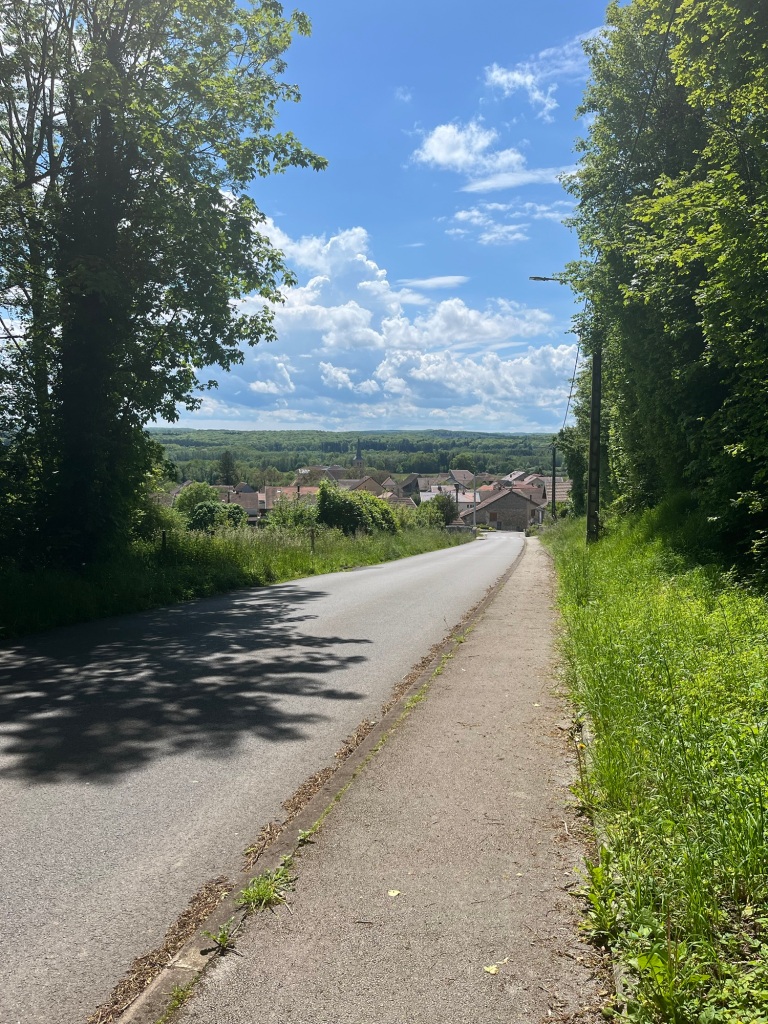
It was now nearly 1pm and uncomfortably hot for walking. I followed a Lightfoot Guide shortcut which took me through Veze (where I had planned to get off the bus around three hours earlier!) and then cross country to rejoin the official route at Foucherons.
This would save around 8.5km against the official route and used a quiet road from Veze, past Besançon airport (sole air traffic one single engined ‘plane practicing take offs and landings) and then some woodland walks.
It was a long afternoon, I listened to an audiobook of Agatha Christie’s. Towards Zero flipped the whodunnit genre on its head, beginning months before the murder and slowly threads converged. I’ve taken to playing music and audiobooks through the speakers in my phone out in the countryside. This way I can hear what’s going on around me as well as trying to work out who the murderer is. (In this case, I was certain I’d worked it out early, by Christie is great at misdirection… but I won’t give a spoiler!!)
The landscape had certainly changed this side of Besançon. Rolling pasture and woodland; I heard my first cowbells.
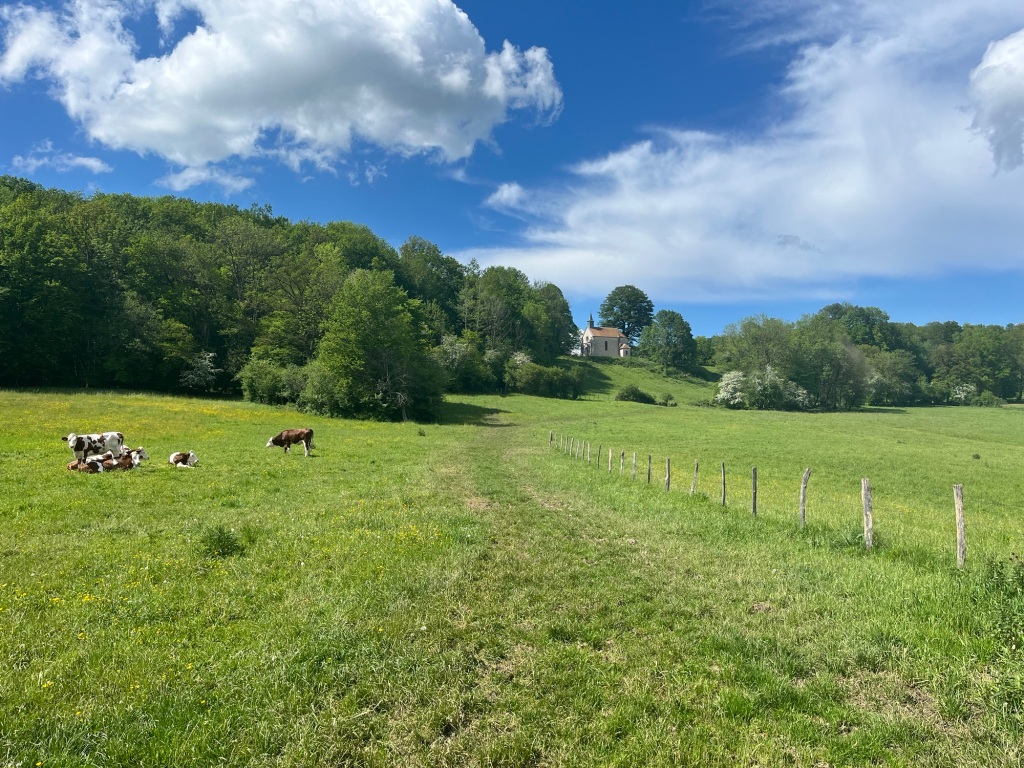
I reached the village of Foucherons at 4.15pm. I re-filled my water bottles from the standpipe in the cemetery and said bonjour to a procession of primary school children who were making their way home.
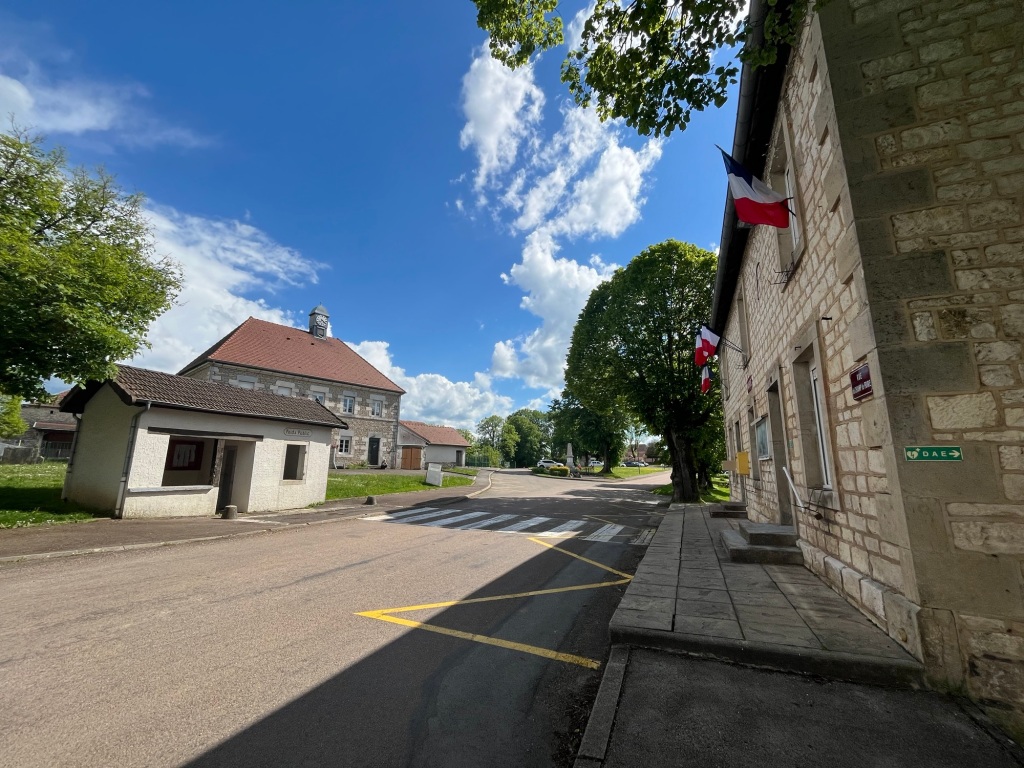
The village lies about 550m (1800ft) above sea level, my guides told me it was downhill all the way to Ornans now. This could also be a metaphorical description of the remainder of the day too!
As I started my gently descent a thunderstorm began to gather ahead and to my left. Judging the wind direction I concluded that it would pass me with a clear distance. However, constantly watching this storm, I missed a left hand sign and continued on for the best part of 3km (or 40 minutes) on the wrong path.
I realised my mistake, but looking at the AllTrails app, which includes woodland walks and drives, I reckoned I could walk for about a kilometre southwards and scramble onto the route again.
Imagine my thoughts when I got to the end of the path and could see the official route below me… about 50 metres below me! I was on the edge of a limestone cliff! There would be no quick scramble down a hillside. I would have to go the long way round.
This added around an hour onto my walk. An hour I could have done without. I tried to be philosophical about it, but it was hard not to be very annoyed with myself. Two missed or misread signs in one day! What would Victor Hugo think?
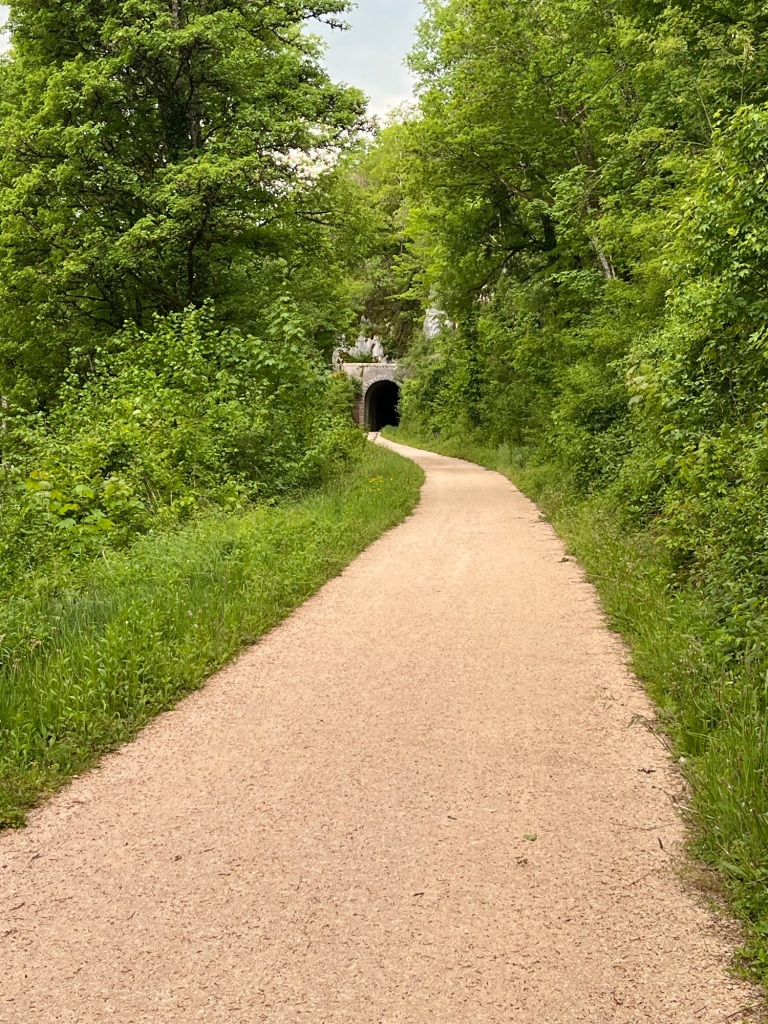
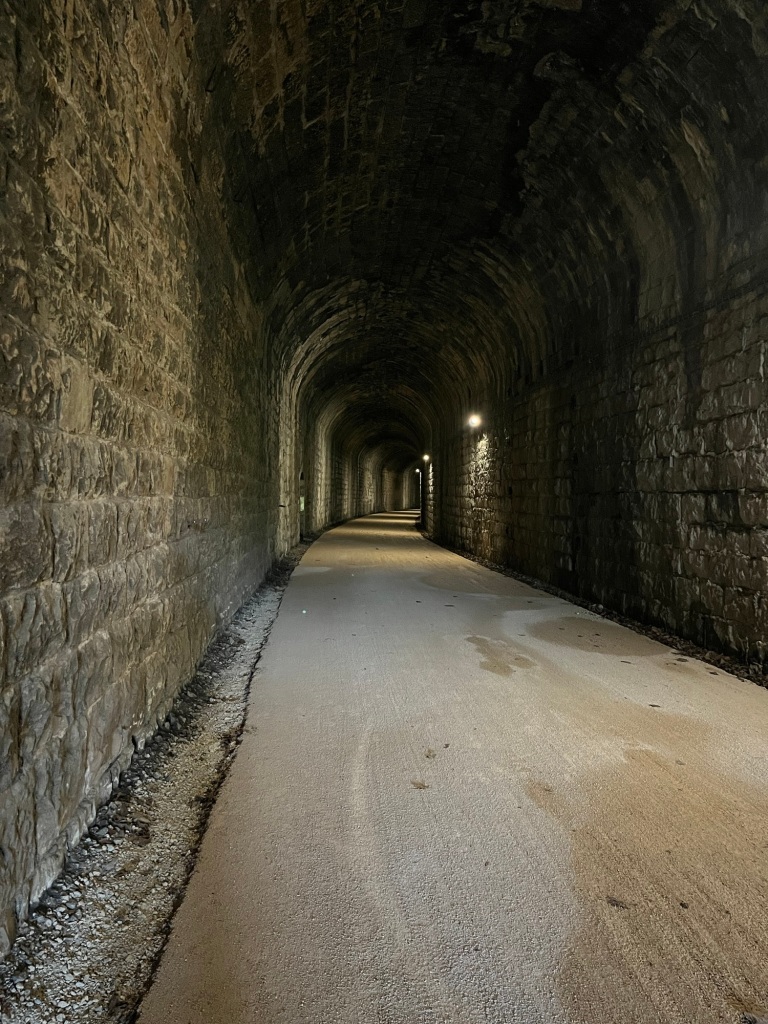
The one compensation was that the remainder of the route was along an old railway line, very gently sloping down towards Ornan, 9km away.
I got to go through a tunnel, which I found very exciting. Motion sensor lights came on within a few steps; these, it turned out, were fed by a small solar powered station at the other end.
Sadly, it now began to rain, hard. Another thundery band of rain swept through the gorge through which I was walking.
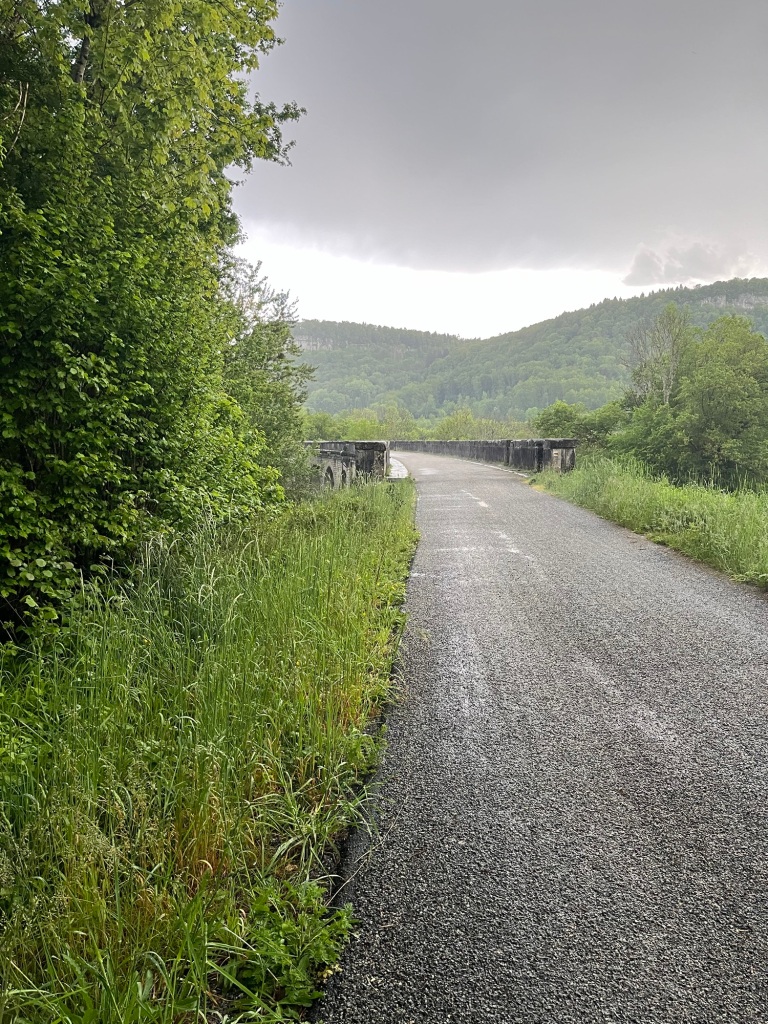
The green goddess made another appearance; water ran down my neck. I kept walking, with a determined rhythm. Not long to go now. Over a viaduct next, which crossed the river Brêmes. It was quite a structure, almost as high as the Ledbury viaduct in its central arch. However, I could only really think about limping in to my accommodation for the evening by now.
Forty-two kilometres later, at least ten of these being unnecessary, I was welcomed by Jo into her lovely home. Shade me comfortable and offered me dinner with her partner Antoine.
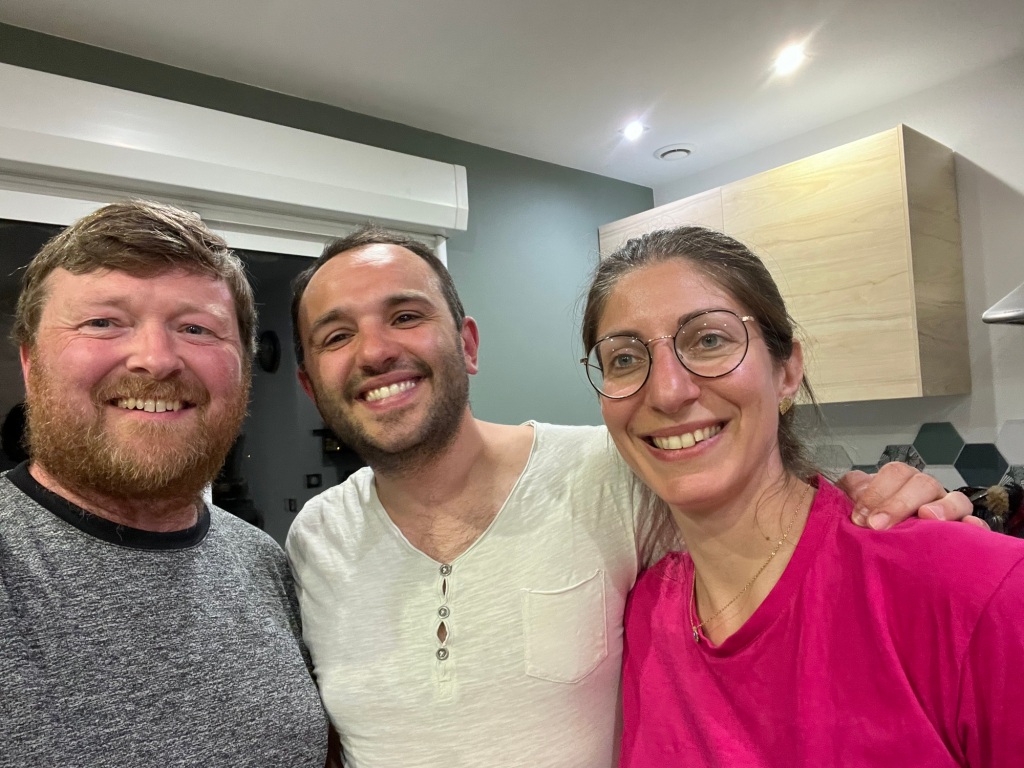
Jo, a middle school teacher and Antoine a builder’s merchant, were wonderful hosts. They coped admirably with my poor French and I was able to out the day into its proper perspective. Opportunities to meet great people like this are worth any number of challenging days. This is what the pilgrim life was all about.
Shortly before I turned in for the night, Jo lent me a book in English, a collection of Somerset Maugham’s short stories. I realised that I hadn’t read a book for six weeks, and I had missed it. One story was entitled The happiest man. I counted myself in his ranks that night.


 The Loafing Pilgrim
Leave a reply to mickymousecourse Cancel reply