Yesterday I awoke early at the gîte belonging to the Leffond commune and busied myself making breakfast. VE Day is a public holiday in France, usually just referred to as 8th May. I was grateful for the baguette that had been left by Bernard and the team, for this would serve as lunch as well – I was sure there wasn’t a boulangerie in the village.
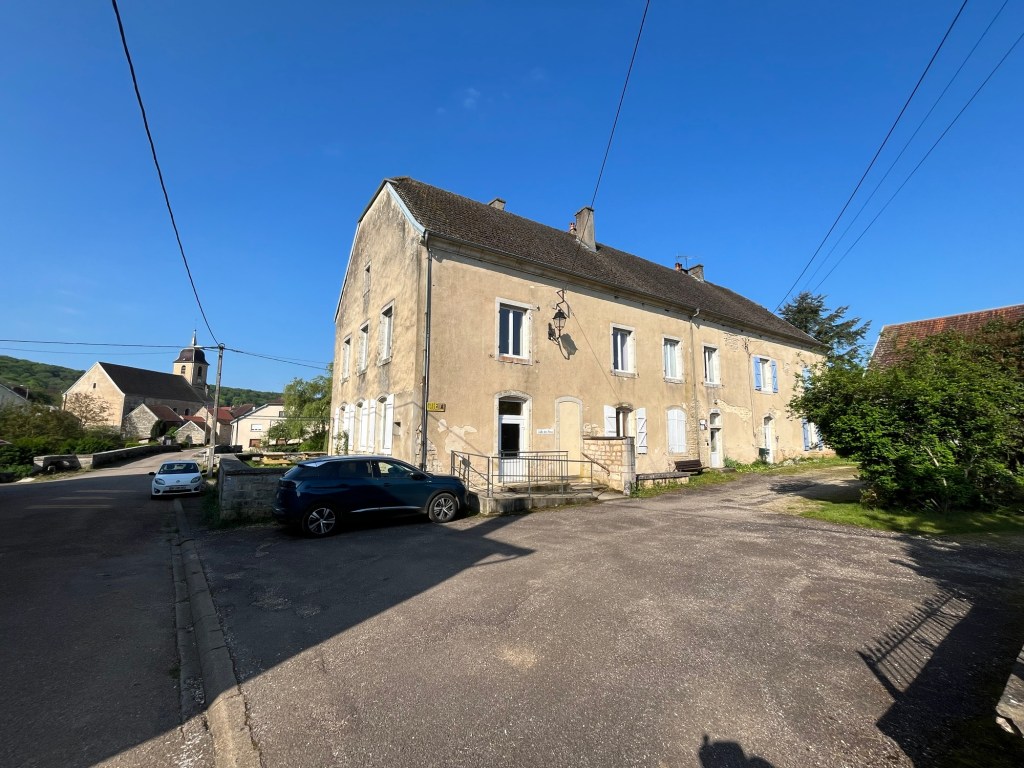
It is a wonderful system here. This picture shows the mairie, the salle de fêtes (a community hall or room) and the gîte all in the same building, which dates from the 1740s. Small villages are often combined to form a commune but each place has its sense of identity and public building – and of course, a mayor. As I was to soon find out.

As I left the gîte I was hailed by Bernard and another gentleman who were on their way to a ceremony at the village war memorial for the 8th May. (They can be seen crossing the bridge above).
They bid me Bon route and I went on my way. It wasn’t long before I regretted not going with them. As the gentleman had pointed out, the English were at the Normandy landings. I felt that it would have been good to have paid my respects.
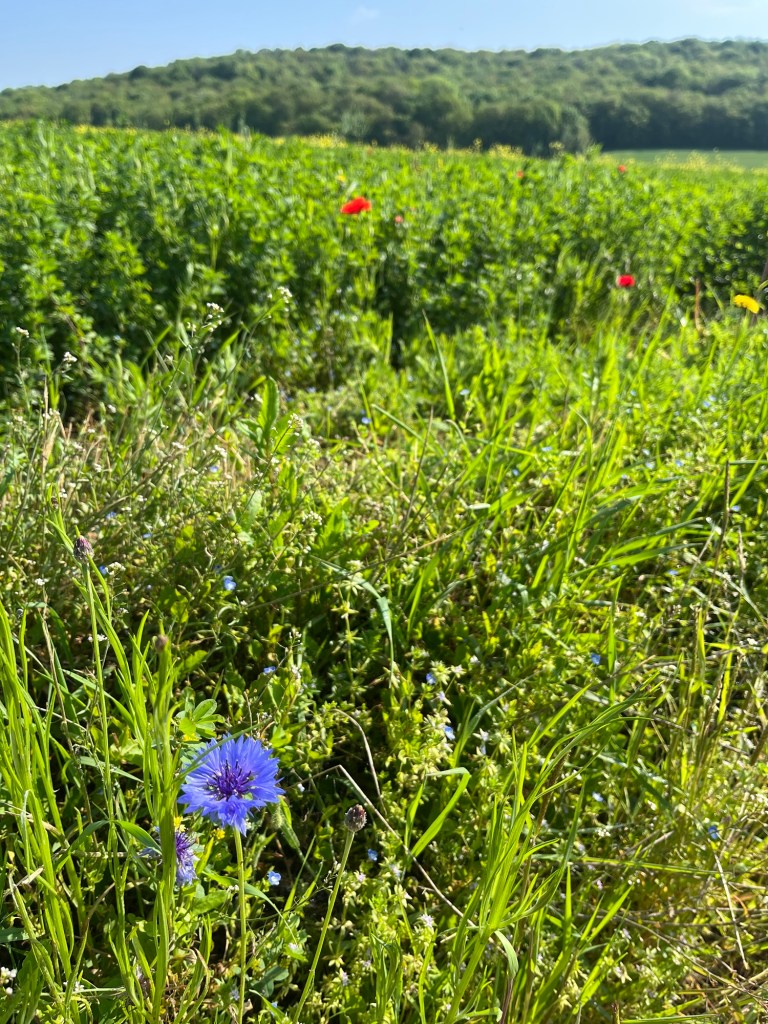
It was a glorious morning, with clear blue skies and a very pleasant walk along the course of the river Salon, through woodland and fields. In once section of field I spotted both poppies and cornflowers growing together: the symbols of remembrance for Britain and France respectively, underlining the poignancy of the date.

As I entered the next village, Montarlot-lès-Champlitte, I noticed several people, dressed smartly walking in the same direction. “Aha”, I thought, “another ceremony perhaps.”
Following this hunch I found myself outside the village church and war memorial.
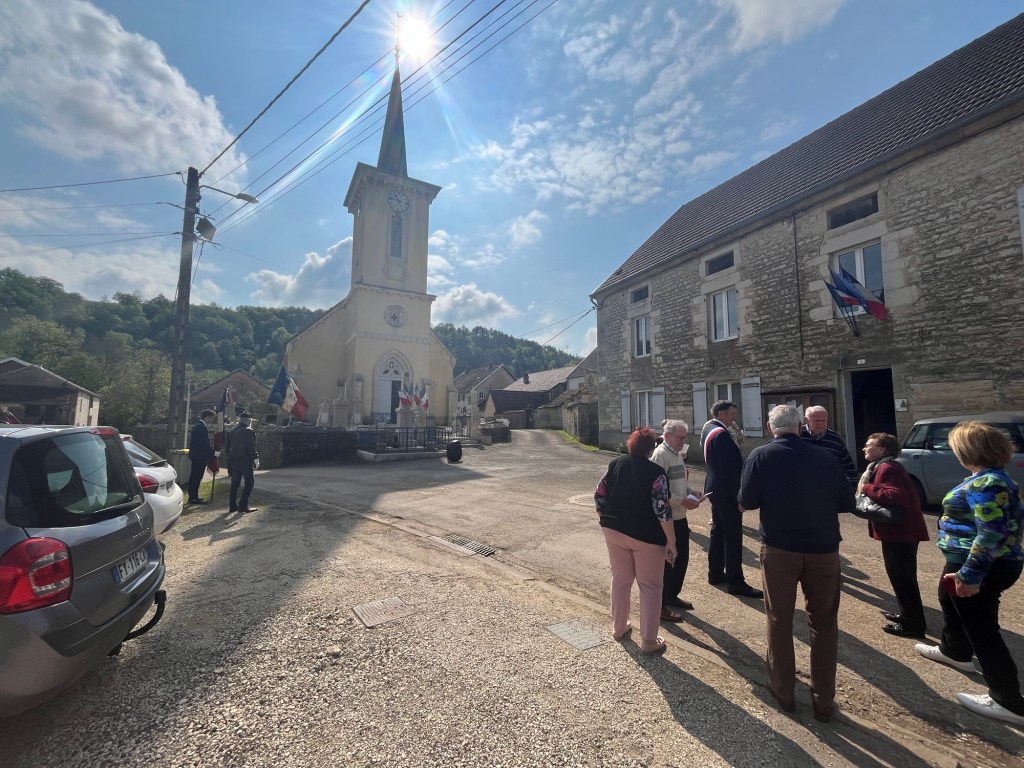
There was indeed to be a short ceremony led by the Mayor of Champlitte and the Mayor of Montarlot. This first mayor came over to me, and introduced himself as Patrice Colinet. He explained that he was spending the morning touring the six associated villages around Champlitte performing these ceremonies and that there would be a larger ceremony, with band at Champlitte at midday.
It was a simple ceremony, with words of General de Gaulle hailing the peace and paying tribute to the bravery and sacrifice of the French people, then words of today’s defence minister. A bugle call was sounded followed by a minute’s silence and a wreath of flowers was laid by one of the children attending. We then sang the Marseillaise followed by the Song of the Partisans (the words of which had been previously circulated). And then with some words of thanks, the ceremony was over and we all repaired to the salle de fêtes for a drink.


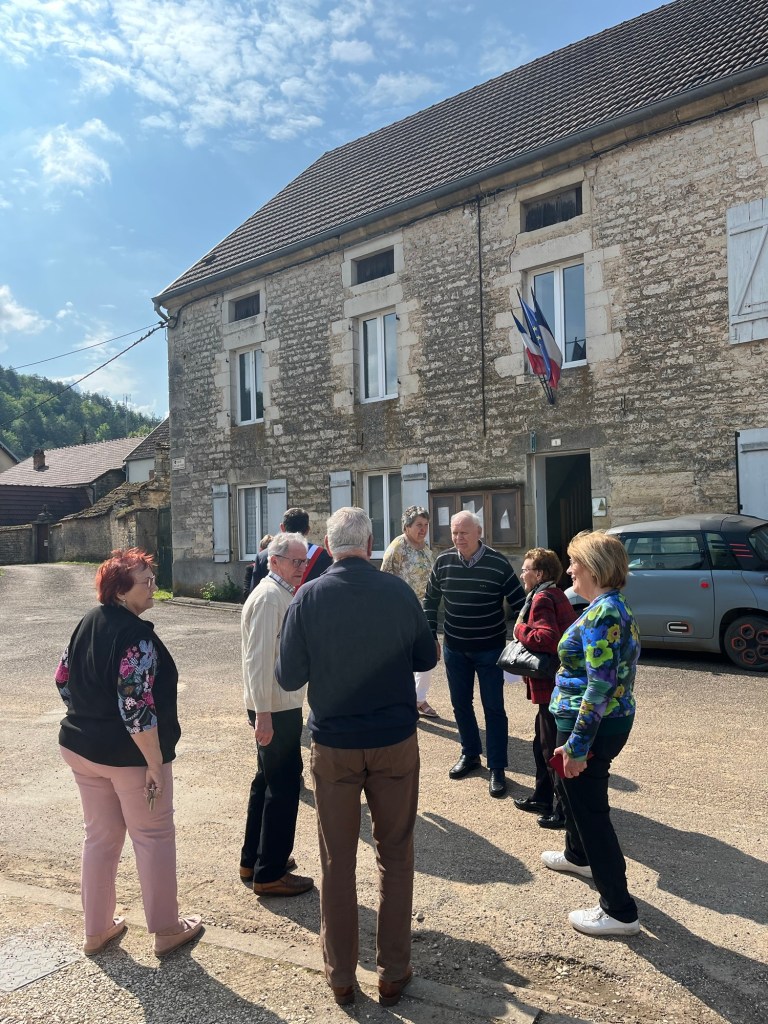
During the silence I reflected on the different significance VE Day has for Britain and France. For the British it marked the end of the war in Europe, yet VJ Day would not come for several months. For France, it is a more complicated picture. There is a clear sense of national liberation. While towns and villages were liberated at different times, but 8th May seems to stand for it all. But there is a sense of beginning again too, not simply going back to a pre-war understanding of national identity.
Much of Charles de Gaulle’s speech of 1945 was lost on me, but certain words and phrases such as déportation, résistance, victimes civiles des bombardements stood out. For us, the Second World War can be remembered in a very simplistic way: we were on one side (the right side) against fascist tyranny (the wrong side). With the exception of the Channel Islands, we did not have to endure an occupation with all the moral and ethical difficulties that brought. Who among us would have been collaborators? Who among us would have turned a blind eye or informed on a neighbour in order to protect what was ours? These were uncomfortable thoughts as I stood there in the bright sunshine. Uncomfortable too was the fact that many more French civilians were killed by Allied air raids than by the occupying forces.

These thoughts dominated my musings as a walked on to Champlitte. The “bun fight” after the ceremony had been most convivial. A rather nice bottle of white wine was shared; the Mayor told me that the vintage was owned by a French senator who had been a minister under the Sarkozy administration. I rather liked his acting out of this man getting the boot, when Macron got in!
I had been invited to the Champlitte ceremony, but knew that it would be a bit of a push to get to the town in the required 40 minutes. Losing confidence in the route once I had crossed a very rickety bridge sealed my fate.
As I entered the town I heard the strains of the Song of the Partisans and knew I was too late.
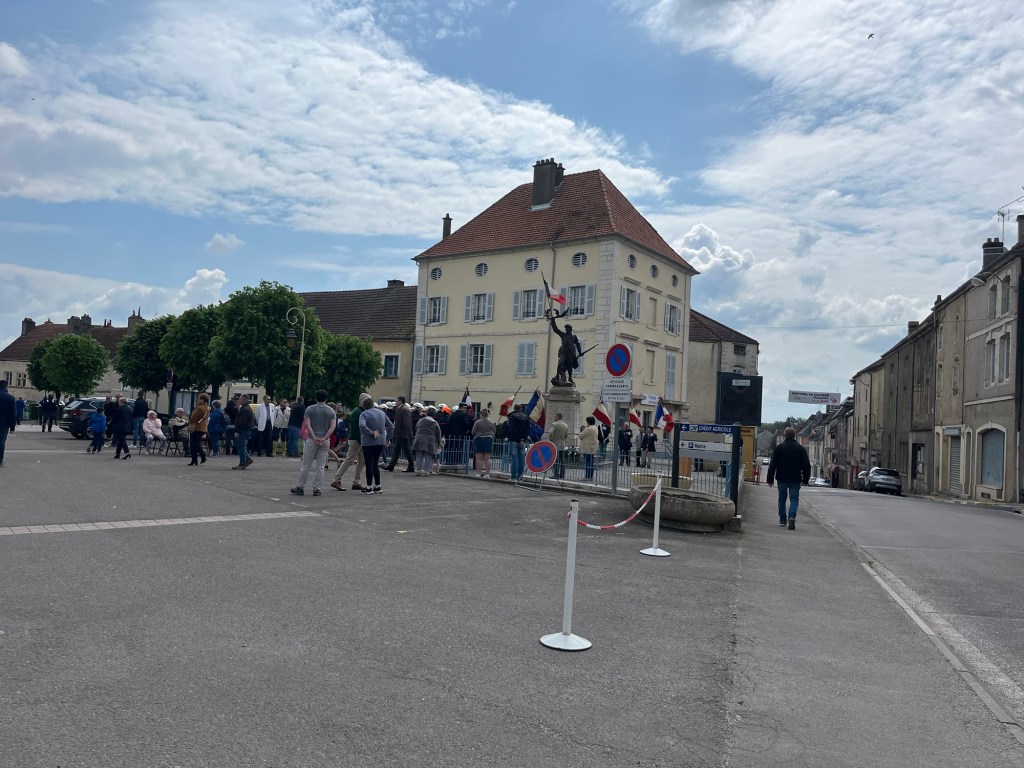
The ceremony had just ended. However I did share greetings with the Mayor once more, and he introduced me to Martine Gautheron, his deputy mayor and also Vice President of the European Association of the Via Francigena. Eight hundred pilgrims walked through Champlitte last year, which is a larger number than I expected.
Again, I was invited to the mairie for the drinks reception, but felt that with only a third of the walk under my belt and it being after noon, I might be tempting fate. I politely declined.
However there was to be one more poignant moment before I left this French capital of the Via Francigena. The band, which had enthusiastically accompanied the resistance song, now began to play again. From two streets away, I heard the hymn tune Abide with me, played with all the stately grandeur of the evening hymn at a beating of retreat. I stood for a while, moved by what I heard. The segue into the hymn tune Aurelia (The Church’s One Foundation) was even more unexpected. Those familiar with Oh What a Lovely War might know this as the tune parodied:
“We are Fred Karno’s Army, the ragtime infantry, we cannot fight, we cannot march, what bloody use are we…”
Of course if you are familiar with Hymns: Ancient and Modern or better still The New English Hymnal you’d have been humming this tune from the first mention.
I journeyed on, rather regretting that I wasn’t overnighting in Champlitte: with its quaint narrow streets, friendly local politicians and love of English hymnody, it was my sort of town.

I paused for lunch at the next village, slightly confusingly called Champlitte-les-Ville. I listened to an episode of What Ho Jeeves! with Michael Hordern playing Jeeves and Richard Briers playing Bertie Wooster. Based on the novel The Inimitable Jeeves, this Wodehouse mini masterpiece was entitled The Great Sermon Handicap and involved a book being run on the length of sermons preached in various outlying villages on a certain Sunday. Happily Champlitte-les-Ville is a quiet and understanding place – clergymen roaring like drains in local bus shelters are tolerated admirably.
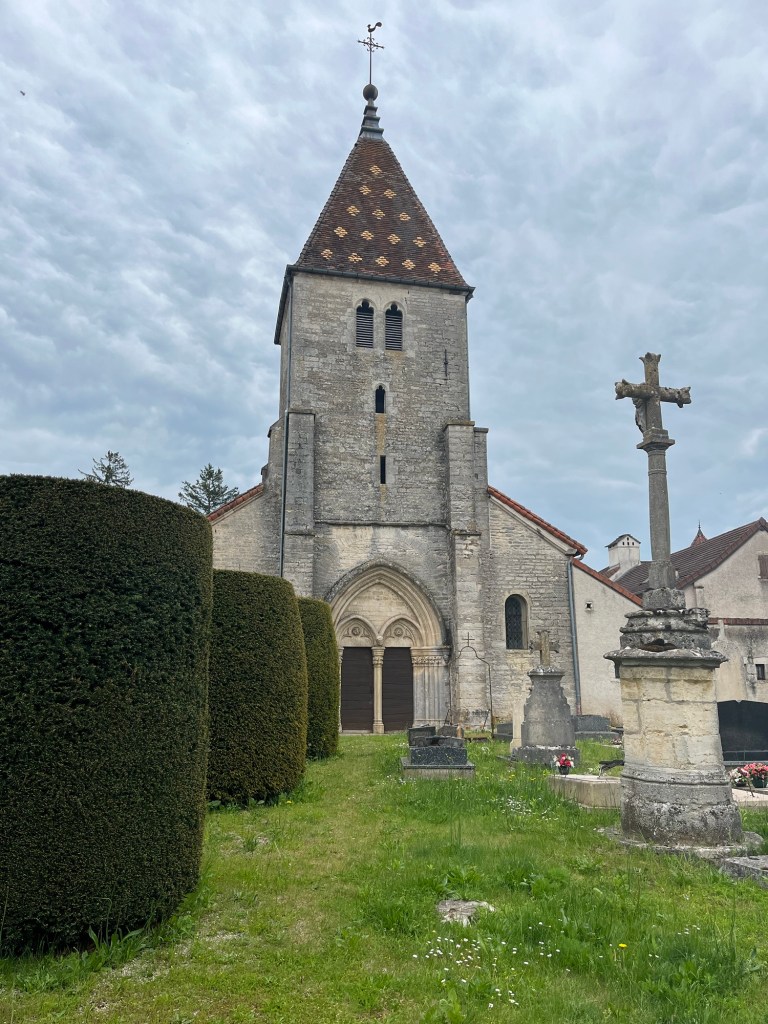
The church here, like in the bigger Champlitte up the road is dedicated to St Christopher. An unusual patron as far as I can see in France, but an ideal one in Via Francigena country.

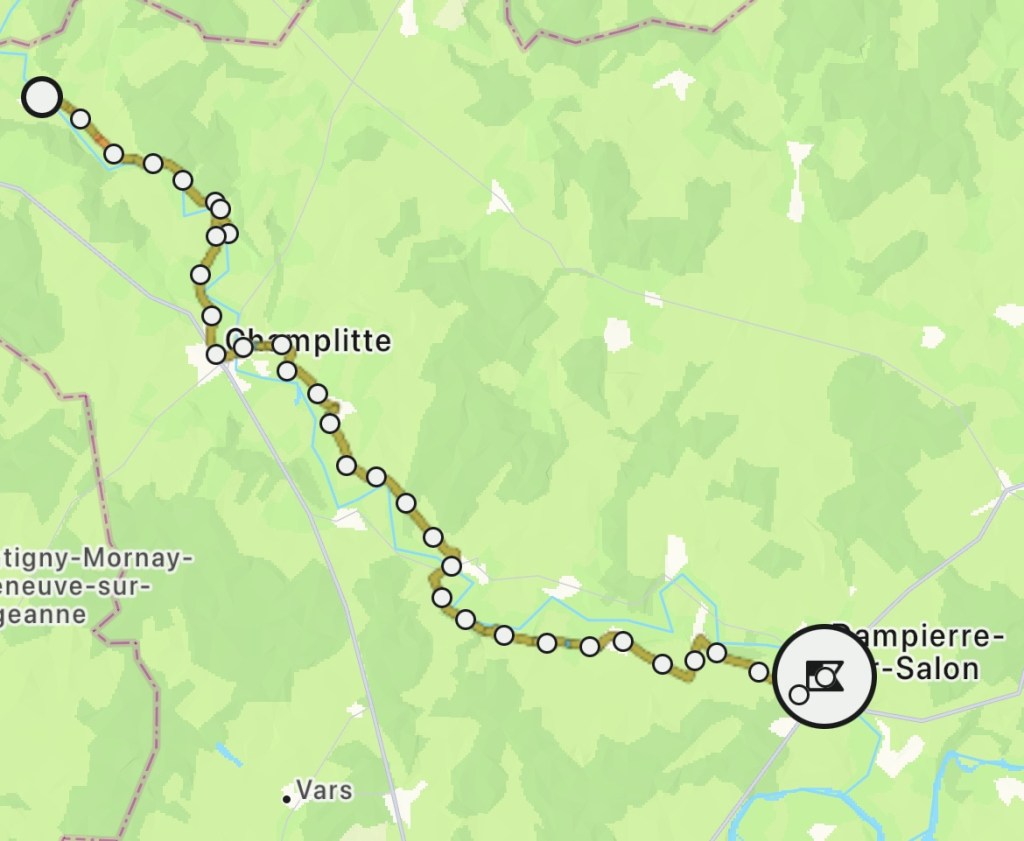
The afternoon was long and hot, despite the growing cloud cover. The usual pattern of fatigue and sore feet made the last hour fairly uncomfortable, but I finally reached Dampierre-sur-Salon around 6pm and settled in to my accommodation. It was a bijous residence, tastefully converted, albeit with a spiral staircase that led up to the bedroom and down to the salle de bain, which made for quite a trek from one to the other.
The next day was Ascension Day: another public holiday here in France. I must admit, this is my ideal week: work Monday and Tuesday, have Wednesday and Thursday off, work Friday and then it is the weekend! Of course for the pilgrim, it is fraught with food anxiety. Will anything be open? Will the shop close early? Will I be able to get my stamp?
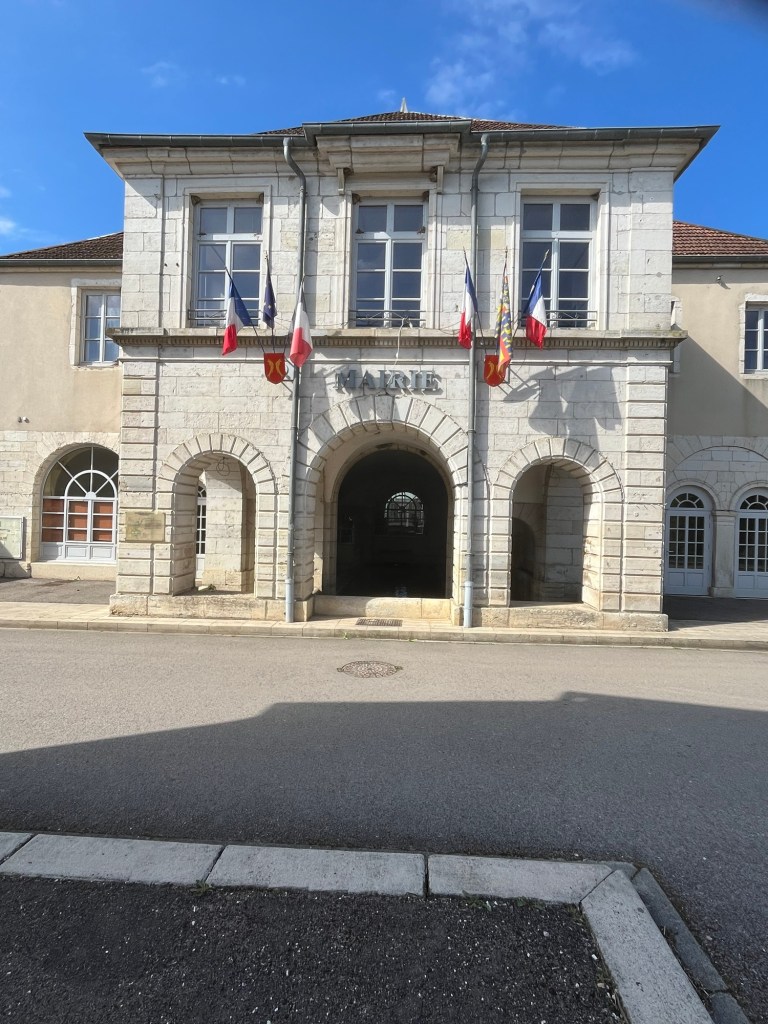
I passed the mairie in perfect sunshine on my breakfast mission. I noted that this might be the only mairie that has the lavoir or public wash house running through it. Keeping the politicians squeaky clean perhaps, or else a convenient way of laundering the money?
On my way back through from getting breakfast, I noticed that the tourist office was open. With my pilgrim credential in my pocket, my heart leapt for joy. I might be able to obtain my stamp!
It turns out that the building is also used as a hub for volunteers and the two helpful ladies I encountered had nothing to do with dishing out gen to tourists. In a scene reminiscent of Guînes tourist office all those weeks before, the three of us searched the desk and drawers until we found a cachet and stamped my credential. This felt like a major victory on a public holiday.
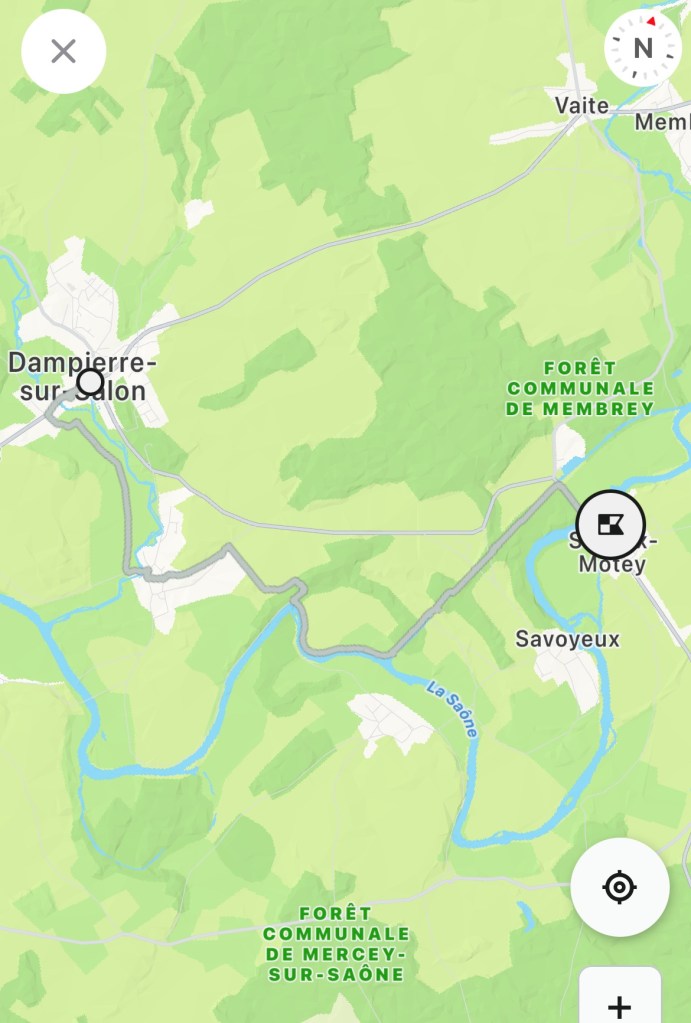
The day before had been tiring. I decided that today I would only walk a short distance to the next available accommodation, some 9km along the Via. This meant that I could have a look around Dampierre and have some lunch before embarking on my walk.
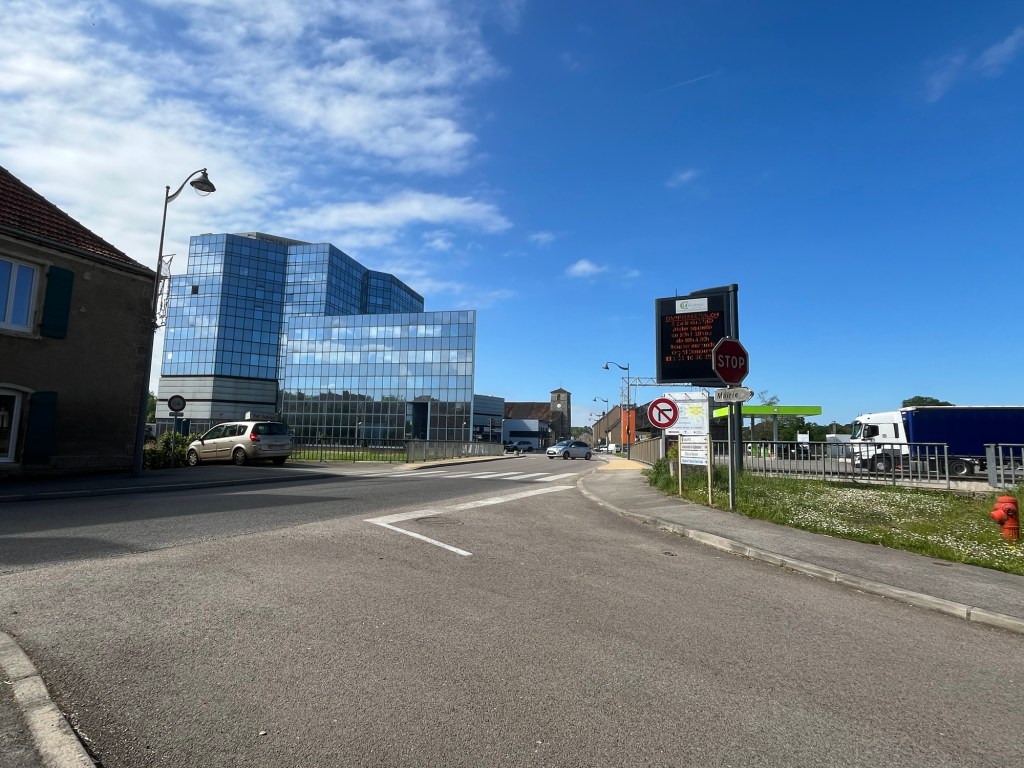
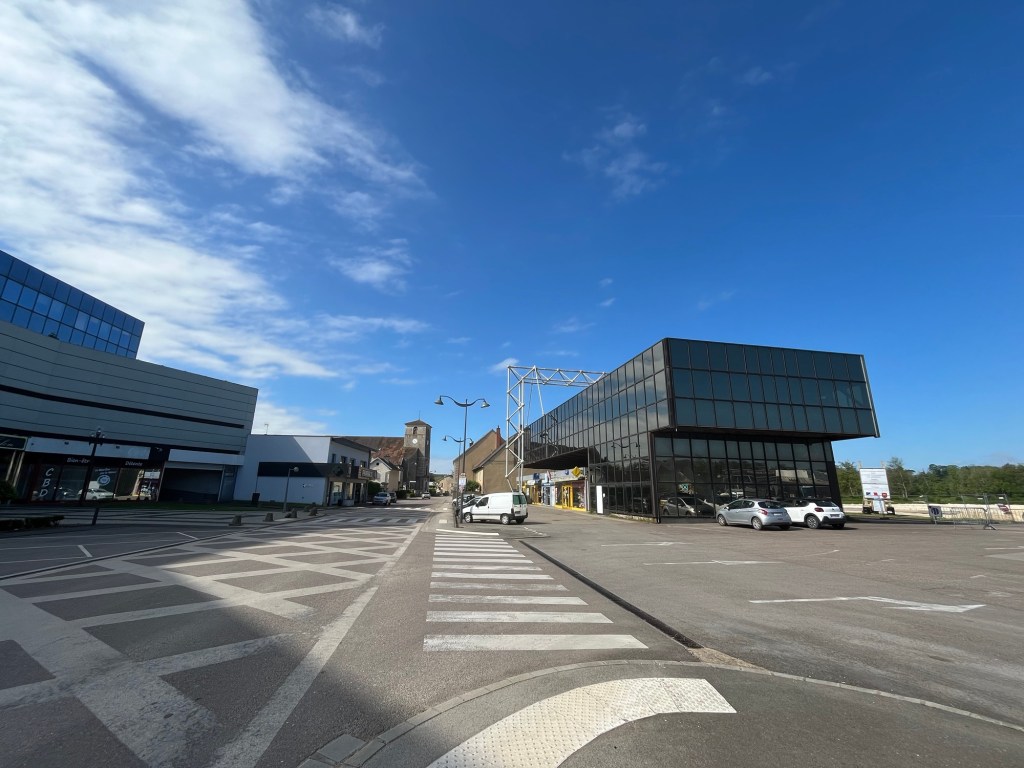
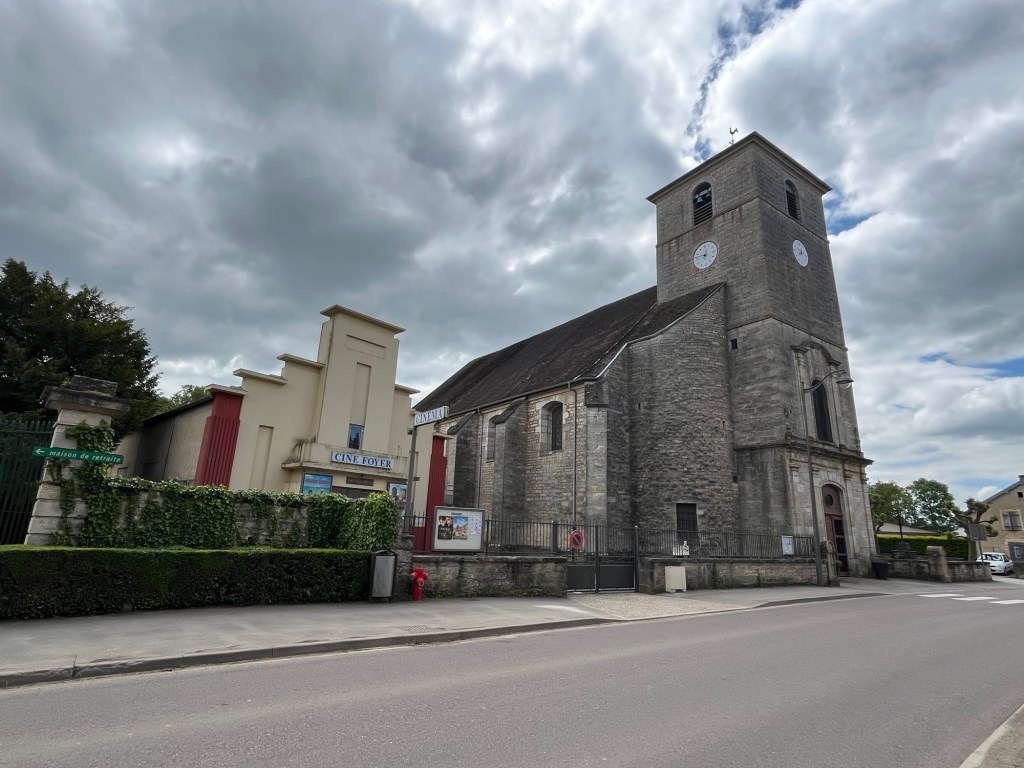
I was struck by the architecture around the 18th Century church. Immediately next door was the local cinema, a charming miniature art deco building, and a few buildings up a massive steel and glass pile, formerly a hotel. Opposite this was something that looked like it came straight out of an East German planning textbook. With dark brown reflecting glass this structure looked like a mini version of the much-loved and much-missed People’s Palace in Berlin. However on closer inspection, I realised that the building was, in shape, like an L lying on its side, with the long part of the building held up by a steel bridge which straddled the building.
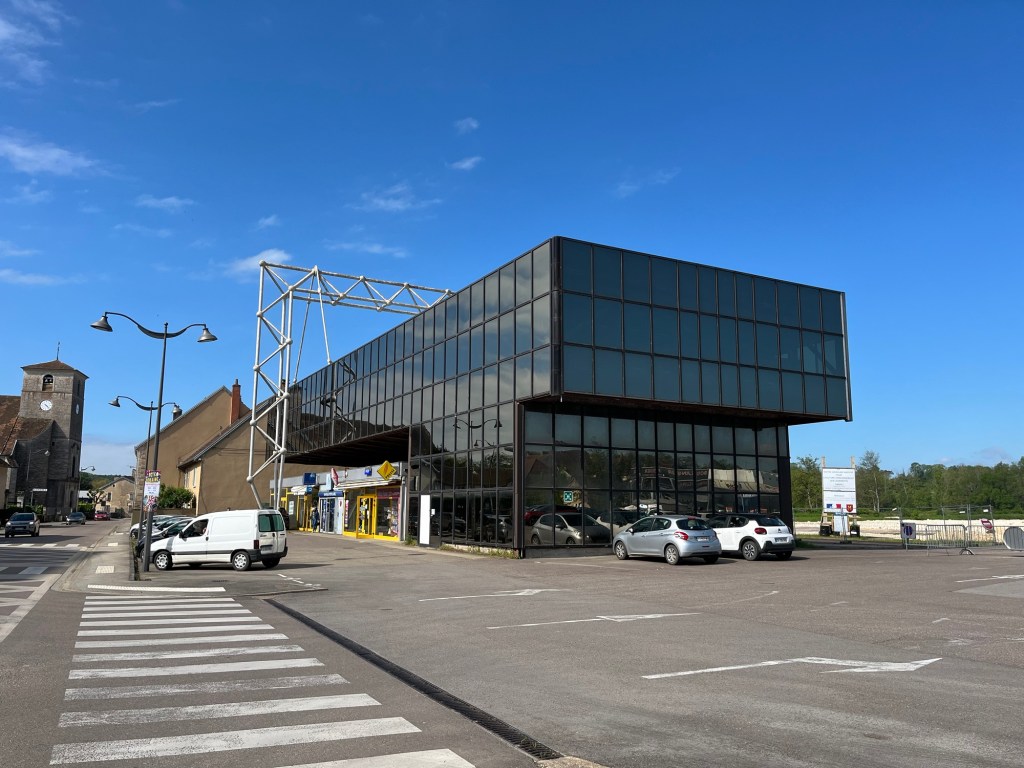
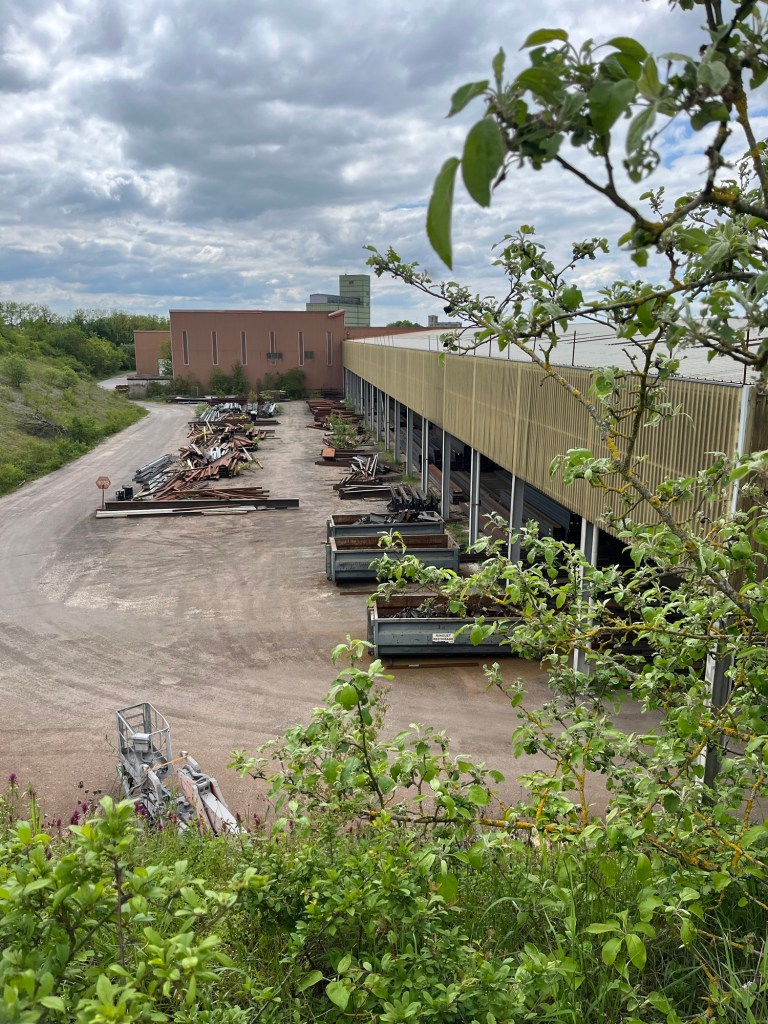
On doing a little research, I discovered that Dampierre was home to a metal factory (perhaps rather like Wiggin’s Special Metals in Hereford). I suspect this was a bit of a showcase for their art. I had to admire the ambition of this building, even if it seems somewhat underutilised today.
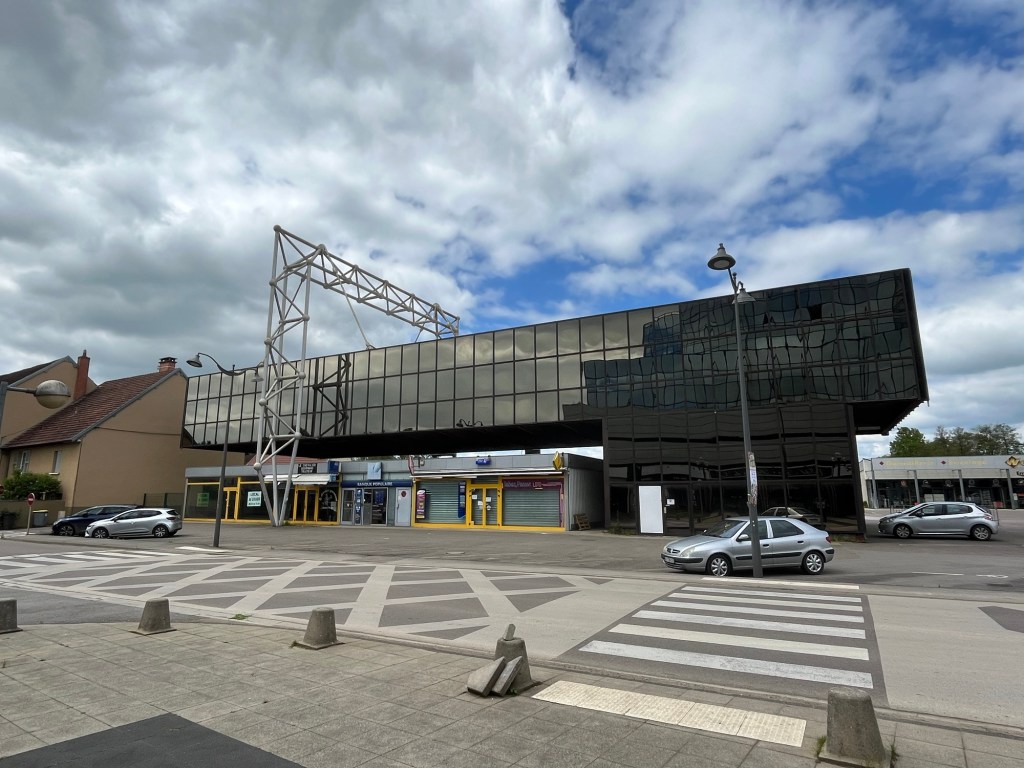
There are a run of shops underneath the suspended section of the building and I’m sure this is not what the architect envisaged. I had to look quite hard to see what was going on: imagine how striking the building would be with nothing but space underneath.
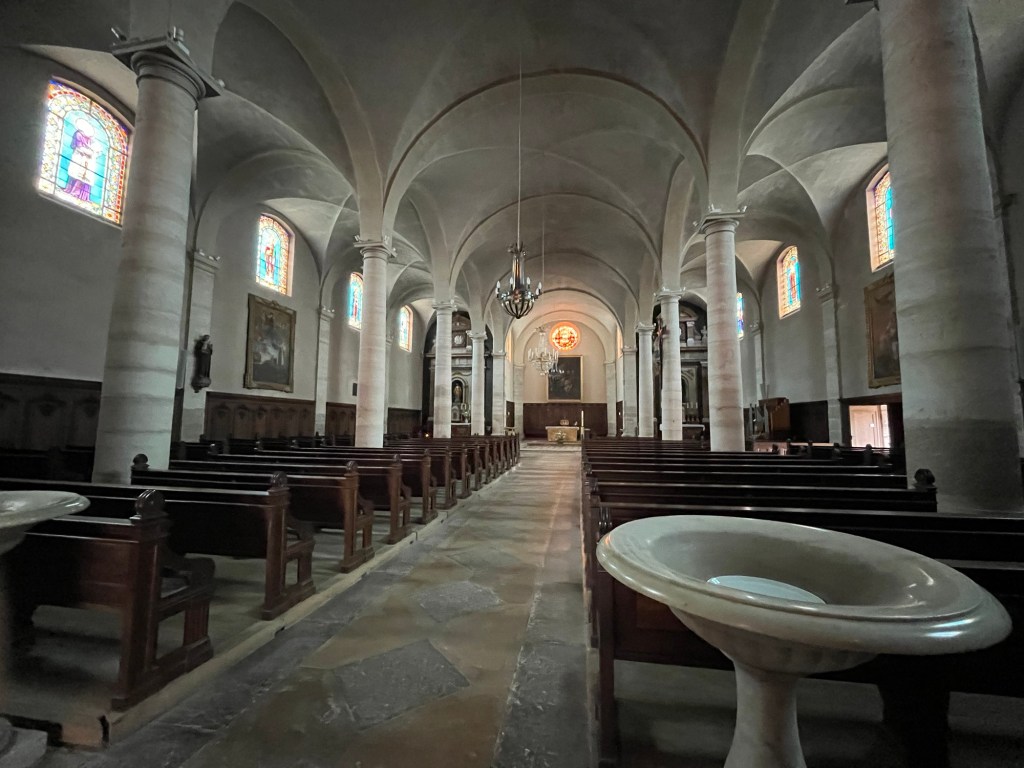
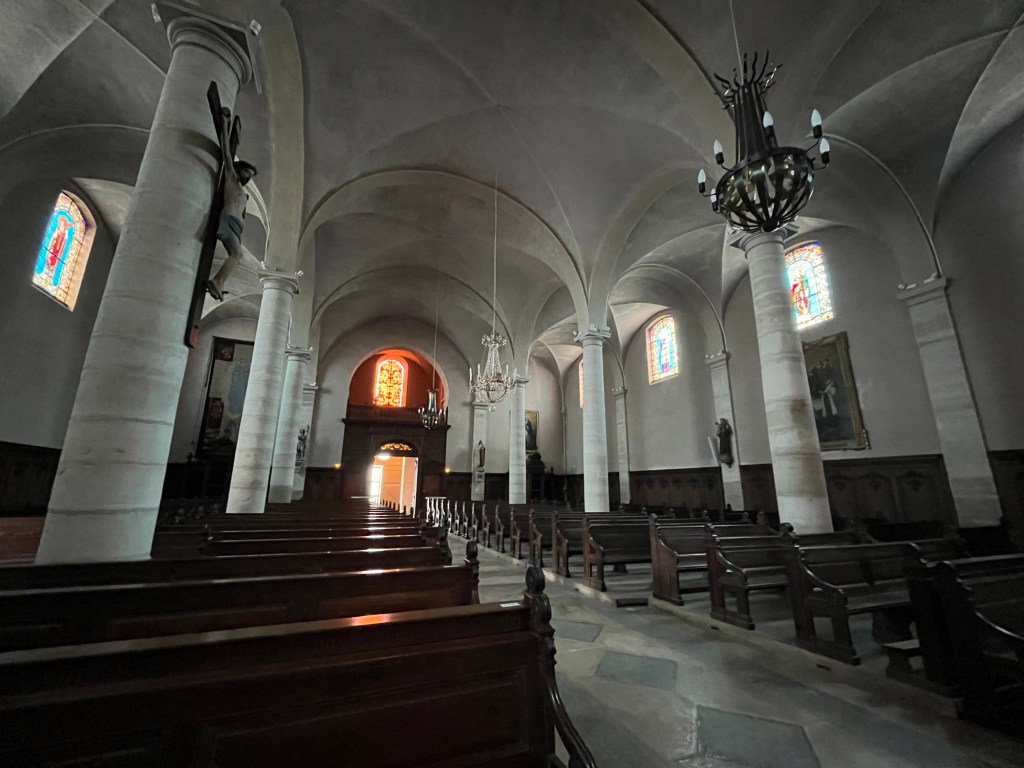
The church itself was a little dark for my liking, although a sense of peace and calm prevailed. My favourite space was a small area off the main entrance under the tower reserved as a baptistery.

And so it was time to strike out on my short walk to Seveux. Again it was warm, but I enjoyed loafing my way through the rolling countryside.
After a few km, I found the metal factory, and wondered it seemed very familiar… lots of metal hanging about, very much like Wiggins appears to be at home.

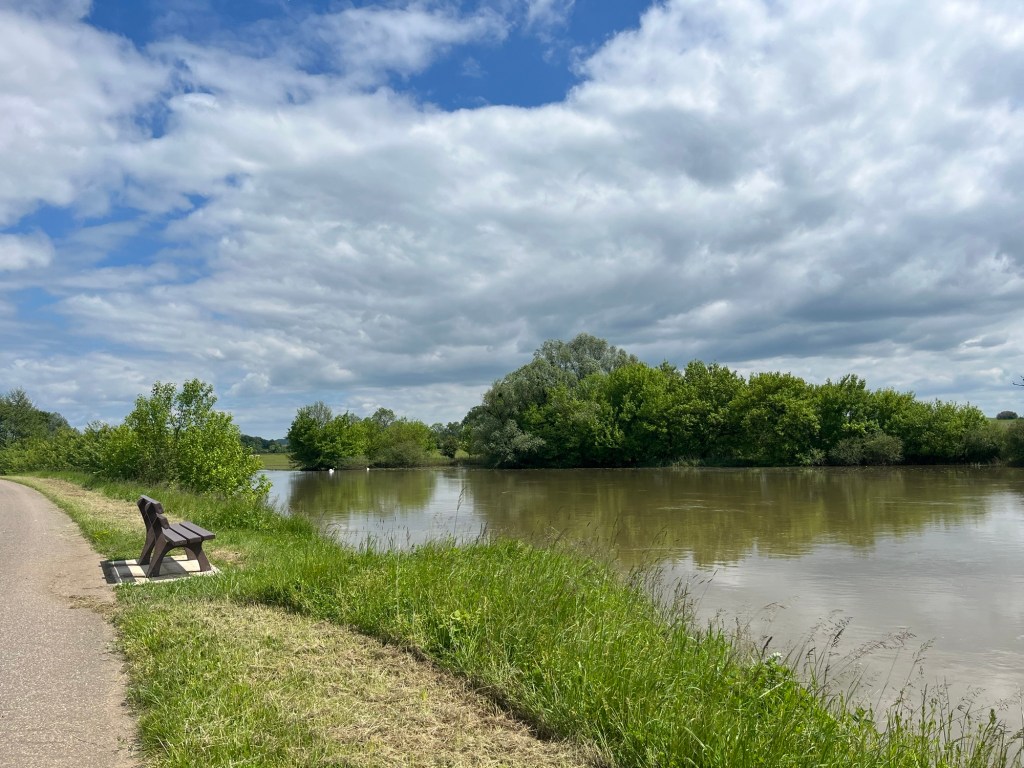
With rolling countryside soon to give way to the Jura Mountains, I was glad to spend a little bit more time with a canal. First of all I came across the River Saone, which is navigable for much of its length. Indeed, it feels a lot like the River Avon around Stratford or Evesham.
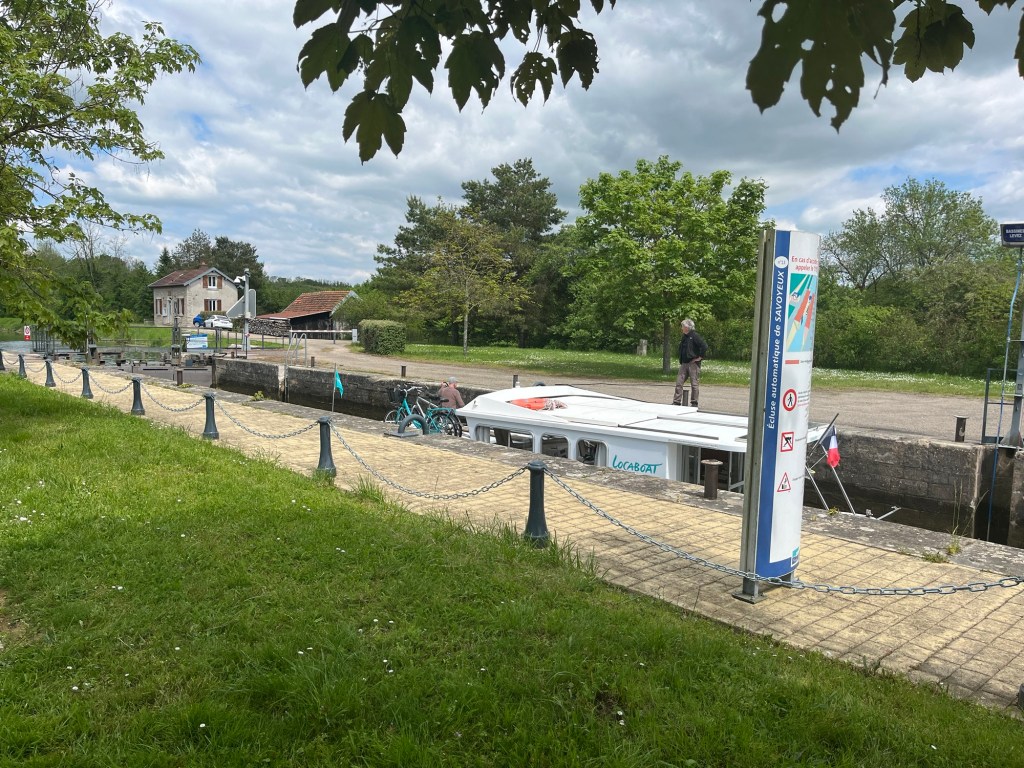
And then a canal lock and tunnel. Having time to loaf I was able to watch the progress of a few pleasure craft making their way through.


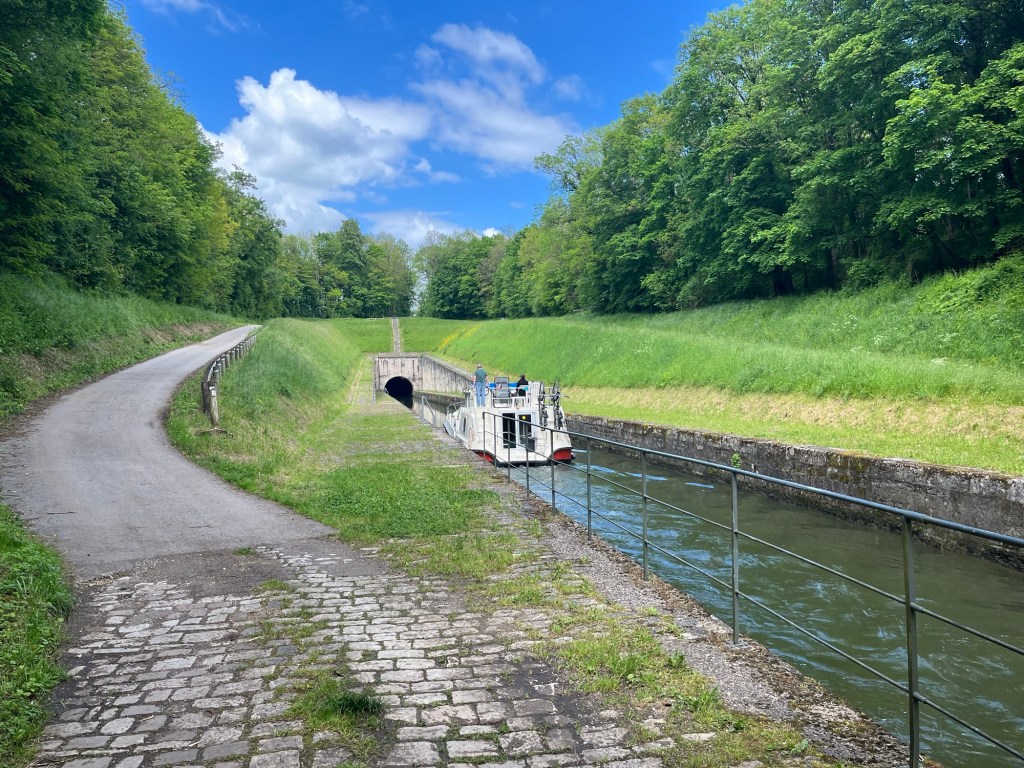
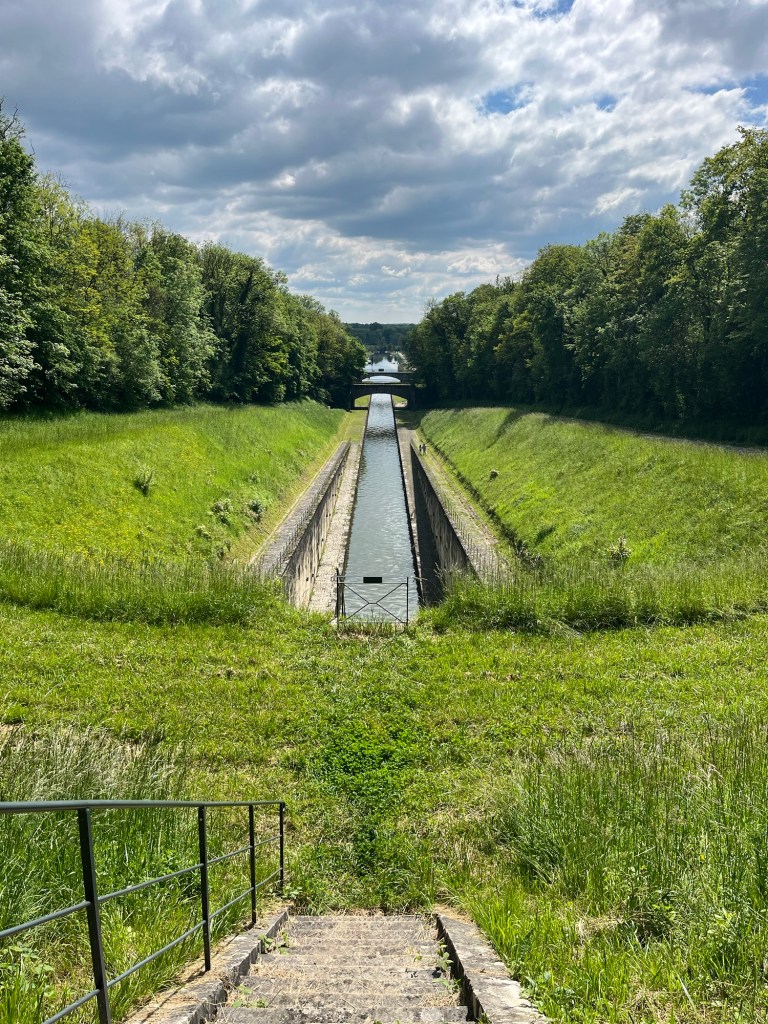

Sadly the footpath didn’t go through the tunnel, but a short walk over the top brought me out very near my home for the night.
I was fascinated to see an interactive game that could be played along this stretch of canal based on Archbishops Sigeric, his scribe and some, possibly spurious, marauding Vikings. You could play it on your phone by scanning QR codes as you went along. This is something I know my boys would love, and it would be outdoors too!
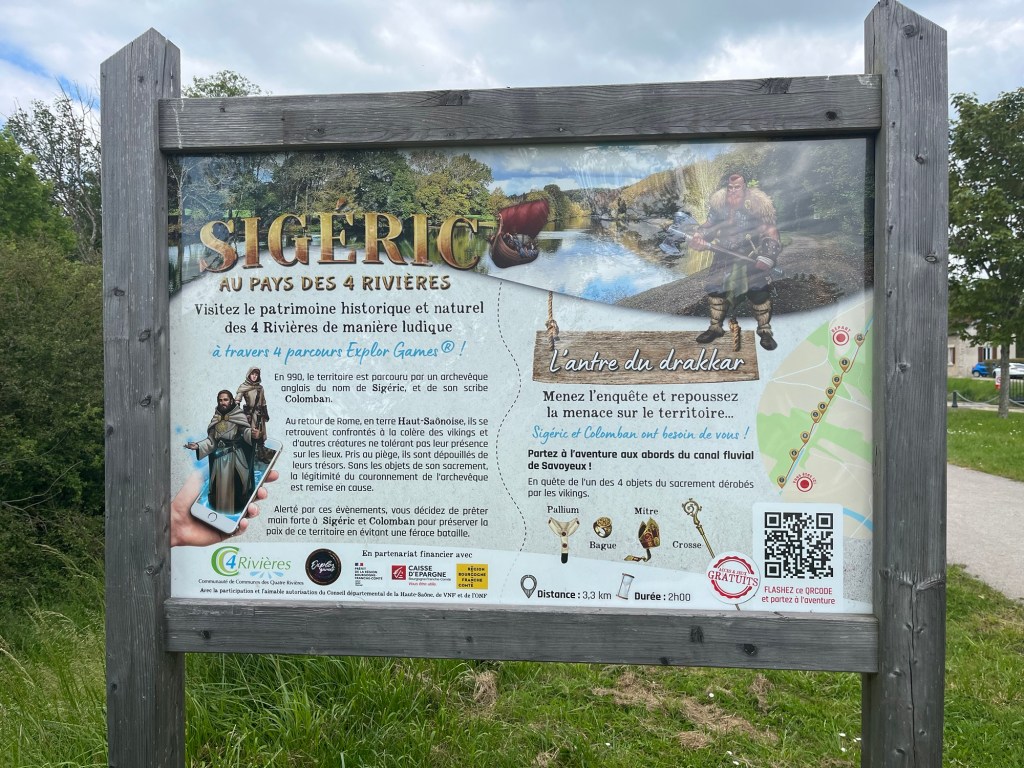
And so, to Seveux I went, staying with Roger and his son at the Gîte Reve. But more of that tomorrow…


 The Loafing Pilgrim
Leave a reply to mickymousecourse Cancel reply