With my uncle staying I had the great luxury of being dropped off at Montmorency-Beaufort with a light bag.
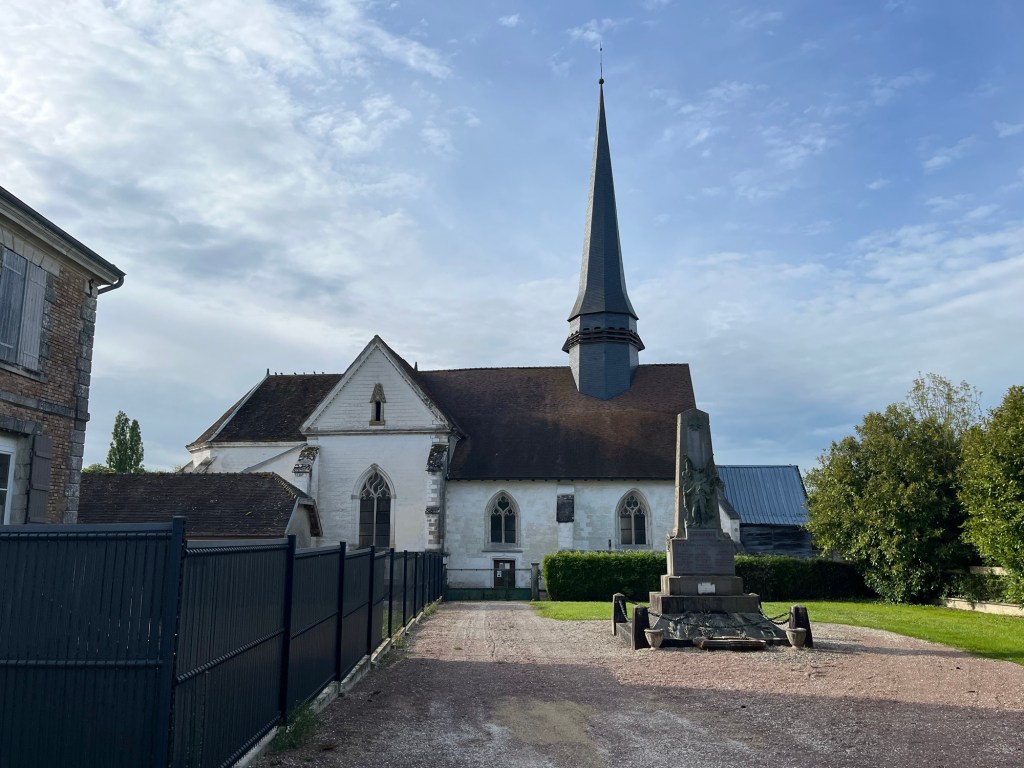
The Via Francigena climbs onto a ridge behind the village and, frustratingly was poorly marked for a good 2km stretch. Lots of time was spent checking and re-checking where I was on the map, and despite this I still managed to veer off in the wrong direction and have to retrace my steps.
However, once I was again on the right track, I was rewarded with a splendid view back across towards Brienne-le-Chateau.

The view was great, but it must be said that this stretch is perhaps a little “samey.” Chalk farmlands tend to roll on for huge distances, and with the exception of the occasional patch of woodland, or if one is lucky, a hedge there aren’t many features until you drop down into valleys where water emerges from below the band of chalk.
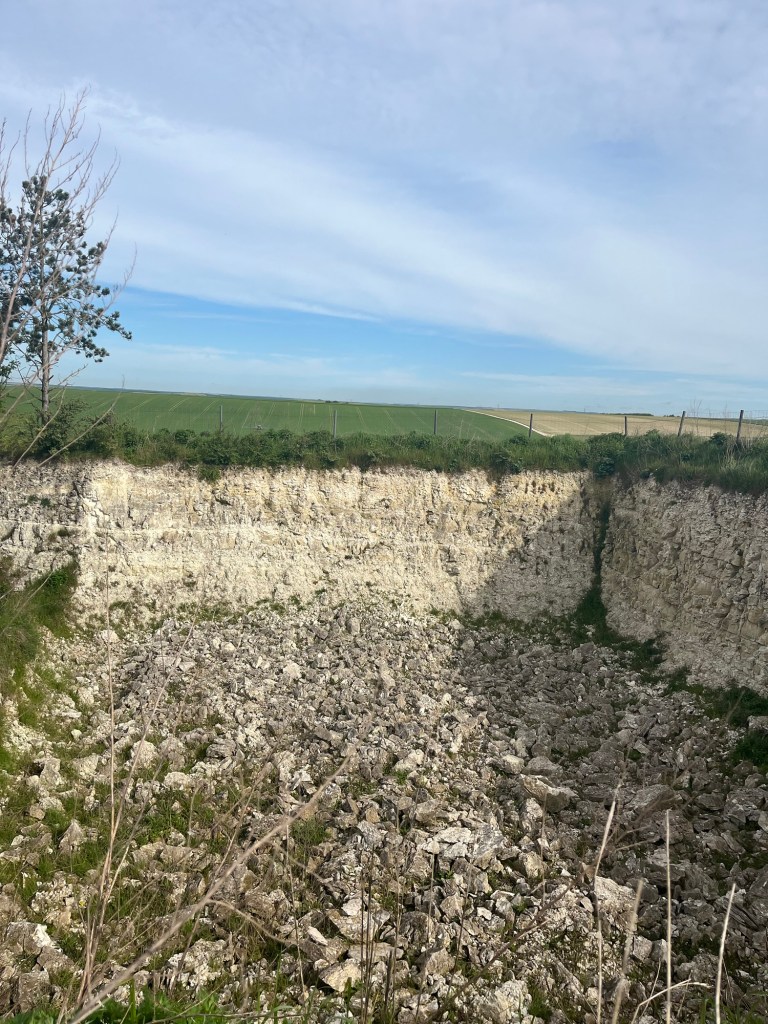
I was pleased to see an old, small quarry cut into the rising ground showing how near beneath the surface the chalk is.
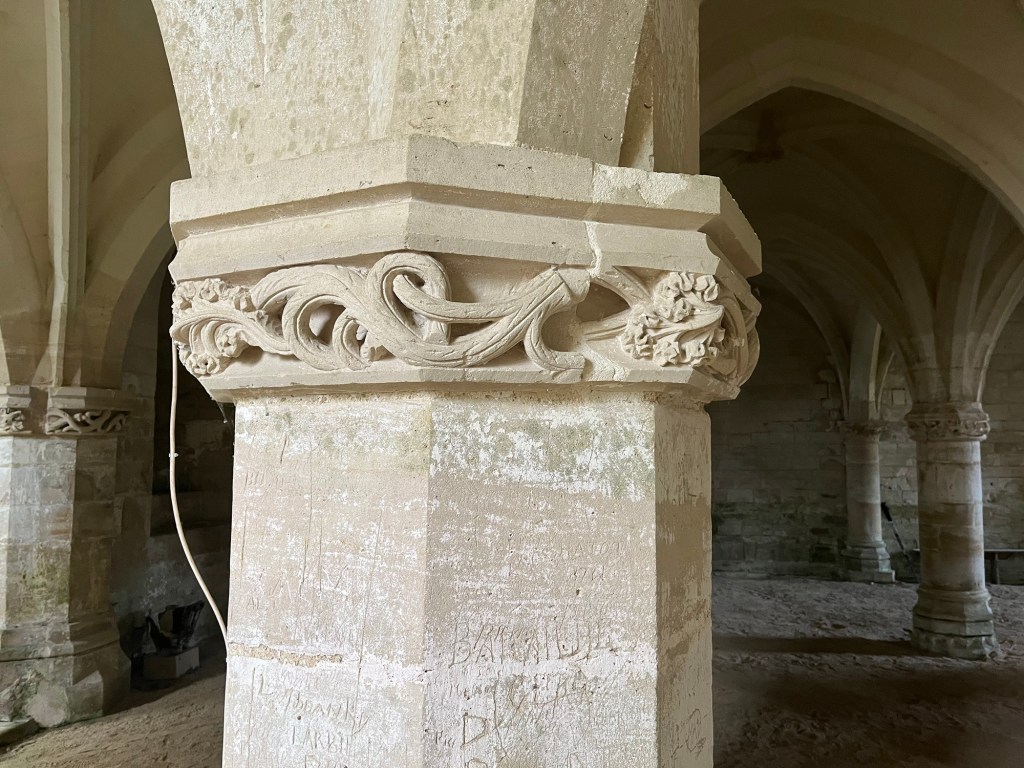
The main highlight of this stretch of the route is the church at Rosnay-l’Hôpital. The church itself is dedicated to the Assumption of the Virgin Mary, but the crypt below is dedicated to St Thomas of Canterbury and dates from the 12th Century.
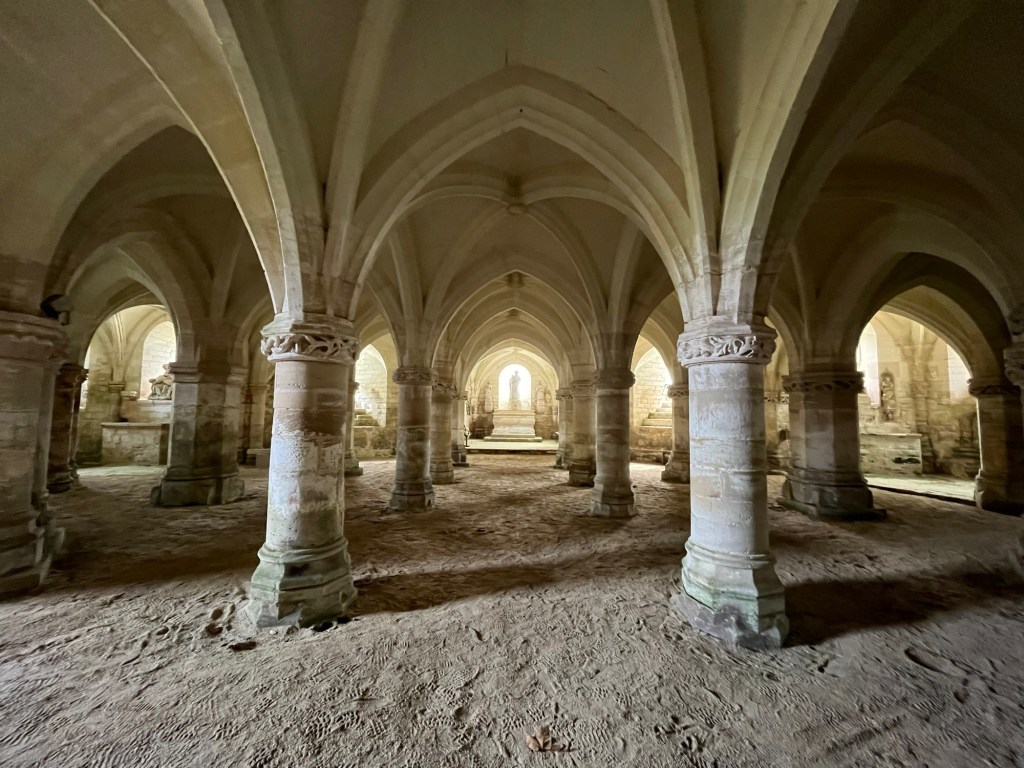
On arriving at the church I discovered some wonderful carving on the column capitals and a simple dignified space.
/

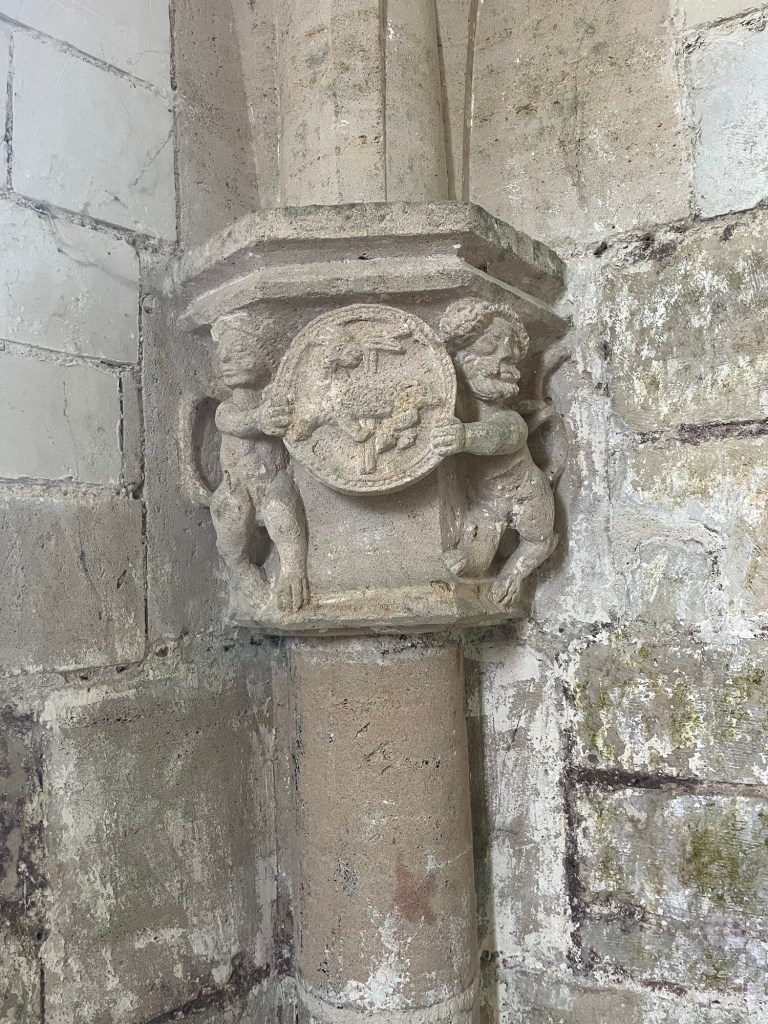

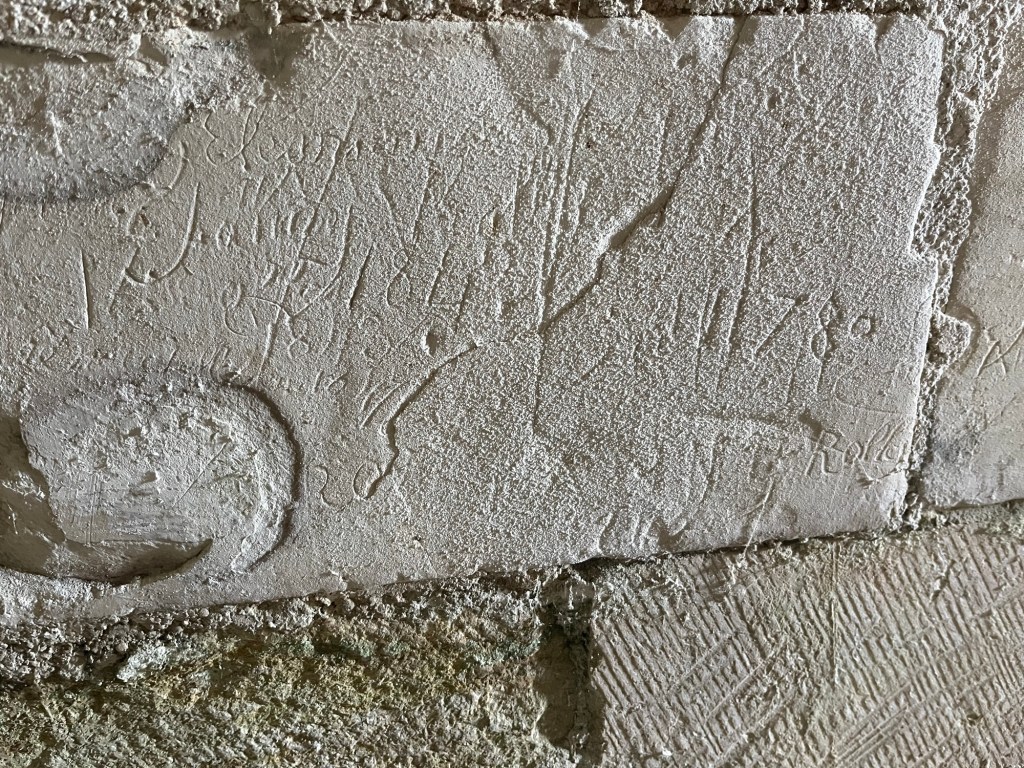
Centuries old graffiti can also be found scratched into the limestone.

The church above dates from the 15th and 16th Centuries, but as Sandy Brown commented in the guide Walking the Via Francigena
“…its statue of the Virgin of Mercy and its stained-glass windows are of exceptional artistry.”


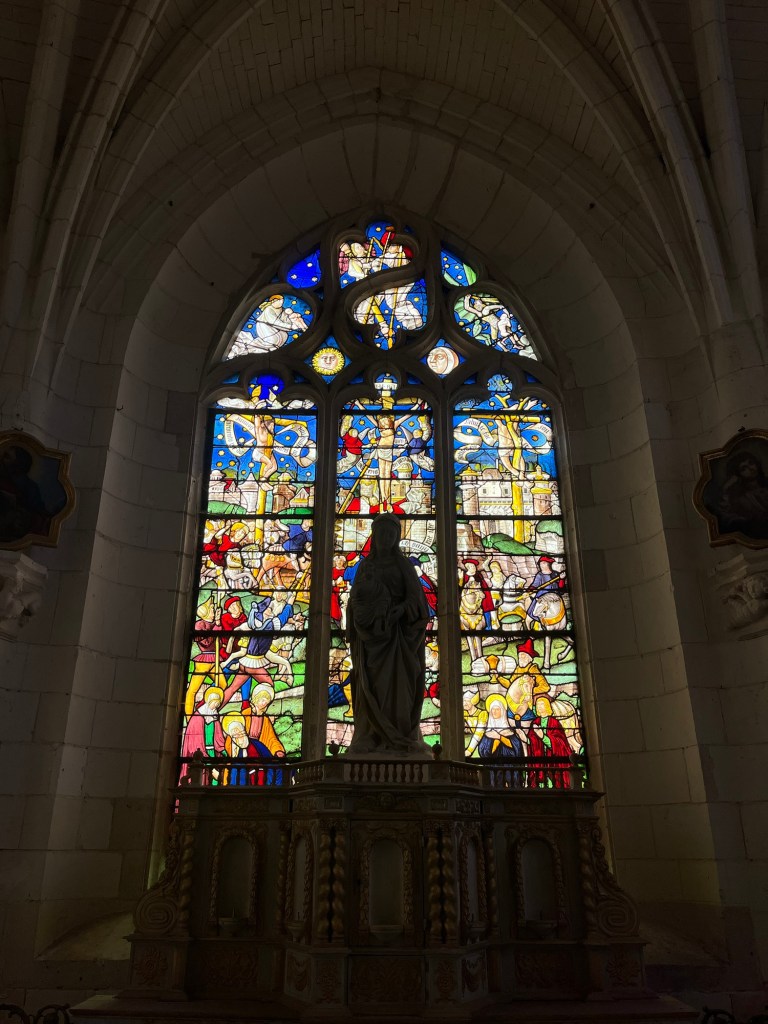
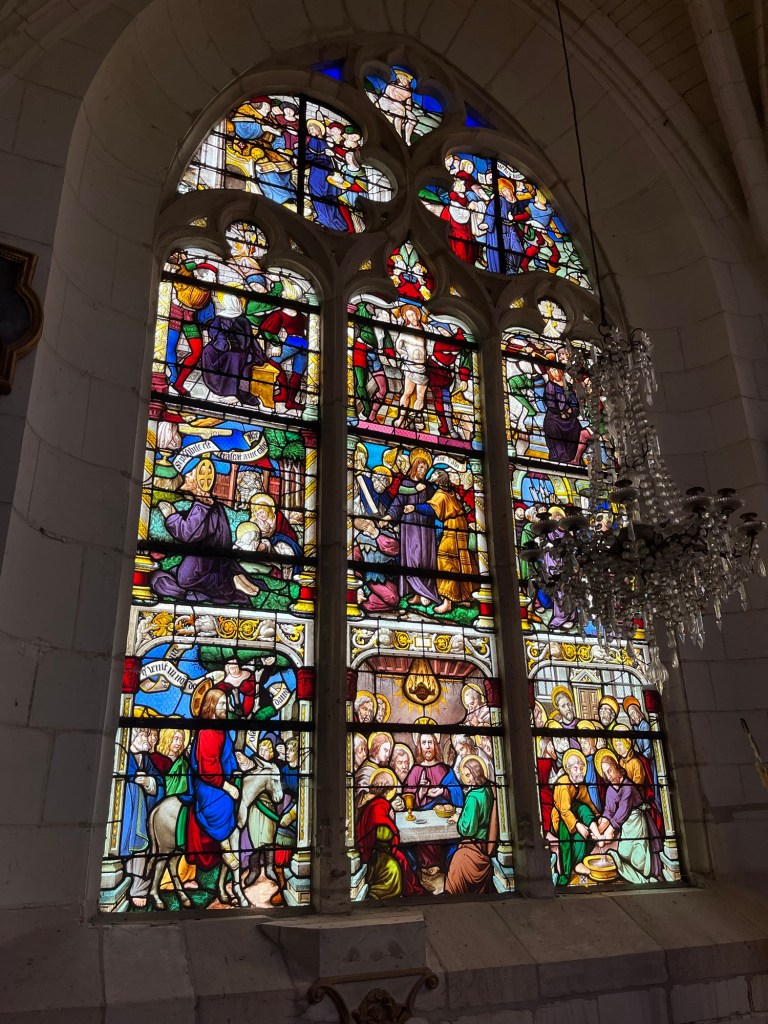
And Sandy, I would have to agree.
On leaving the church, I discovered a local farm produce automat. Usually these are filled with fruit and vegetables in quantities that would be foolish to buy and carry around. However, a cheeky pink cheese caught my eye!

And from subsequent tasting, I can confirm that this was as lovely as it looked!
The route then followed the edge of the river Voire, deep down in a gorge beside the road. The road then became a track before emerging in the back of the small village of Bértignicourt. A large man, who seemed to come straight from central casting in the guise of a jolly French farmer chatted to me about a number of things. I only understood the section of conversation about pilgrimage, but think I nodded and agreed at all the appropriate moments.

Then on Chalette-sur-Voire. The route here was a little frustrating as it would double back on itself as soon as the bridge at Chalette was crossed.
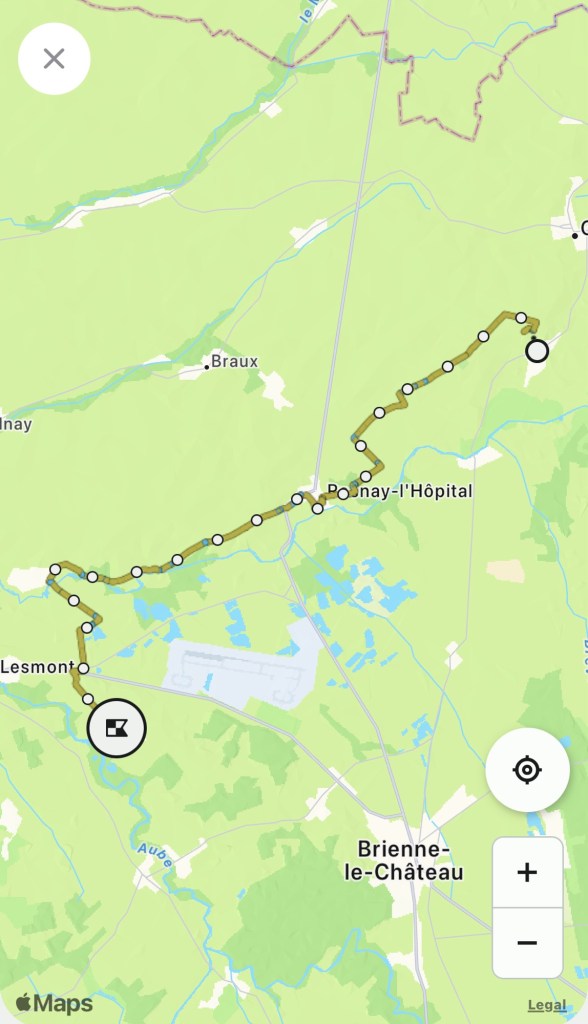
However, instead of heading back for the southern back of the Voire, I stayed on the D5 saving myself a little bit of time. Many folk find road walking boring, but I rather like having to think a little less where my feet are going (usually how to avoid the mud) and this frees up my mind for other thought and prayer.
I was nearing the end of the walk now. Past the gravel quarries and then over the busy D960 up towards Précy-Saint-Martin. Happily a track ran alongside much of this road, as I didn’t fancy sharing a verge with the many lorries hurtling along at break neck speed.

Précy-Saint-Martin seemed to be another typically quiet French village, however it was obvious that with a large Mairie and a school, a little more happens here than in the other villages I walked through that day.

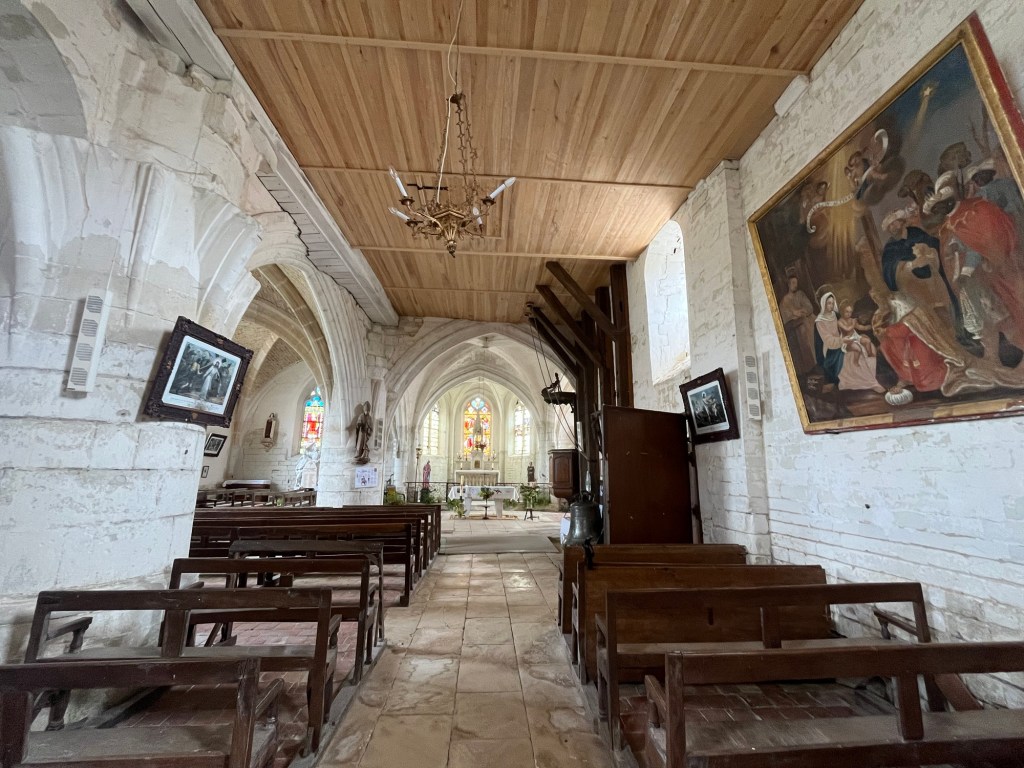

The village church seems to be loved by its congregation, with a number of handouts and prayer materials dotted around the place; as well as a large bell that presumably had to be brought down from the tower and hasn’t quite found its way back up yet.

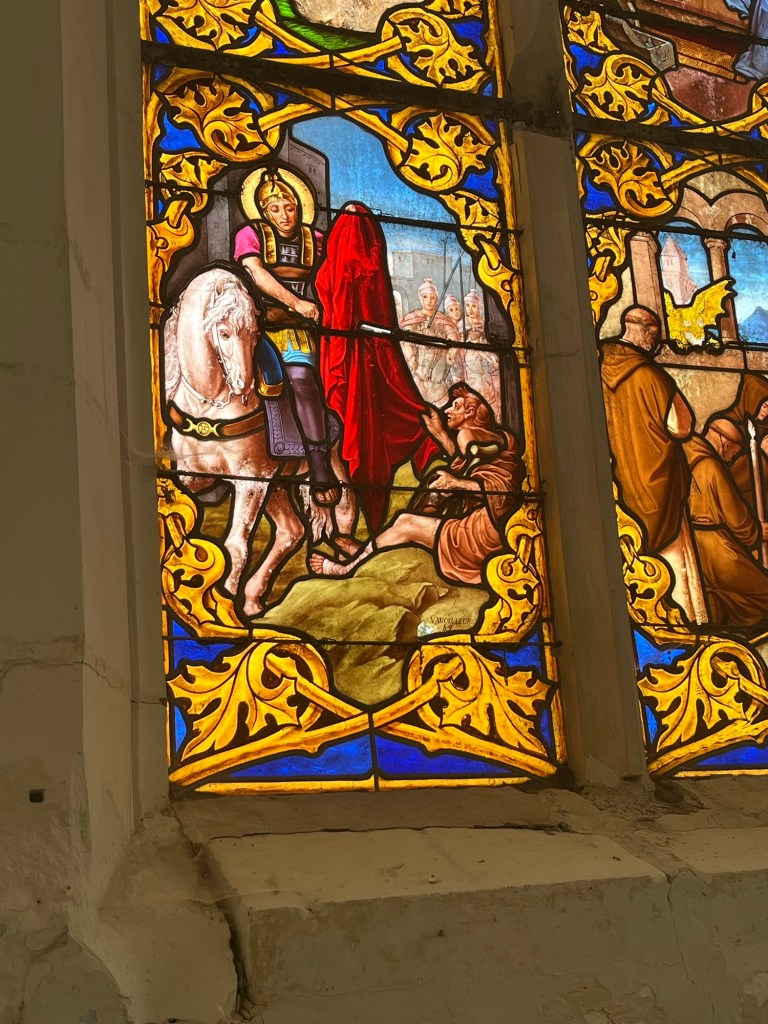
There was some particularly vivid stained glass here too. Including several panels telling the story of their patron, St Martin. This soldier was supposed to have encountered a beggar on the road who is in the middle of freezing to death. Taking his sword, and perhaps mindful of Jesus’ words that what one does to least of us, we do to him, he cut his cloak in two and gave half of it to the beggar.
I particularly like St Martin for this – he is a good example of the pastoral model of self-care for the carer. Martin would be able to do no more good if he had given his whole cloak away and then had frozen to death himself. In order to properly care for others we must not neglect our own care.
At the west end of the church is a little open lean-to covered area against the building. I’ve noticed this with a number of church buildings in these parts and wonder if they held markets here in times past.
While musing on this, a sobering memorial caught me in my tracks. It commemorated 14 men of the village who were shot by the German occupying forces on 27th August 1944 as retribution for a nearby act of sabotage.

Resistance greatly increased after the D-Day landings. It’s awful to think that these men were killed so near the end of the war.
Still musing on the tragedy of war, my uncle appeared ready to take me back to Brienne-le-Château. It had been a good day’s walk and we spent the rest of the day exploring the Brienne, catching up and then ventured out into the town in the evening for something to eat.
That, is another story…


 The Loafing Pilgrim
Leave a reply to revdpaulroberts Cancel reply