So it came time to say goodbye to Loan; home of a great theological school of thought in the 12th Century, with Anselm and Abelard and other famous chaps of the church. As I looked up at the cathedral for one last time, I saw the life sized oxen, peering over their places on the towers – placed in honour of the beasts of burden who had hauled the stone up to build this impressive building.

Sadly today, this wonderful building seems a little cold and sterile inside, despite its great beauty. Perhaps it is because it is no longer the seat of a bishop (Laon ceased to be a Diocese at the Revolution), or maybe it is because the dynamism of the town is around the base of the mount and not its top. The piped music of monks chanting certainly didn’t help, and I had noted that there was no holy water in the stoops by the doors (never a good sign). The cathedrals at St Quentin and Arras had seemed like living buildings, this one seemed sadly like a museum. And so spare a thought for the traditional parish church of the city, St Martins, which appeared to be in a pretty parlous state.
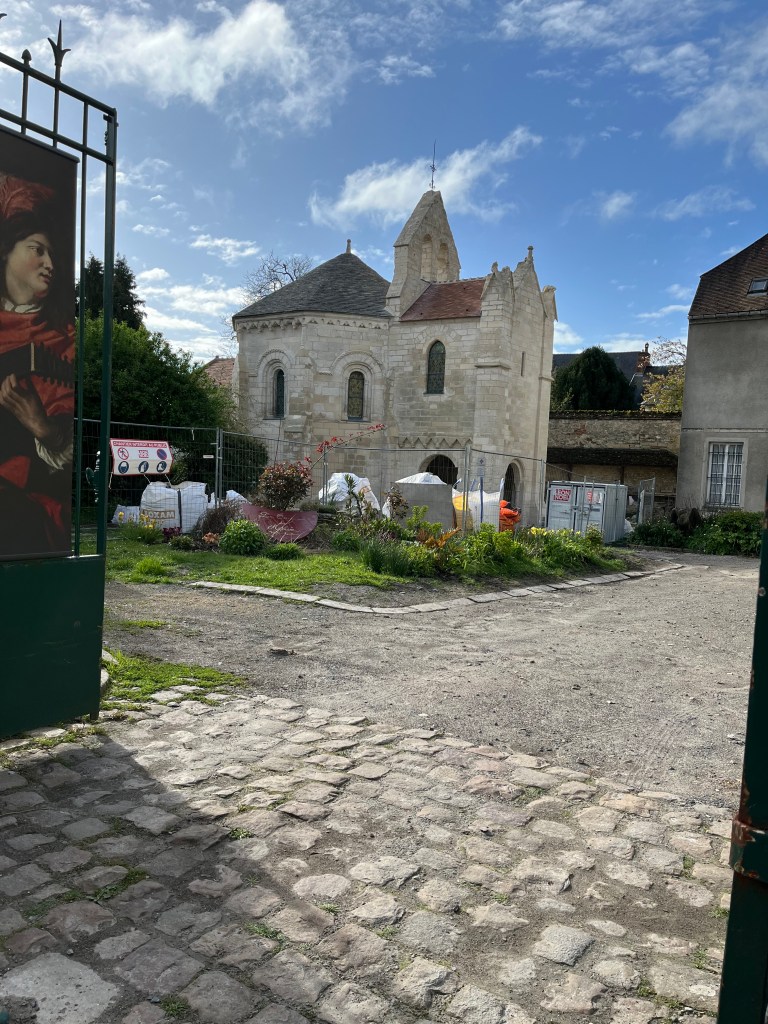
However, I before leading the mount completely, I did spy the Chapel of the Knight’s Templar which greatly appealed to me, in size and relative simplicity. This building is certainly on the revisit list!
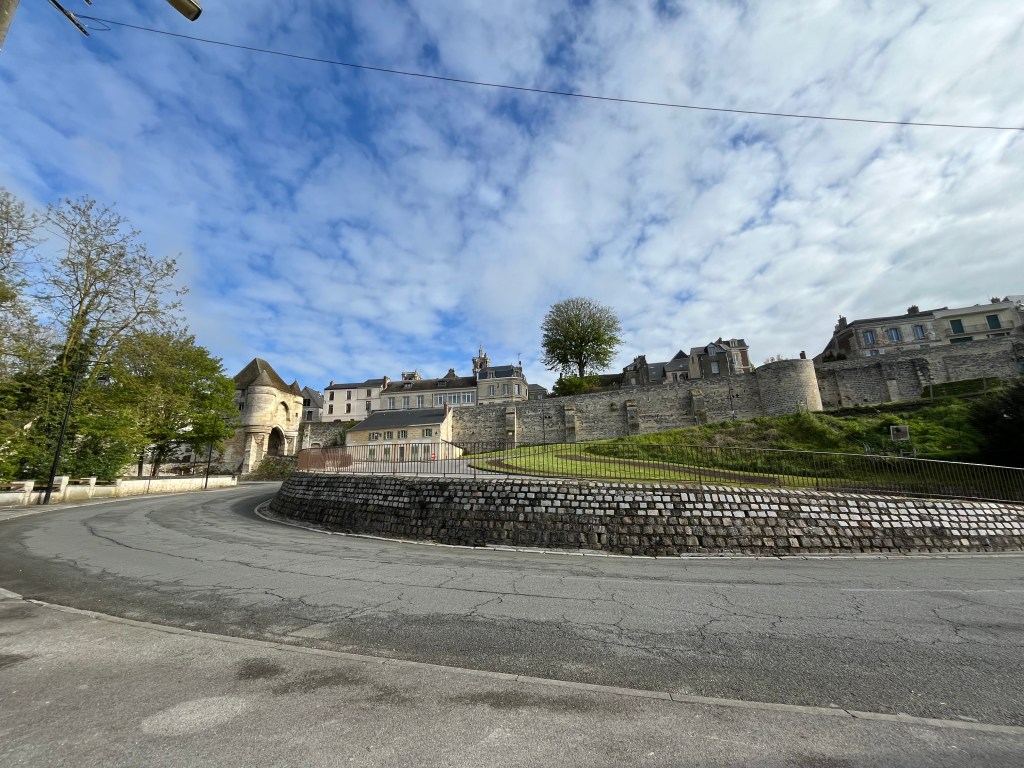
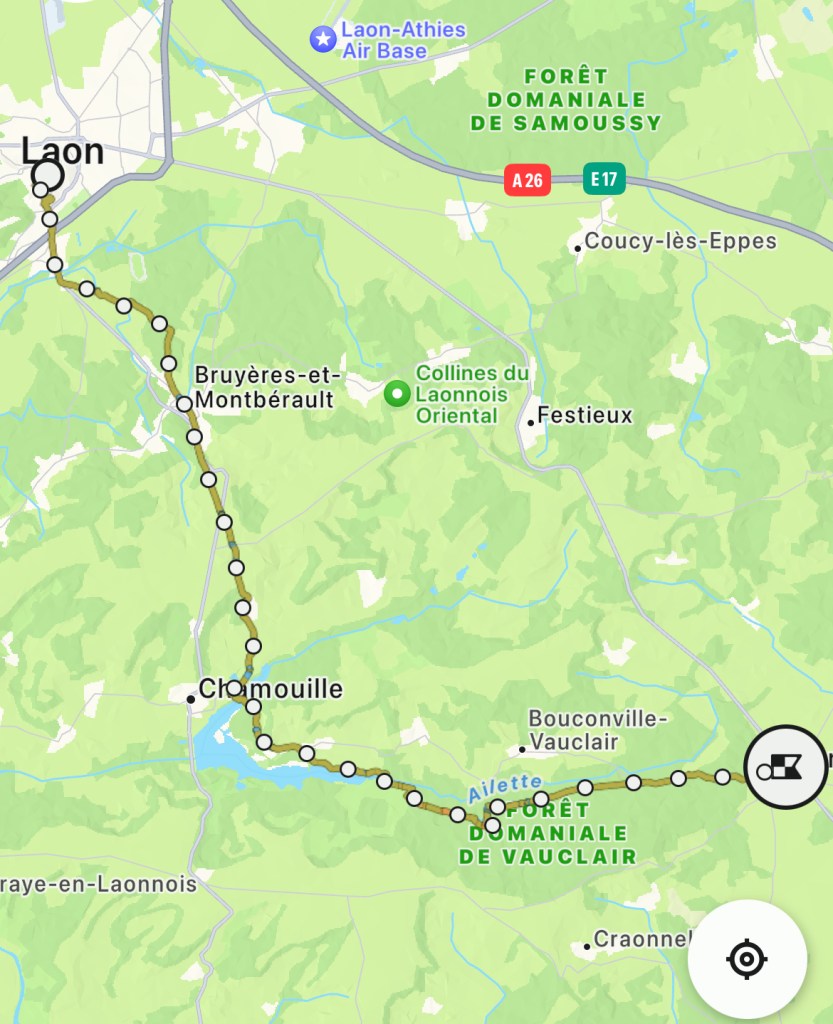
The official route of the Via Francigena leaves the city via the Soissons Gate and then winds round the high ground before dropping down into the suburb of Ardon. However, as I had stayed at the opposite end of the old city, I exited via the Ardon Gate, and traversed a number of sweeping curves and very steep lanes to get to Ardon in a much shorter distance. This was a route suggested in Paul Chinn’s Lightfoot Guide and I congratulated myself on a good 2km saved, although my knees were less euphoric!
Ardon itself has everything the hungry pilgrim could need. (Or should I say the pilgrim that knows he will be hungry by lunchtime!). I would certainly recommend buying all the supplies here than on the top of the hill, where choice is limited and prices are higher!
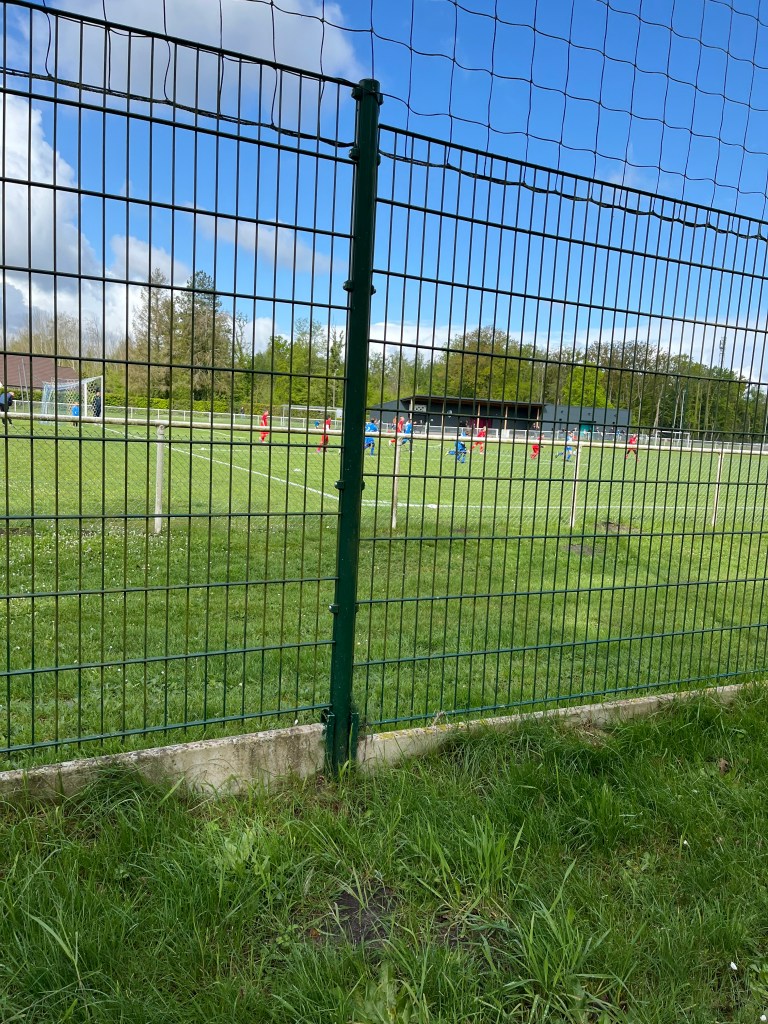
Then, via fields, quiet roads and forest tracks, I came to the village of Bruyères-et-Montbérault. It being Saturday, the village football ground was alive with youngsters. Two games were being played concurrently. I paused a while and watched the action. The goalkeeper nearest to me fumbled a shot tapped in by a wirey looking lad, and a conceded what I suspected was yet another goal. I walked on, wondering how kind his team mates were going to be at full time!
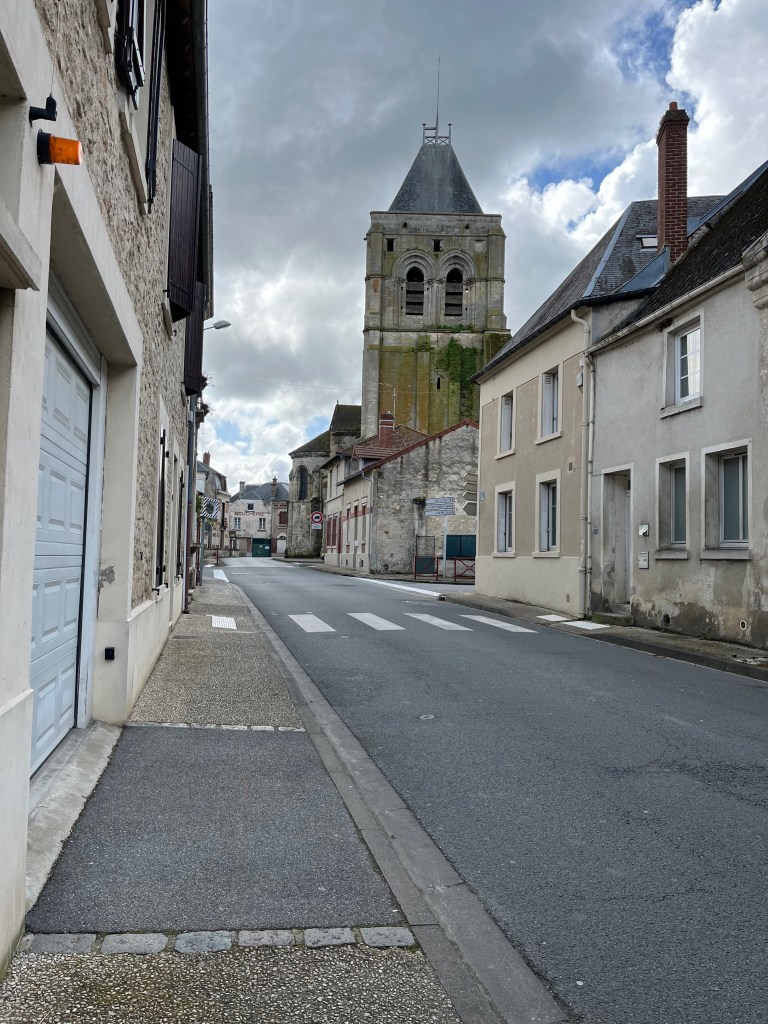
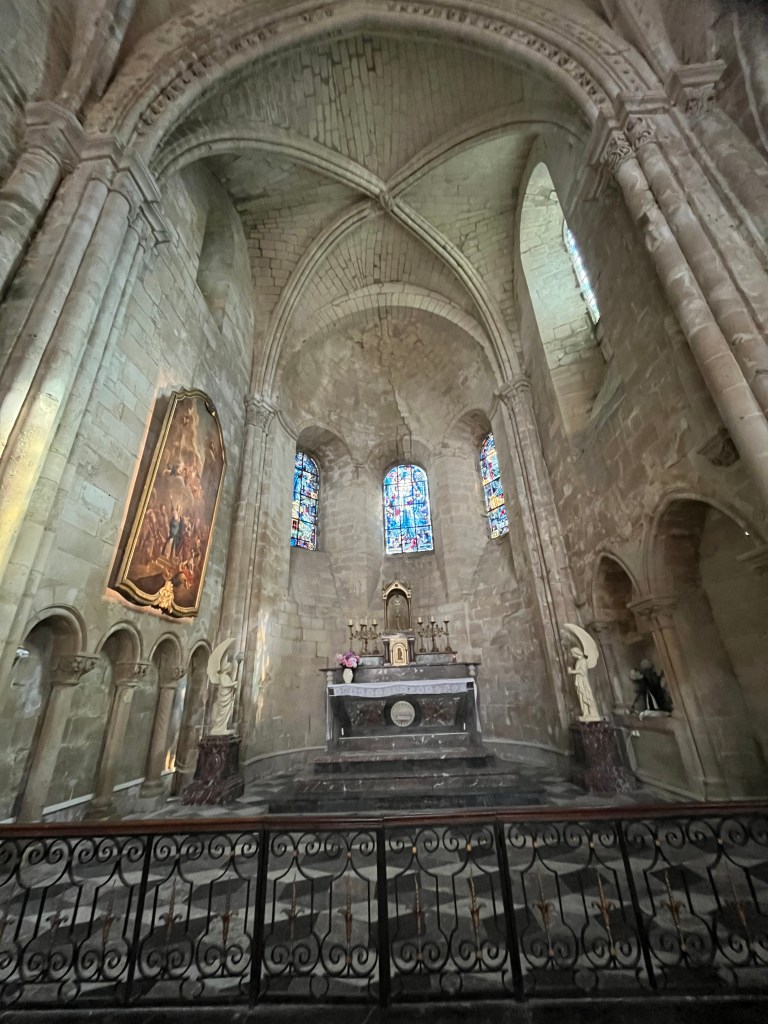
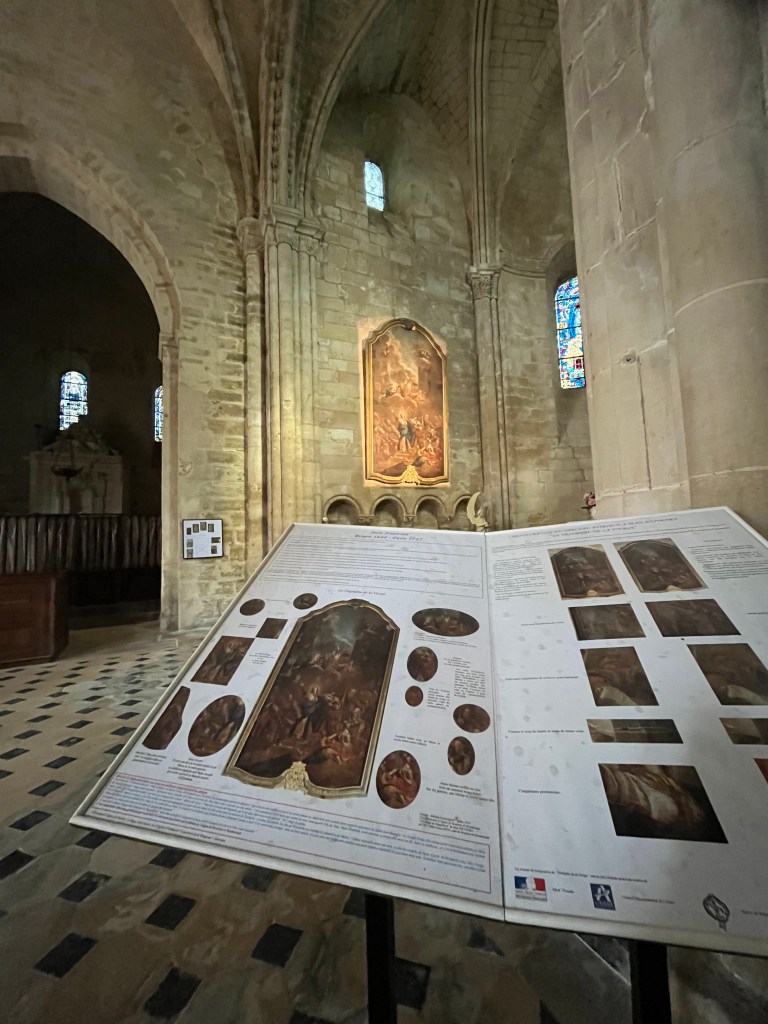
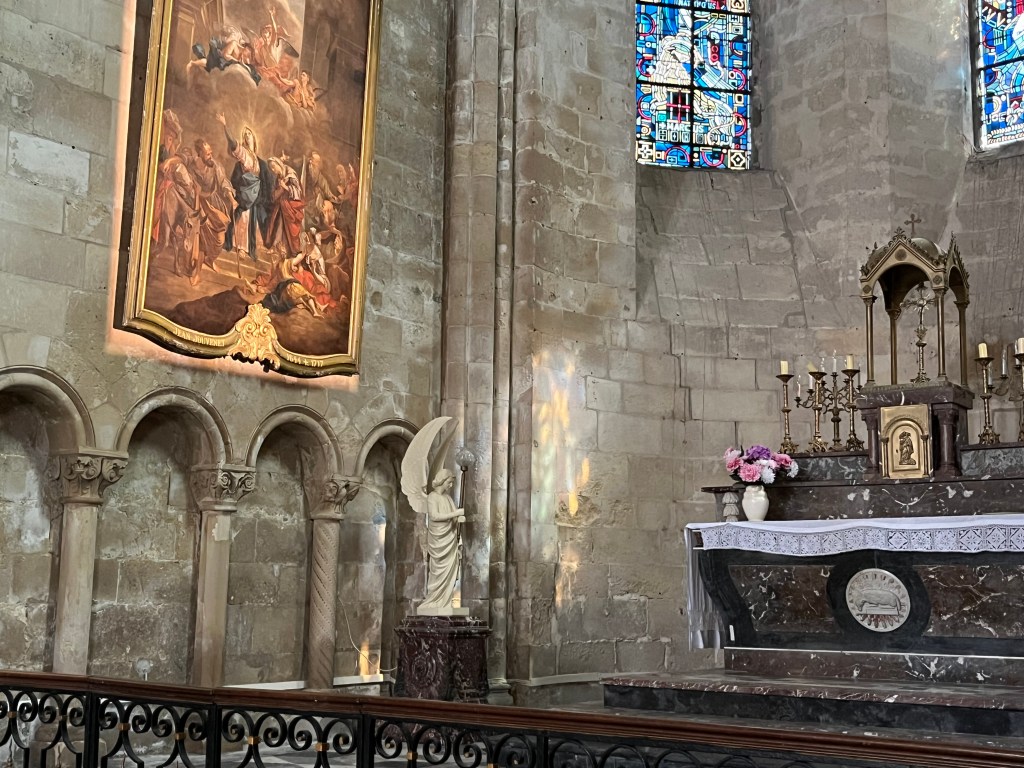
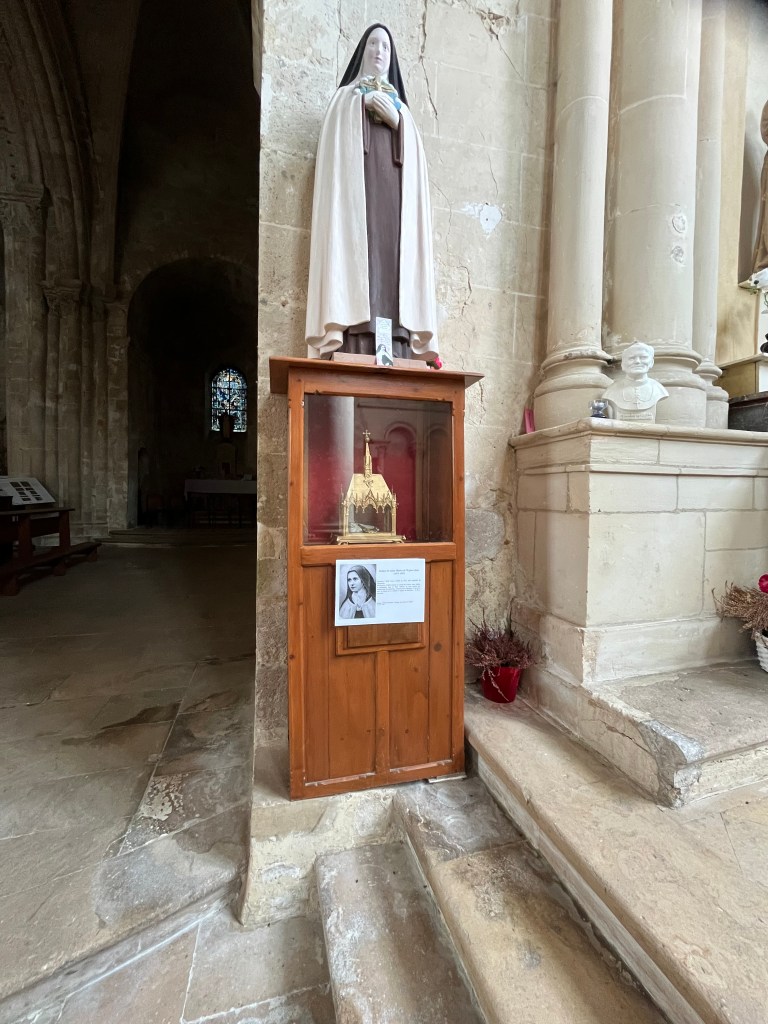
This village also had plenty of facilities, and also a rather wonderful Romanesque church of oversized proportions. The Church of Our Lady of the Visitation dominates the centre of the town, with a beefy tower and elegant apse, complete with early carving. To my delight the church was open and I spent some time exploring within. A guide by a friends’ association added more detail. (Incidentally the first church friends’ association I have been aware of here. Created in 1994, their aim is “…with the village, owning the edifice, to help protect and look after it.” And all power to them I say!)
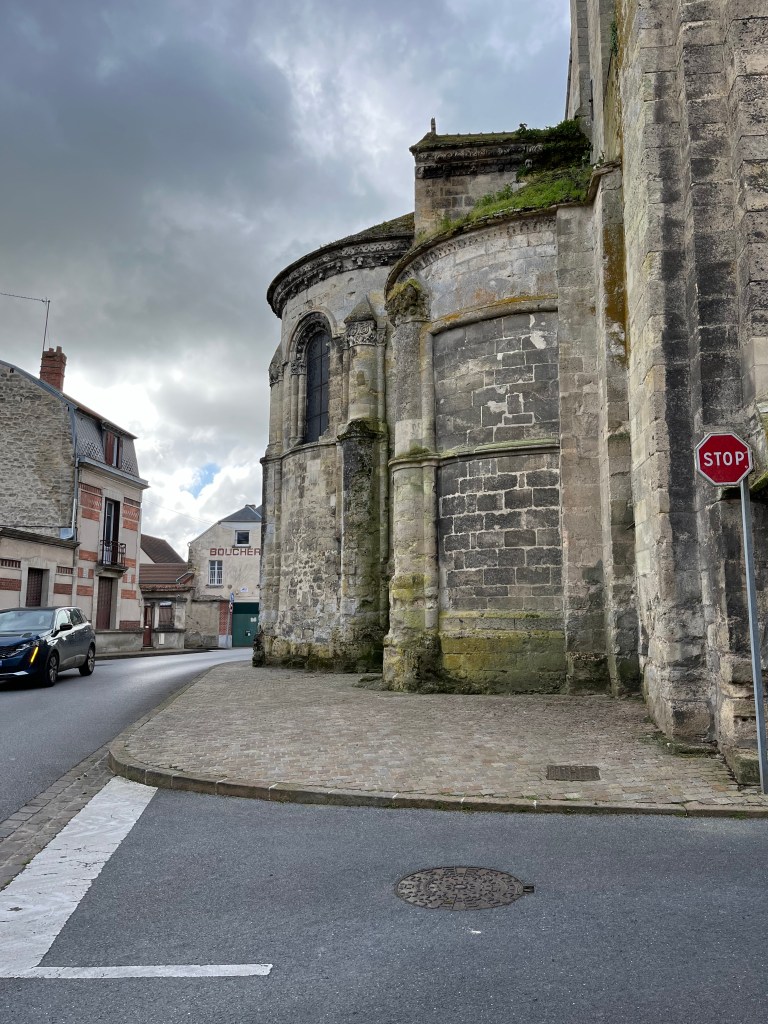
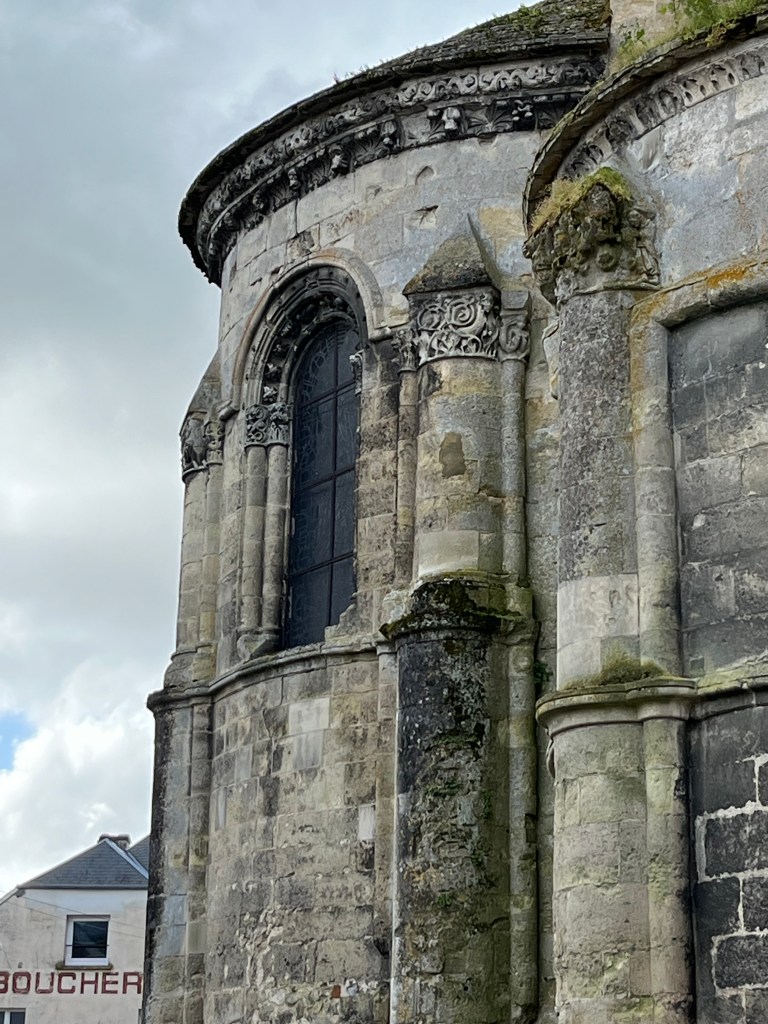
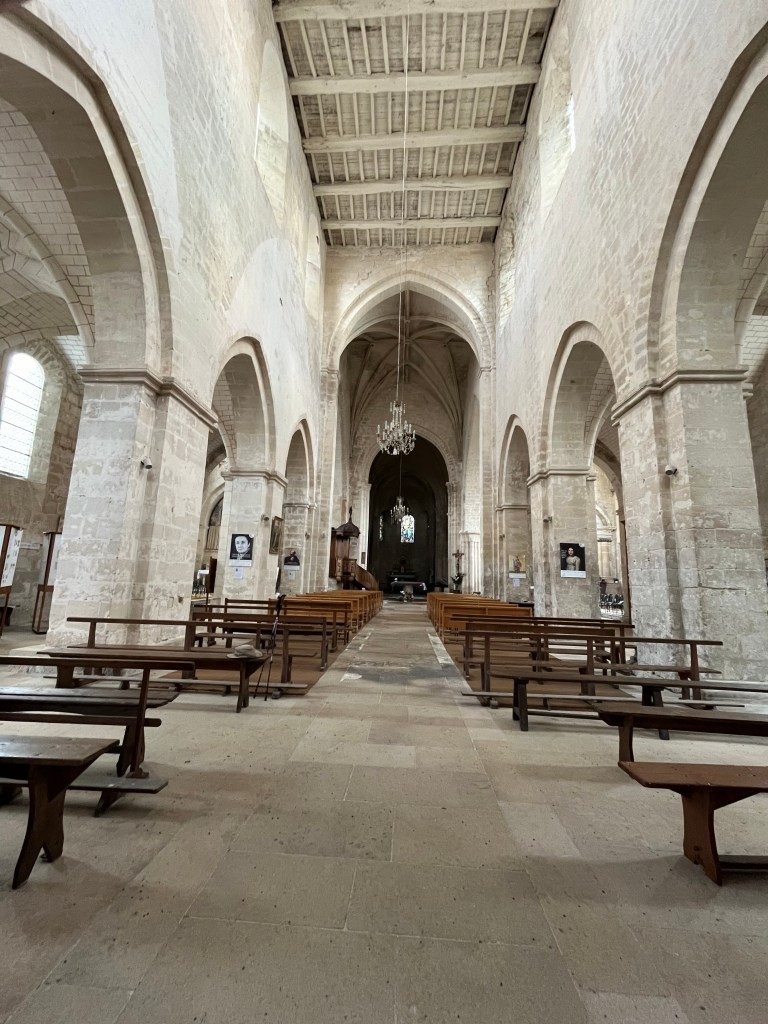
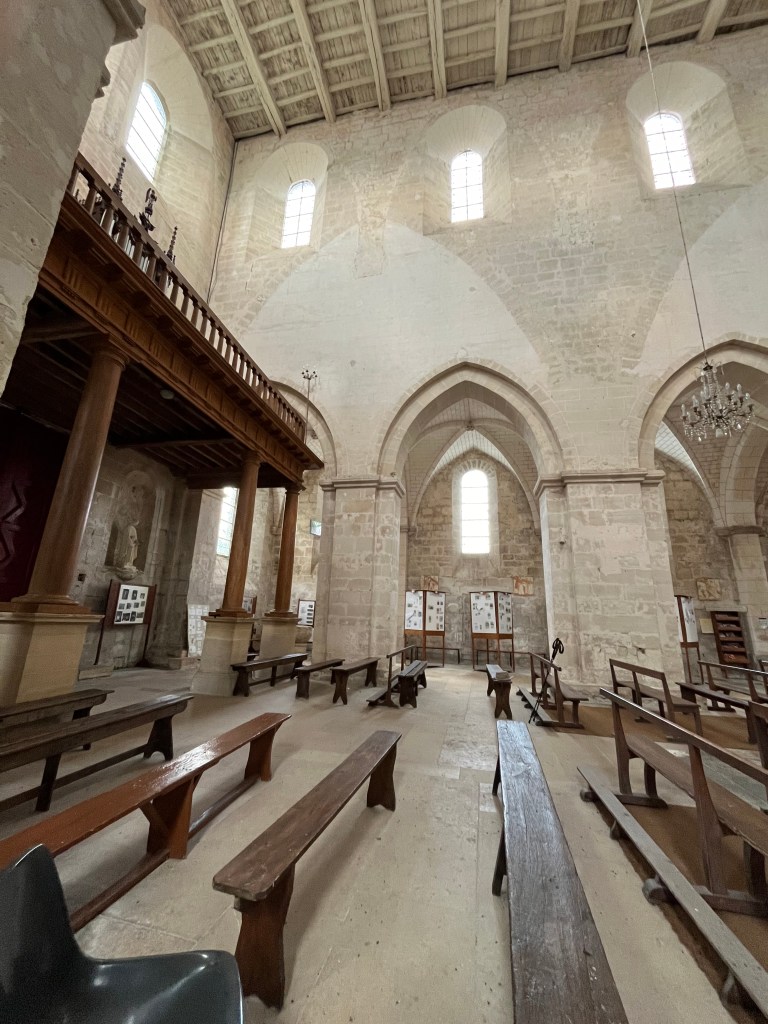
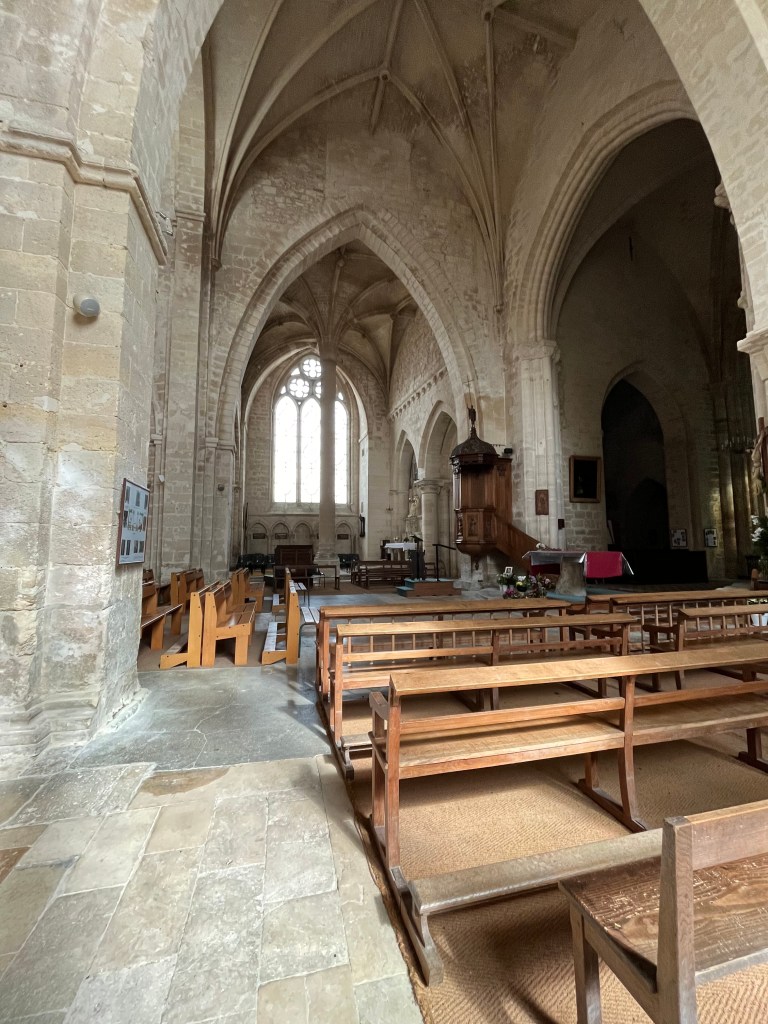
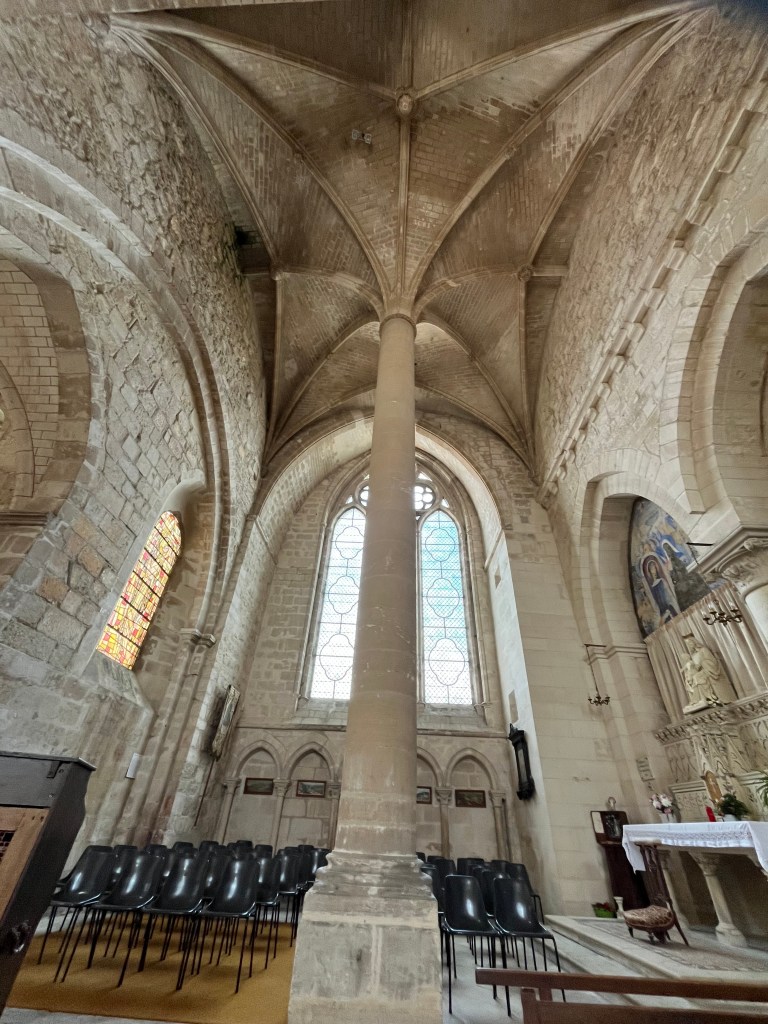
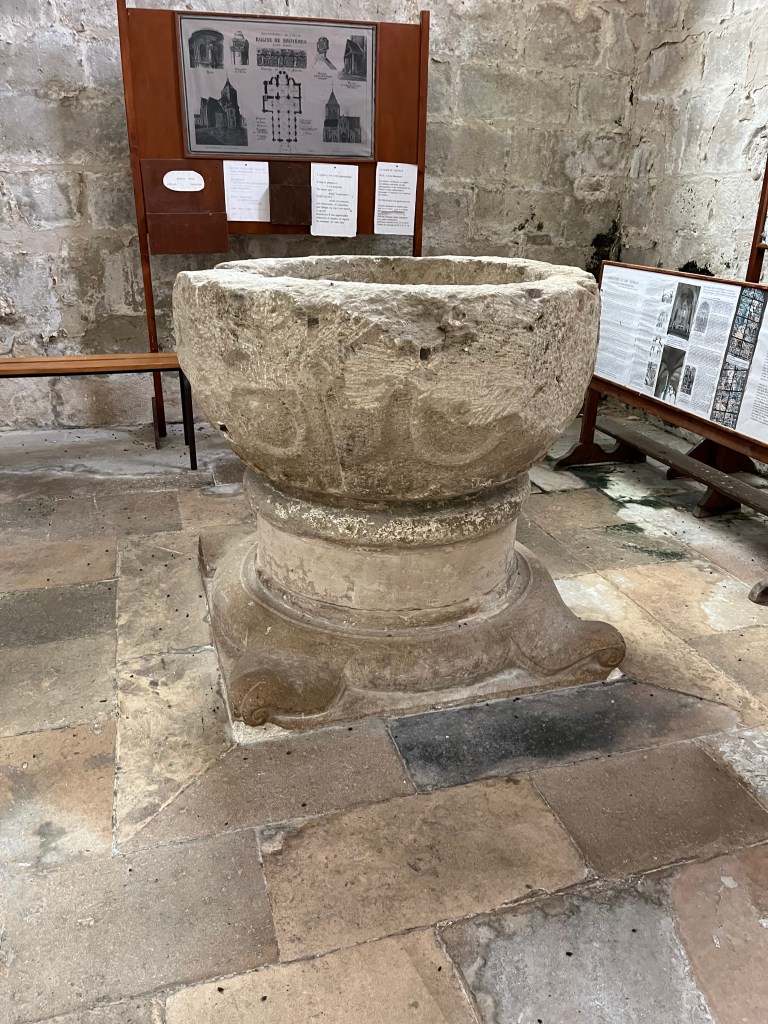
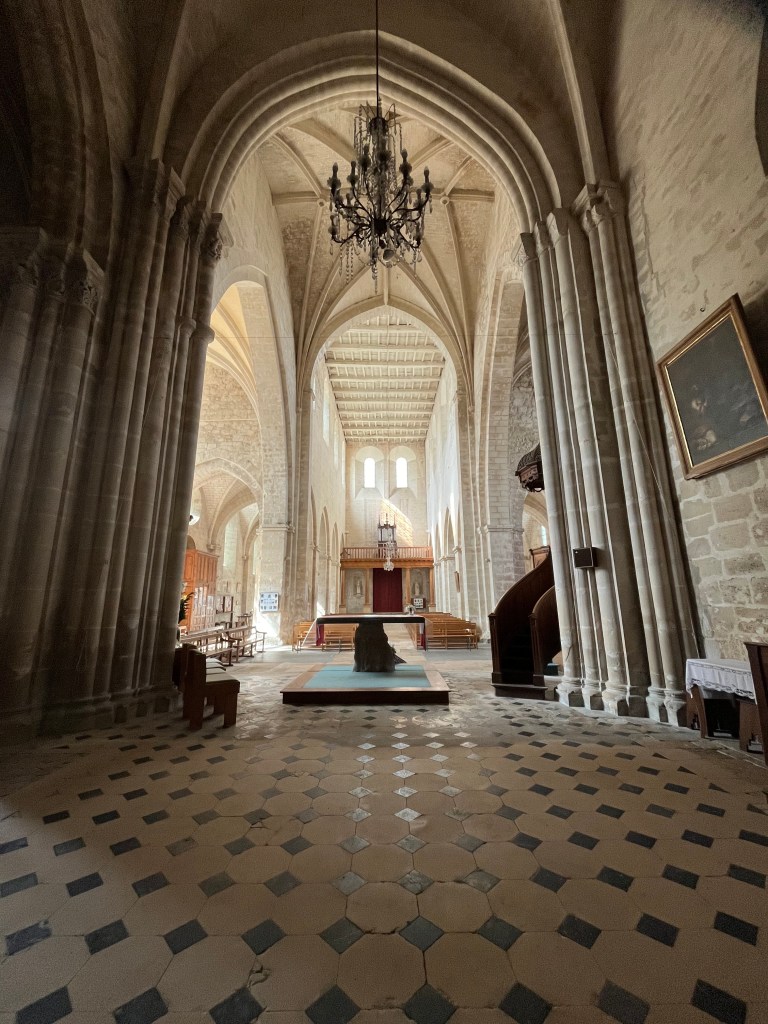

A stiff climb out of the village, brought me out onto higher, exposed ground. Rain threatened, but never came to anything although by the time I reached Martigny-Courpierre, it was cold.
Unlike Bruyères-et-Montbérault, Martigny had been raised to the ground during the First World War.
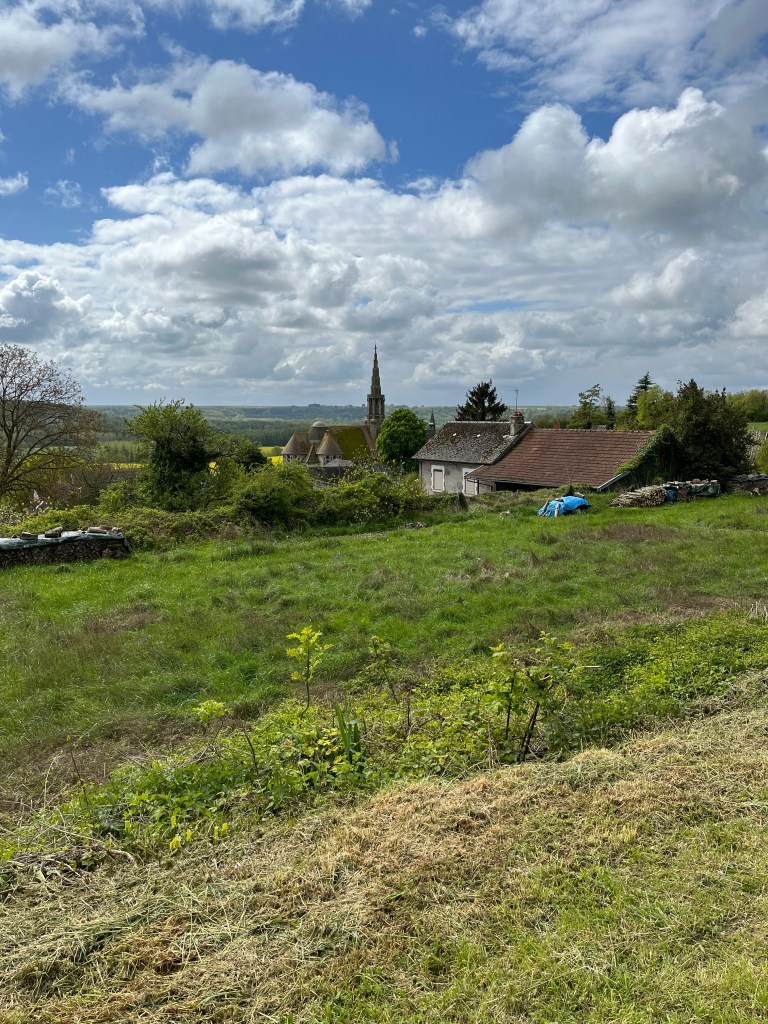
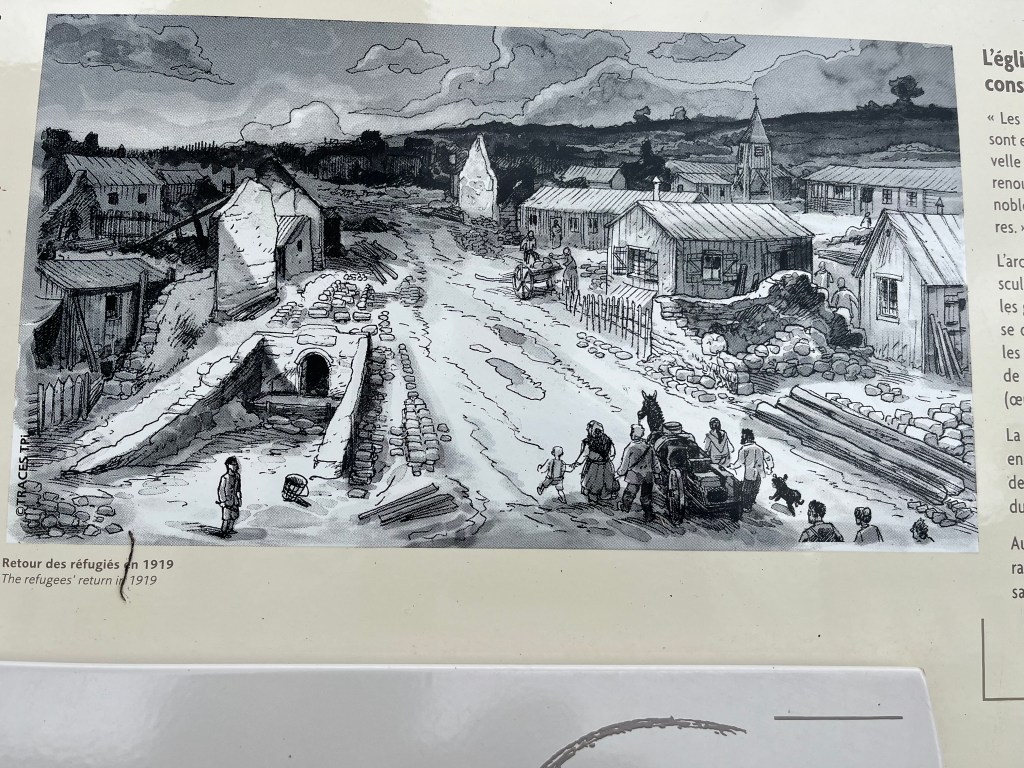
Their priest was named among the “victims civile” on the war memorial, and a moving display board told the story of the villagers returning in 1919 to rebuild. I never cease to be amazed at this generation of folk who worked so hard to bring land back to the plough, and life back to shattered communities. Of course one of the reasons that rebuilding happened so quickly (many buildings bear dates of 1927 or 1928) is the reparations paid by Weimar Germany which tragically were sowing the economic seeds for the next war.
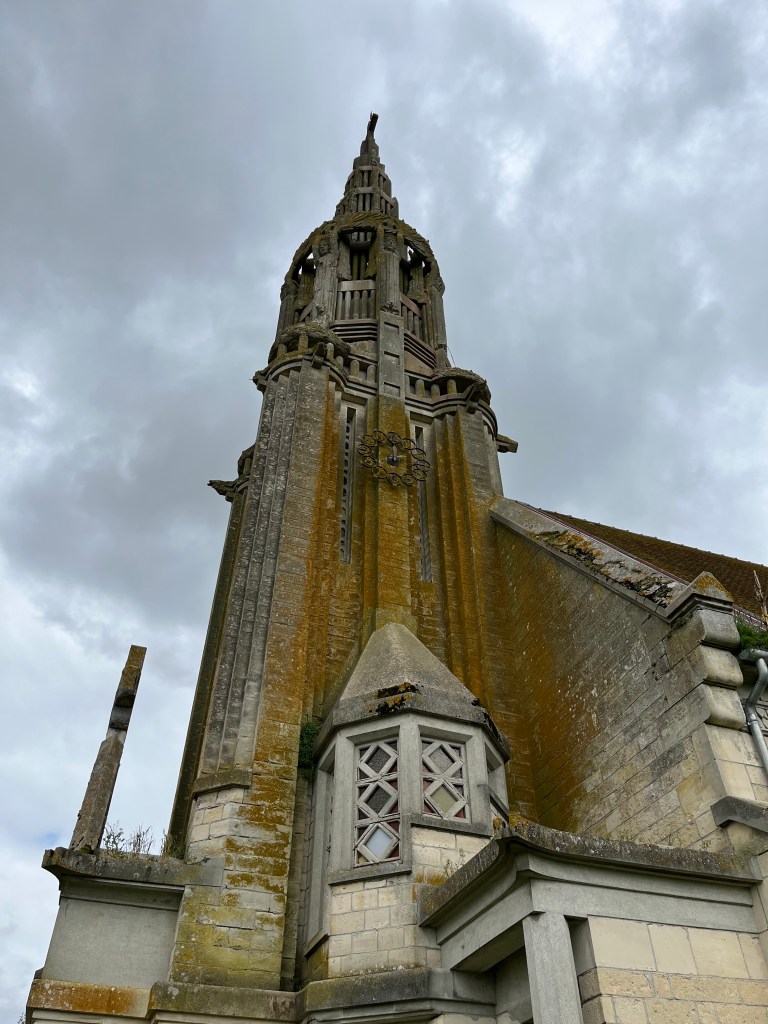
The village church here was built in Art Deco style, making use of the many fluid properties of reinforced concrete. The spire is graceful, consisting of slender columns and angels reaching to heaven. Sadly, unlike at Rocquigny further north, this building is in a sad state. A healthy crop of oilseed rape has set up home in the gutters, window glass is missing and one wonders what the state of the concrete is like.

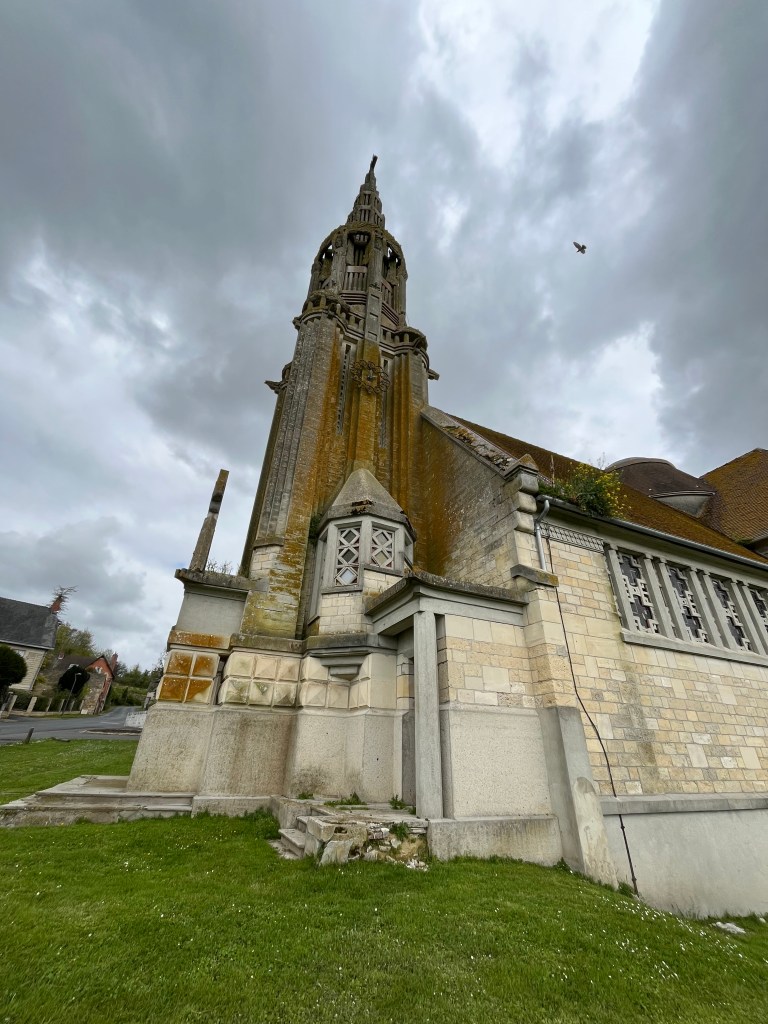
However, to distract me from thoughts of quinquennial inspections, a loud bang drew my attention to a children’s birthday party being set up in the hall next door. That was one balloon that wouldn’t make the final cut!
The Via then wound its way down towards the Lac de l’Ailette. This lake was created in the 1980s by the flooding a the river valley and today contains trails and bikeways. There were a lot more people here than I had seen out in the countryside for several days. I came upon a car park and picnic area and decided this was a good place for a sit down, a stretch and some lunch.
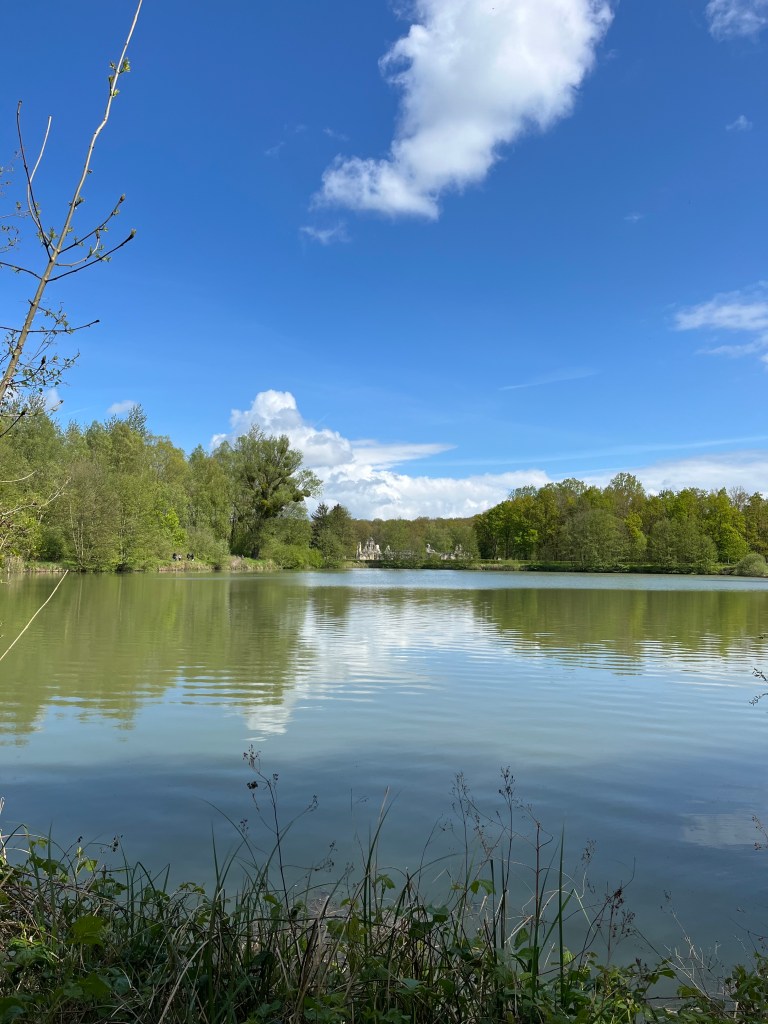
Now I do like people watching, and from my vantage point, I spied three young people in the twenties hanging around their car. They were clearly waiting for someone. The young woman busied herself taking selfies – first with her hoodie up, then down. The taller of the young men strode off purposefully somewhere and was not see again for some time. I wondered what their plan was today. They didn’t look as though they were going for a walk: not the right kit. I was left none the wise for a good twenty minutes.
Then, all of a sudden, another car drew up with three more people in and the third man from the first party reappeared. There was general excitement while everyone kissed everyone else and then to my surprise and astonishment, the tallest of the party squeezed himself into the boot of the car he had arrived in and was shut in. Then the woman did the same in her car. And just like that, the others got into the cars and drove off.
I was left completely confused. What was going on? Were they planning some sort of heist? Were these two, fairly battered, cars going to be parked in a secure area overnight, and the two people concealed in the boots going to spring into action.
I was still pondering these questions as I packed up and walked on in the direction of Neuville-sur-Ailette. And it was then, on rounding the next bend, that I cracked the puzzle. On the lakeside here is a Centerparcs resort. I would put money on the fact that the six of them were going in, but were only going to pay for four places. The other two would emerge from the boot chrysalises to become resort butterflies once safely inside.
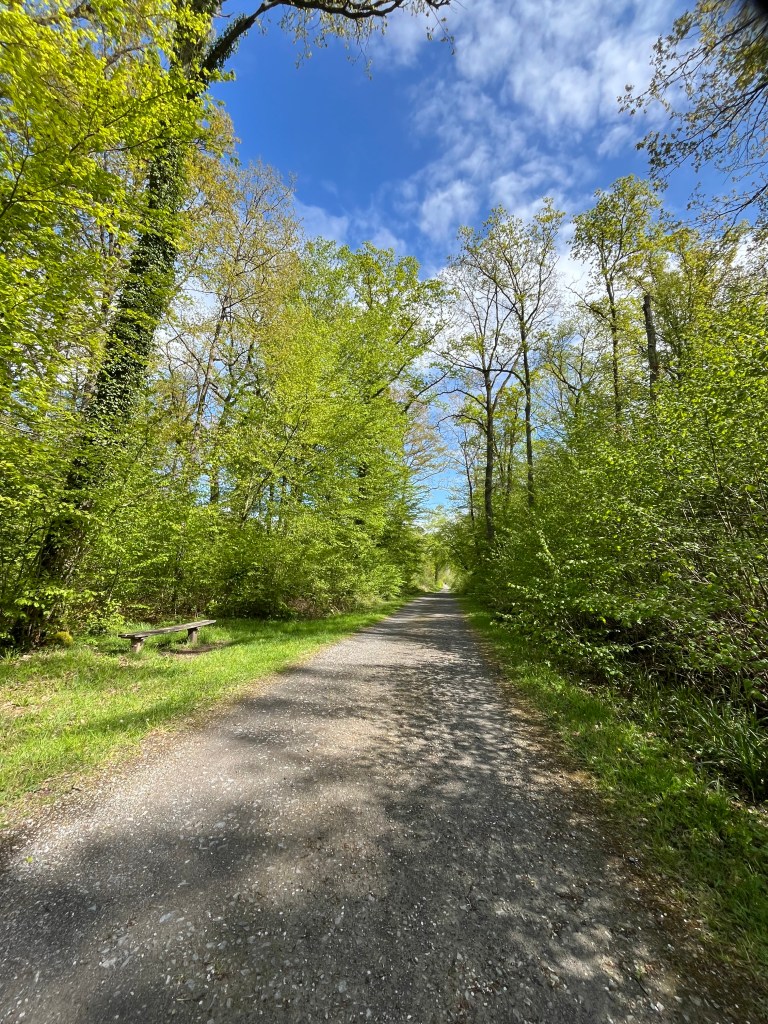
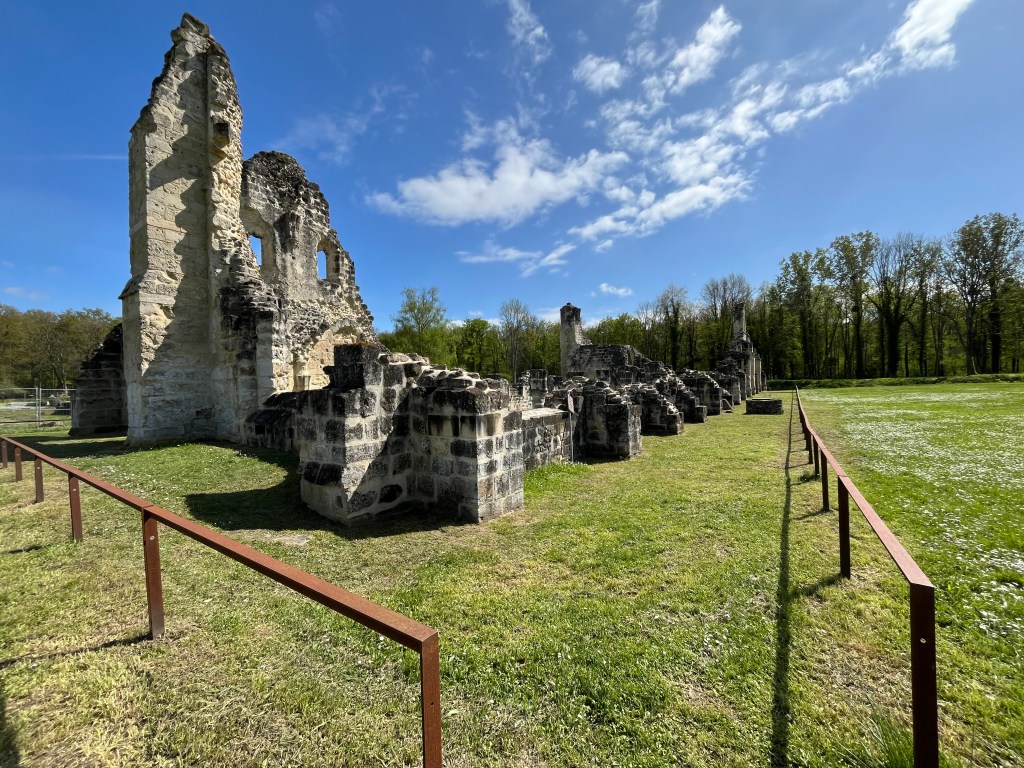
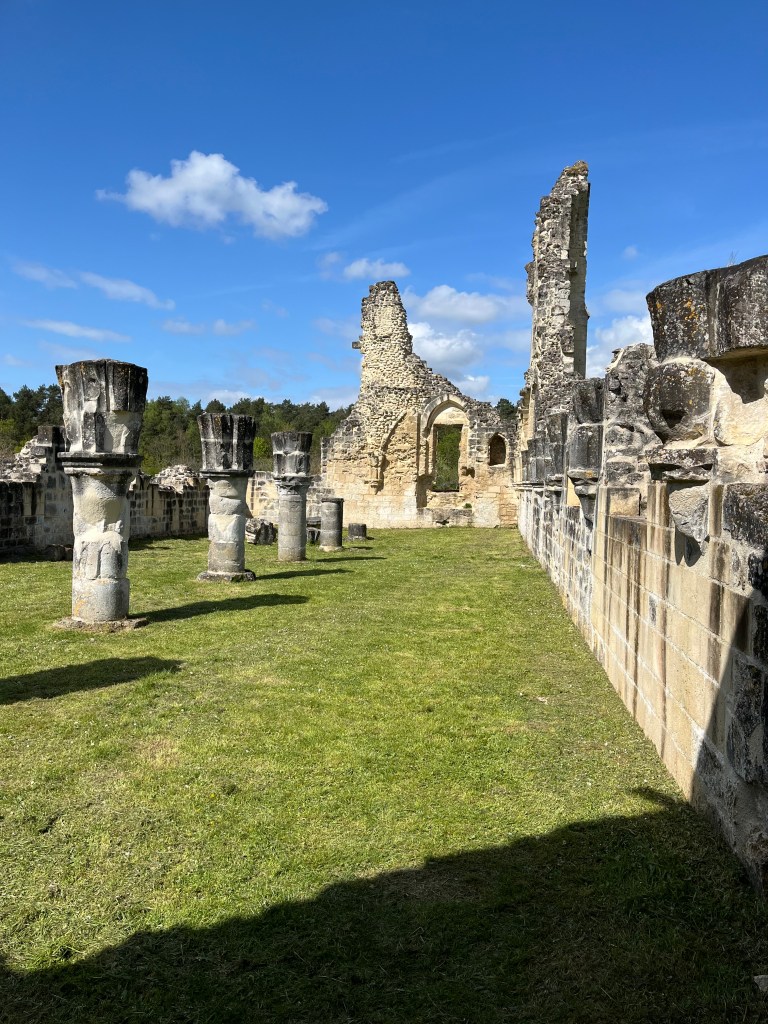
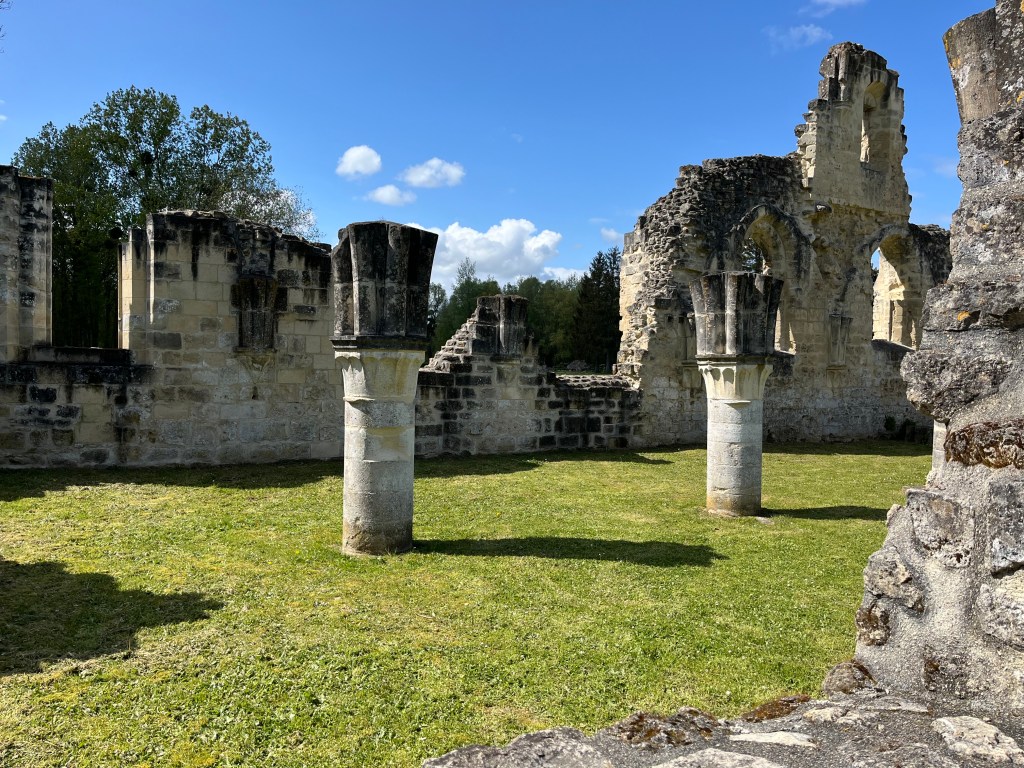
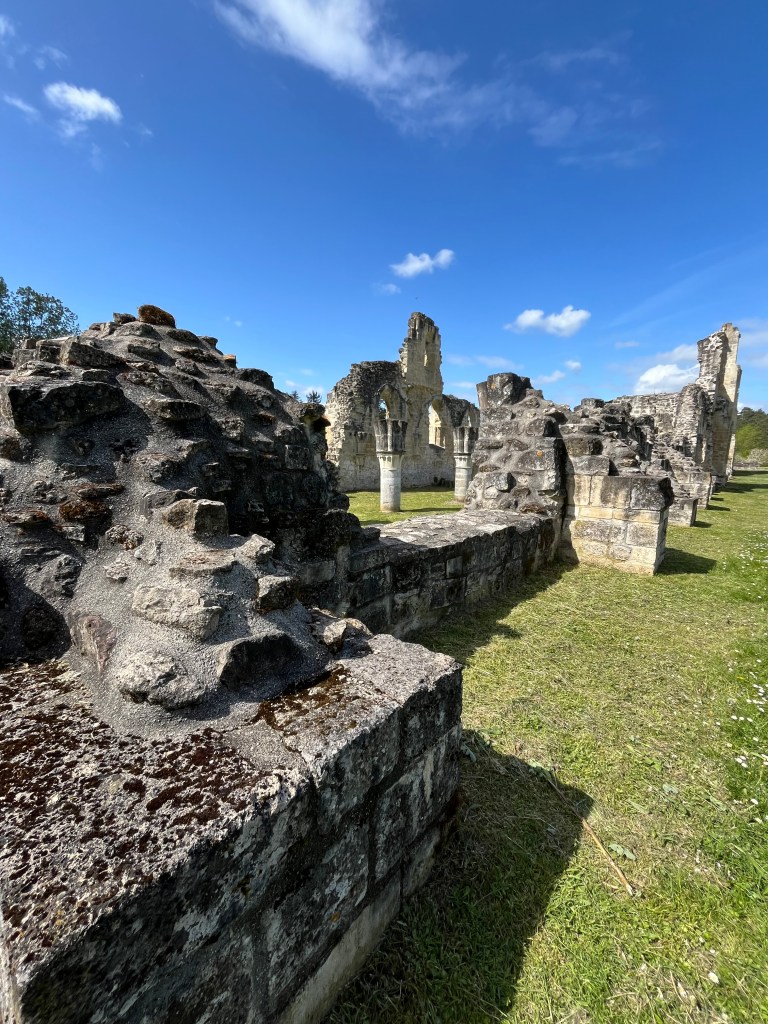
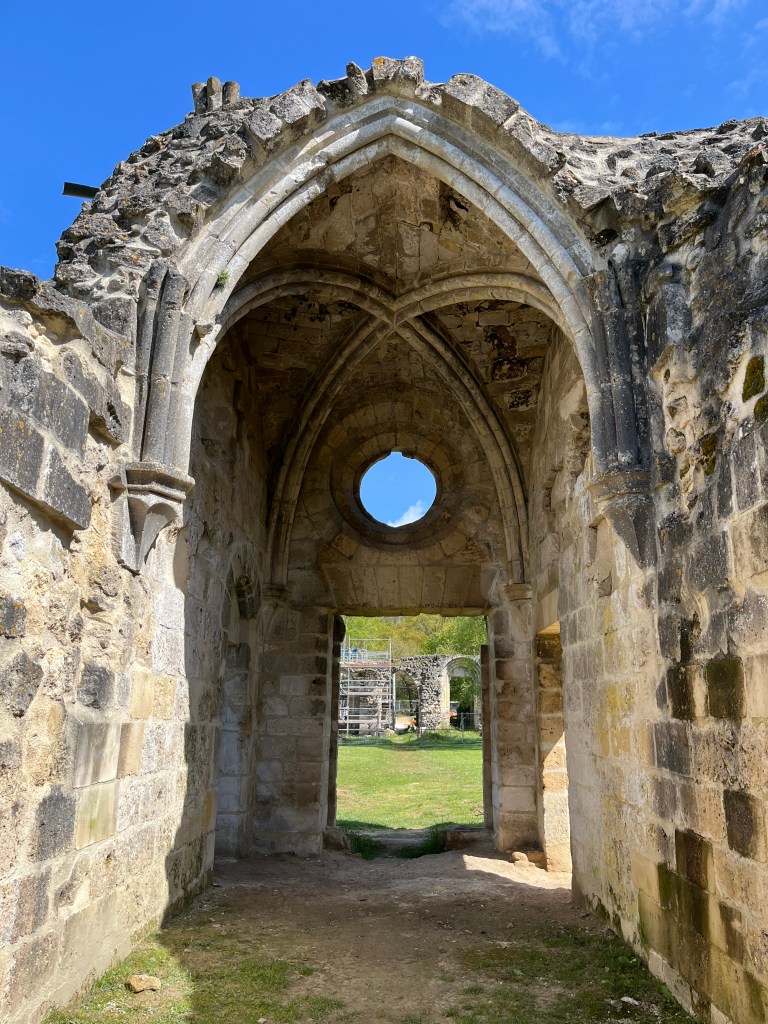
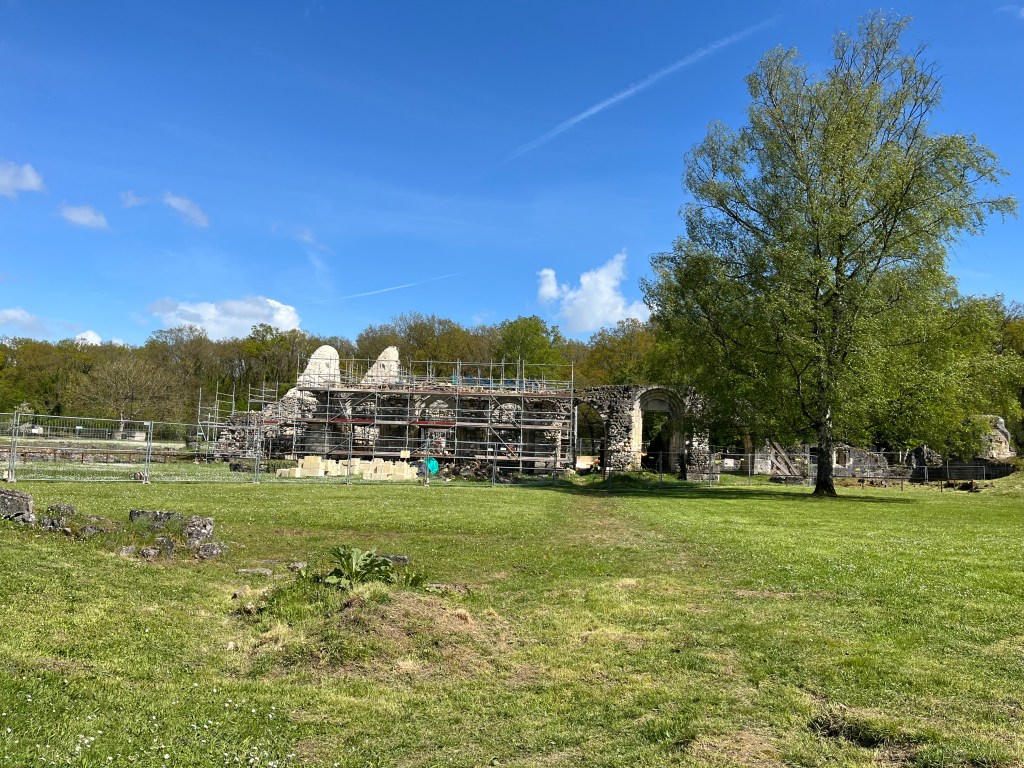
The way now wound its way through woods, along well made tracks. I paused at one moment to watch a plucky chaffinch take on a lesser spotted woodpecker, three times its size. Presumably the woodpecker was intruding on the smaller birds nest site. At the end of this family trail was the ruins of Vauclare Abbey, a Cistercian foundation begun by St Bernard of Clairvaux in 1134. The abbey was active until the French Revolution, and although “ruined” by the 19th Century, was ruined a whole lot more in 1917. The ruins are haunting, even on a sunny day. I paused a while. I admire the Cistercians. They felt that many of the other orders were too “earthly” in their dealings. They looked to establish abbeys in far away places – like Rievaulx in North Yorkshire – and they lived simple, austere lives. I think though, if I’m honest, I’d have preferred to have been a Benedictine or a Franciscan… I suspect they had more fun!
And so now it was just the last push to my bed for the night in Corbeny. As is so often the way on these days, the walk seems around 2 miles too long (irrespective of the actual length of the day’s stage). The final walk along a road through woodland seemed interminable; each bend seemed to promise the town, but only to give more trees. I wondered for a while if I was in some sort of purgatorial fairy tale, trapped in a never-ending woodland.
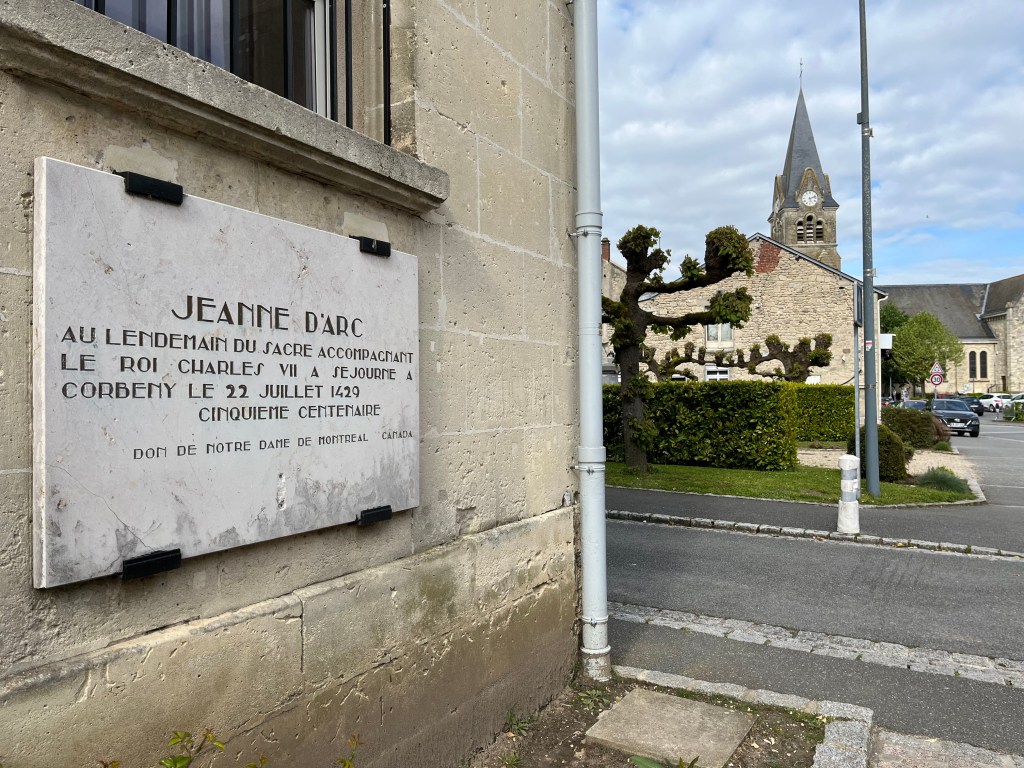
However, it did end. Corbeny was reached – a village of 750 inhabitants, once home to another abbey and a place where, in 1429 Jean of Arc passed through as part of King Charles VII’s retinue. Archbishop Sigeric also stopped here in 990 on his return from Rome – so I am in good company. I wonder if he had to microwave his dinner though?
My home for the night is the Logis Hotel du Chemin des Dames. They are without a chef at the moment, but have made me feel very much at home, plating me up a home cooked dinner. Tomorrow: Hermonville, in champagne country, but for now bed!


 The Loafing Pilgrim
Leave a reply to davidbchambers Cancel reply