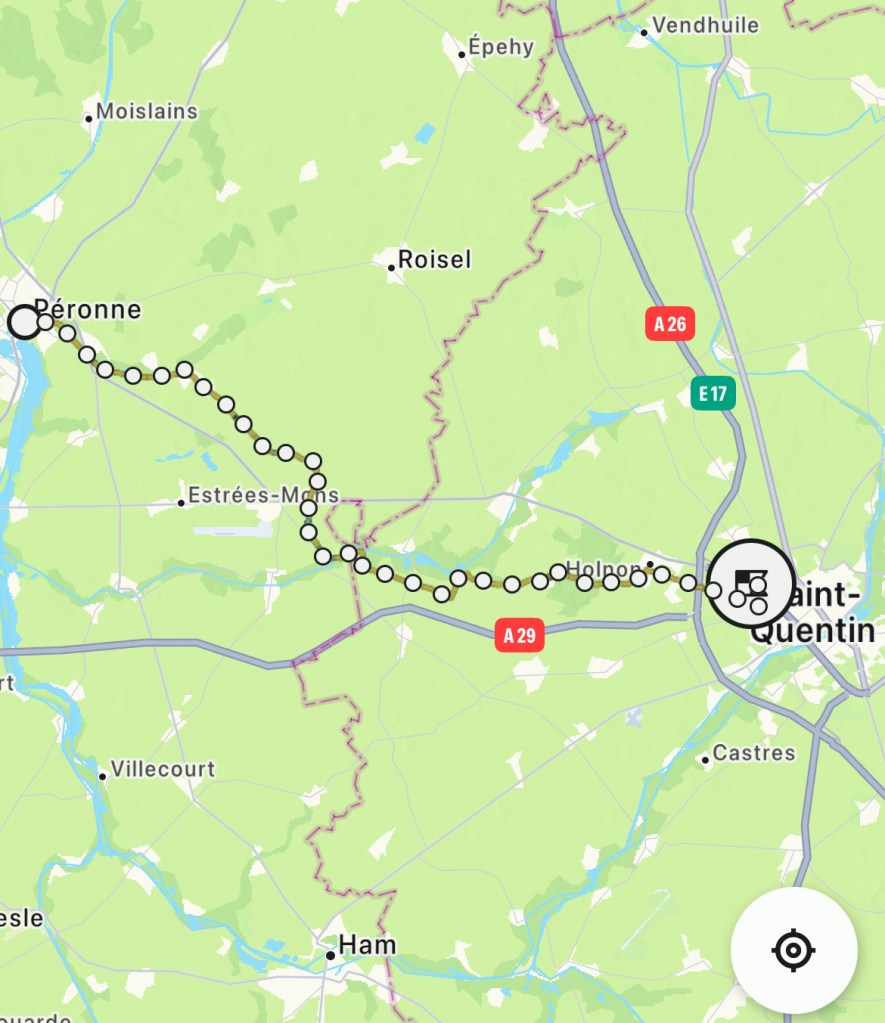
So, where did I leave off this eventful day’s walking? I had just witnessed a violent hailstorm and, when it had abated and the sky looked just a little brighter, I set off from Attilly to walk to through the Forêt de Holnon and into Holnon itself.
I had wanted to walk this route prior to booking accommodation on the northern side of the city. This was an area held by British troops in 1918, at the extreme southerly edge of the British sector. Here the number of men “per yard” of frontline was much sparser than further north. It was here that the a large German offensive was anticipated in the spring, a last roll of the dice before the Americans appeared in significant numbers and swung the balance in the favour of the allies.
This sector, from Attilly forward to Holnon, and through the edge of St Quentin was held by the 61st (South Midland) Division, which included Territorial soldiers from Worcestershire, Gloucestershire, Warwickshire and Oxfordshire. I’ve long been interested in the 2/8th Worcestershire Regiment, which had among its ranks men from my hometown of Malvern. I had visited this battlefield before, but not on foot.

Those of you who have seen R C Sherriff’s play “Journey’s End” or the recent film, will be familiar with this period of history. Of men waiting in claustrophobic dug outs waiting for the hammer to fall. As I walked through Holnon Forest and then into the village itself, I imagined the men of the 2/8th Worcestershire marching up the line to take over the front line positions; marching the same route as me.
As the above image shows, the British line here was not what we imagine of a front line system of continuous trenches, but one of scattered outposts in front, with a resistance line behind and then a main “battle zone” in which any advance was to be met and resisted. To aid this resistance a series of “redoubts” which could provide interlocking fire were hurriedly constructed. This defence scheme, which allowed for a certain amount of elasticity was a wise use of available resources, although it was not what the men were used to.
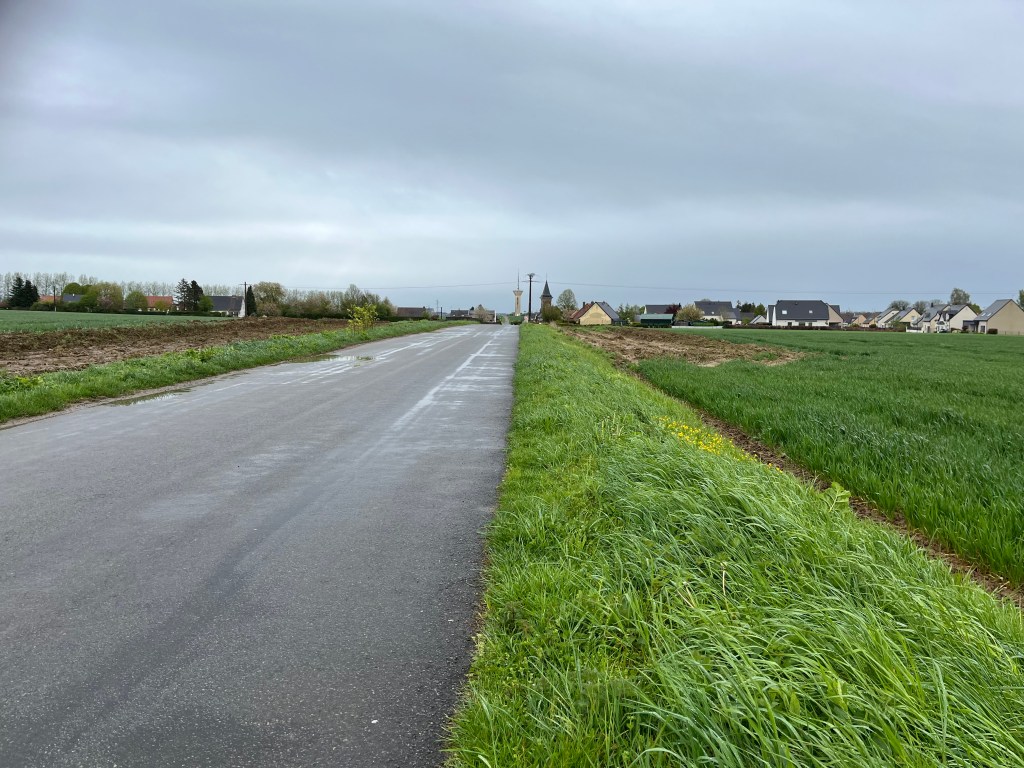
Beyond the now well-heeled village of Holnon, is the settlement of Francilly-Selency. This was within the battle zone. It had been captured the previous winter by the 2nd Manchester Regiment, with Wilfred Owen as one of their young officers. A battery of German howitzers had been captured and a Victoria Cross awarded. The battalion chaplain, Rev Gillenders did excellent work here too and was awarded the Military Cross – after the war he became the Vicar of Leominster.
On the eve of the battle, on 20th March 1918, my Worcestershire men held the outpost line, their ‘C’ Company and Battalion headquarters were in Ellis Redoubt, a mostly finished complex of wires and machine gun emplacements, in shattered woodland, now just on the St Quentin side of the A26 motorway. It was here, one hundred years later, I had stood within what remained of this emplacement. I hoped to pay my respects there again, for when the attack came on 21st March the German advance was swift. Storm troopers moving quickly moved through the outpost line undetected, and surrounded ‘D’ Company, which was stationed in the battle zone ready to launch a counter attack when required. A talented stained glass artist, Stewart Spiers Jackson was killed in an attack on the Company Headquarters. He had won the Military Cross at Cambrai in December the previous year and would have gone on to have an illustrious career no doubt. He was the uncle of a much loved former parishioner of ours at Bodenham, Sue Diamond.
My feet were sore, and my legs ached. I passed under the motorway bridge and knew that there was a scramble up a bank and than several hundred metres along the field edge to get to Ellis Redoubt. With a heavy heart, I decided not to re-visit the site, but spent a moment remembering the sacrifices of that day, of the time spent in captivity by the vast majority of the battalion and the ensuing retreat.
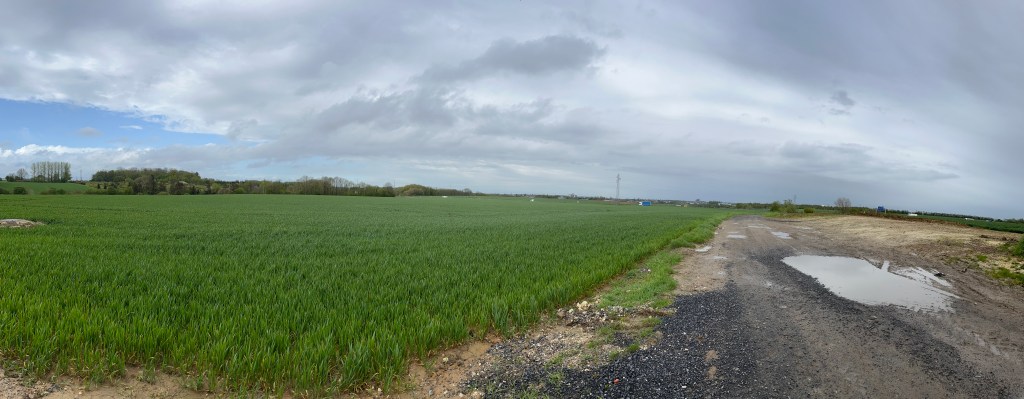
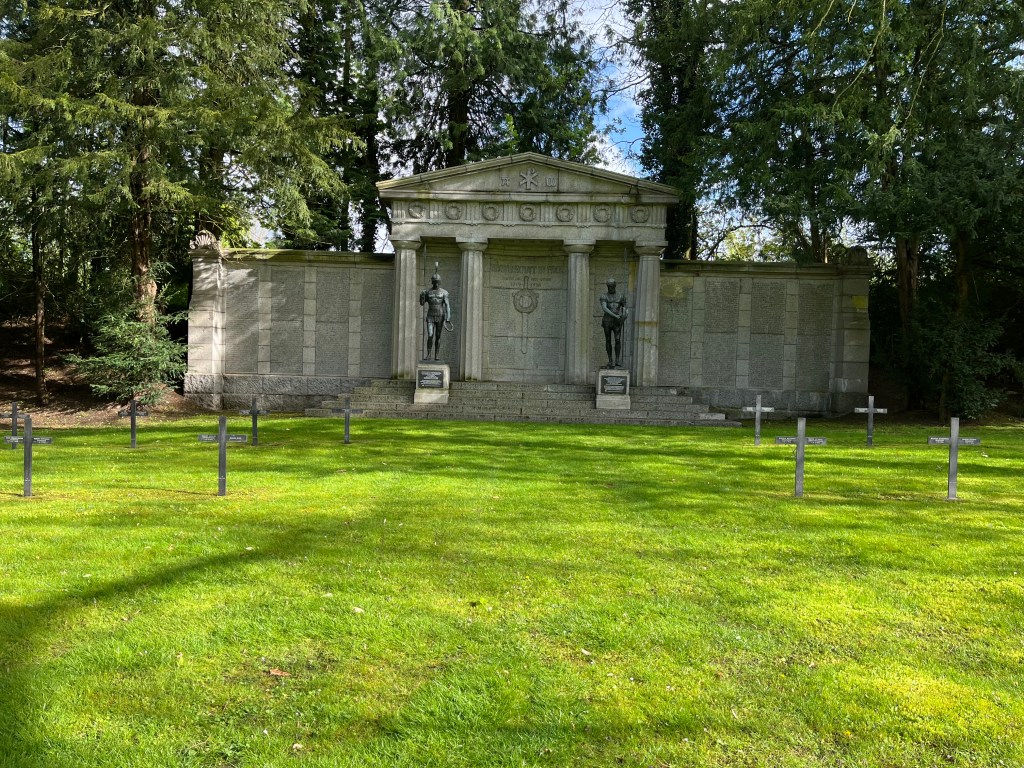
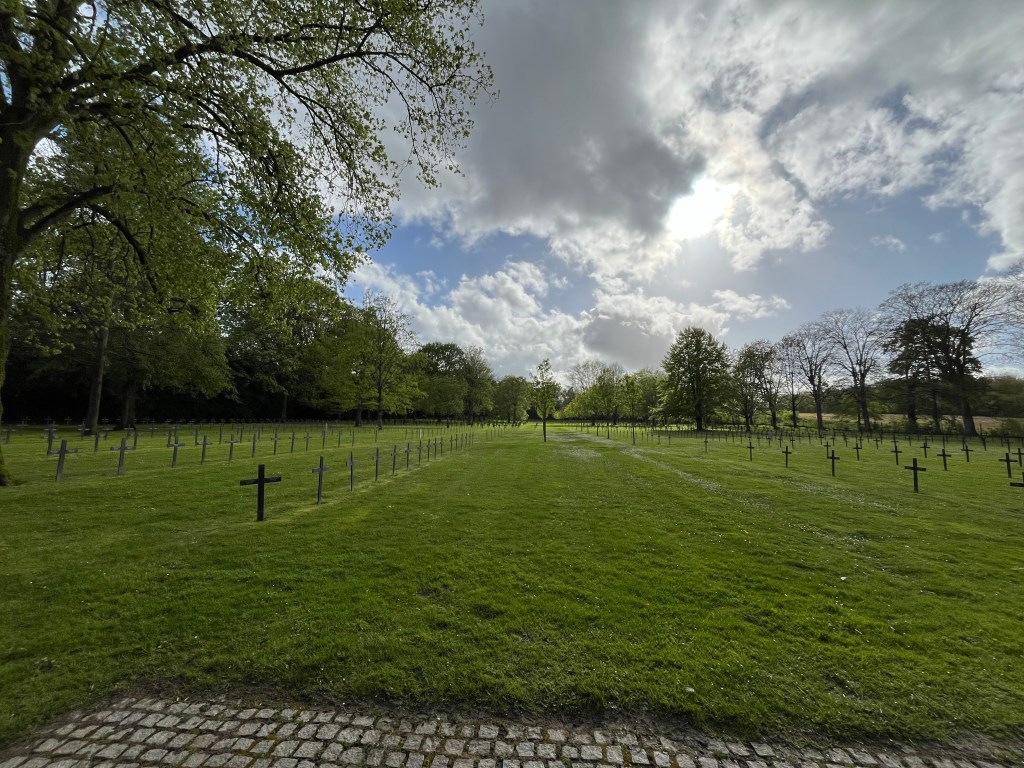
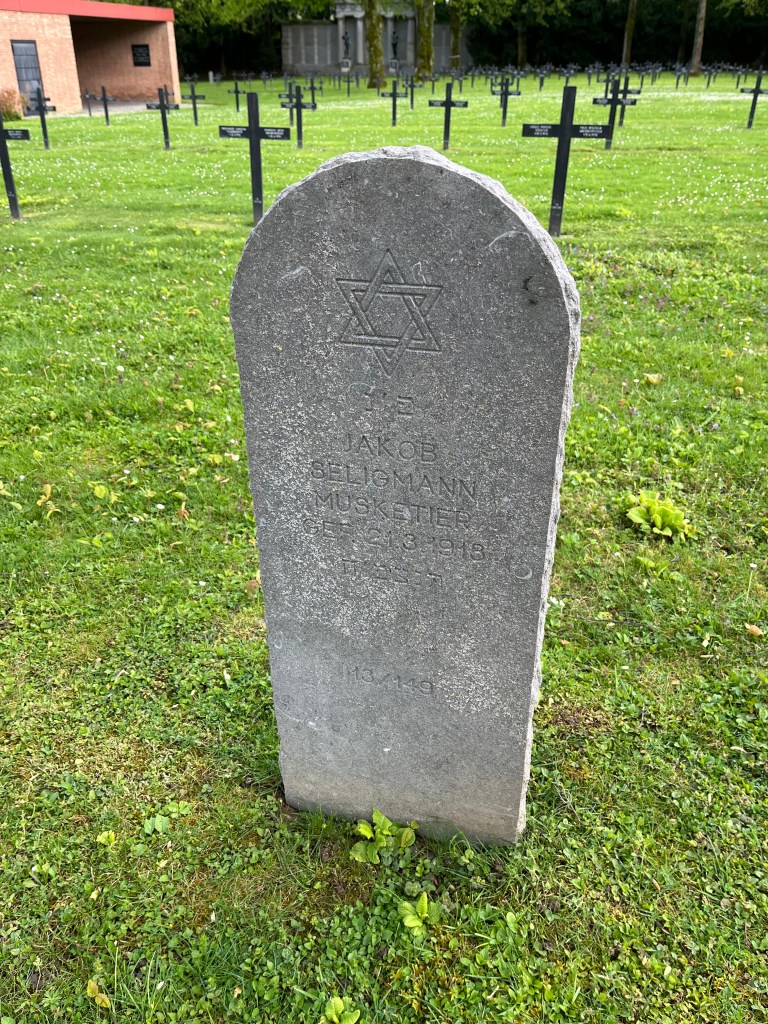
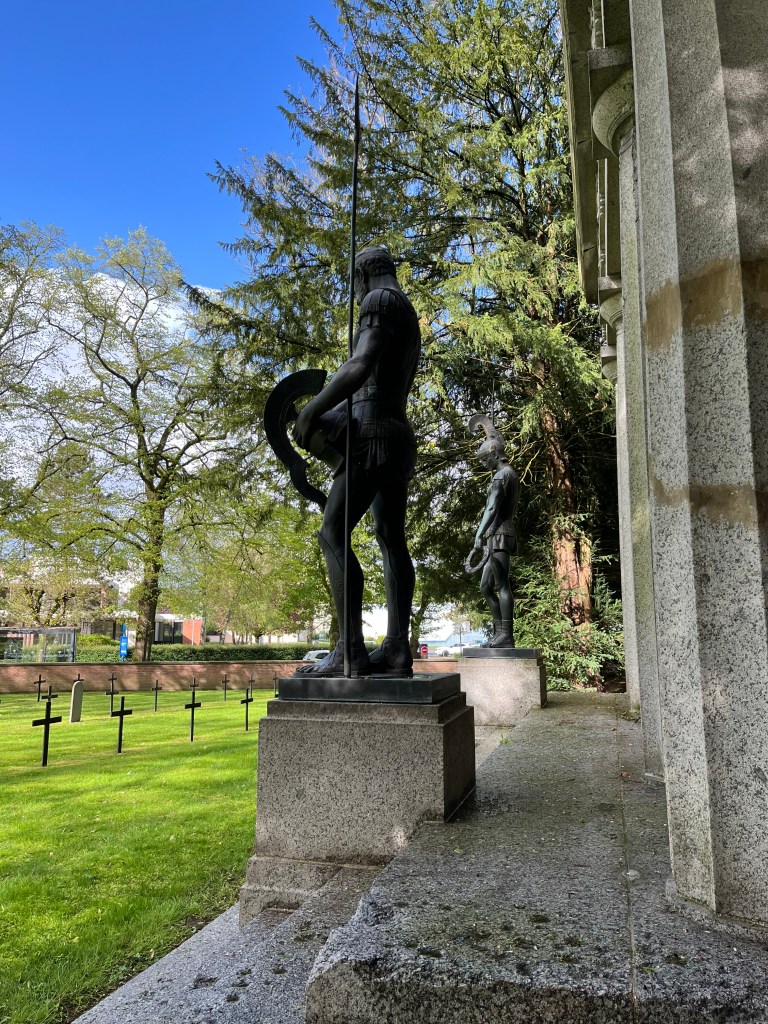
Continuing on the track, which is a Roman road, one soon enters the commericial sprawl of modern day St Quentin. I was to stay in the slightly misnamed Hotel “Premier Classe” on the edge of town, opposite a Suzuki dealership. I still had mixed feelings about not having re-visited Ellis Redoubt, and probably owing to this made a navigational error. I remained on the Chaussee Romaine too long and by chance, stumbled upon the St Quentin German War Cemetery.
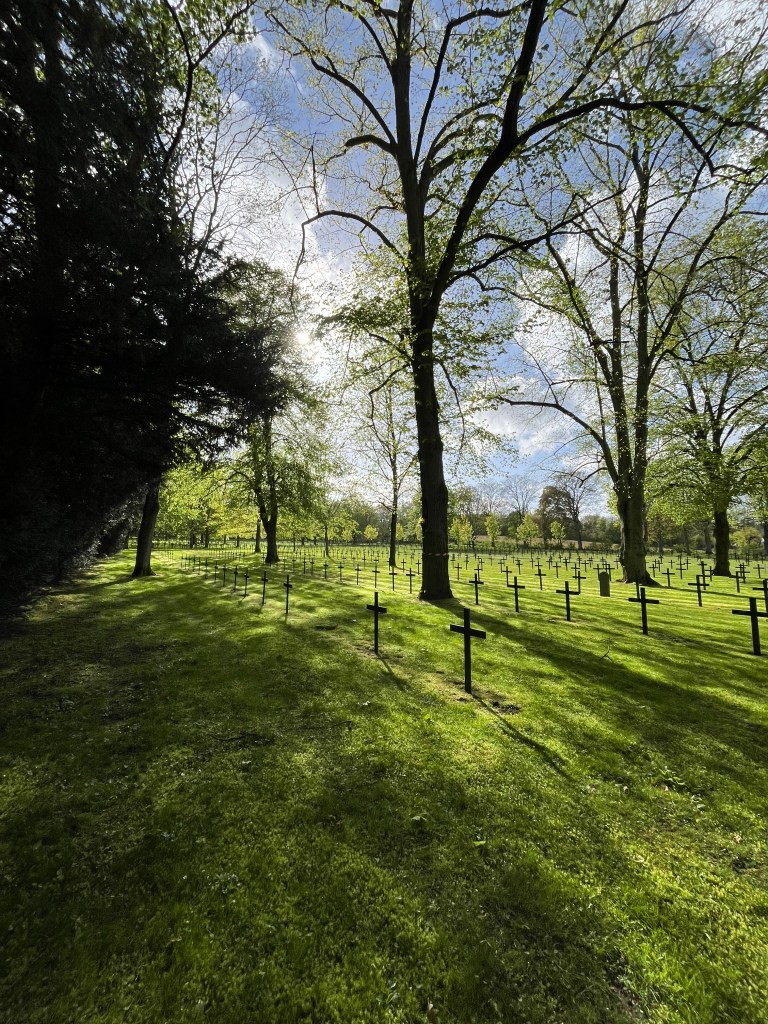
Instead of visiting the Worcestershire men, I had ended up visiting those that had opposed them that day. Whatever divided them in life, in death they were all equal. It was particularly poignant that those men buried immediately by the interest had all been killed on the 21st March 1918.
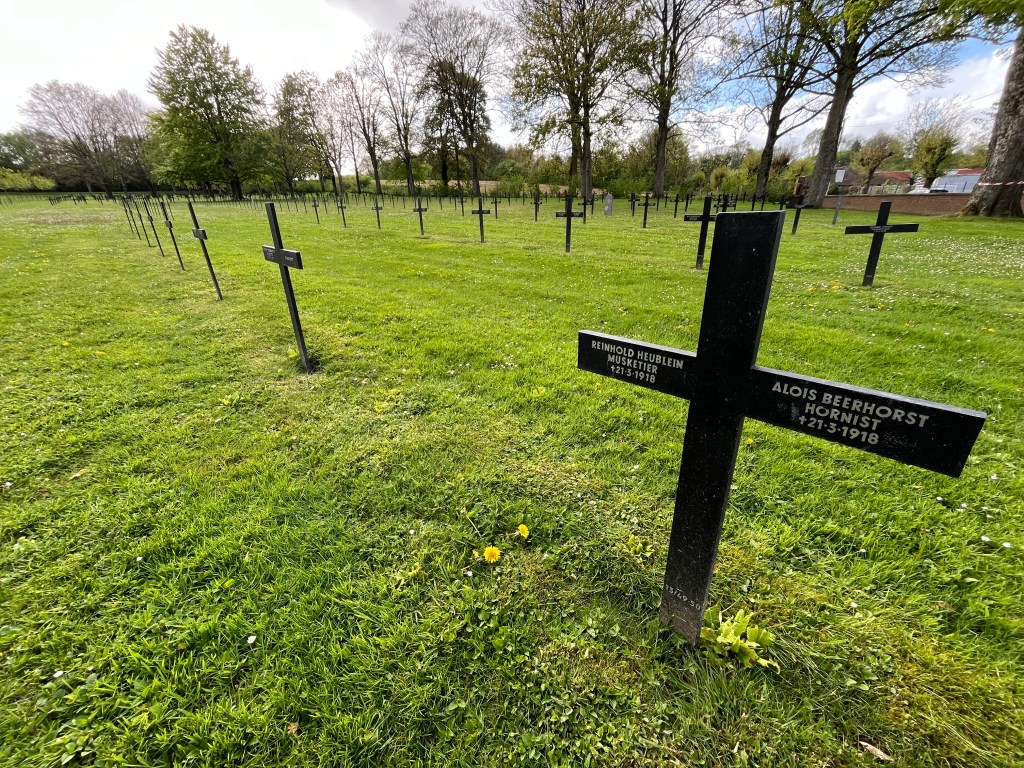
When I talk to people at home about the battlefields, they often comment how dark and foreboding German cemeteries are; often in connecting with visiting the cemetery at Langemarck. I think this due to the German tradition of planting trees, particularly oaks, within their cemeteries and the simpler design and layout of the cemeteries. I certainly did not find this cemetery gloomy, but like with all war cemeteries, it was sobering and deeply humbling. I found a quotation by John-Claude Juncker, displayed in the cemetery building:
”Those who question Europe or despair of Europe should visit military cemeteries. They show what a disunited Europe, the confrontation of the individual peoples with “don’t want to join” or “can’t join” attitudes, must lead to.”
I couldn’t agree more.


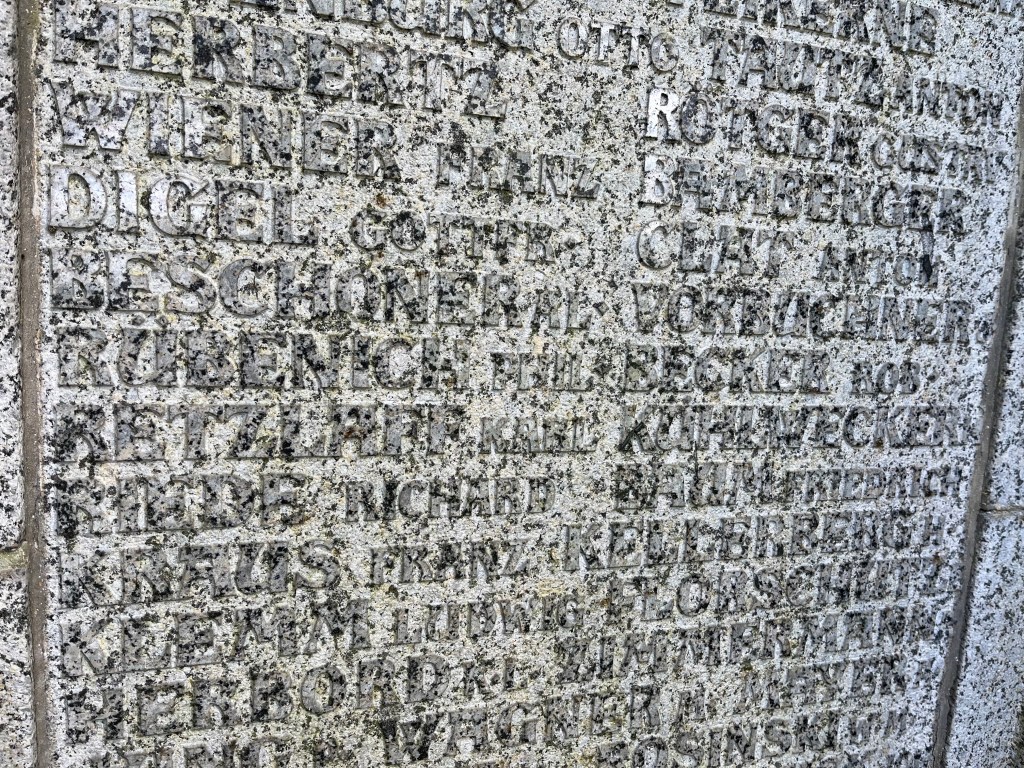
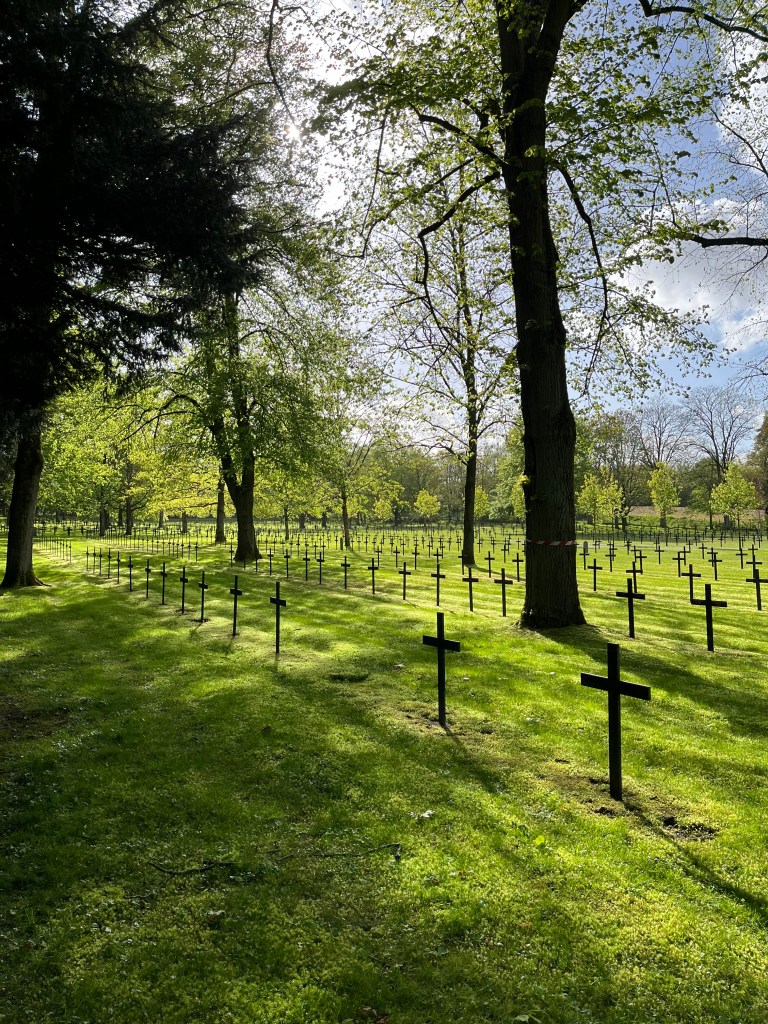
And so I left for my hotel for the night. After an exhausting 36.5km. I spotted where I fancied eating for that evening, a buffet car themed restaurant!

But once I had got in, I ate my much delayed lunch and fell asleep. Happily being now ahead of where I had planned to stay, the next day would be a short walk, preceded by a chance to loaf around St Quentin.


 The Loafing Pilgrim
Leave a reply to Gill Cancel reply