Yesterday’s walk from Ablain St Nazaire to Arras very much brought home the impact of the First World War on this part of France. I had a great stay with Sylviane and Pierre Labenne, practically on the site of the sugar factory which had played such an important role in the early defence of the captured village by German forces and its retaking costing many lives.
Over a homely evening meal of chicken, potatoes and salad we talked about the rebuilding of the village after the war, reparations from Weimar Germany paying to build the new church, the construction of the National Memorial at Notre Dame de Lorette on the hill above Ablain, and the life brought back to the village in the years after the conflict.
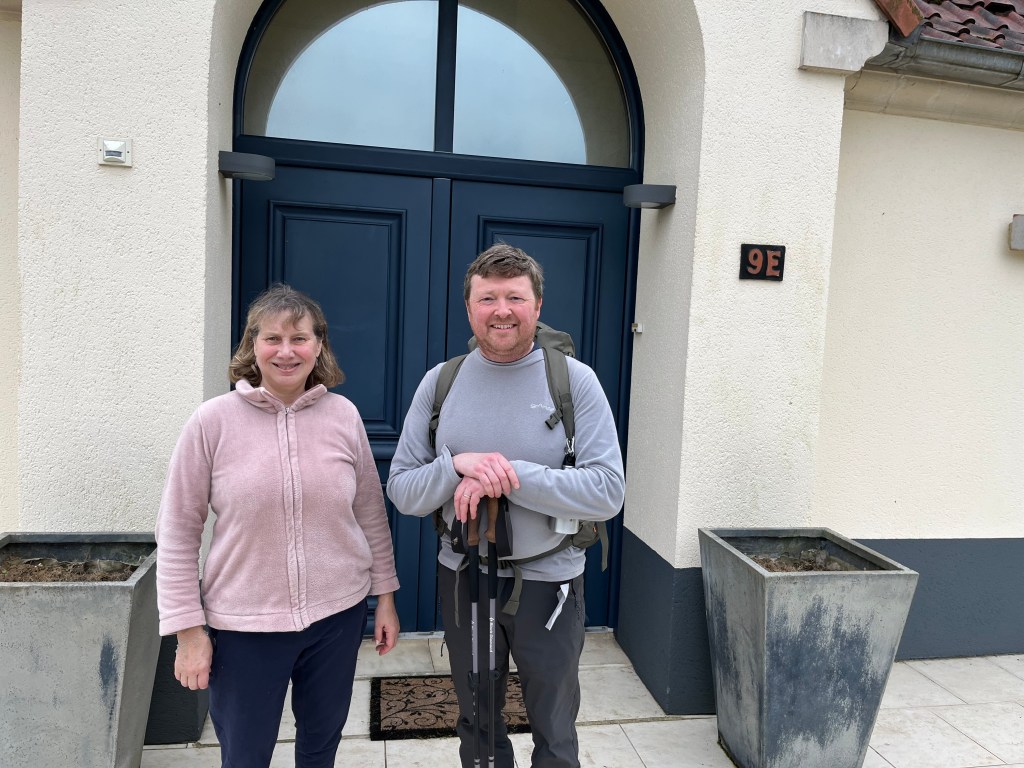
A hearty breakfast followed in the morning, and Sylviane offered some tips for the coming visit to Arras. She also pointed out the 1914-18 Museum at Souchez which I decided to visit as it was on my route. It didn’t open until ten, but I only had about ten minutes to wait; there’s nothing like being first into a place!
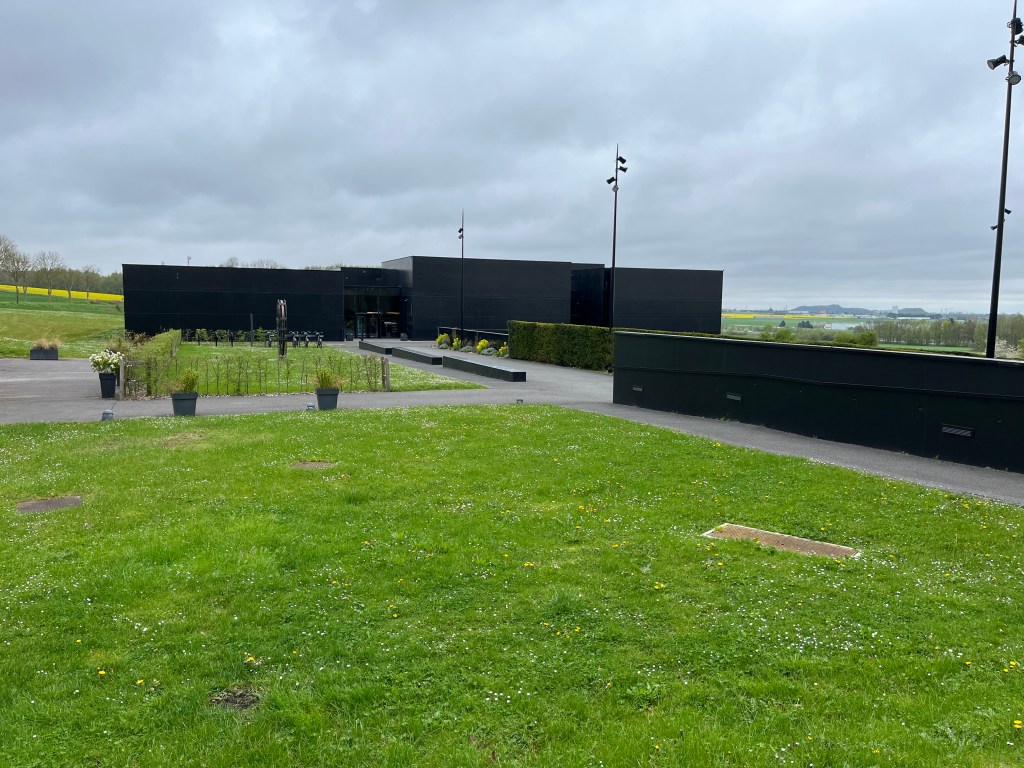
The museum is fascinating and well worth a visit. It lays out the story of the war on the Western Front very well, and offers more in depth insights about the Arras offensive. If you were walking the Via it would be a good place to see, as it takes around an hour and lies on one of the shorter stages.
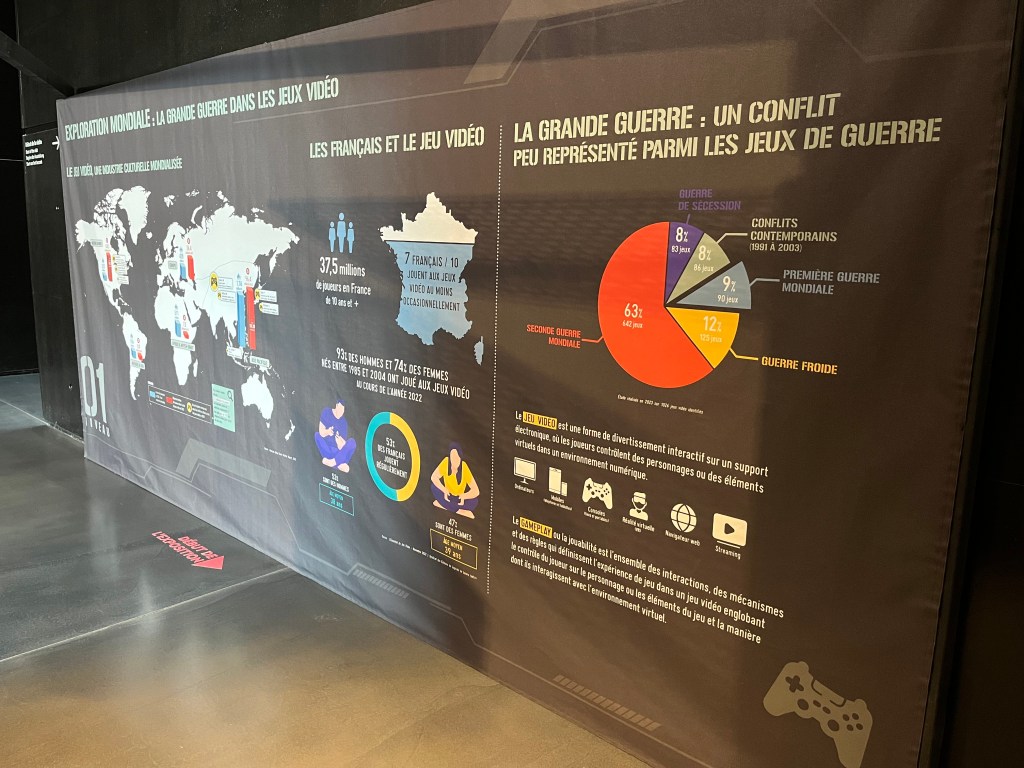
Two things struck me. The first was a temporary exhibition on WW1 video games, with interviewers with gamers, game designers and historians. I initially found it quite distasteful, the excerpts of the games were graphic and shocking. However I realised that, behind black and white photographs and the distance of historical events, it is easy to sanitise the events of the First World War and maybe such an exhibit was needed to re-introduce the immediacy and ghastliness of warfare. After my visit, I discussed this with the manager of the museum, who said that it had proved very popular and had proved a good draw for younger people to visit the museum and learn about the Great War.
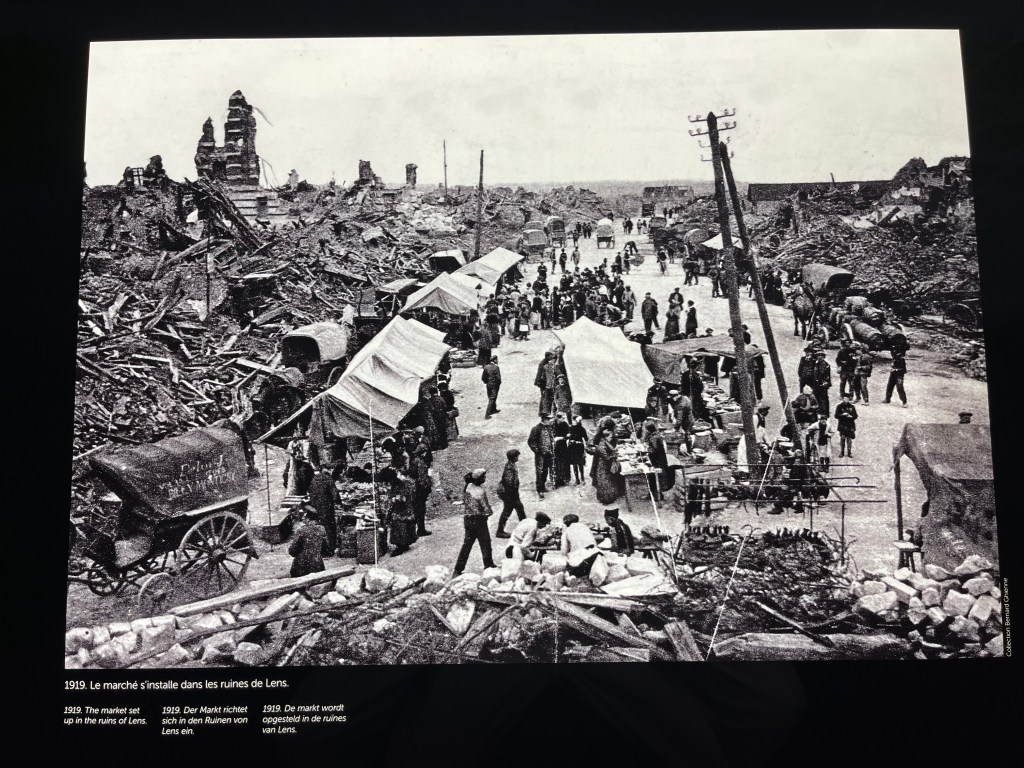
The other thing that struck me would relate well to the land through which I would walk that day. One Paris journalist described “the hell of the north”, village after village utterly destroyed. There was an excellent section of the museum devoted to the rebuilding, and the way life and hope were brought back into communities, where barely a brick stood on top of one another. Within ten years land was productive, homes, schools and churches were rebuilt, and this process began almost as soon as the guns fell silent, as this picture of nearby Lens market from 1919 shows.
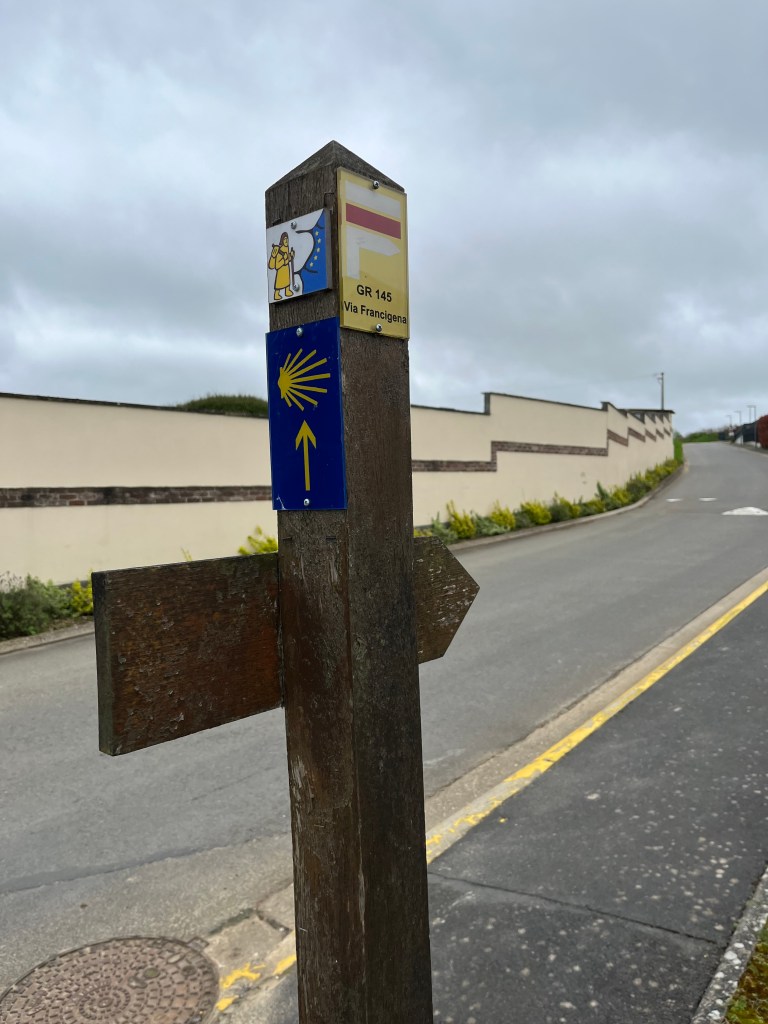
I left the museum and walked through the bustling small town of Souchez. As I followed the route out of town towards Mont St Eloi, I saw the first sign for the Camino to Santiago Compestella. For several miles, both routes coincide and the stamp for pilgrims’ credentials in Arras reflects this, depicting both the pilgrim of the VF and the shell of the Camino. For a few moments I was tantalised by the thought of switching routes… but soon came to my senses!
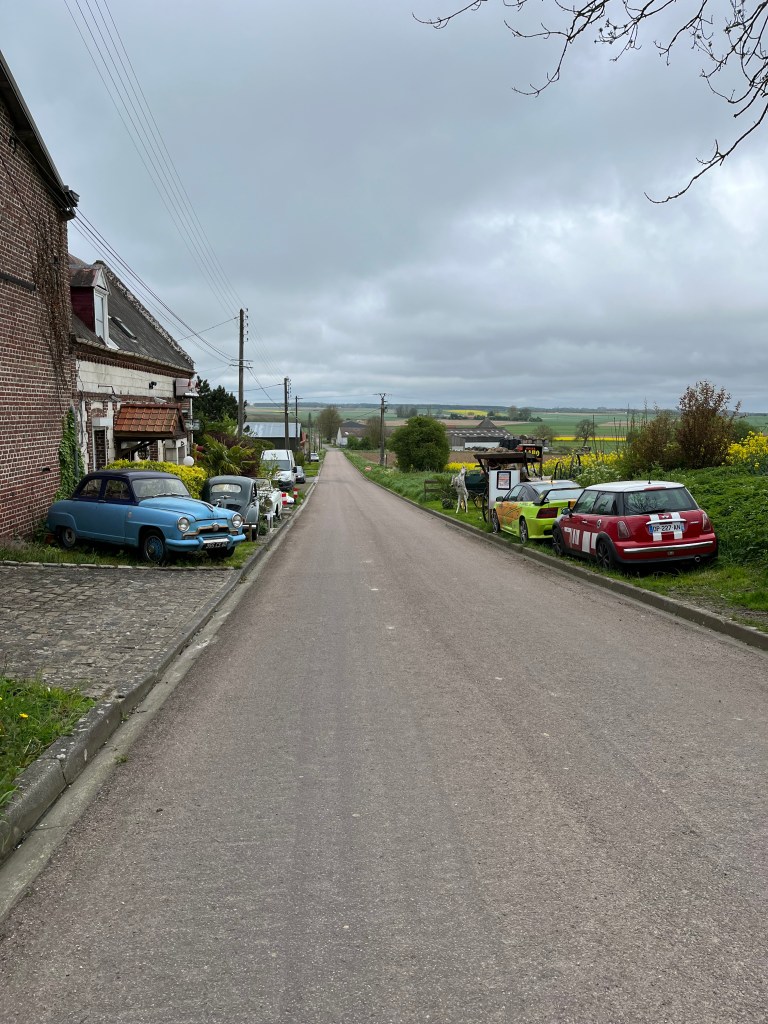
The approach towards Mont St Eloi, and its ruined abbey’s west façade was a pleasant one across fields. This is a place I have visited before, but it was good to approach it from a different direction. There were echoes of both World Wars on the approach – a memorial to a French general killed in 1915, only two days after taking over command from another general killed, and a memorial to a regiment of dragoons from the Second World War who were involved in a brave reconnaissance of advancing German forces. However, to lighten the mood considerably, there was also a garage with a collection of veteran cars and even a carriage, to add colour and life to this scene. I could see no-one at home, but jaunty 1950s music played from within.
Now this would be a good time to address a disservice I might have done to the good people of this country. I refer of course to the imperative to sit down. Since remarking on the lack of places to rest ones weary appendages, there have been a plethora of seats, picnic benches – everything indeed, with perhaps the exception of a free massage chair (though I wait in hope!). An area of open space in front of the old abbey church in Mont St Eloi was just one of these places. However, I had other plans, so I pressed on until the village of Ecoivres, down the hill.

The abbey at St Mont Eloi, like most others, came a cropper in the French Revolution – practically all the buildings including the church were taken down at this time. The west end, seen here, underwent further damage during the Great War, but most of what you see (or more accurately, don’t see) was done prior to 1914.
I stopped at Ecoivres Military Cemetery to visit a grave I have visited a number of times before – that of Major Malcom Neilson. He was born in Rutland, attended Uppingham School and was in Canada as an agricultural student when the war broke out. He quickly enlisted and went over the France as part of the first contingent of the Canadian Expeditionary Force, where in April 1915 he endured the first gas attack of the war near Ypres. Later wounded, he was commissioned in the field, and gazetted to the Worcestershire Regiment, although never actually left his unit, the 2nd Canadian Infantry Battalion. On 9th April 1917, he was second in command of the battalion, whose task was to move up behind the first wave of attacking troops in the famous assault on Vimy Ridge. Tragically he and his batman were killed by a shell explosion. In 1995, as a very callow youth, I bought one of Malcom’s medals at a flea market in Malvern. Among such vast numbers of graves on the Western Front, it is so helpful I find, to “adopt” individuals, and he is one of mine.

There were a team of gardeners from the Commonwealth War Graves Commission at work in the cemetery when I visited. I found it very satisfying to thank them (in broken French) for the work they do in maintaining these places of peace and beauty so well.
I ate lunch in the cemetery shelter and then continued on my way. After lunch I often listen to a podcast or some music, and was just in the middle of a particularly good podcast (you may have heard of it, its called “Just a Walk in the Sun” from the Herefordshire Regimental Museum), when I became aware of what can only be described as a log jam of older citizens, snarled up in the gateway I needed to get through. The phrase sheep without a shepherd could not have been better used than in this situation. Well, recalling my vocation, I confidently stepped out into the road to see if I could help.
What I had neglected to do in this moment was to look behind me and the dulcet tones of museum curator, Col Andy Taylor, dulled my senses to my surroundings. I was aware of a sudden rush of air and a low electronic whir, and was passed, with inches to spare, by and e-scooter, ridden by a mountain of a youth. Of course this galvanised the gaggle in front of me to a chorus of “zoot allors” and other such expressions. The next moment they were clapping me on the back and toasting my good fortune. Suitably chastened, I decided follow the example of the Magi: on to Maroueil “by another route.”
Sylviane had advised me that there was a supermarket and other luxuries in Maroueil and she was indeed right. I suspect walking between larger towns and villages may soften up an unsuspecting pilgrim, when more isolated sections of the route are encountered.
I wasn’t due at my accommodation in Arras until 6.30pm, so I was able to live up to my eponymous title, and loaf along the remaining miles of the route. I wondered at the crystal clear waters of the river Scarpe between Etrun and the outskirts of Arras. Wildlife abounded, and someone had consciously scrubbed out the word “non” on a sign warning that water was “non potable.” Departmental and European money had been spent clearing up this river as a sign proudly stated. I suspect also that the French don’t rely on the market to administer the water supply and treatment monopoly here. There would be no sharing the water with floating unmentionables here, unlike at home.

And so after a little more loafing I made it to the beautiful Flemish influenced city of Arras, with its cathedral, belfry and town hall, its large squares, and smaller squares. I breathed a sigh of relief, knowing that tomorrow would be a rest day. I had arranged accommodation through AirBnB and would be staying for two nights in the flat of Paul and Emilion on the Rue du Turenne, next to the famous Neptune fountain which lies on the Via route into town. It was a great find, very friendly hosts who made me feel very welcome – and at 32EUR a night, I was very happy!
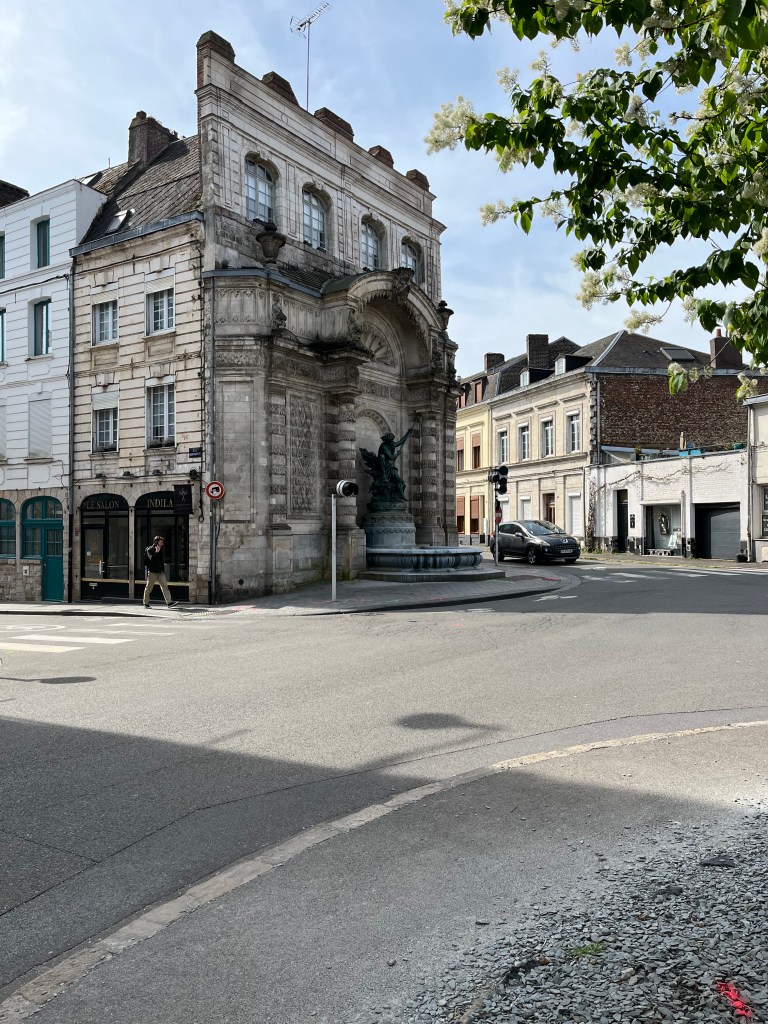
Right opposite the flat was a laundrette, so following a frankly outrageous 9 hours’ sleep I did my washing. Now, for those of you old enough to remember that Levi’s ad, I can assure you that not all my clothes were washed.. but certainly enough to freshen my step over the next week or so.
Today I have loafed into town, had lunch at the Grande Place and visited the Carriere Wellington – a series of tunnels dug to link up medieval limestone quarries under the city. A fascinating place, where we were taken on a guided tour, with replica WW1 Brodie helmets for safety. We through eerie shadows as we were taken around this subterranean world which housed up to 24,000 troops in the run up to the Battle of Arras: the same as the pre-war population of Arras itself, giving it the nickname the city under the city.

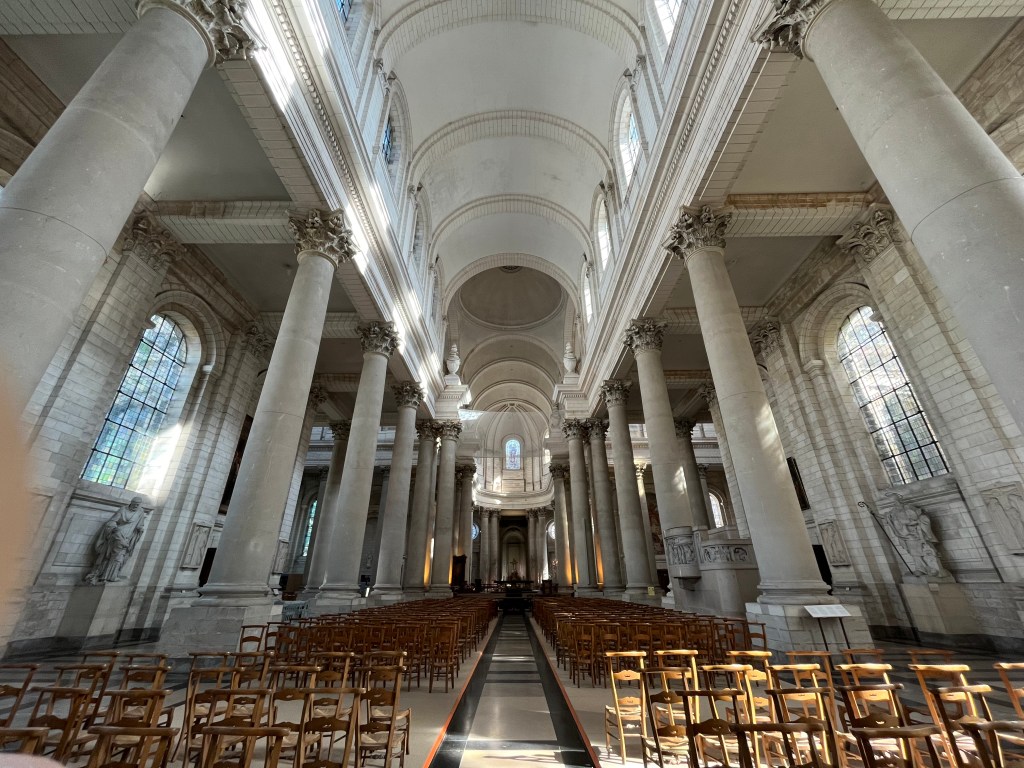
Finally, on my way back this evening I visited the Cathedral of Our Lady and St Vaast. A moving place, of light, space and peace. I had hoped to get in and look around as there is a fragment of the former high altar, destroyed during the Great War, in one of my churches (St Michael’s Church, Bodenham). An opportunity to give thanks for all those who work hard to heal the scars of war and to pray for those facing uncertain times to come.
Arras is a place I can thoroughly recommend, to pilgrim and non-pilgrim alike. Friendly people, lovely shops, great food. I even managed to procure a 50% discount on a pair of sunglasses this afternoon, replacing my old pair which threw in the towel. How this happened with my French as limited as it is, I can only guess – I suspect they took pity on me.
And so it is time to take pity on myself and get some rest. Bapaume tomorrow and its going to be warm, so an early start beckons.


 The Loafing Pilgrim
Leave a comment