The day began with Rosie and the boys praying over me the pilgrims’ blessing used at Canterbury Cathedral. As we’d had to miss the two stages through Kent, it was great to be sent off in this way. Even if we did all find it a bit emotional.
One of the lines from this prayer asks that the weather we encounter may be the weather we need. Thus certainly seemed to be the case. An overcast, wet and wind start to the day gave over to a windy and sunny day as soon as we docked in France.
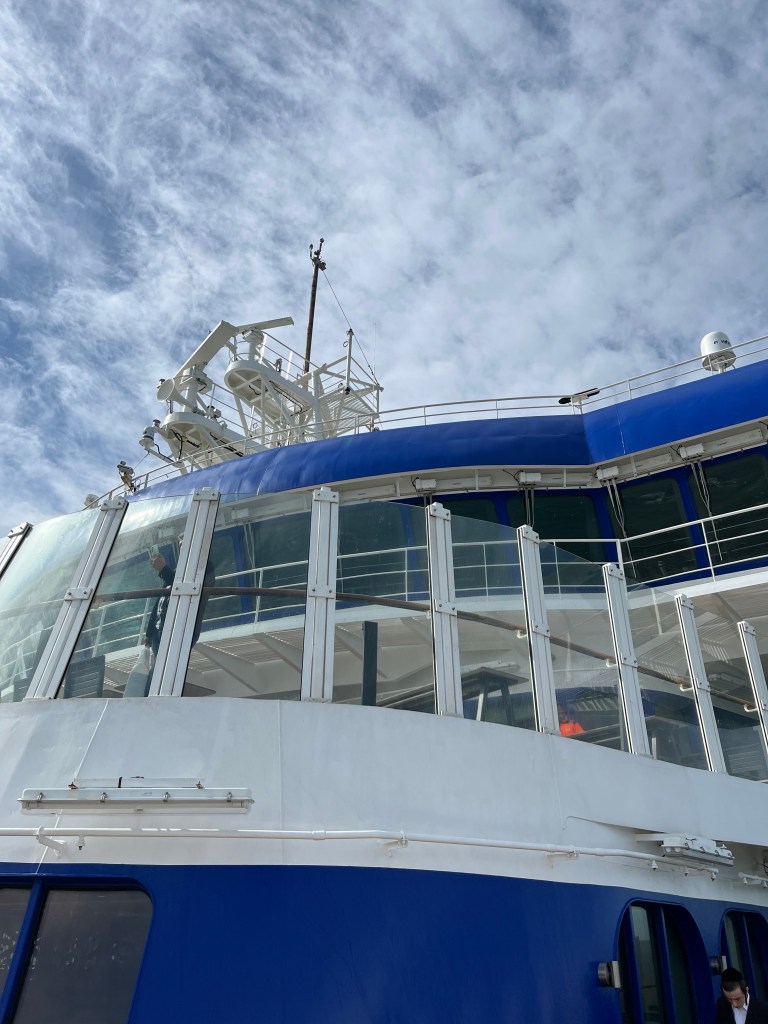
how we before goin on to describe my time in Calais, I must tell you about the experience of being a foot passenger. It turns out to be remarkably civilised. There are only four crossings a day (with P&O only) which accommodate foot passengers. However a short wait in the departure lounge, then a smooth transit through border control and security and then first on the ferry, with our pick of the seats. No waiting in cars, no jostling to get on to the car deck or into a lift.
after a surprisingly smooth crossing, the chosen foot passenger few, congregated awaiting our transfer off the vessel. I spied someone who appeared to be a pilgrim. This man, rapidly became my hero – with a long pilgrim staff, apparently a veteran of the Camino to Santiago and possibly Fatima. He encouraged me to get my first stamp at the ferry’s information desk and then we chatted briefly about routes. Like me he wasn’t going to Wissant, but the direct route through Guînes. However as he had walked from Canterbury to Dover the previous day, I suspected our paths wouldn’t cross again. I last saw him heading away from the very port with all the confidence of a seasoned walker.
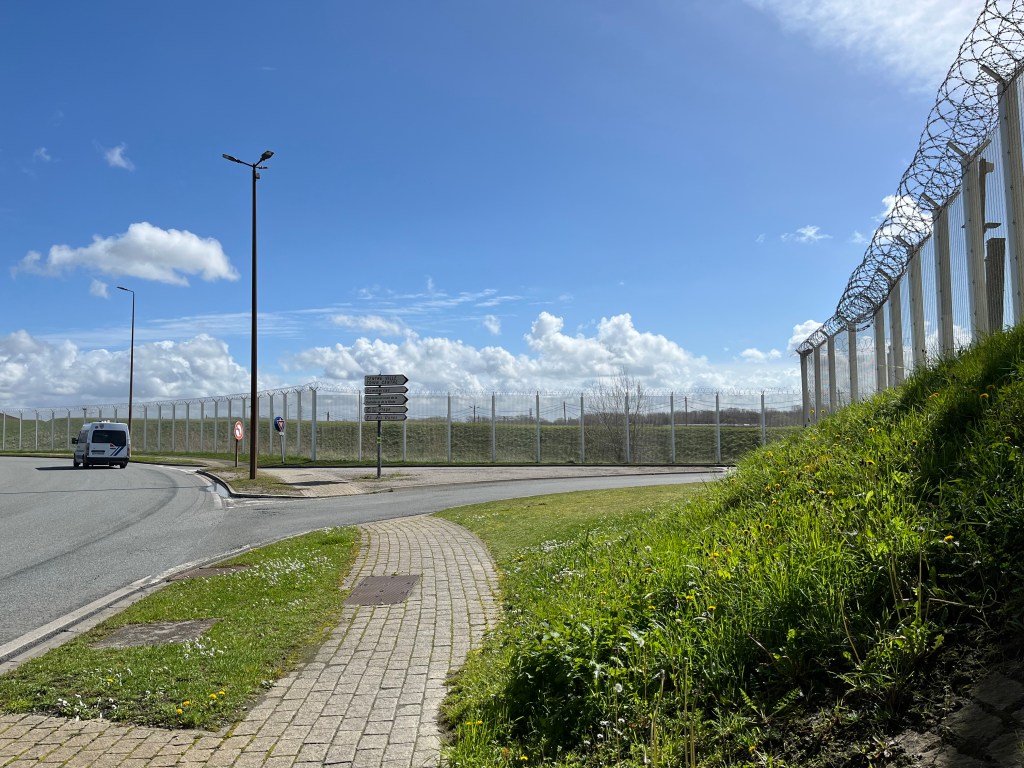
The route from the ferry terminal to the “centre ville” was a little confusing, although as it turned out one needed only to follow the traffic signs and the Calais lighthouse soon hove into view and from there on in, it was fairly plain walking. I was glad of the brief company of a Canadian student as the moan of the wind through the razor wire surrounding the port facility was eerie to say the least.
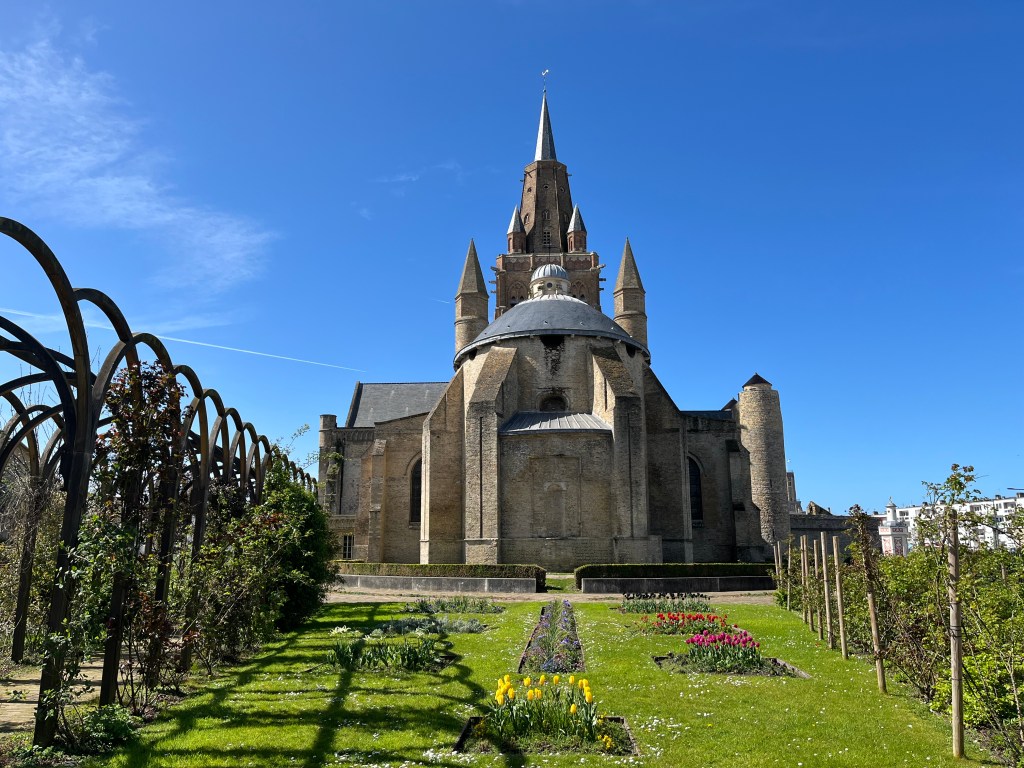
A lot is written about the bleakness of post-war reconstructed Calais, but, perhaps due to the sunshine I found it a charming place that I’d like to spend more time visiting. In fact I spent too long wandering around the Church of Our Lady, buying lunch, checking my feet and generally loafing around.
I was particularly taken by the stillness of the “Tudor Garden” at the east end of the Church of Our Lady (pictured). Named in honour of Mary Tudor (or Bloody Mary) who, according to the information sign had “finally lost Calais.”
I got my second stamp at the tourist office and so, while my erstwhile pilgrim friend was probably several miles inland already, I didn’t set off for Guînes until after 2pm. Shopping centres, gave into residential streets, busy dual carriageways and finally scrubland between autoroutes and railways. Here concealed among the trees were makeshift shelters pointing to the human tragedy of migration and trafficking in this part of France.
Shortly after, entering the commune of Coulogne I picked up the Canal du Calais and a cycle route with the jolly sign “Guînes 7km”
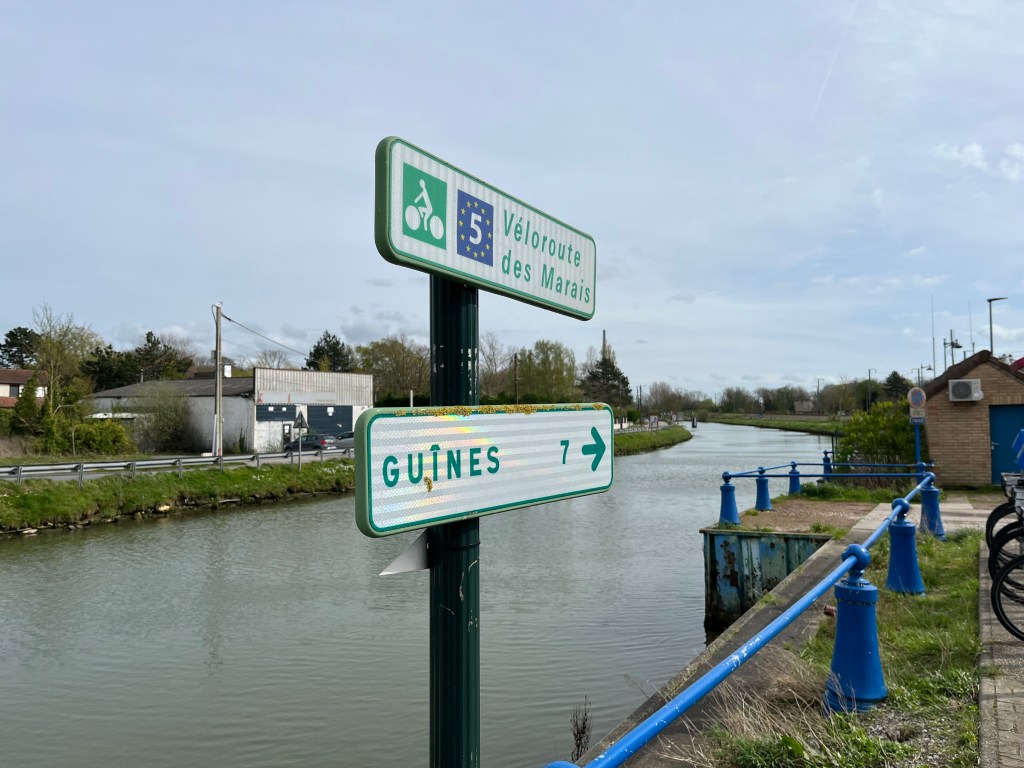
Flushed with navigational success I made the mistake of trusting Google Maps for direction and then embarked on a hefty detour, including a long walk along narrow fast roads, and the promise of 7km evaporated in the afternoon sun.
However, as the local populace were driving home from work, I finally reached the small town Guînes, a onetime stronghold of the Vikings and scene of the Field of the Cloth of Gold summit between King Henry VIII and King Francis I. My knowledge of which is entirely drawn from the TV mini series “The Tudors” – so probably not massively accurate. (Though I do remember there being a drinking fountain that dispensed red wine!).
Home for this evening is the Logis Auberge du Colombier – an extravagance for the first night, but a vestige of the original plan which would have seen the family with me here as well.
And so to bed.


 The Loafing Pilgrim
Leave a reply to jakswestoby662 Cancel reply