What a difference a day makes, as Dinah Washington once sang. I had a very good night’s sleep; if I had kept Remy awake with my snoring, he was very gracious about it.

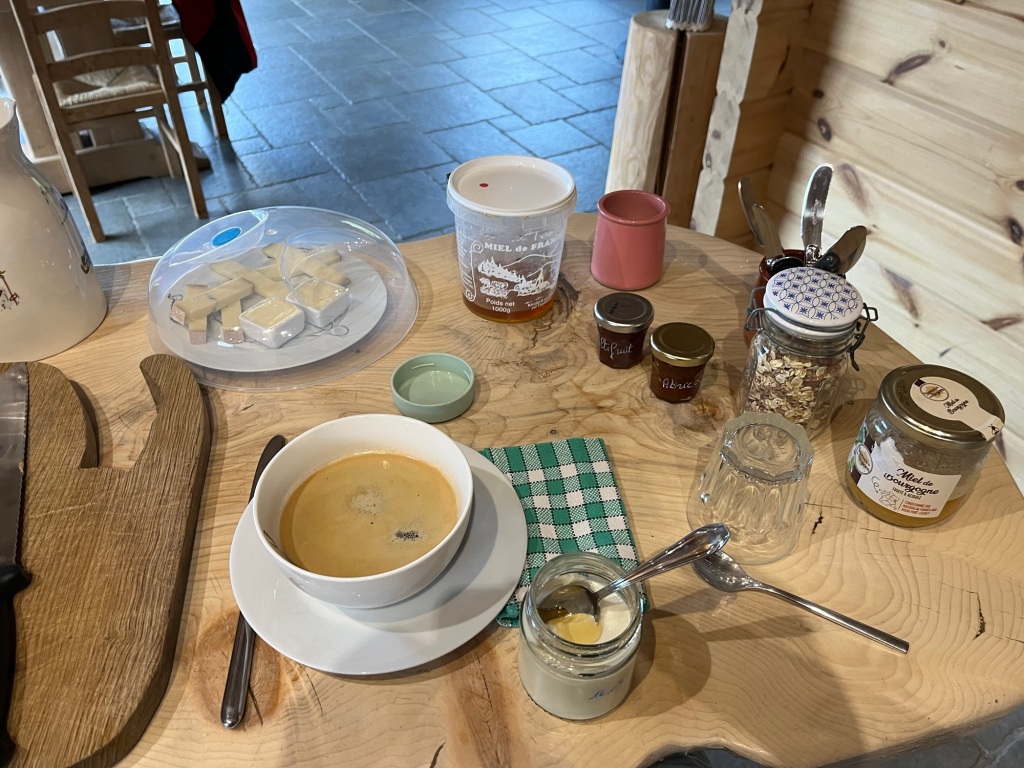
Out of the window, looking towards Switzerland, the sky was blue, the sun was out, I felt like a new pilgrim: keen to face the day. Xavier had prepared for me a fine breakfast with local cheeses, homemade yoghurt and jam and honey from his neighbour’s bees. And lots of coffee!
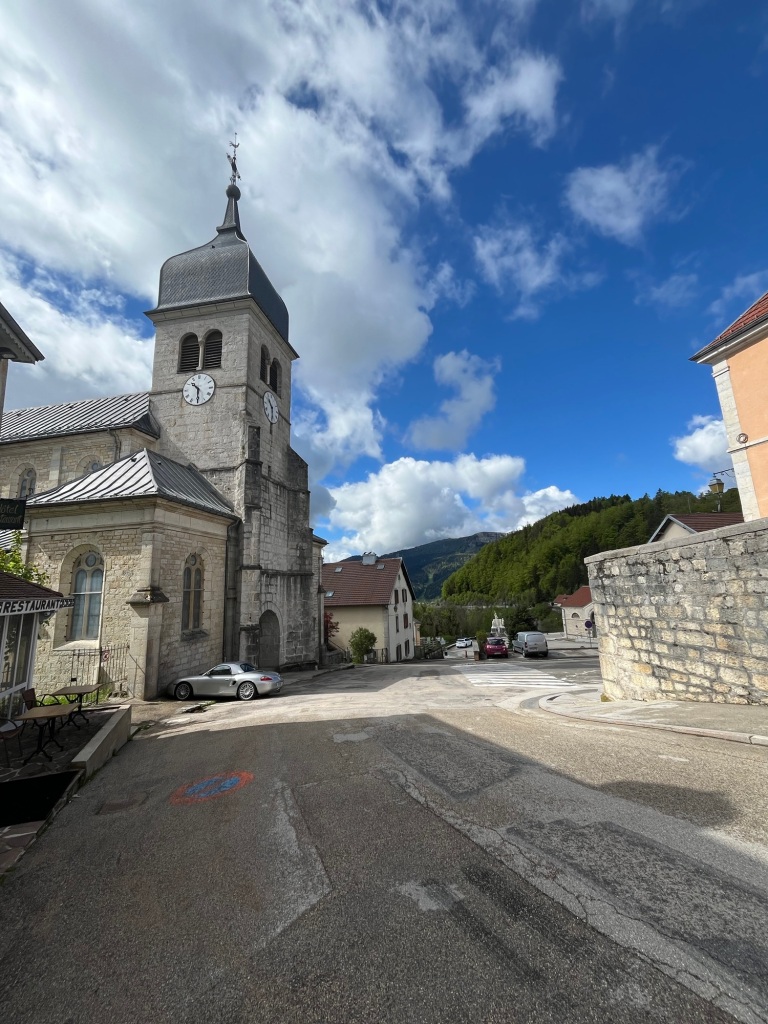
With much handshaking and warm words, I was soon on my way. Down into the village, where I had a look round the church: unprepossessing from the outside, a feast of alpine carved wood inside.
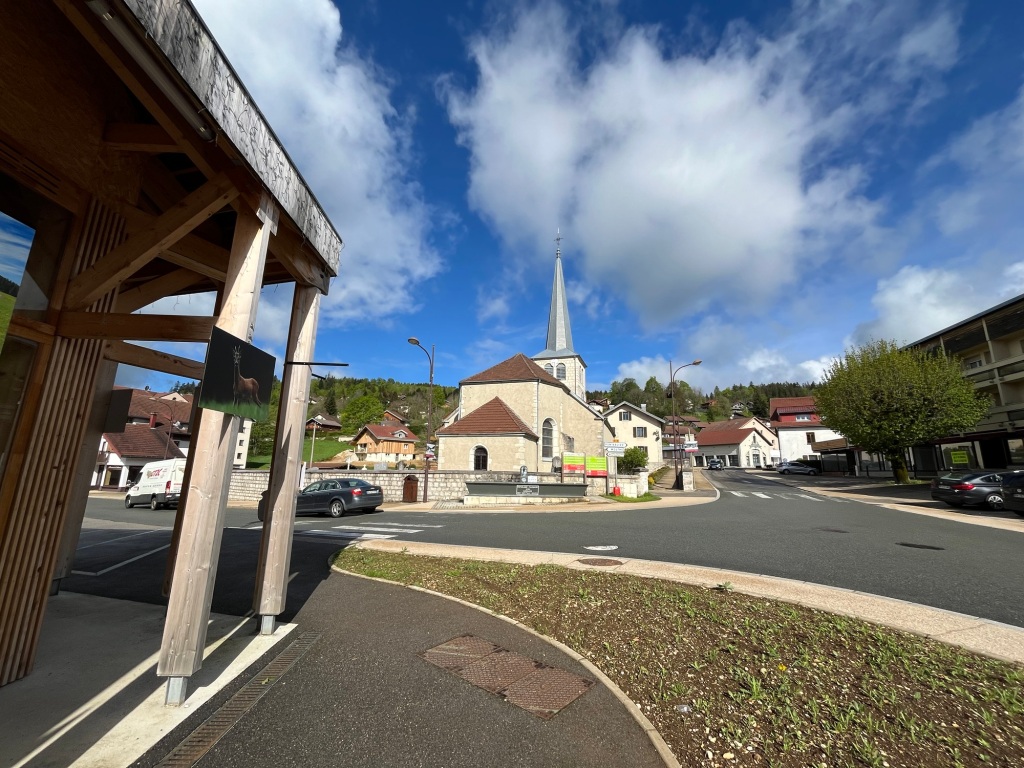
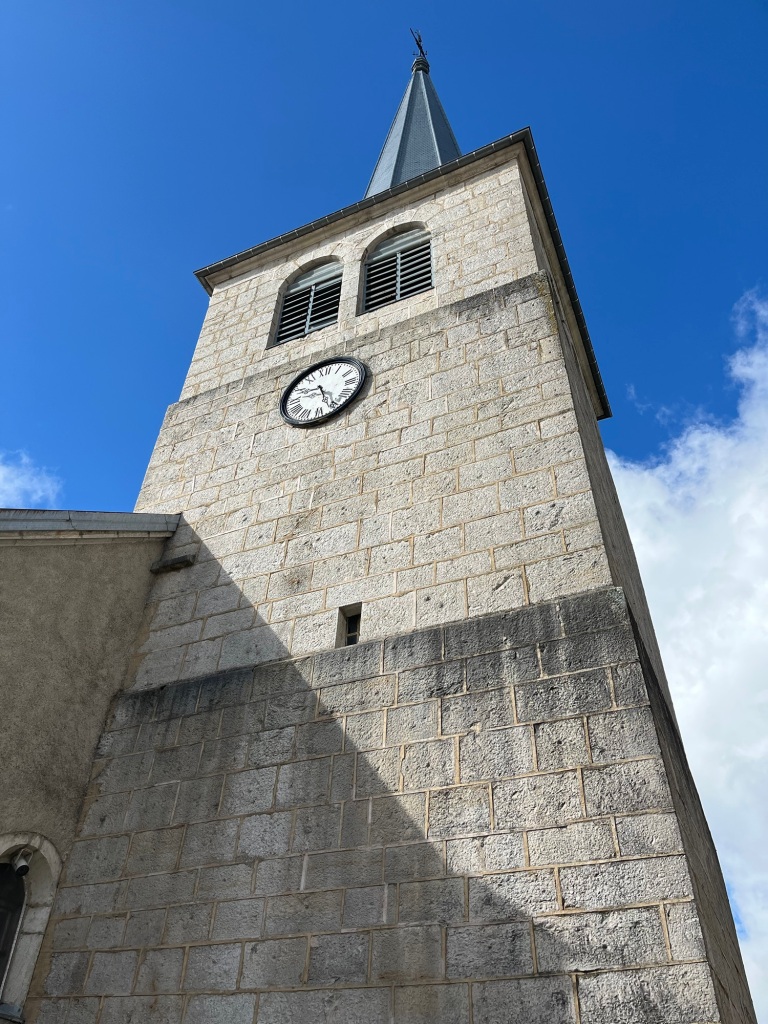
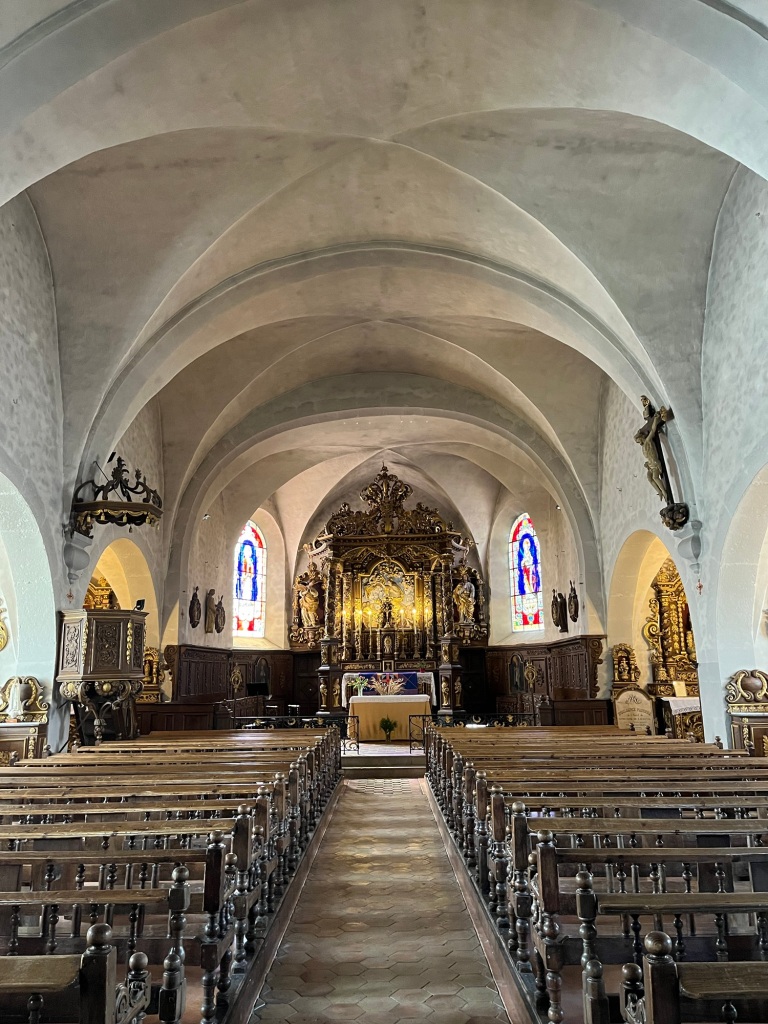
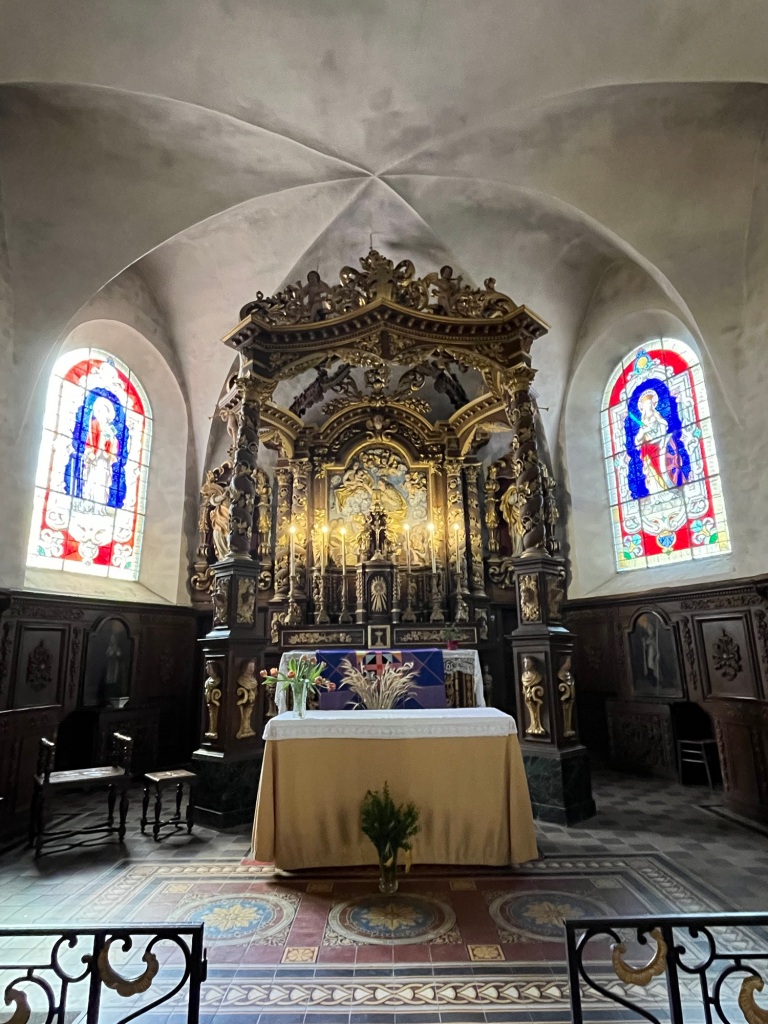
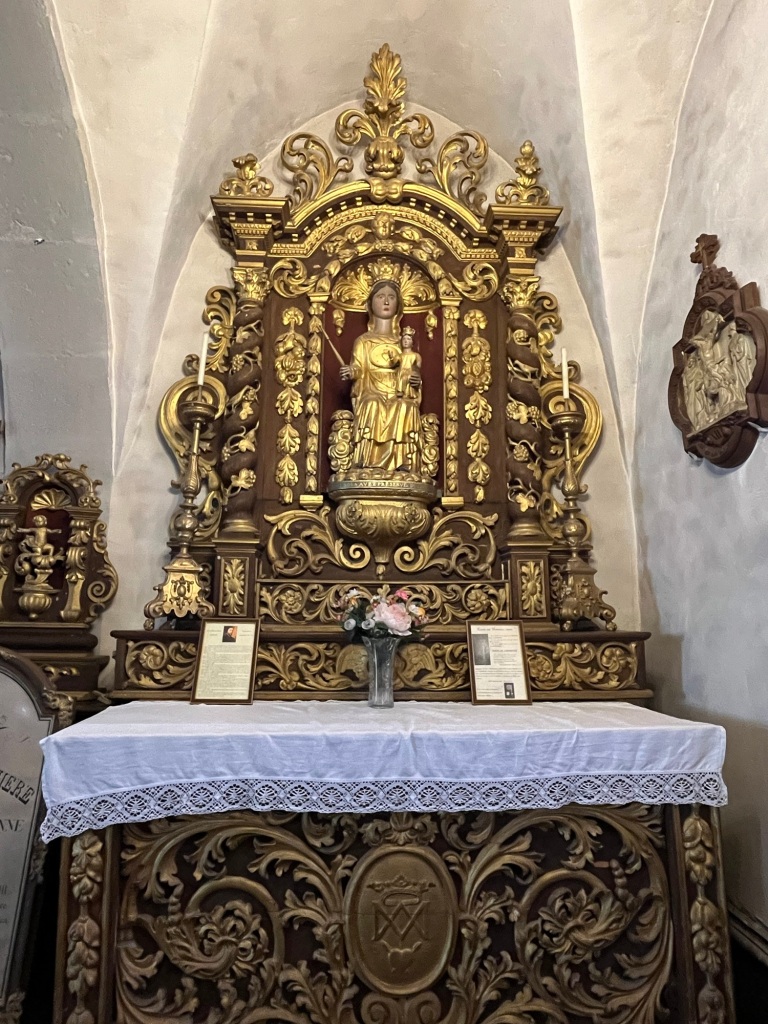
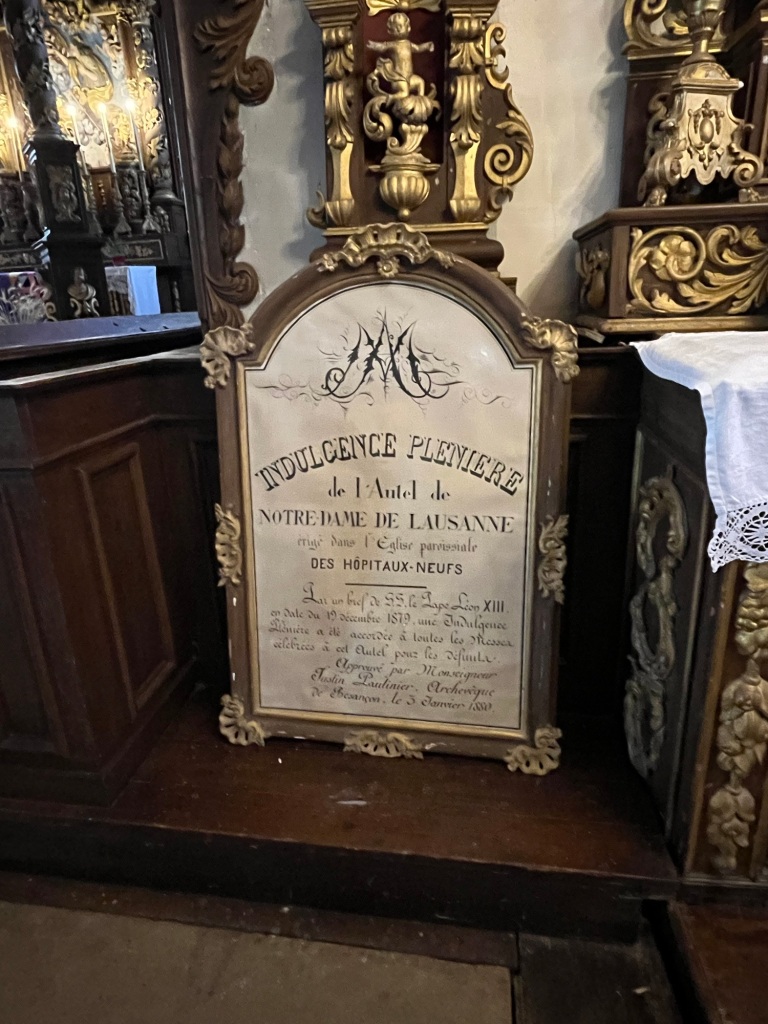
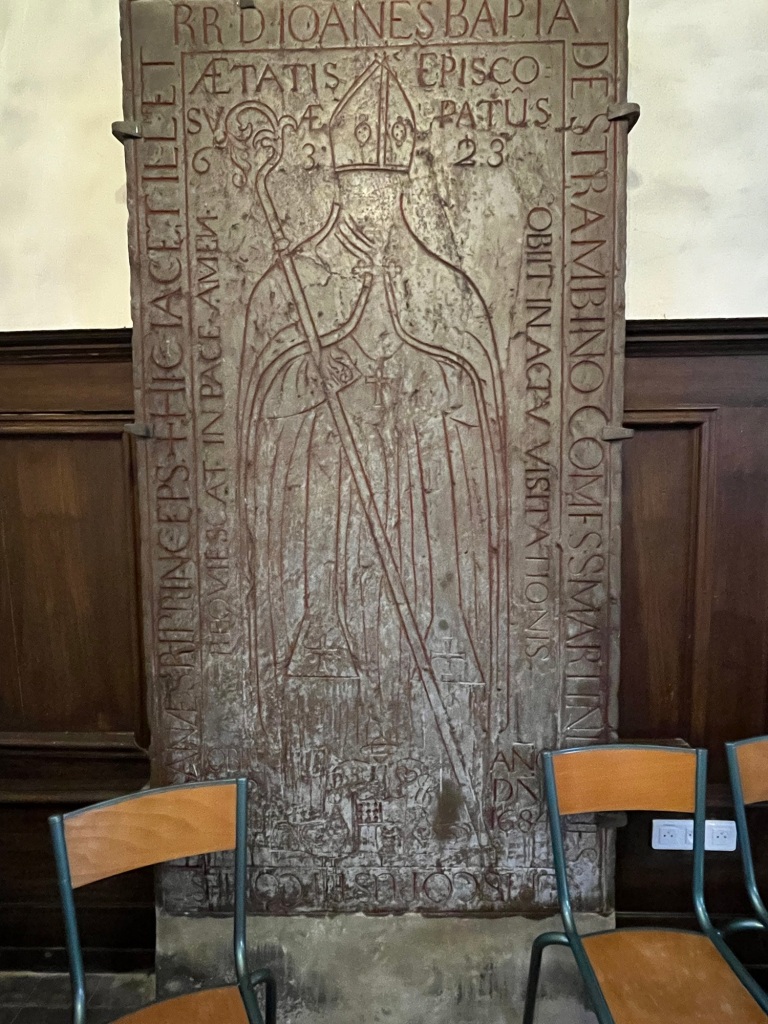
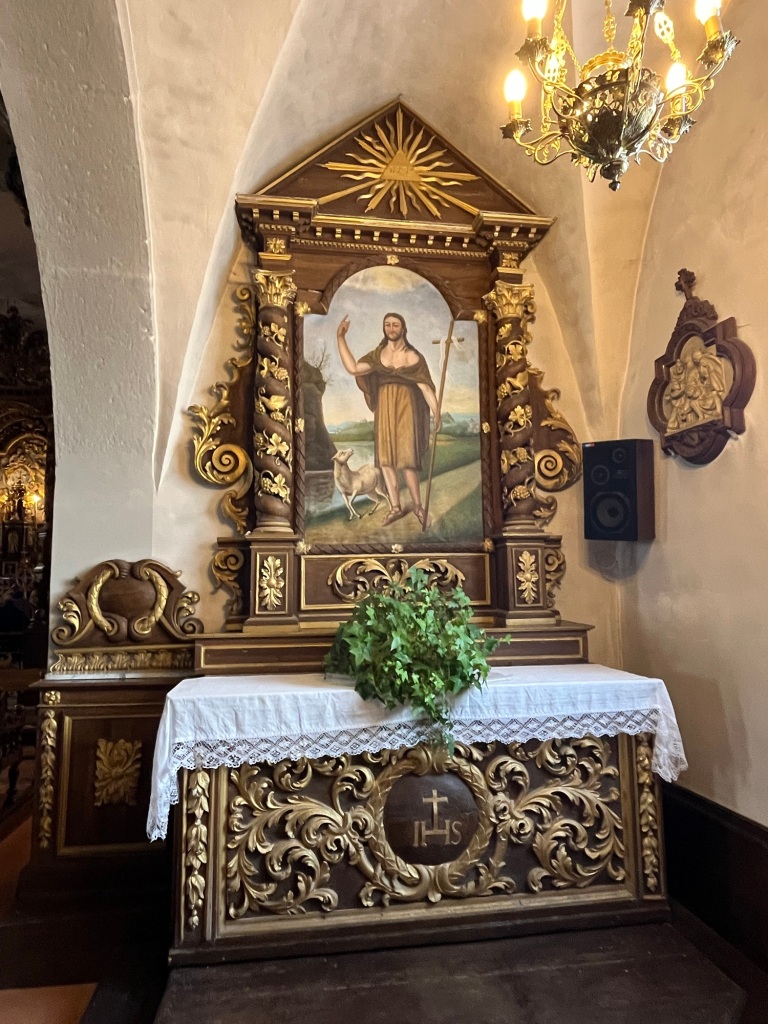
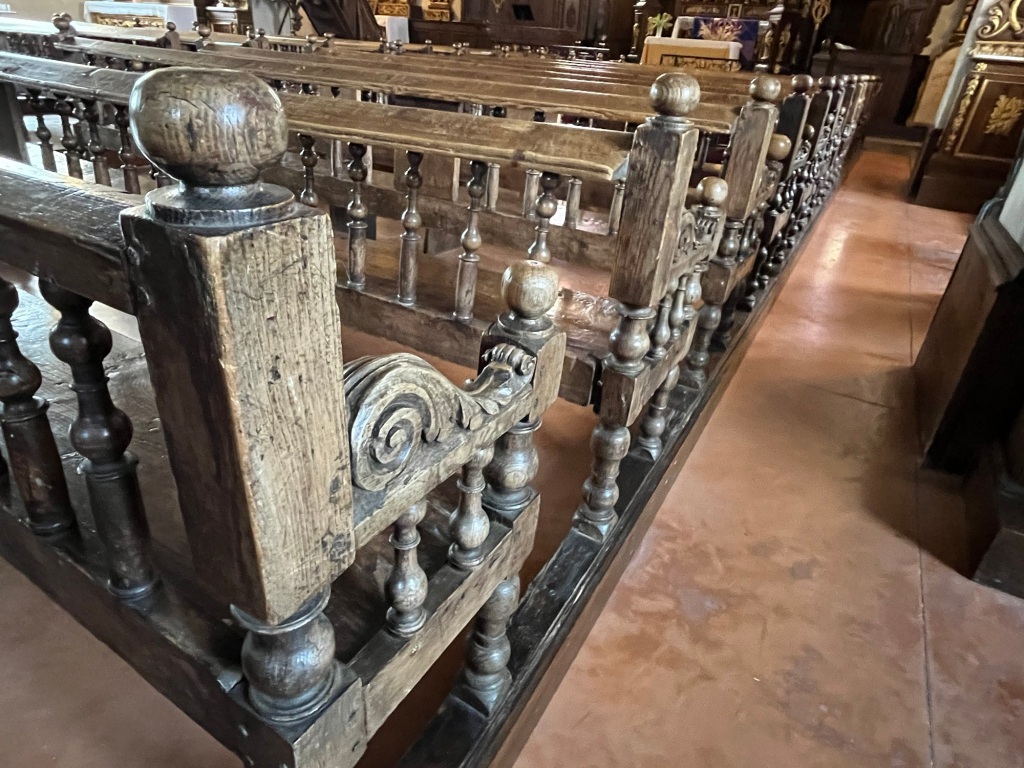
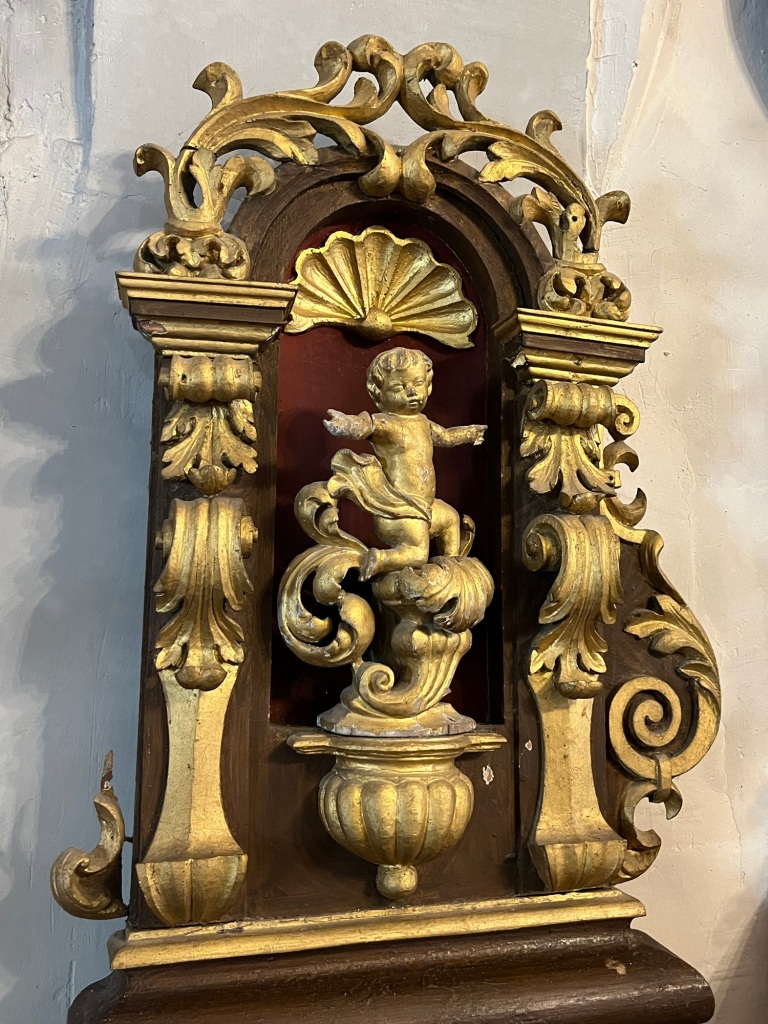
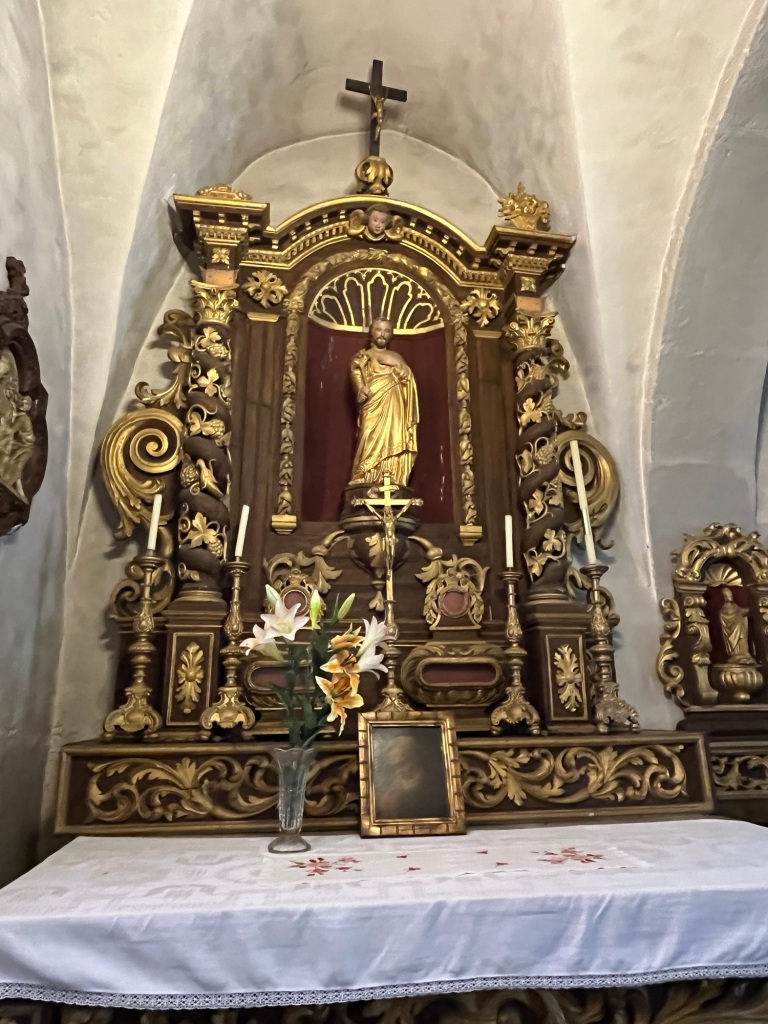
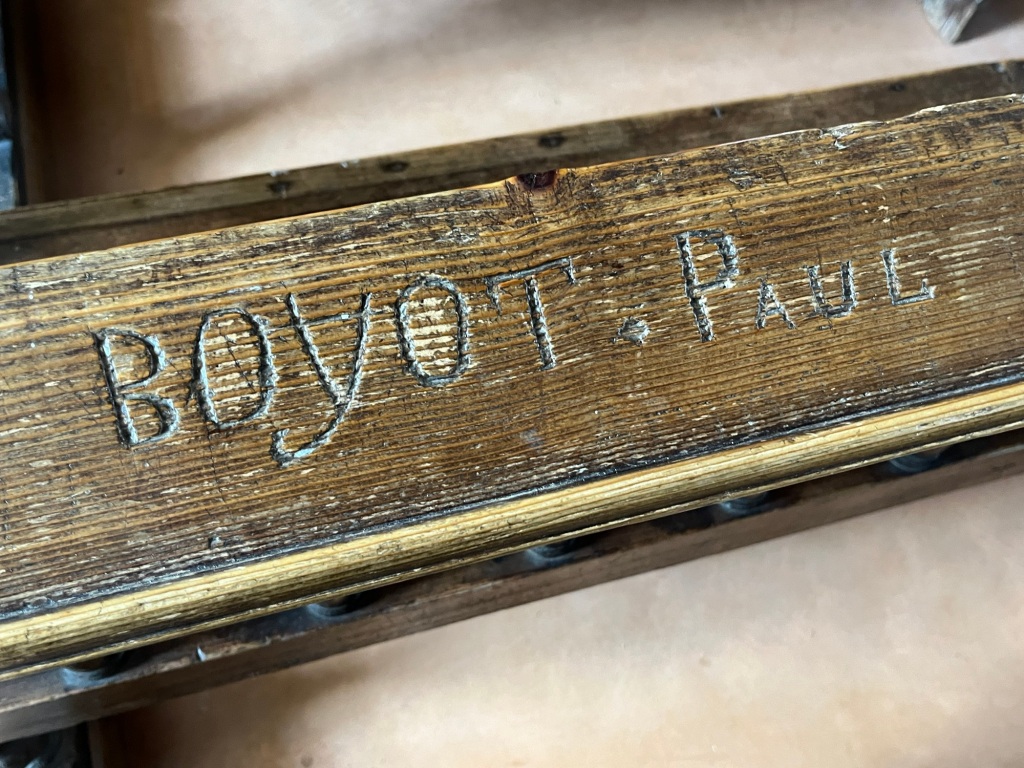
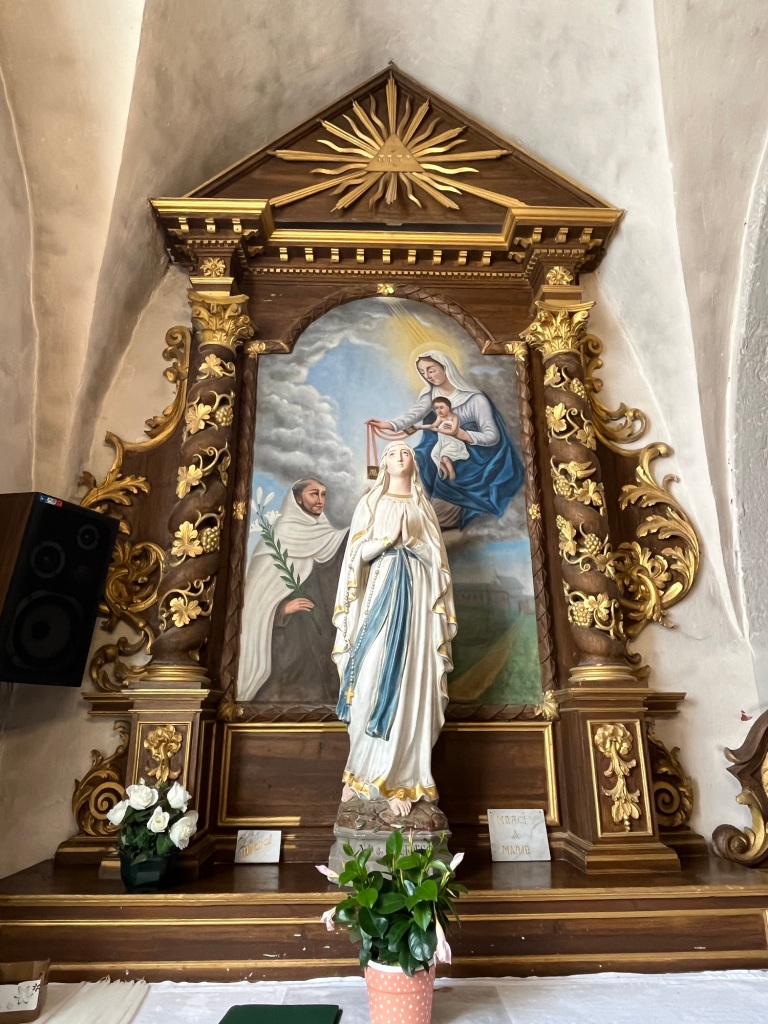
I spent a little time in prayer, lit a candle for people at home who I was holding in prayer and then went on my way. I planned to stock up on groceries before leaving France, to avoid Swiss prices until absolutely necessary. On arrival at the local Intermarché it appeared that most of the patrons were Swiss and had the same idea as me!
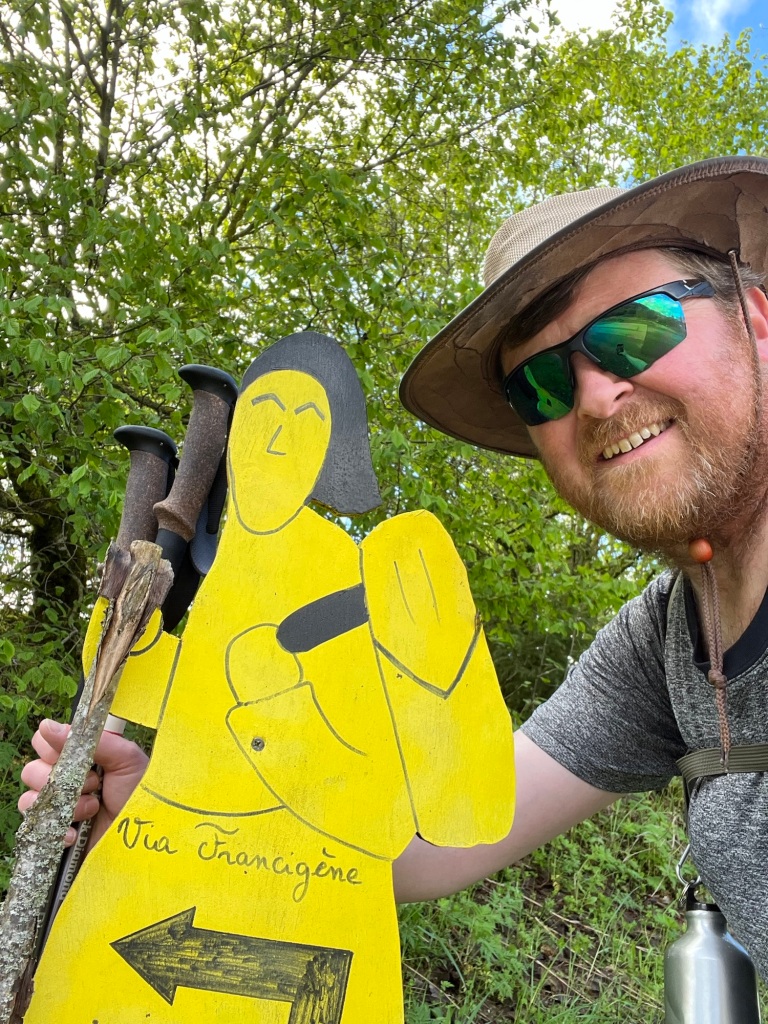
The next few kilometres to Jougne, the last French town were a joy. Fresh, crisp mountain air, sun and a gentle breeze. Someone had been busy creating Via Francigena way markers which would take me almost to the Swiss border.
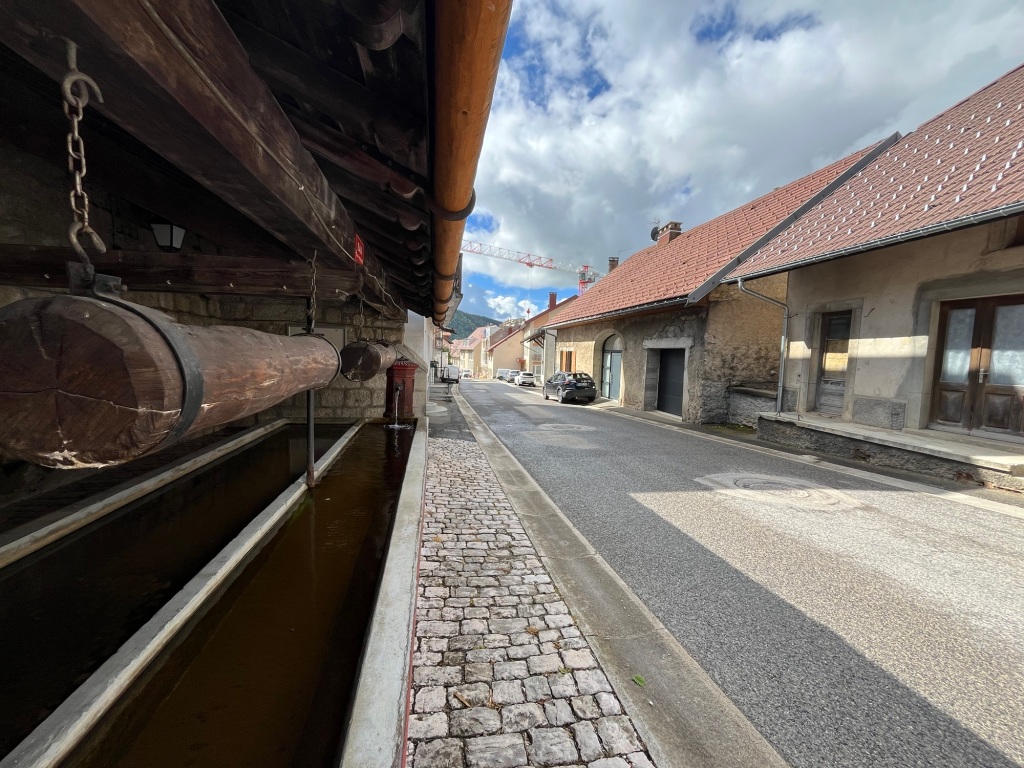
I found my last lavoir of the country, shortly followed by my last French boulangerie, at which I treated myself to a very cheeky looking tartalette aux fruits saison.
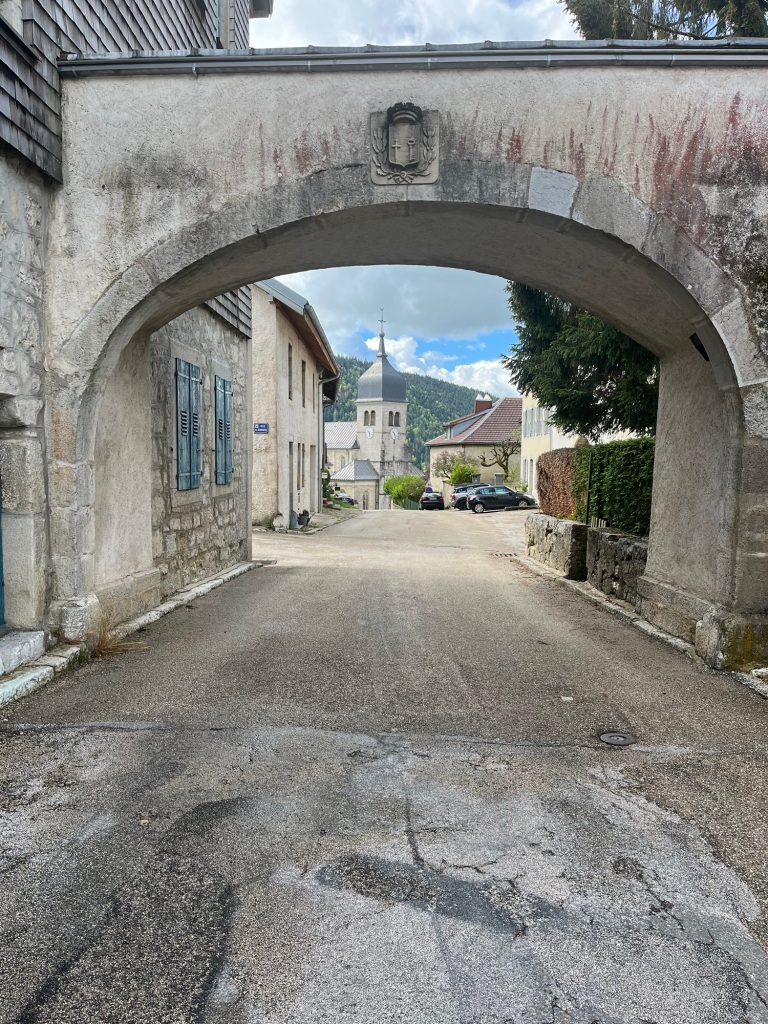
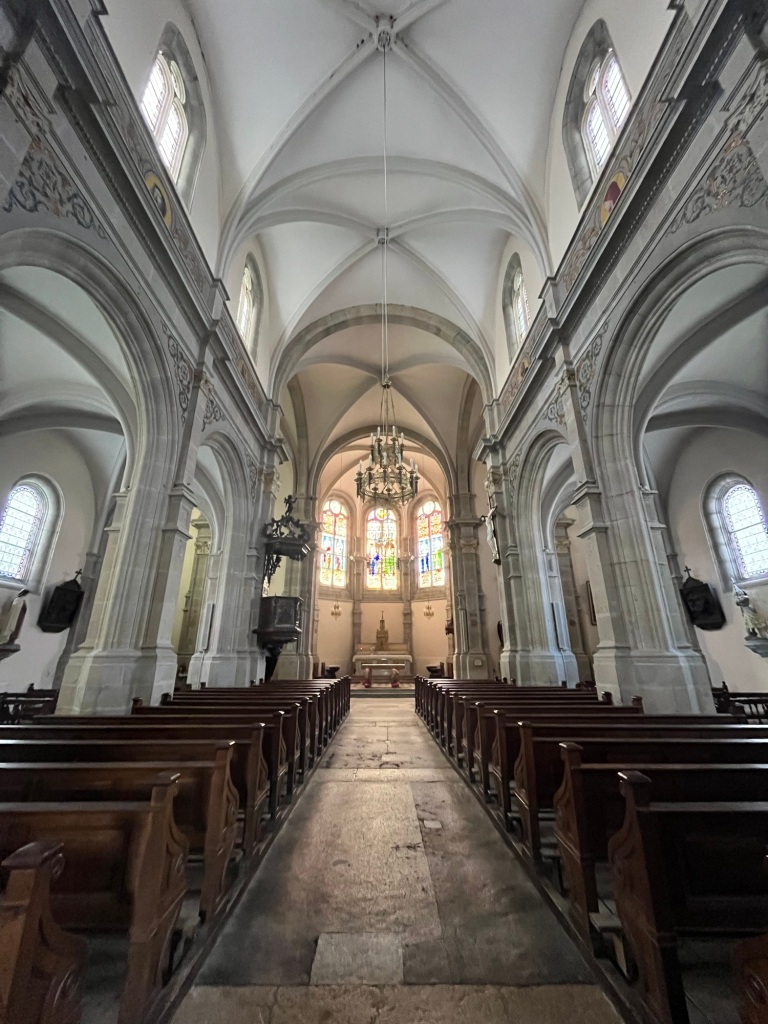
I wondered if the church of St John the Baptist would feature similar carvings, but it had a slightly more austere interior, but nonetheless an impressive space.
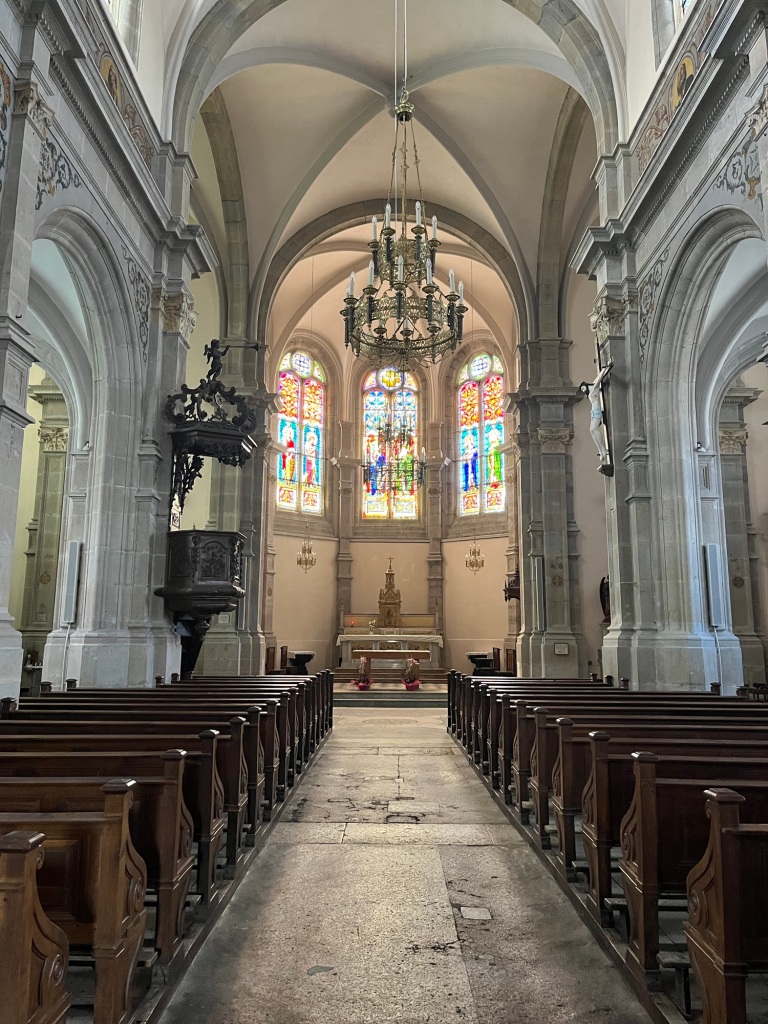
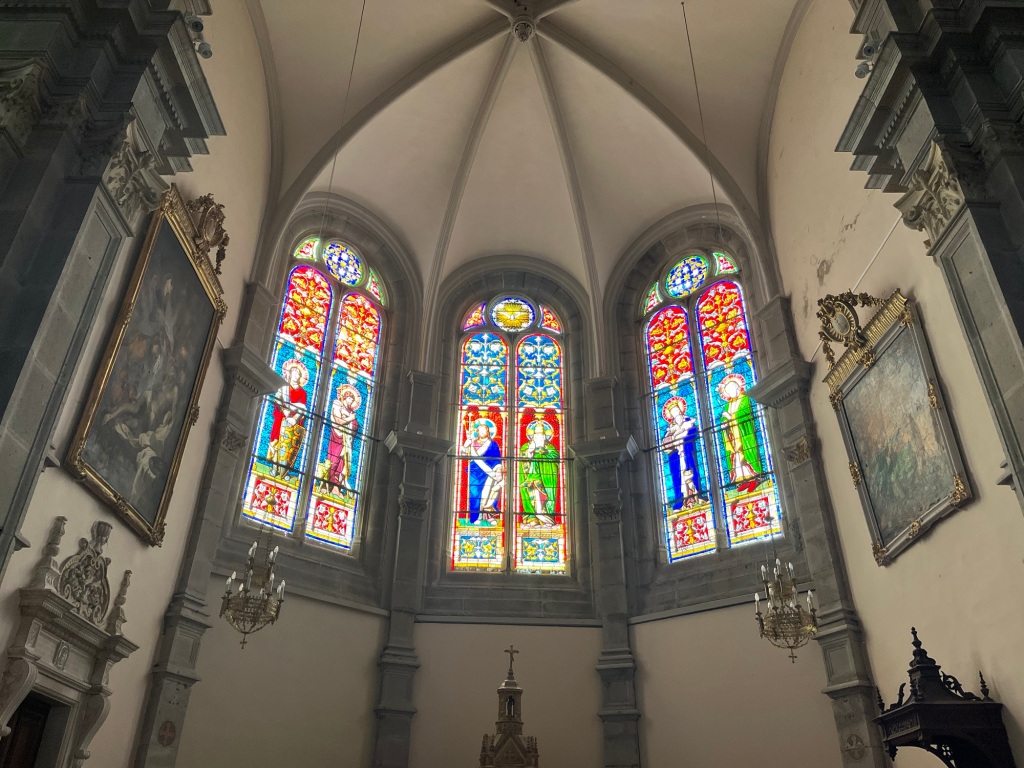
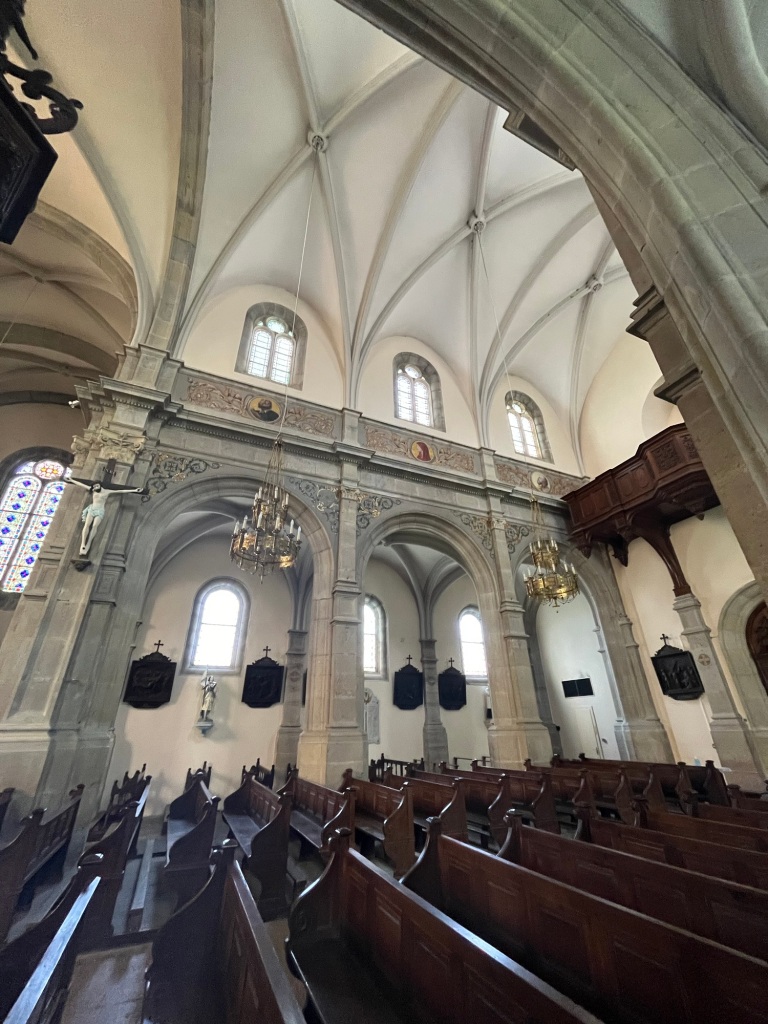
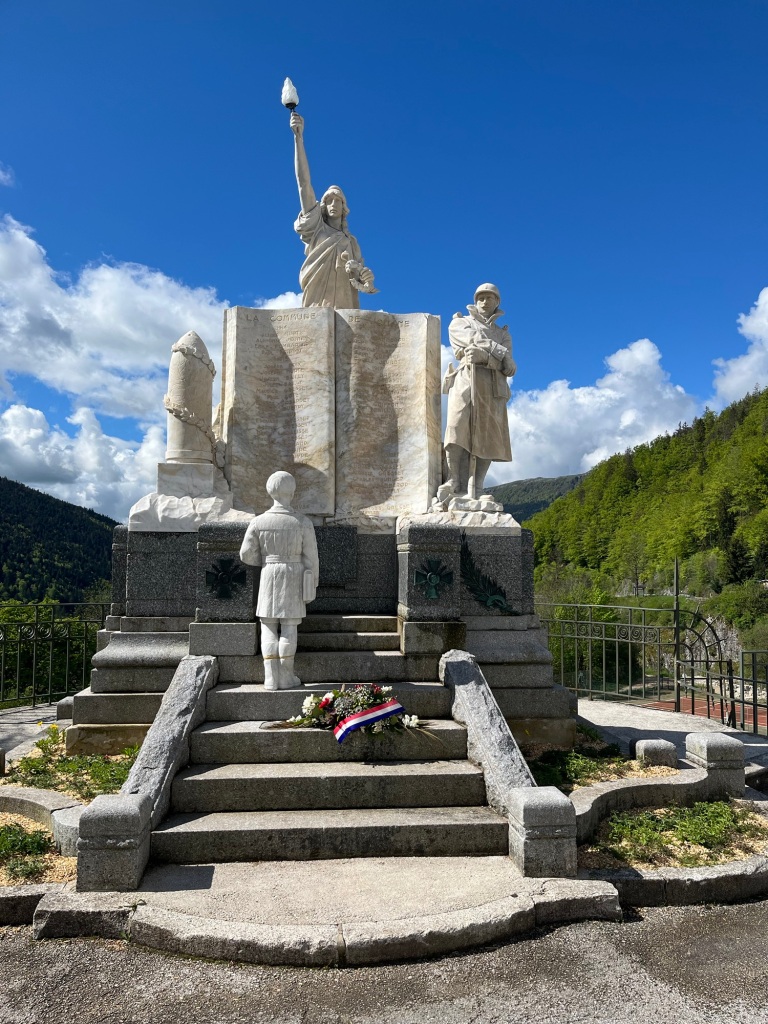
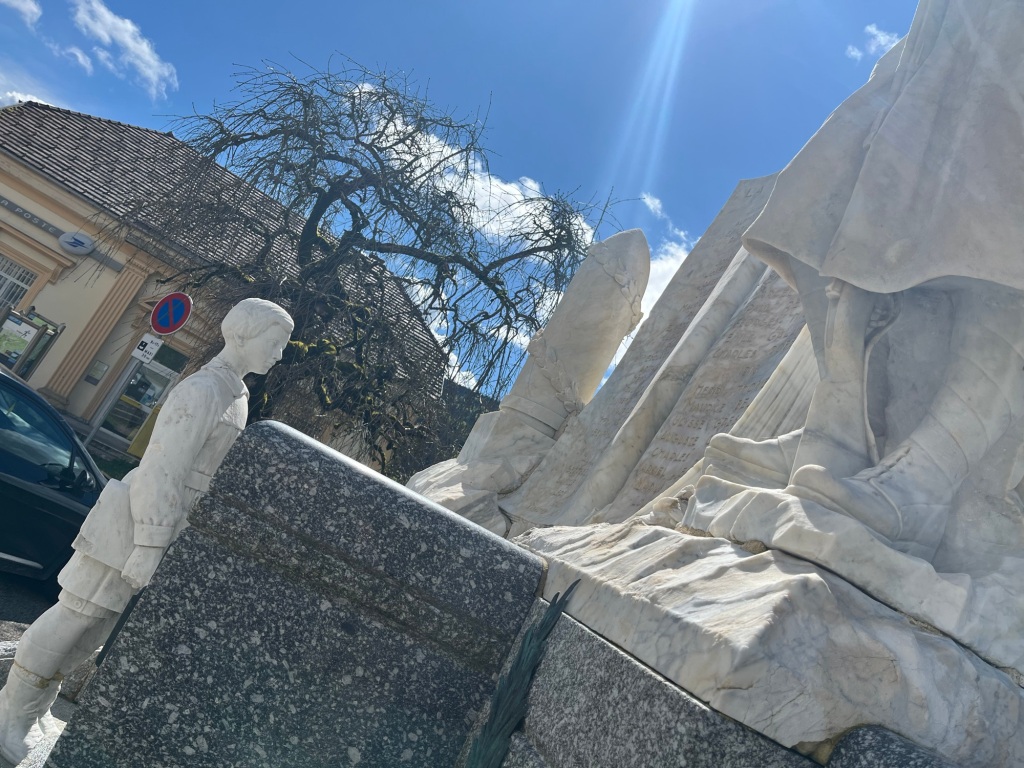
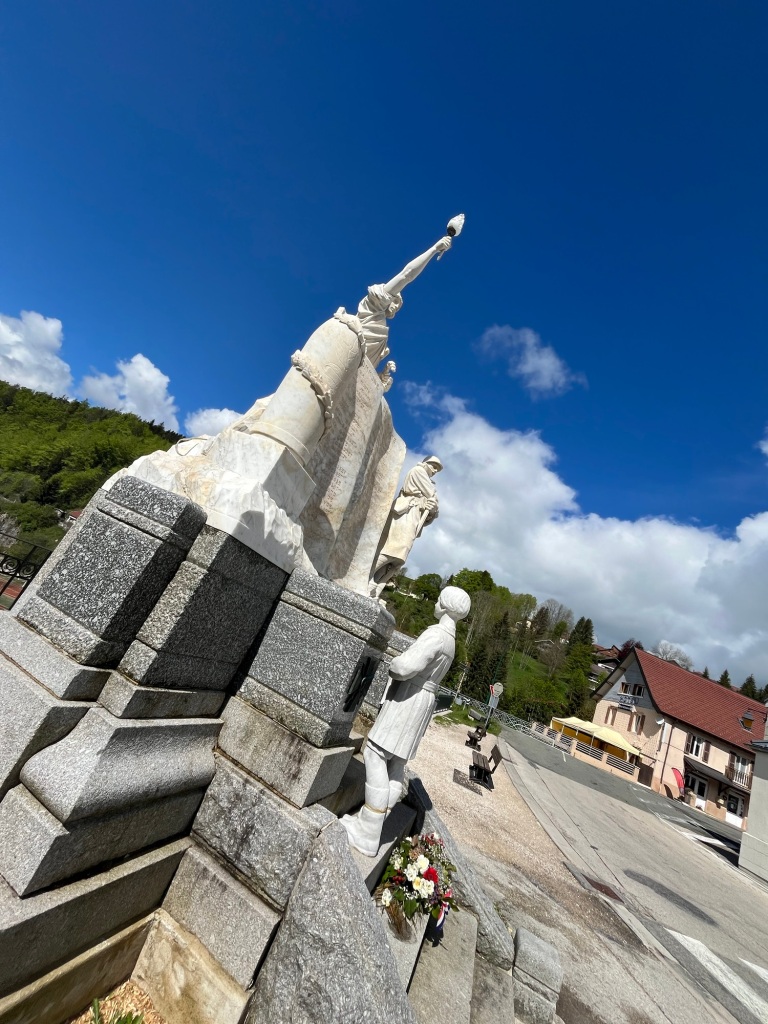
In a continuation of lasts, Jougne contained the last French war memorial of my walk too. I found it very affecting; different to all those I had seen before. Firstly, its setting was simply breathtaking, but the more than that, the use of the figure of liberté, more familiar perhaps in New York harbour and a small boy looking up at the memorial was most powerful.
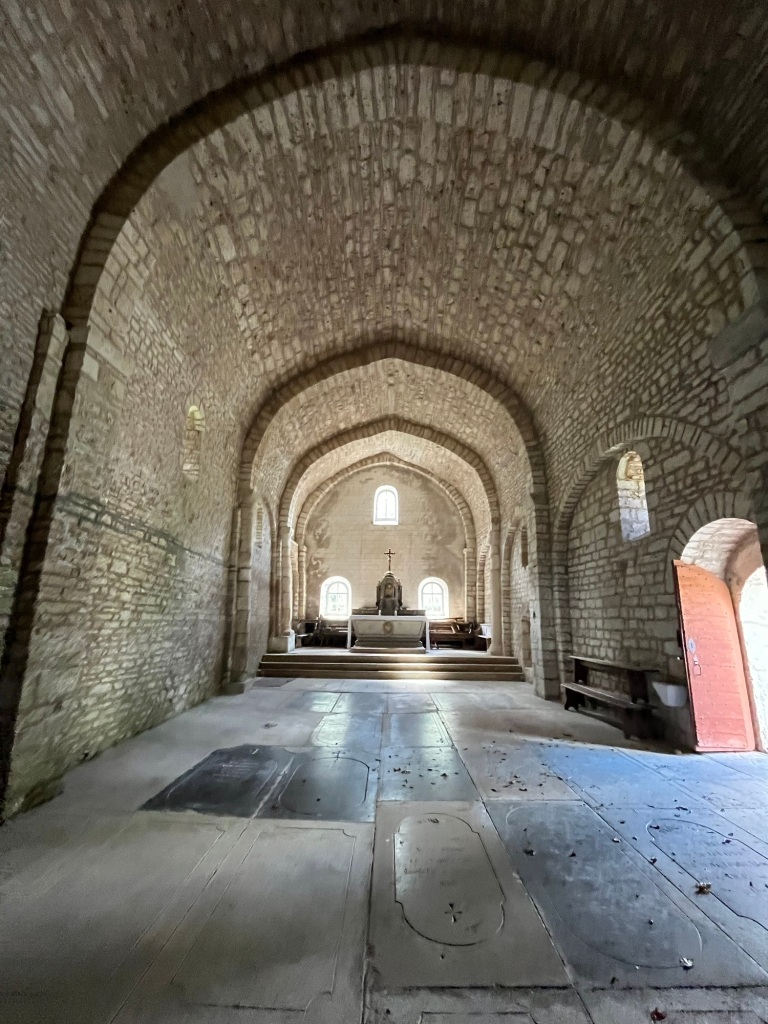
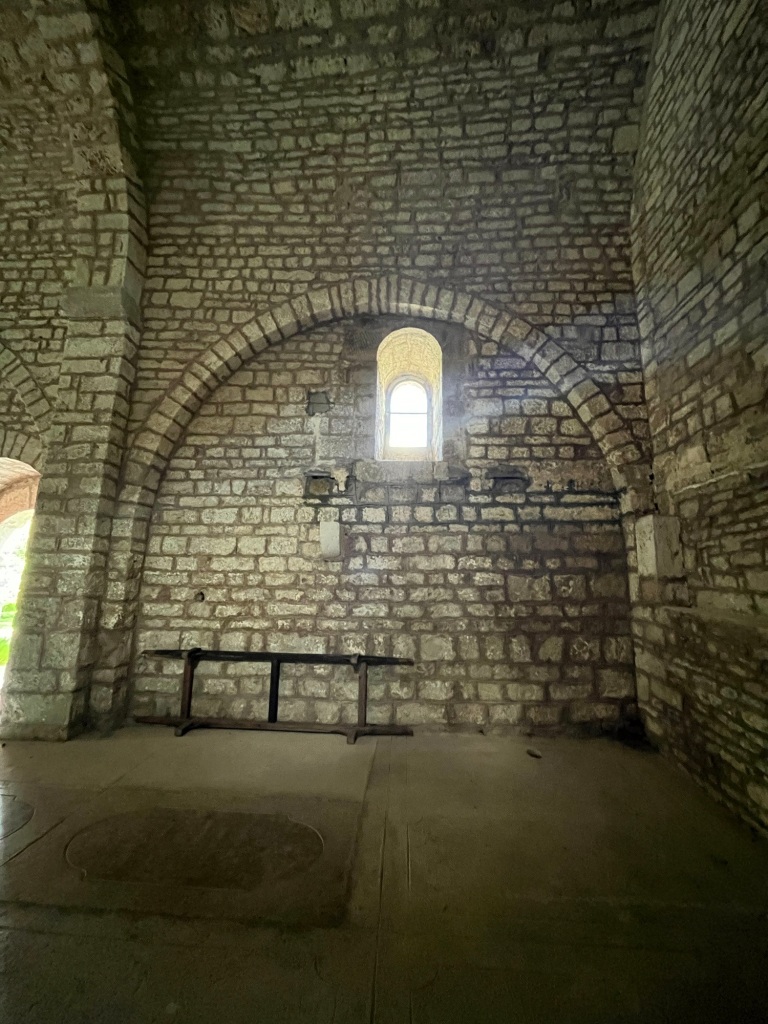
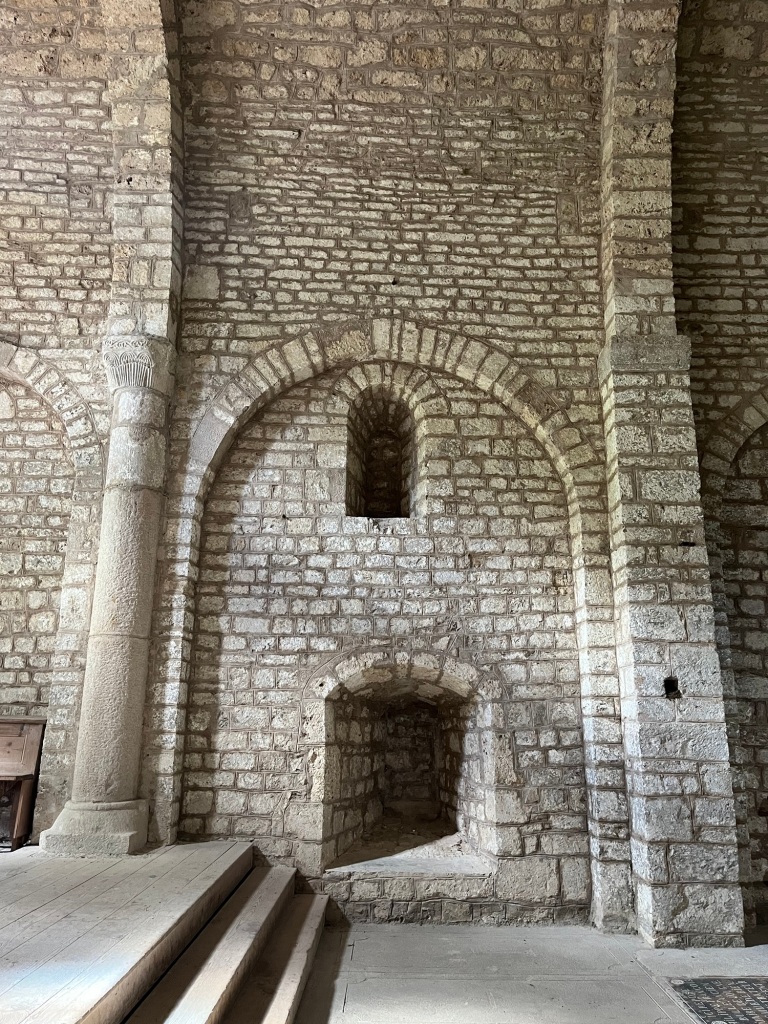
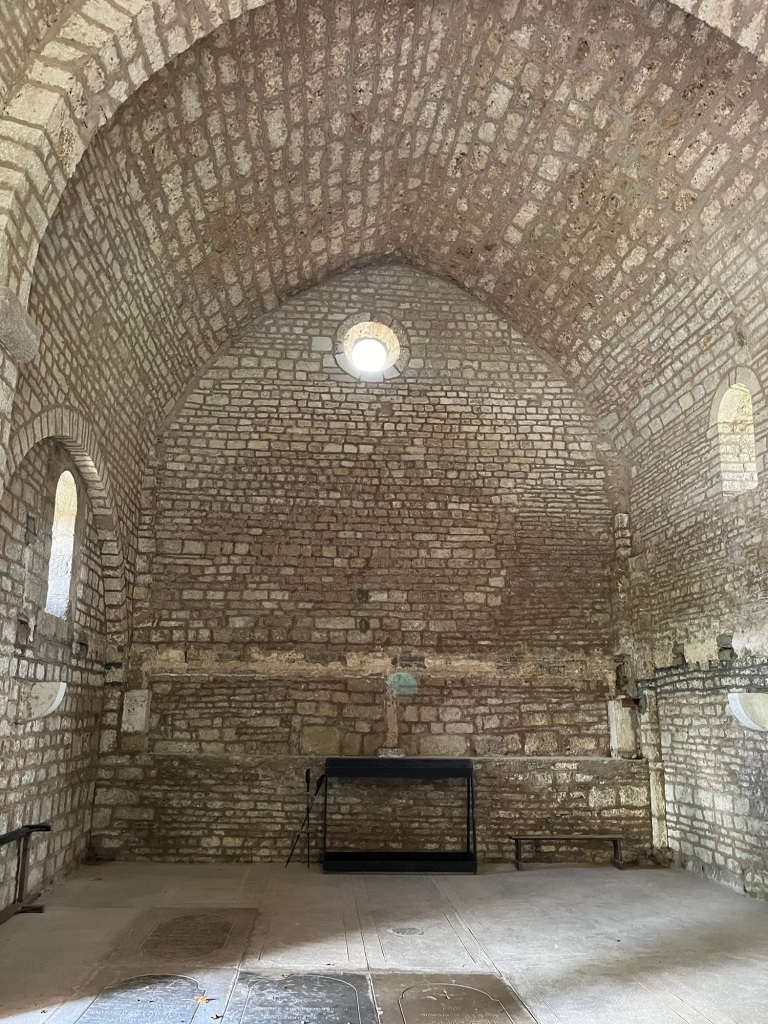
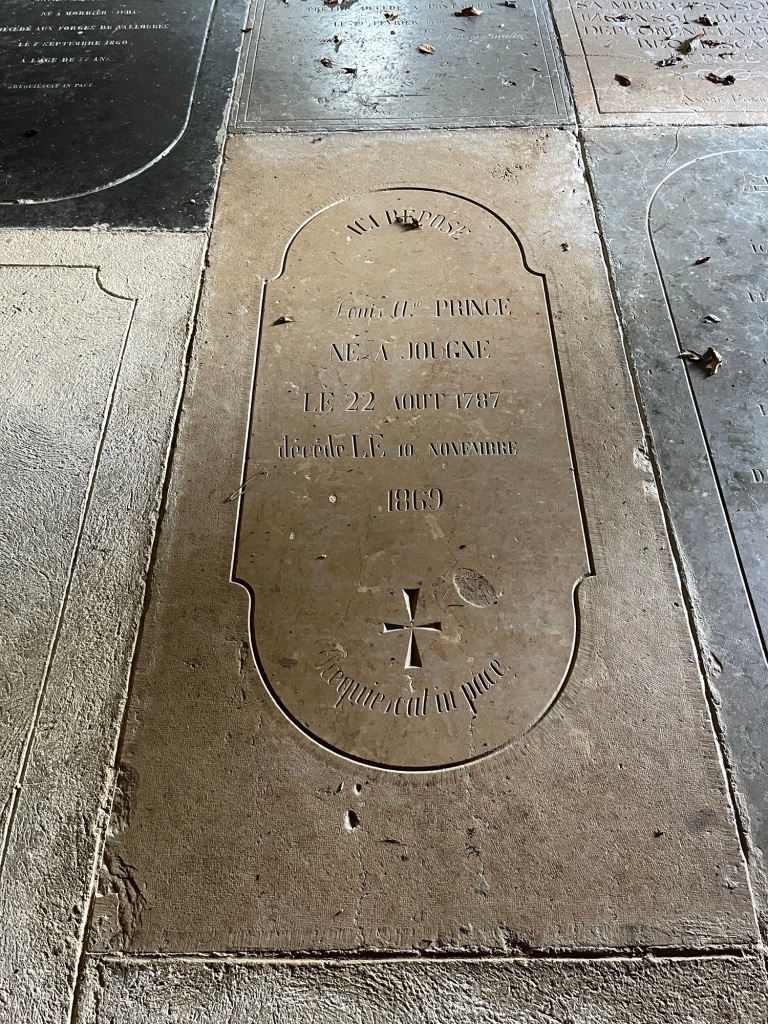
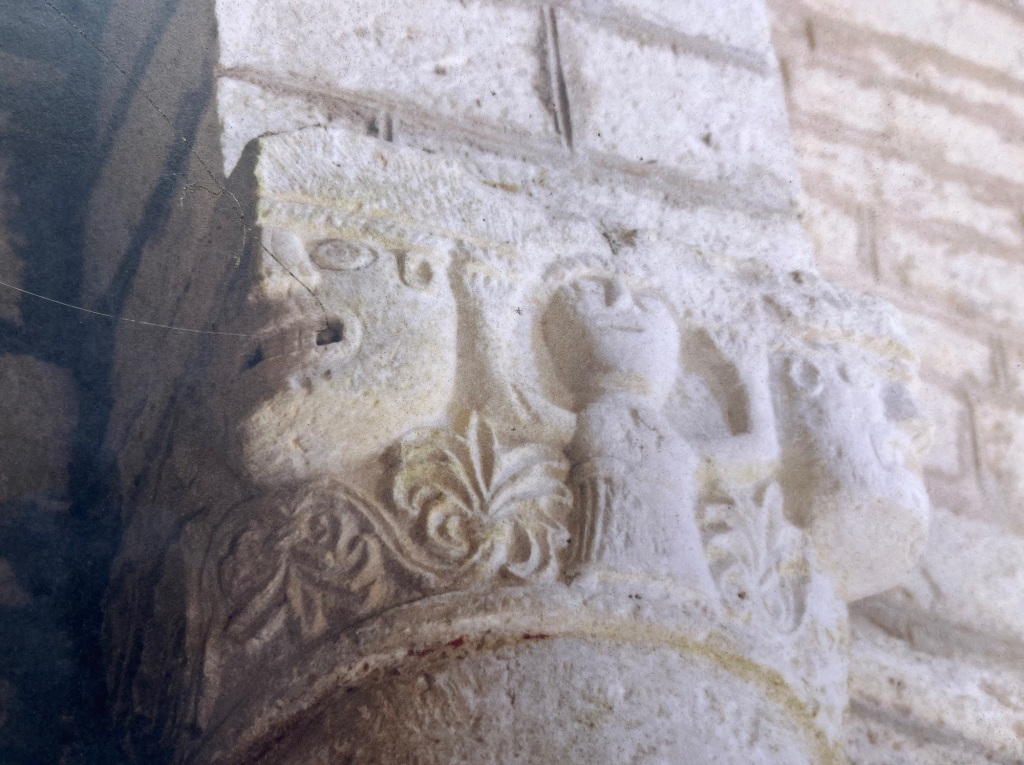
A steep descent followed into the valley below. On the way there, the Chapel of St Maurice presented an altogether earlier and simpler church building. It is all that remains of a monastery formed on the site, the main body of the church dating from the 11th Century, with a 9th Century, Caroligininan vault below. It was a wonderful, holy place. In its simplicity a thin place where the presence of God is keenly felt.
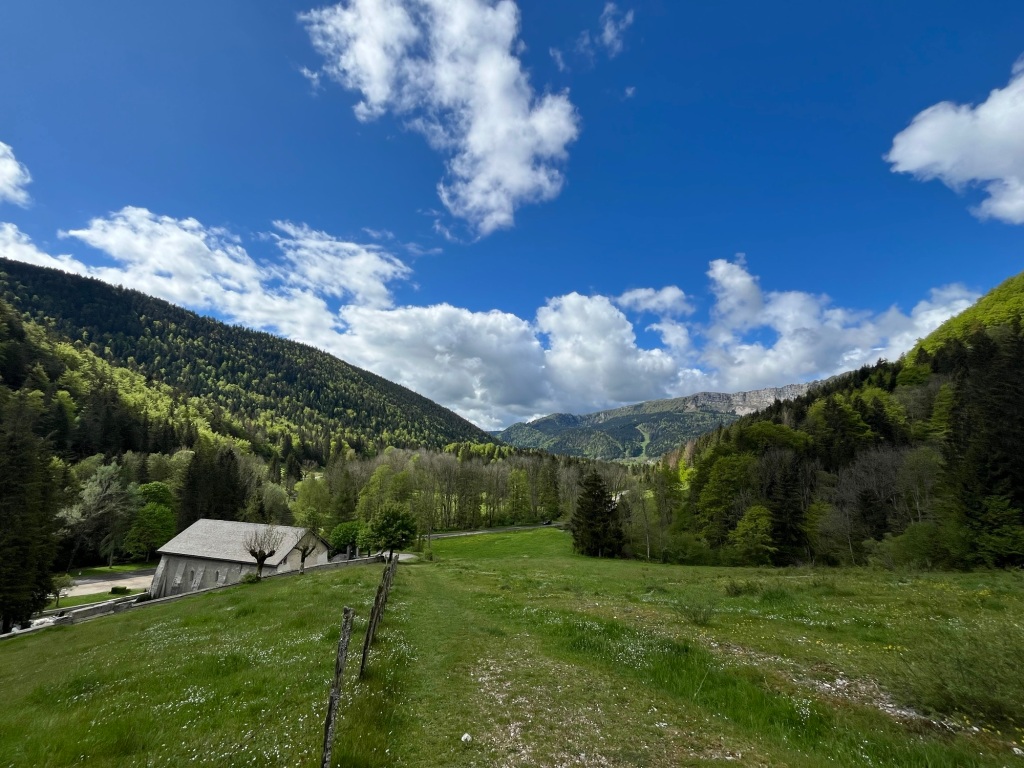
The route now continued on a gentle descent along the valley towards Les Eschamps, the last French village. Along the Rue Jules César, I watched a grandmother sit her grandson on her knee in the driving seat of her car, so he could “steer” the car along the road home. They both gave me a cheery wave as I passed and I smiled to myself: I wonder if his parents knew this was something they did?
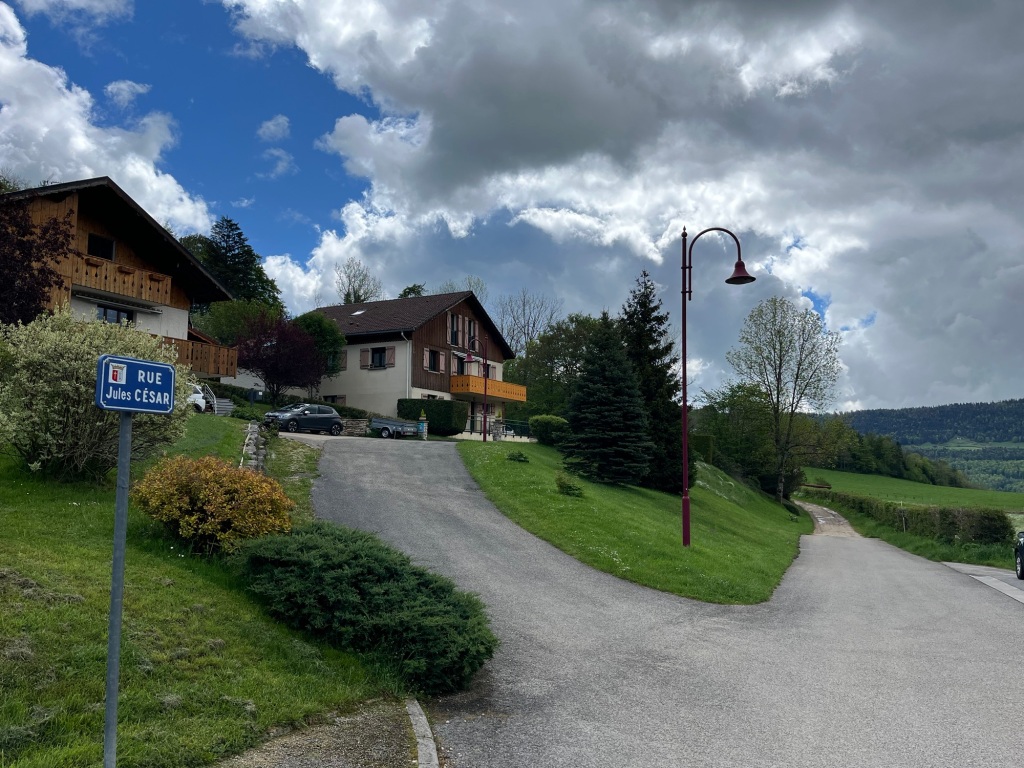
This road name hinted at the Roman origins of this lane, once being an important Roman road, carrying goods and people to and from Rome even then.
And then, with little more fuss or bother, the Swiss border came into view. No uniformed guards, no-one checking passports or customs declarations. A white carved stone marked the boundary between the two countries.
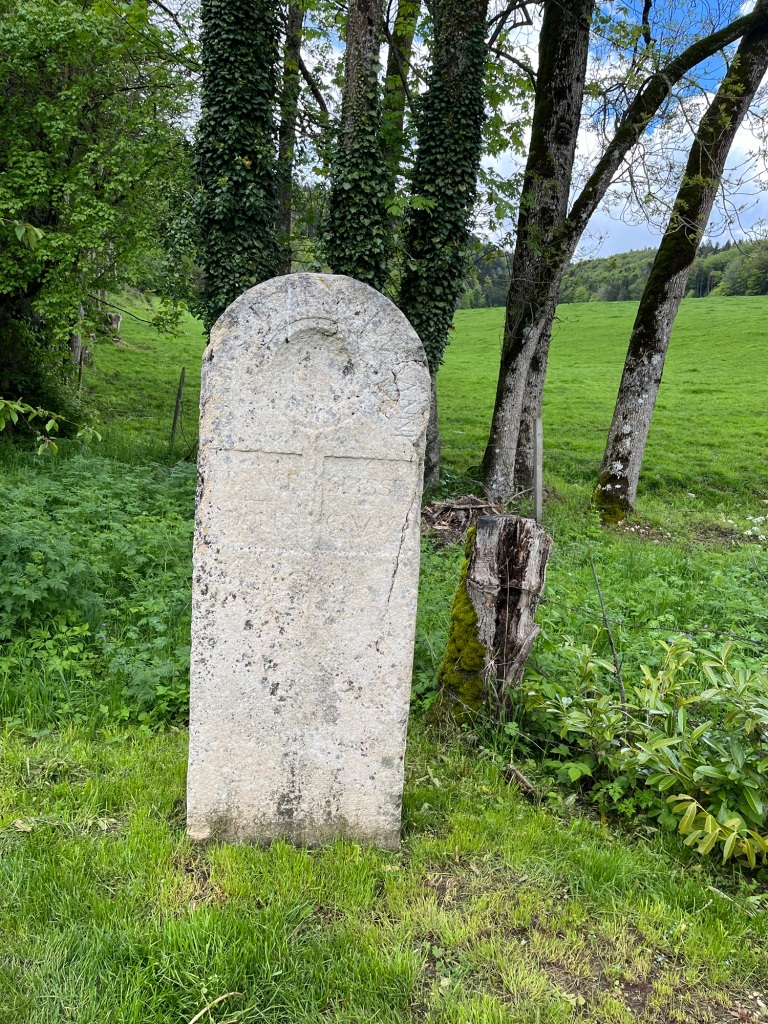
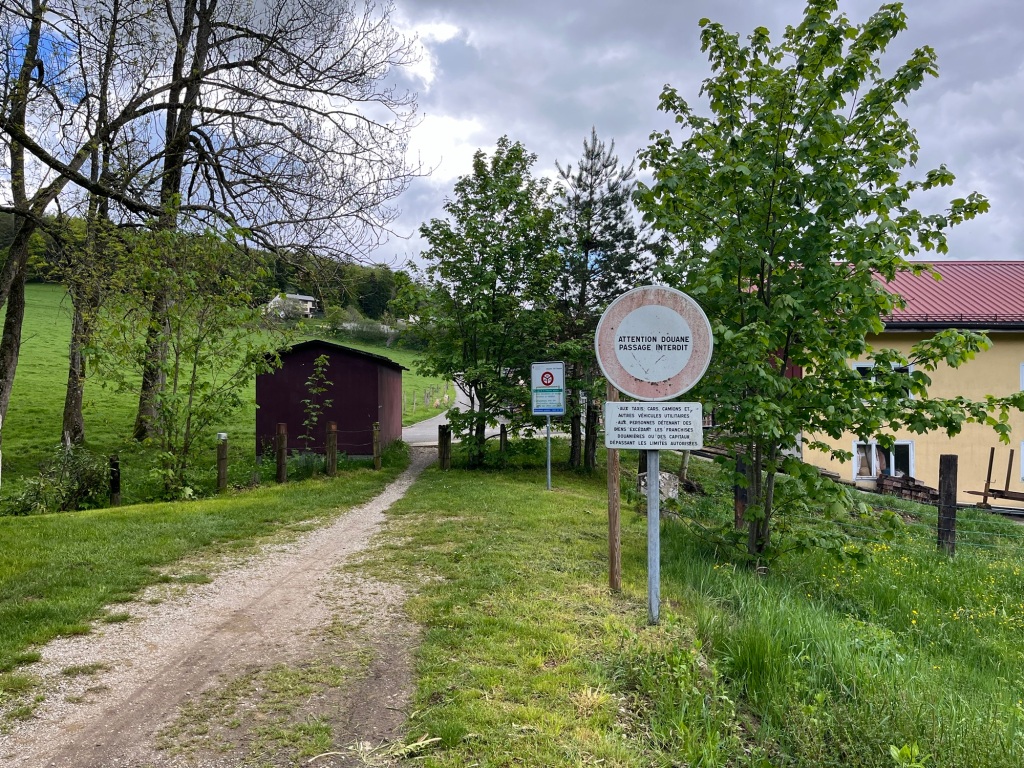
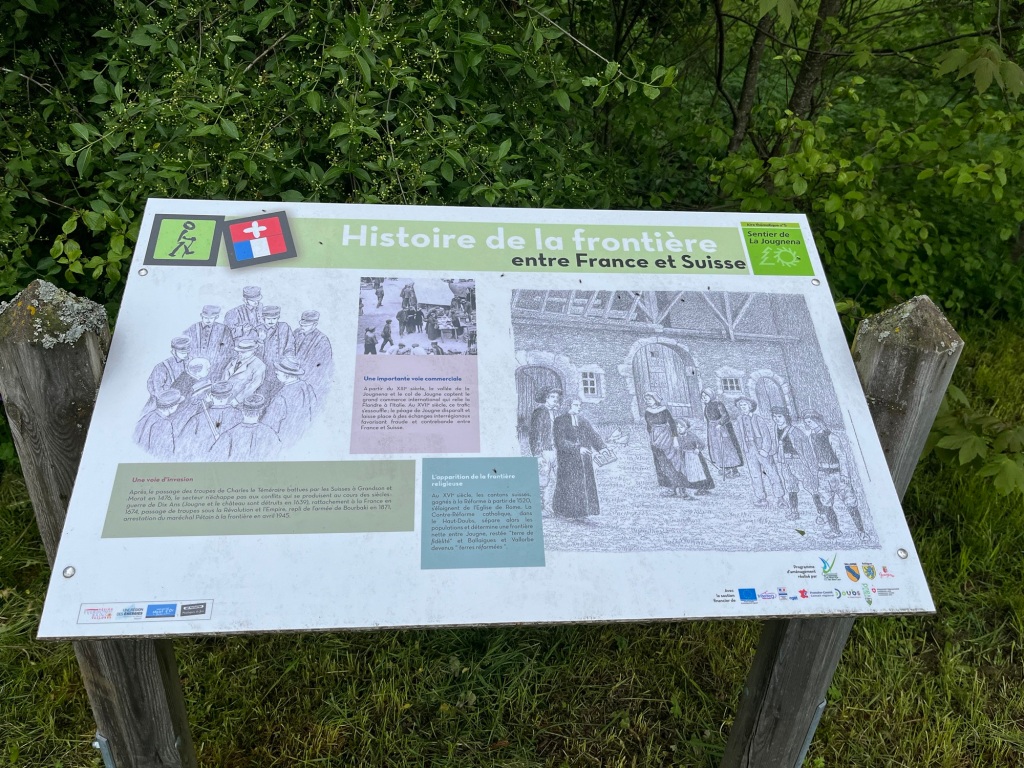
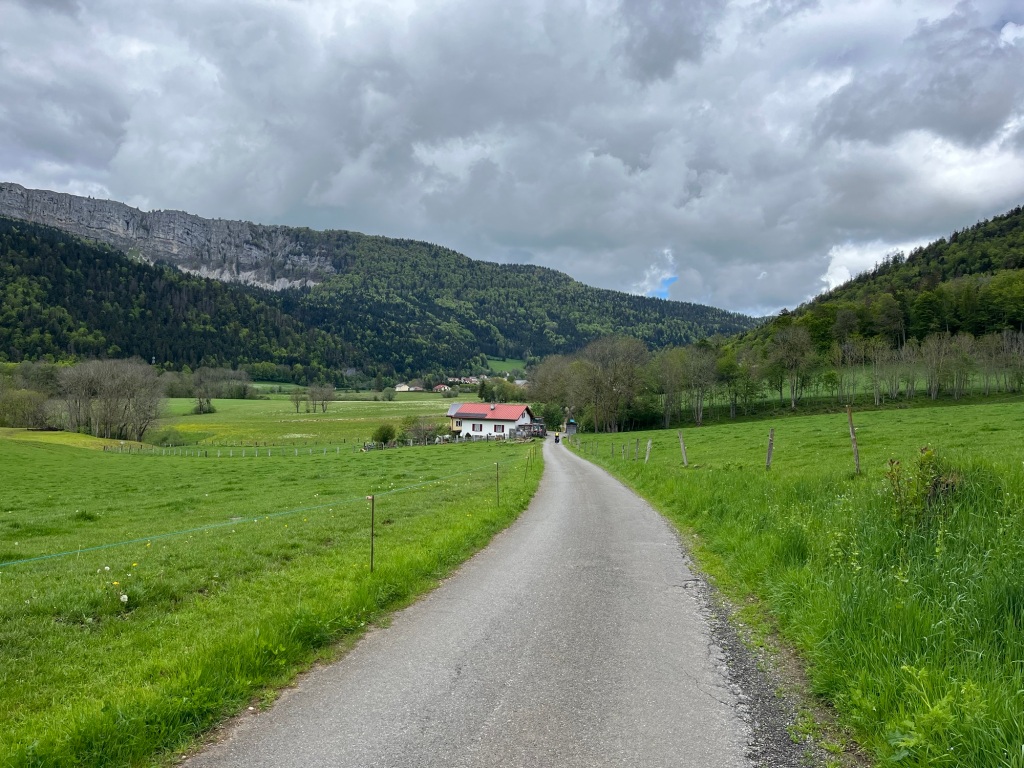
So, it was goodbye to red and white flashes marking my way along the Via Francigena and hello to yellow footpath signs and the Route 70.
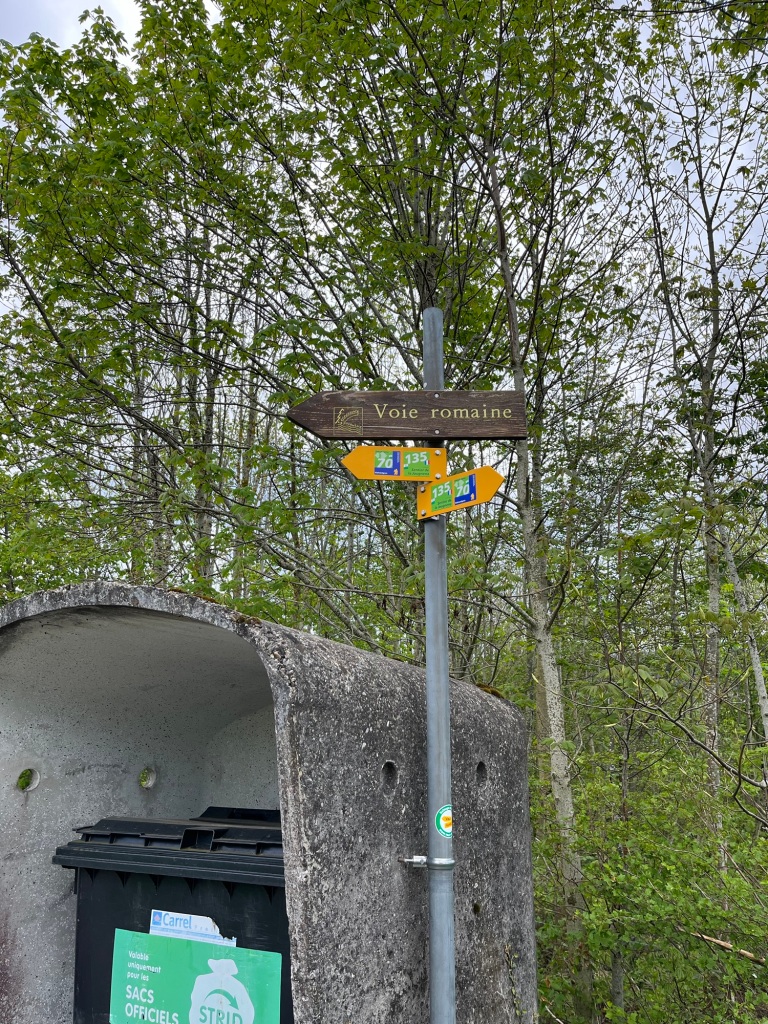
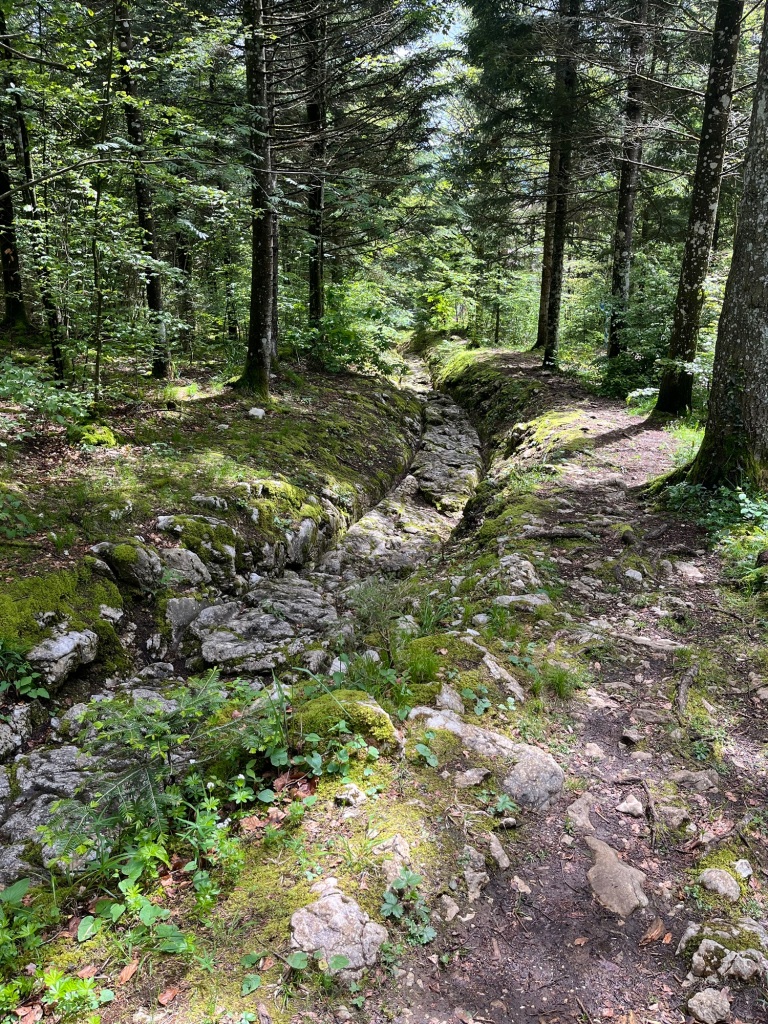
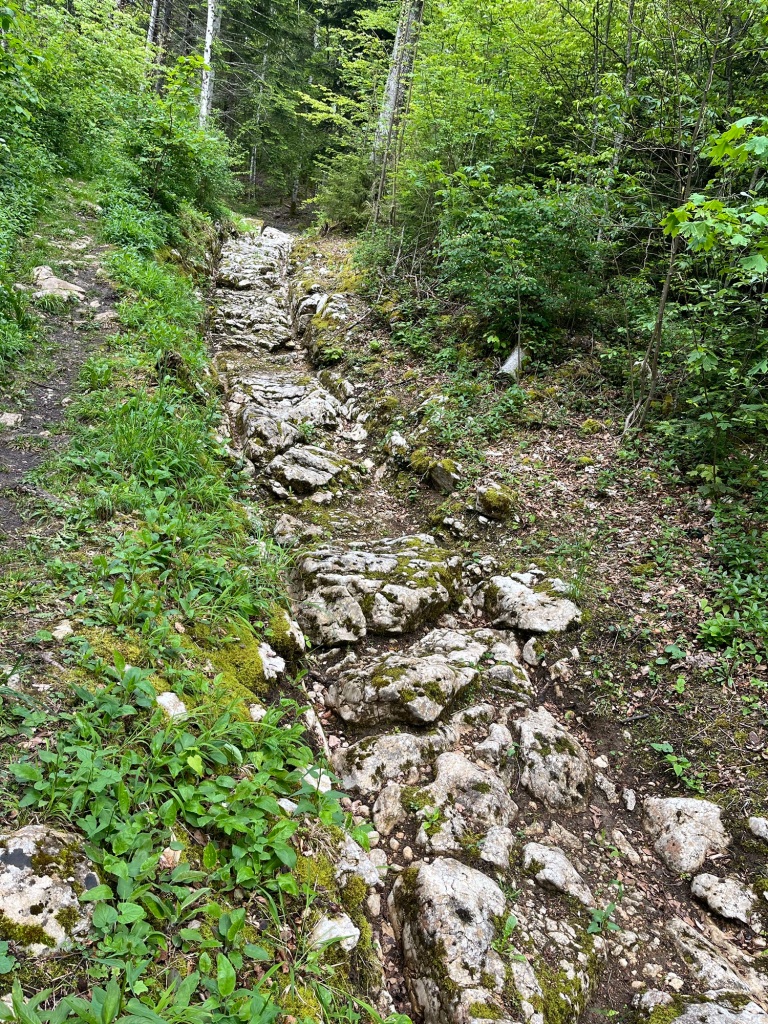
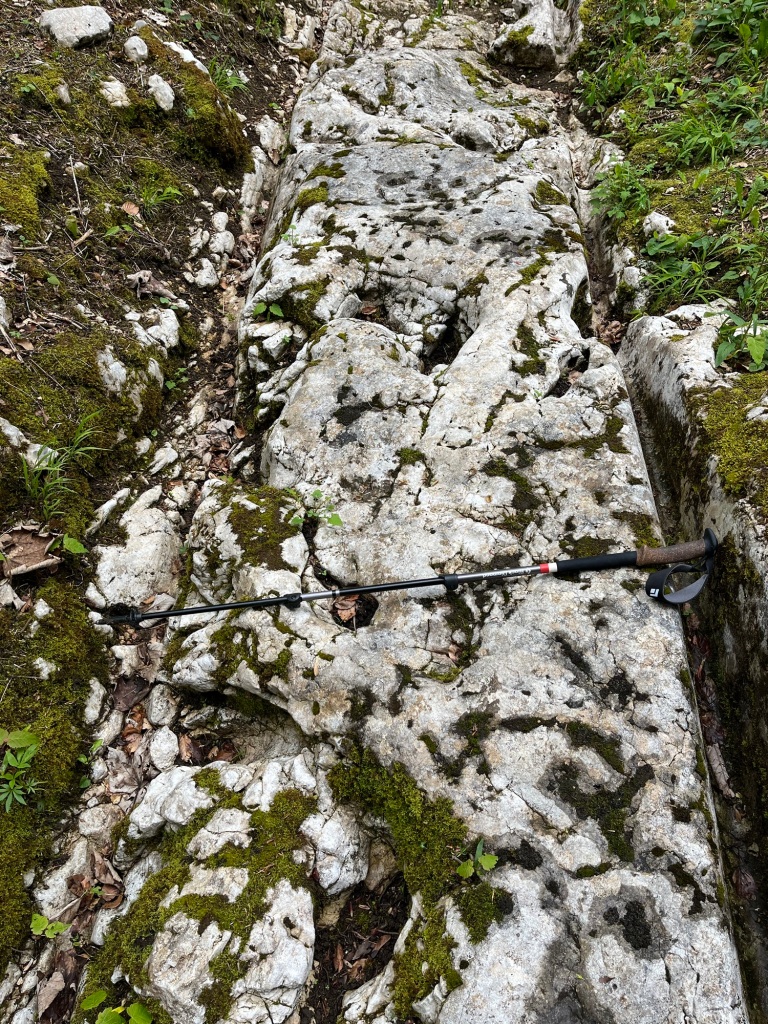
A little further long, before the small town of Ballaigues, there was a stretch of Roman road that had been hewn out of rock and it was still possible to see the cart wheel ruts. I found this absolutely fascinating, definitely worth the short diversion off the official route to see a road that Archbishop Sigeric almost certainly walked along between Jougne and Orbe.
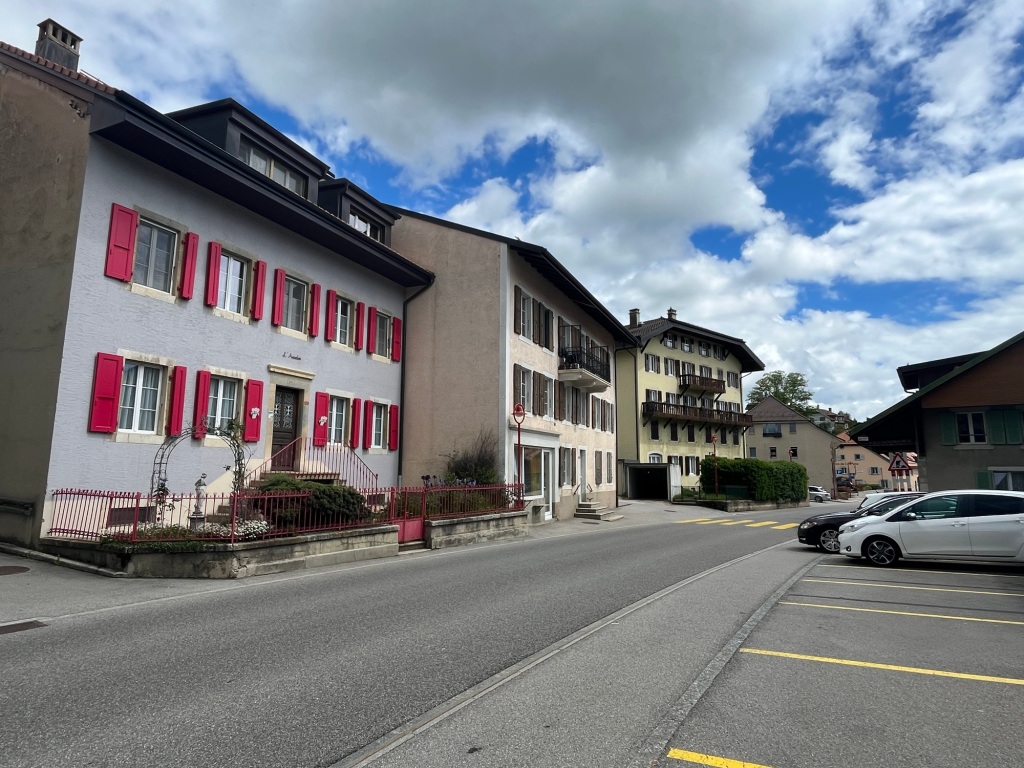
In my first Swiss village I withdrew some Swiss Francs, although I discovered later that there is almost exact parity between the Euro and Swiss Franc, and both are accepted as currency. However I suspect that a better rate is given for the home currency.
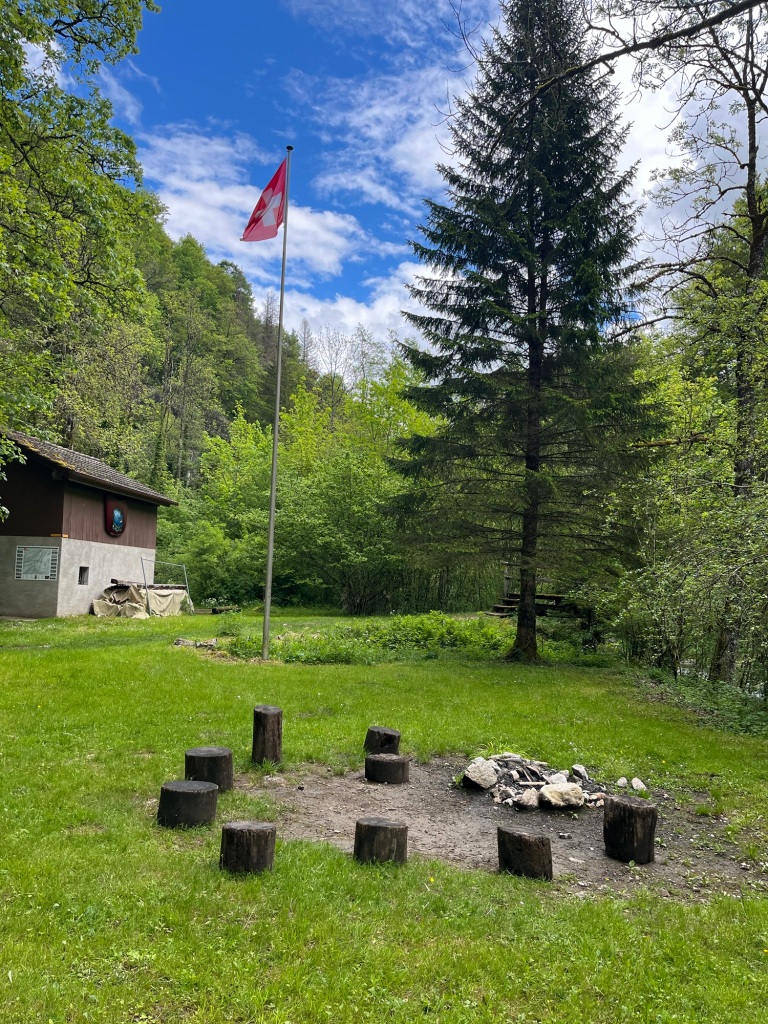
And then a drop down into the valley of the river Orbe, which soon became a gorge. I stopped for lunch here, and enjoyed some sunshine before the clouds of the afternoon.
Then over a rather rickety wooden bridge ad along a route that had been created in the early 1900s and restored in 2017. In places the path barely clung on to the side of the gorge, and perilous drops towards the river below threatened.
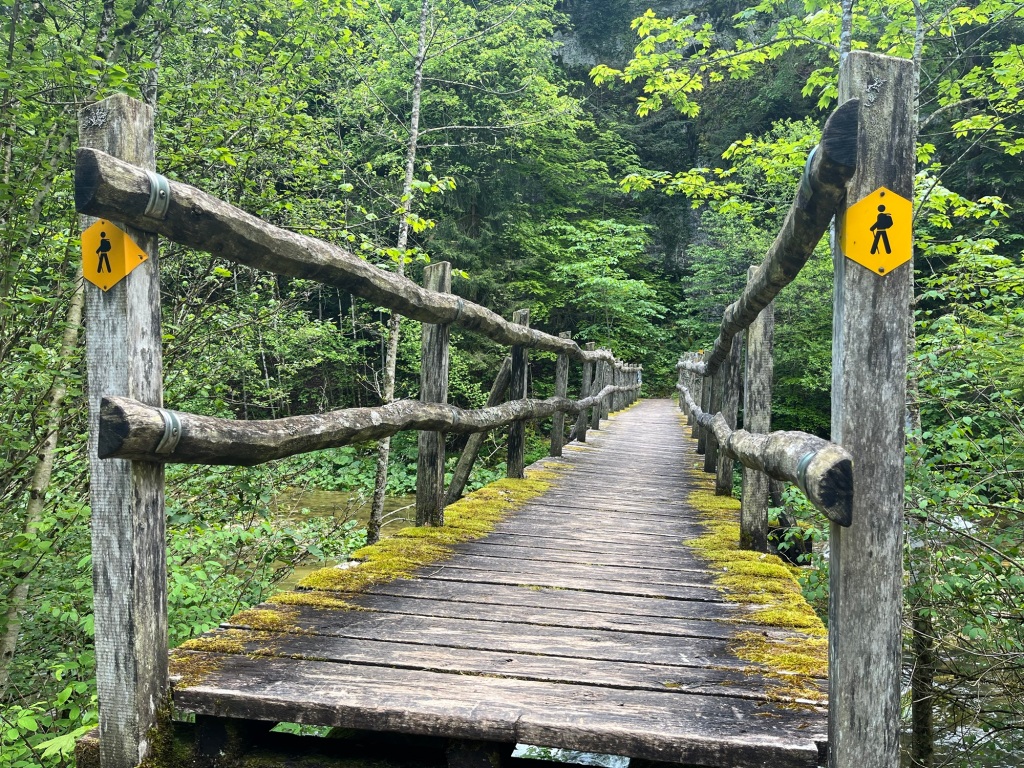
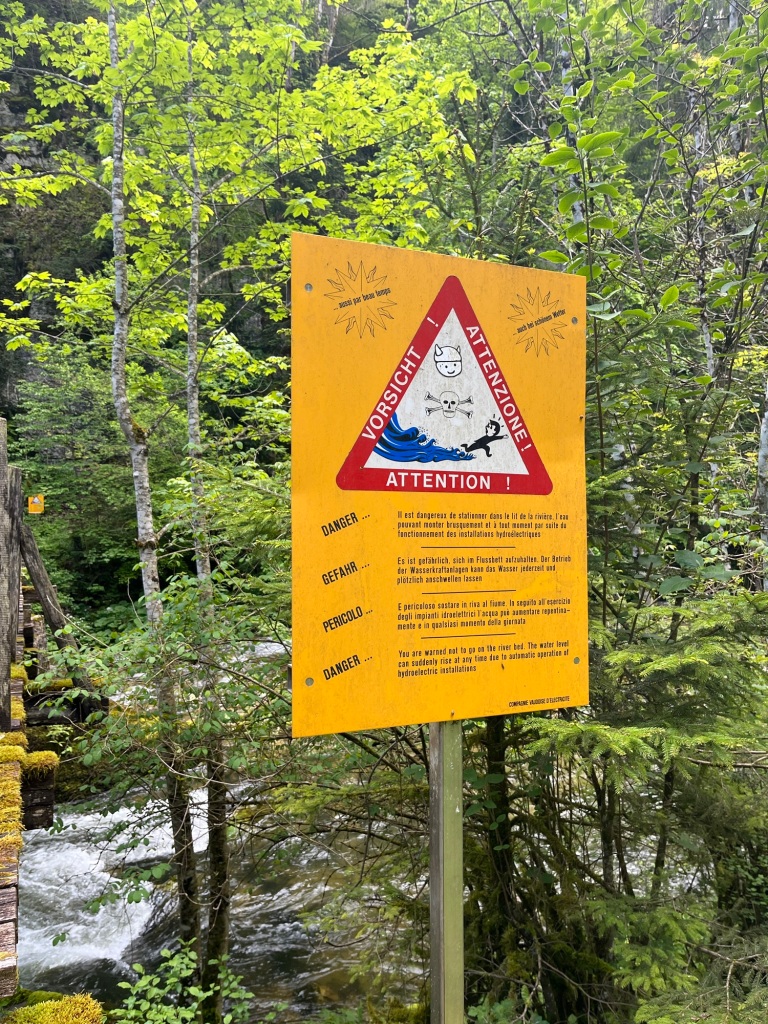
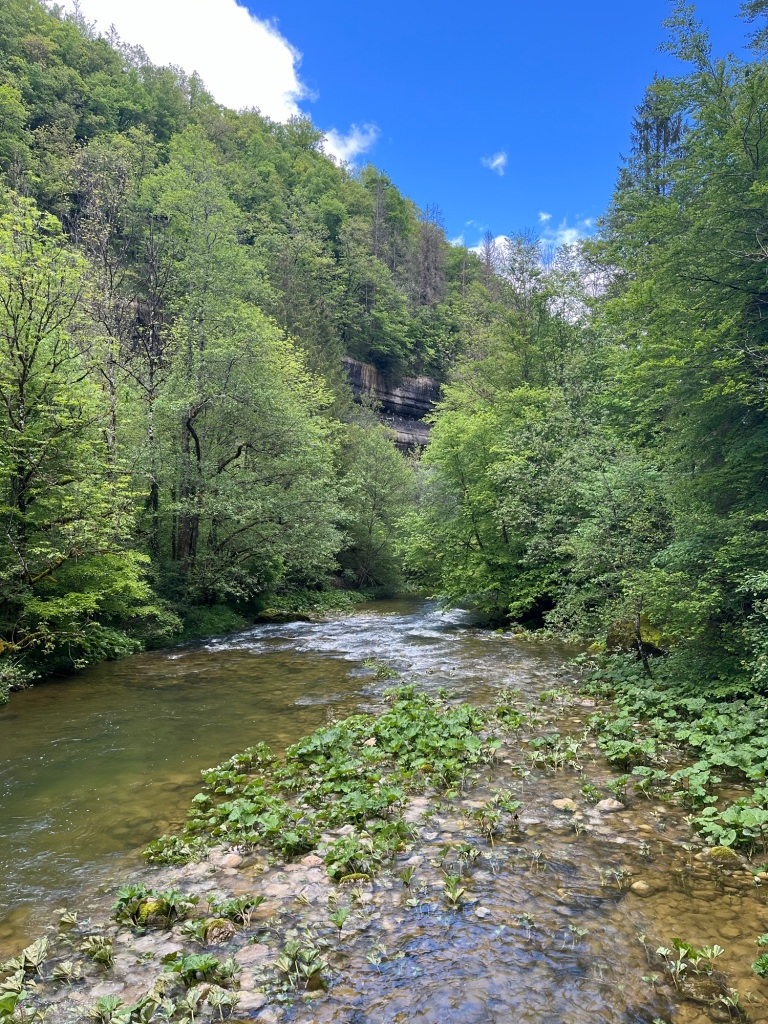
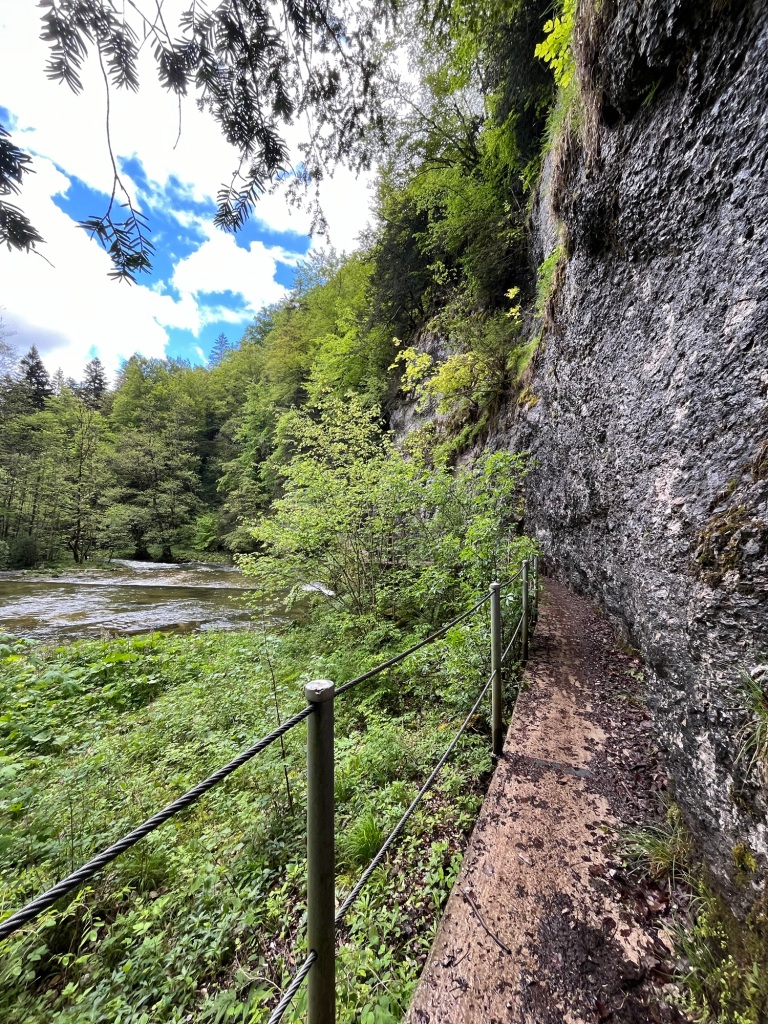
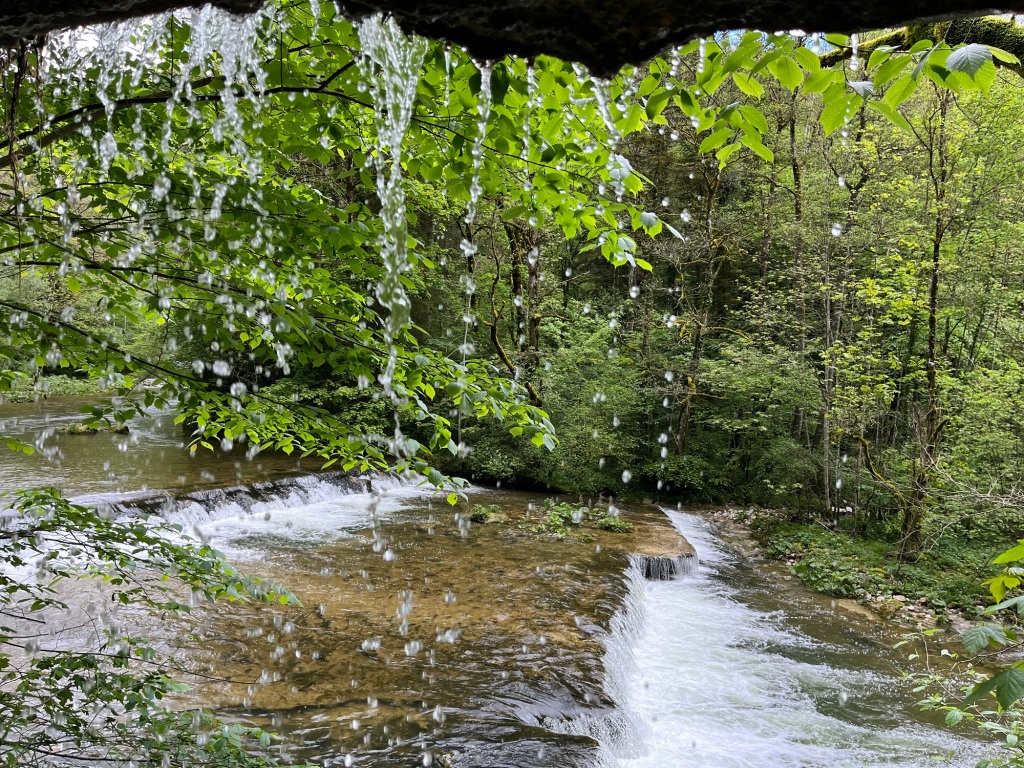
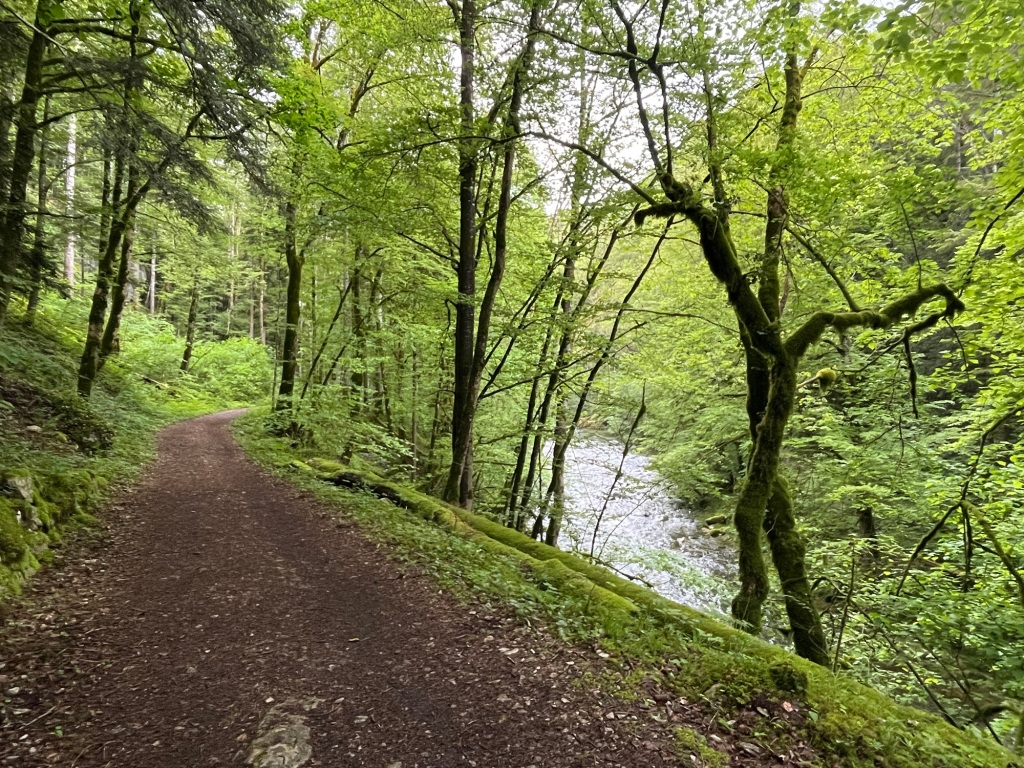
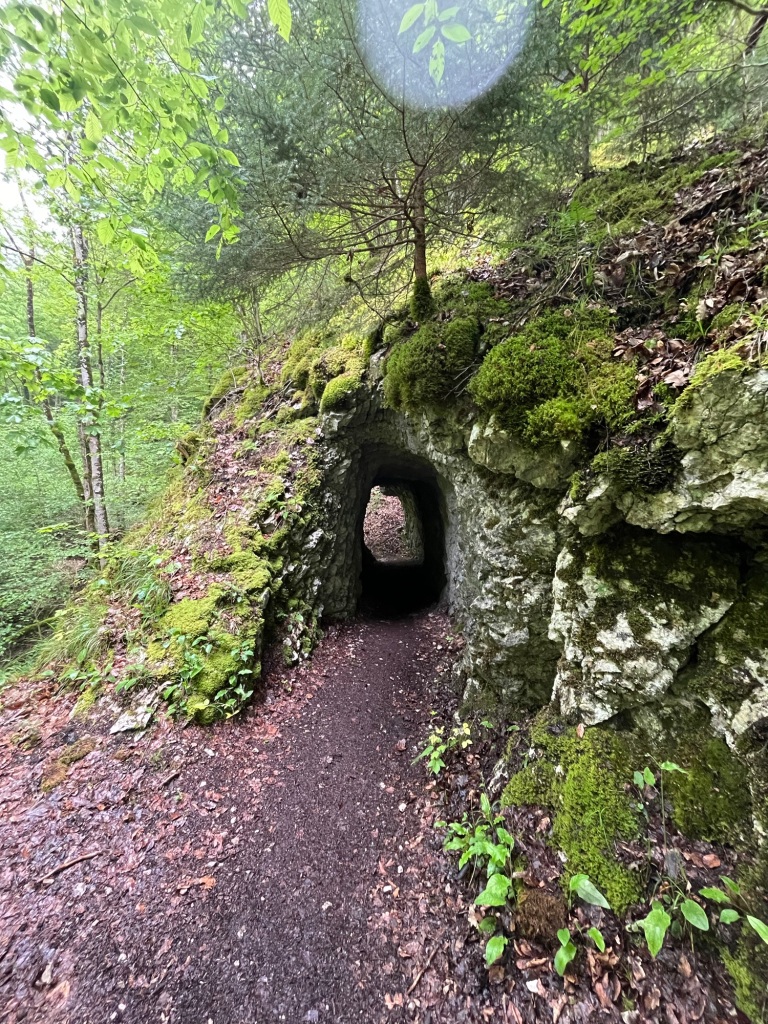
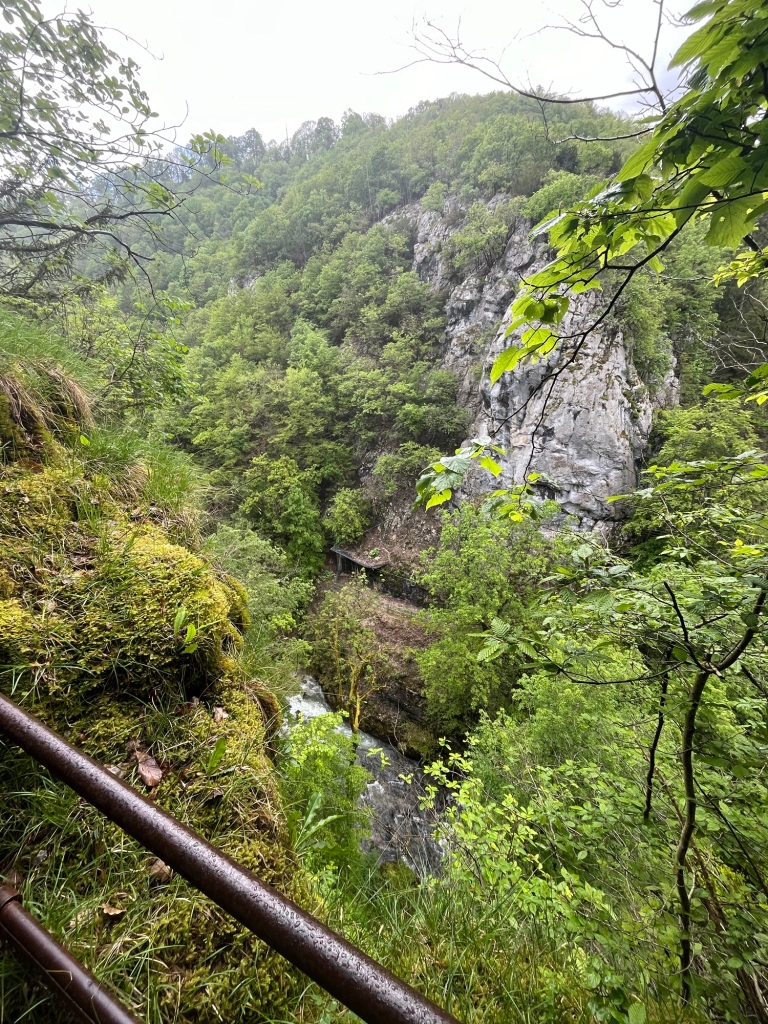
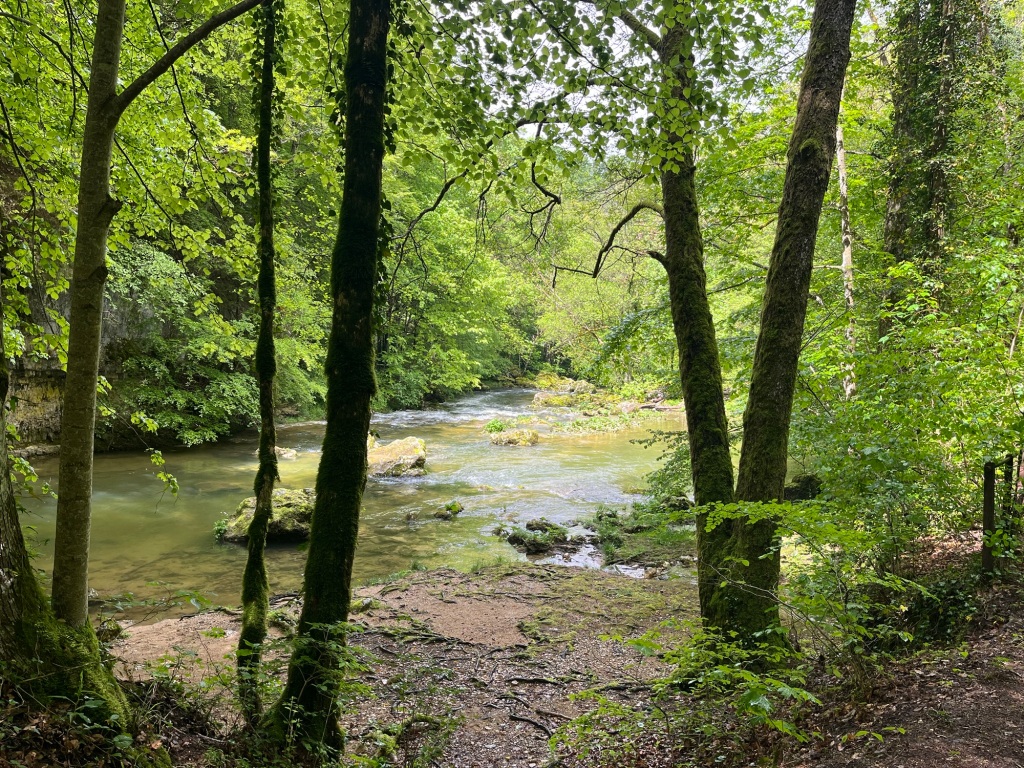
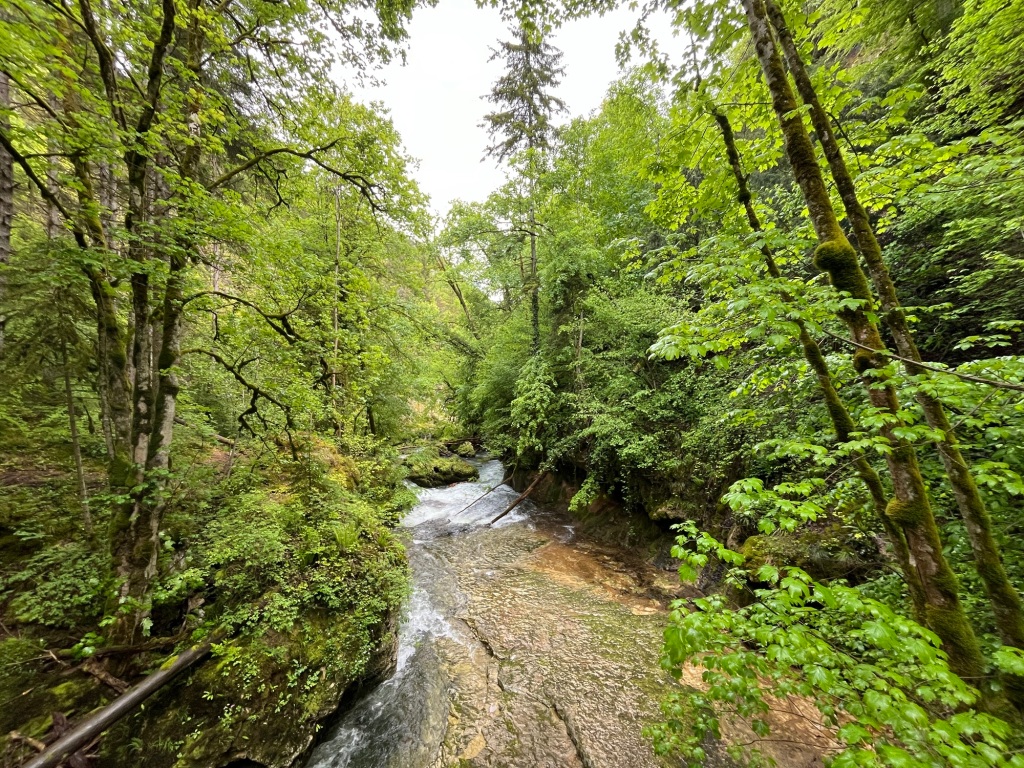
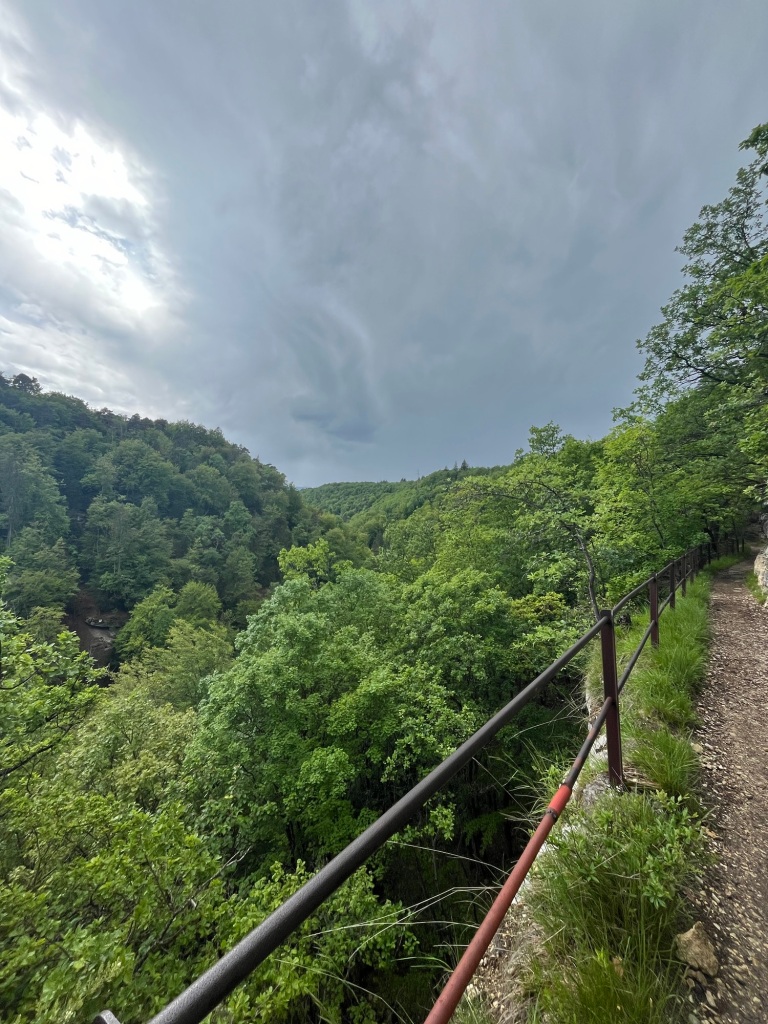
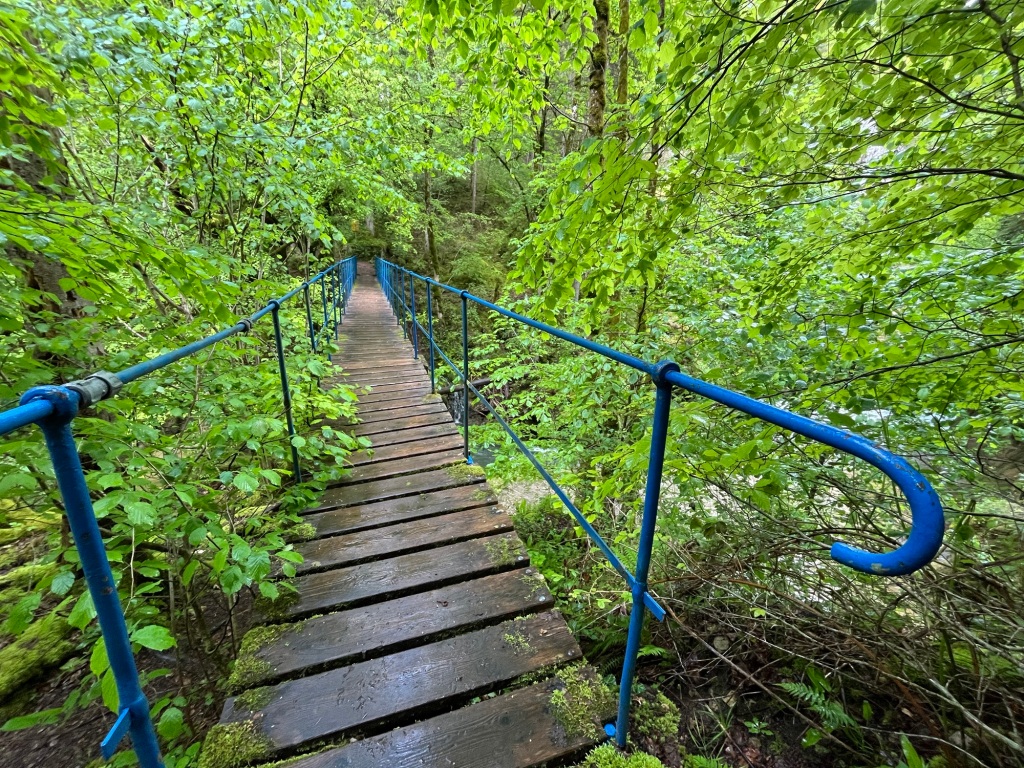
It was a breathtaking walk, over 10km or so. Muddy in a few places, but mostly over gloriously soft pine needles, and gently sloping down. It felt like a reward for all the ascents of the previous days. Dappled sunlight danced through the trees; when it rained, any drops were dissipated by the thick canopy of trees; birds sang and the river flowed beneath.
I was sorry to leave the gorge and head down into Orbe itself, but I got my first glimpse of the Alps on the other side of lake, and felt the final phase of my journey beginning.
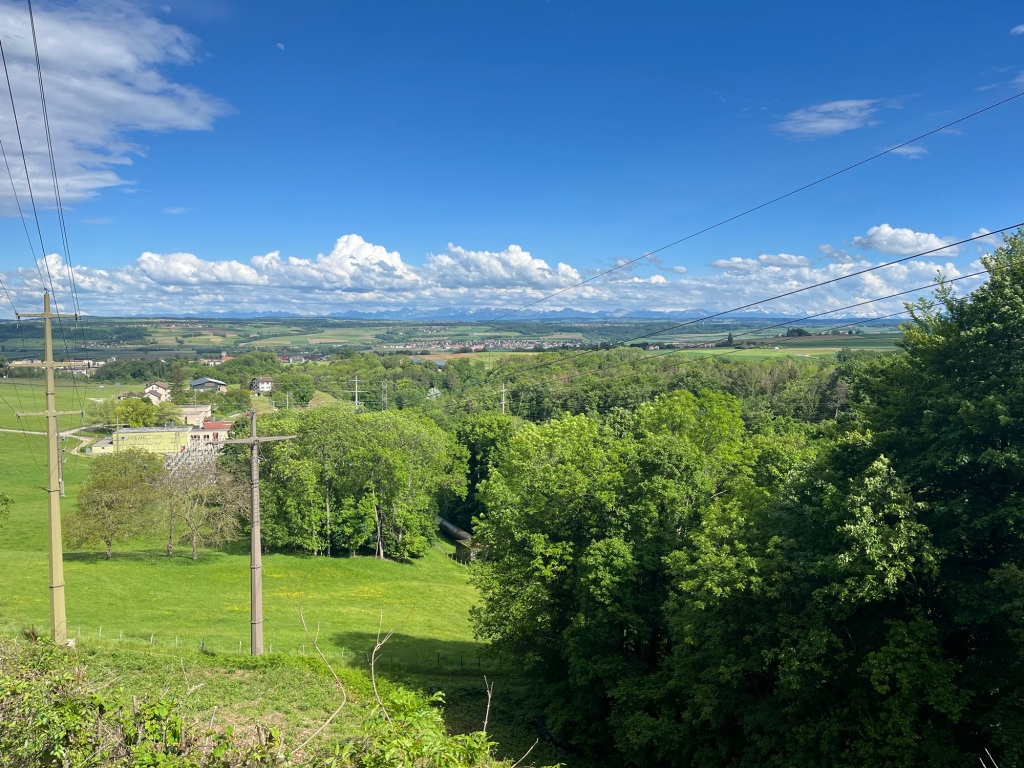
Heavy rain over the mountain behind threatened. I wondered if the pattern of a drenching in the last hour would continue. However, I need not have been anxious. In Spain, I understand the rain stays mainly on the plain, whereas in Switzerland, it stays most definitely in the mountains.
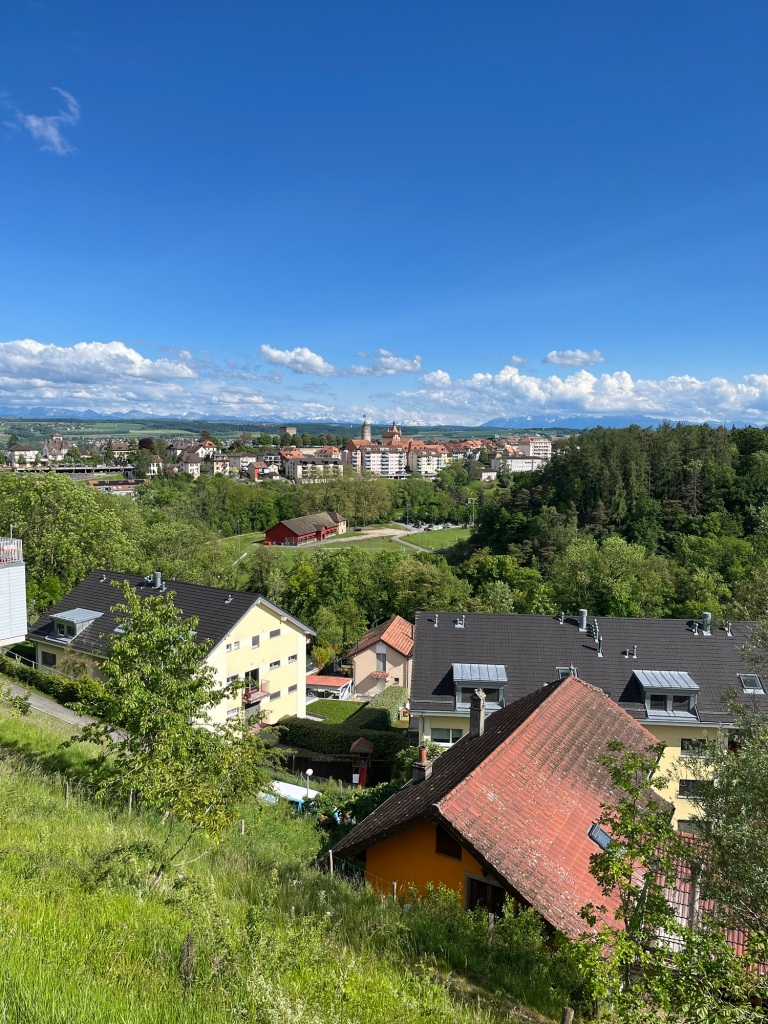
Orbe, my destination for the night, was near at hand. I felt a great sense of satisfaction – I would arrive dry, I had had a great day’s walk and I was now in a different country. I tried to banish the thought of how expensive Switzerland was going to be!
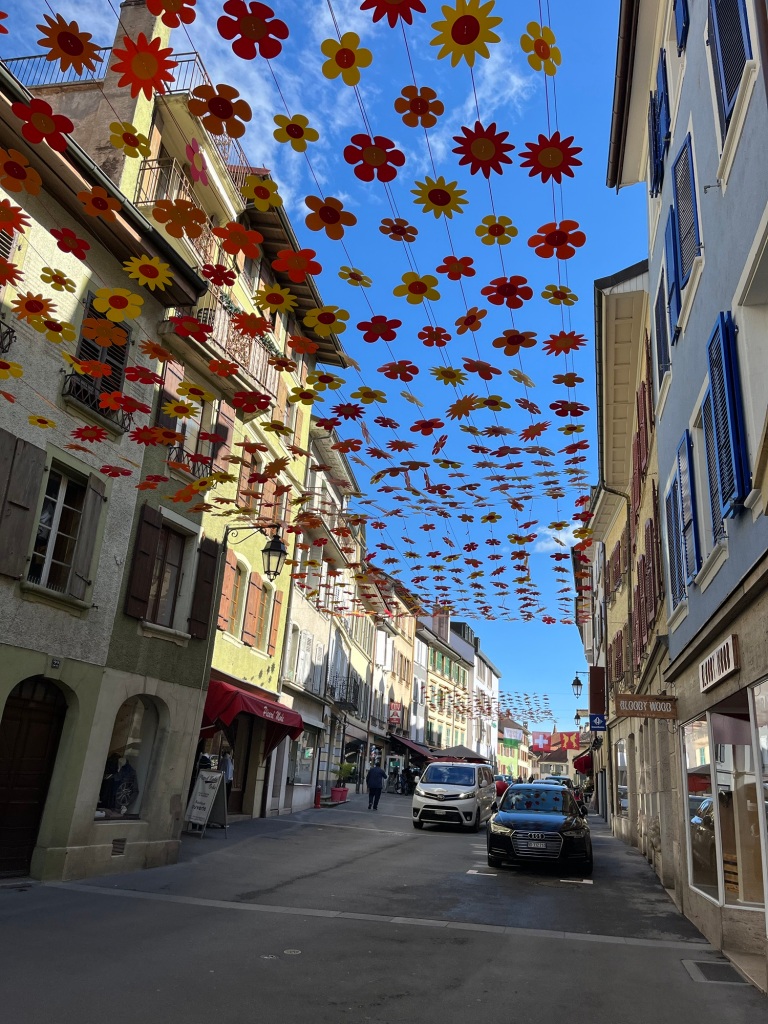
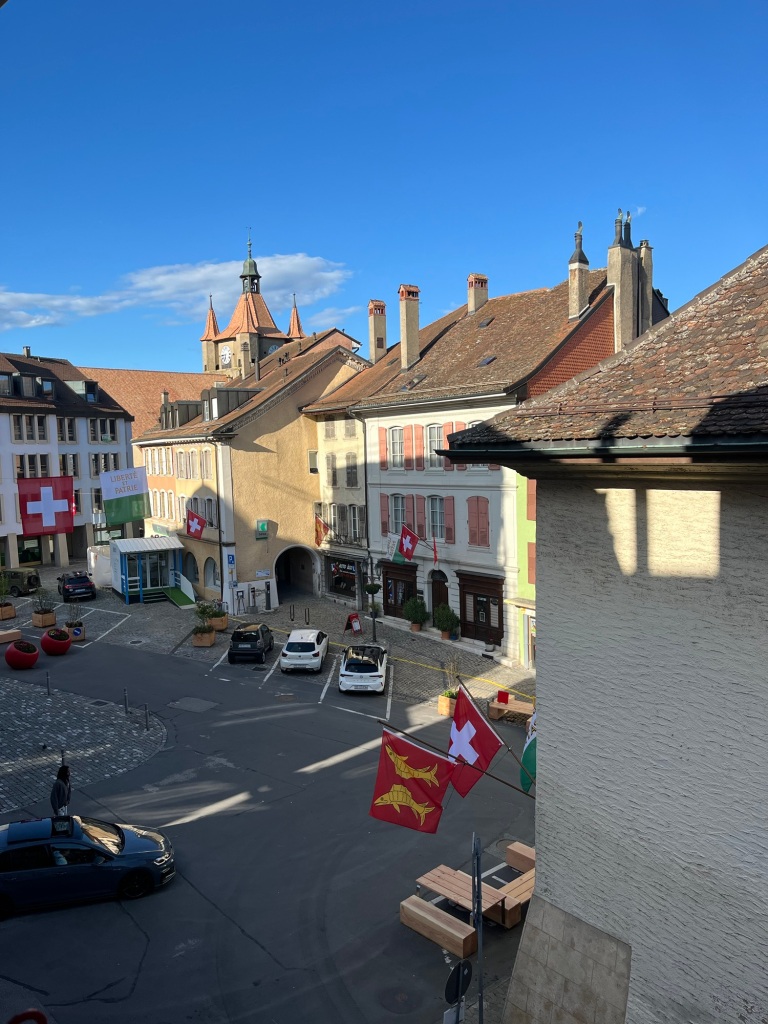
It was Friday evening in town and the main square was busy with people meeting for a drink after work, or having an early family dinner out. I found the Gîte du Campanile and Pascale, a friendly and attentive host. As I looked out of the my window, I gave thanks for the day and for the renewed spirit within me.


 The Loafing Pilgrim
Leave a comment