A few days ago I spent another day walking the Malvern Hills. A foray up to Dinmore Hill and a return along the ridge running behind the Vicarage was enough to convince me that lower-lying walks would still be very muddy.
A lot of rain has fallen recently, and therefore it seemed appropriate to begin my latest Malvern walk by a spring; in this case a lesser known source of the famous water – Earl Beauchamp’s spout on Cowleigh Road.
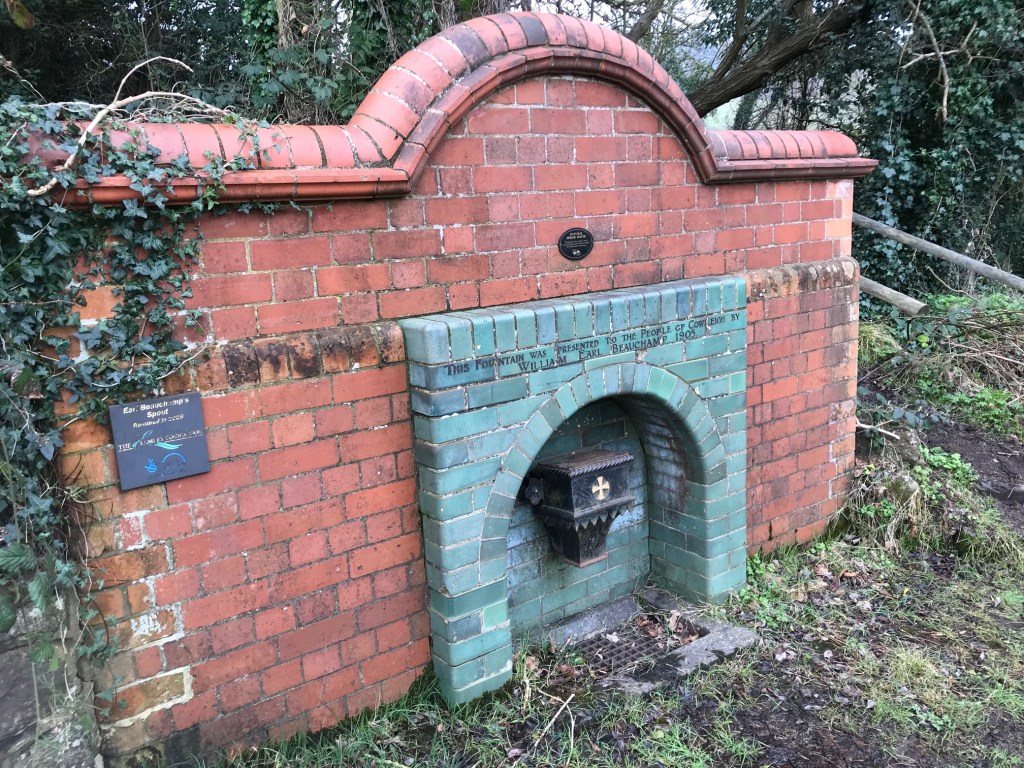
Presented to the people of Cowleigh, by local land owner and Liberal politician William Lygon, 7th Earl Beauchamp, this spring is looking a little tired now despite a refurbishment works twenty years ago. Earl Beauchamp was an interesting character – one time Governor-General of New South Wales, and leader of the Liberal Party in the House of Lords, he is often assumed to have been the model for the character Lord Marchmain in Evelyn Waugh‘s novel Brideshead Revisited.
“A little tired now” is perhaps how I felt that morning if I am honest; the prospect of climbing up to West Malvern Road and around End Hill didn’t help. However, equipped with my faithful walking poles, camel pak and the last mouthful of a flask of coffee I’d leave in the car, I set off.
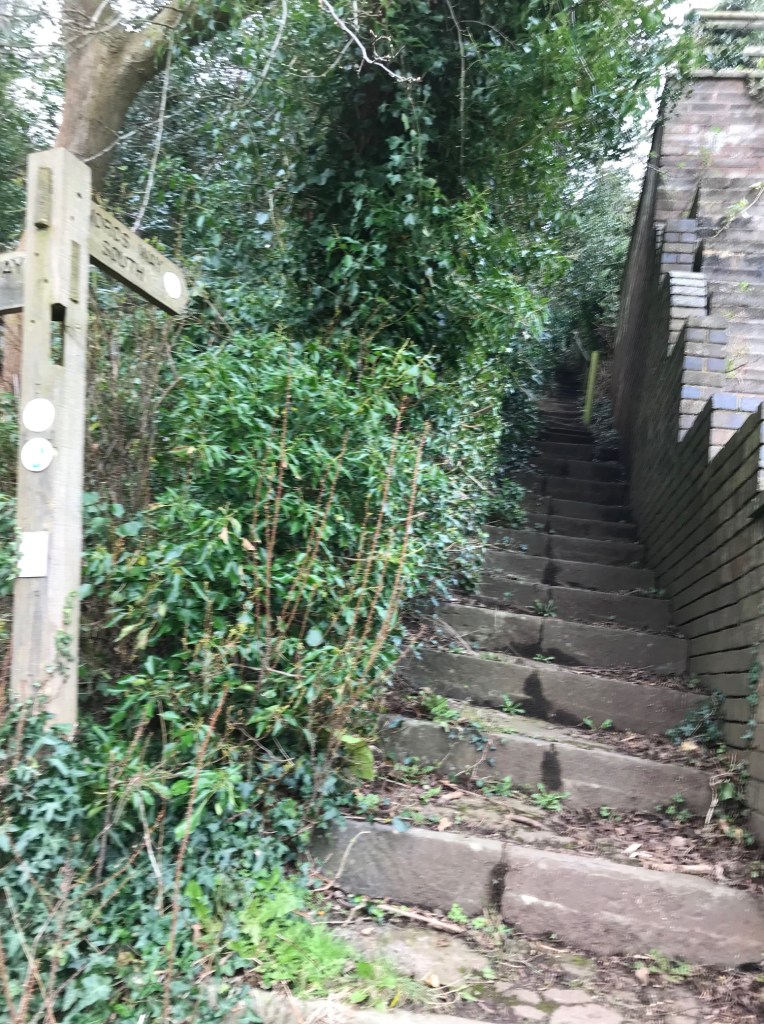
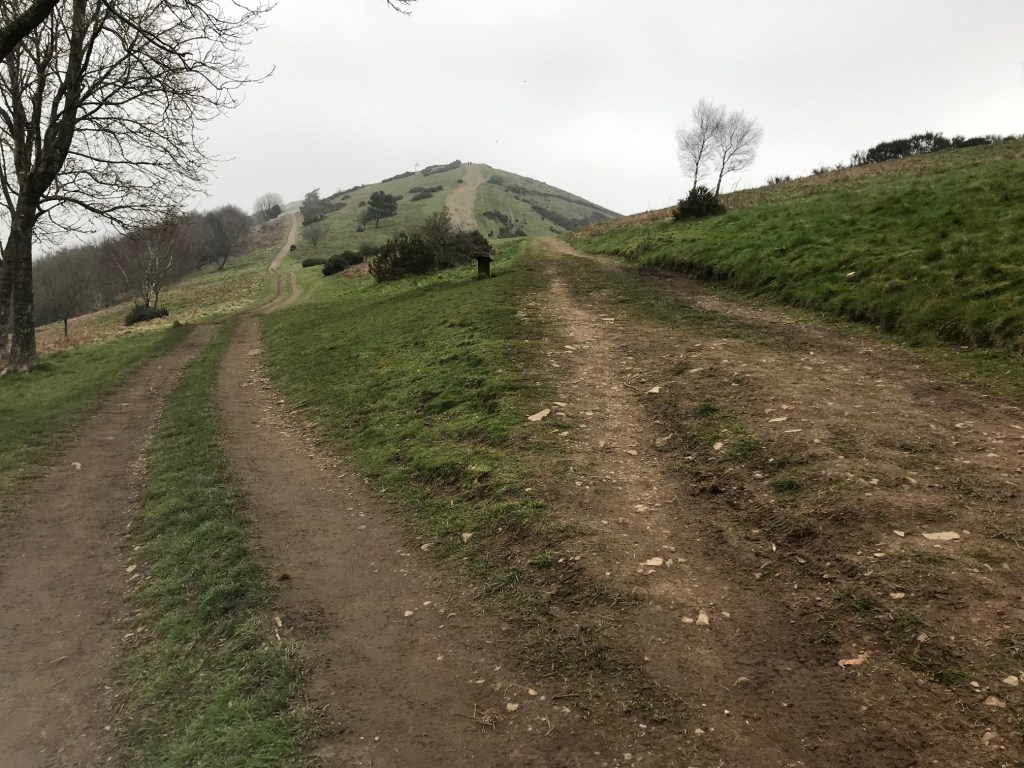
As all the recent (ridiculous) press furore shows, photographs can be manipulated, however I can attest to the fact that this is a true representation of this particularly challenging section of the Worcestershire Way onto the Malvern Hills. However, it was not long before I had got onto the relatively level footpath that runs above West Malvern, and was having friendly conversations with dog owners about muddy paths… very much a common theme!
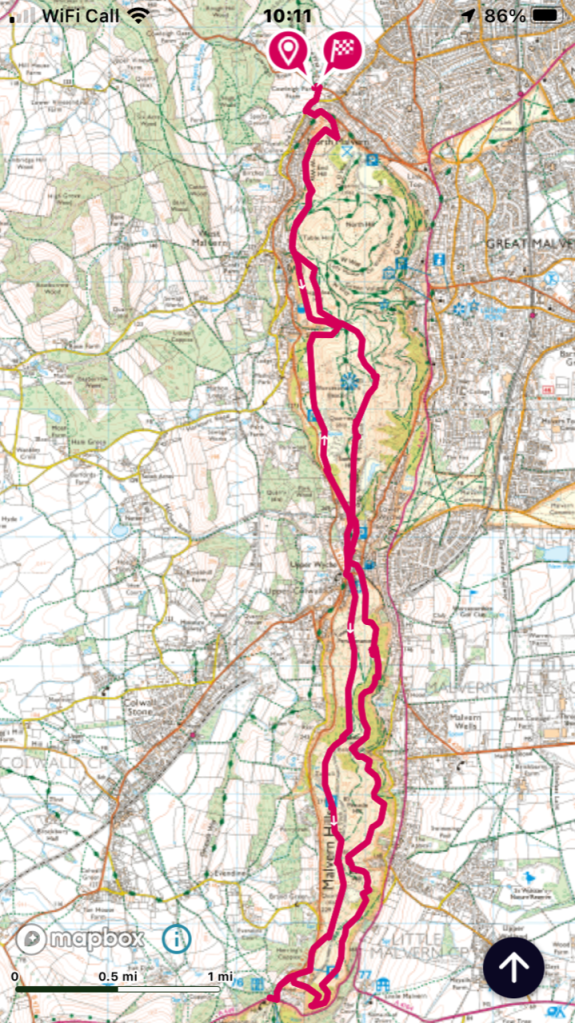
Once again, I set out for the café at the British Camp pass on the A449. The route south was a little more challenging than the route back and, in total, ran to nearly 12 miles (20km). I struggled a little with the camel pak water carrier – I had discovered a leak prior to a previous days walking, and while this had been patched in best Boy Scout methods, and the carrier was now in a waterproof bag, it proved impossible to suck out anything more than very bubbly water! Another note on the equipment snag list!
The weather was windy and a little cold, but I soon found my stride and felt good. My left foot, which sported a plastered blister, held up well and I stopped on the final descent down to the Black Hill car park, near the café, for lunch. As I looked out over Colwall, towards Ledbury and the rolling hills and fields in between, I could not help feeling a great sense of calm and quiet assurance. A feeling that this long walk after Easter was going to be “all right.”
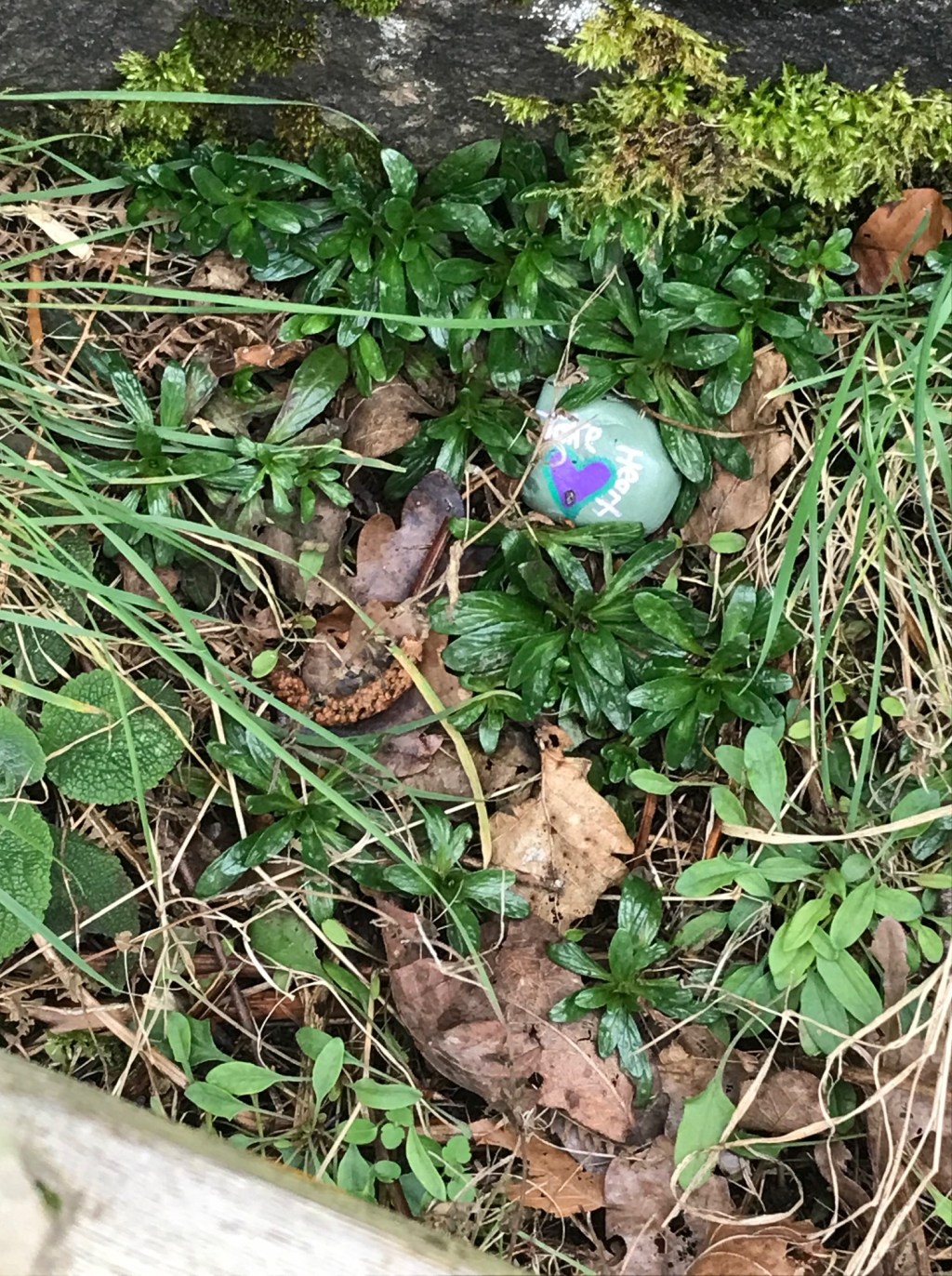
As I prepared to re-start, I noticed a flash of colour on the ground behind the bench and found a little painted stone with the cheery message “Take Heart” painted on it.
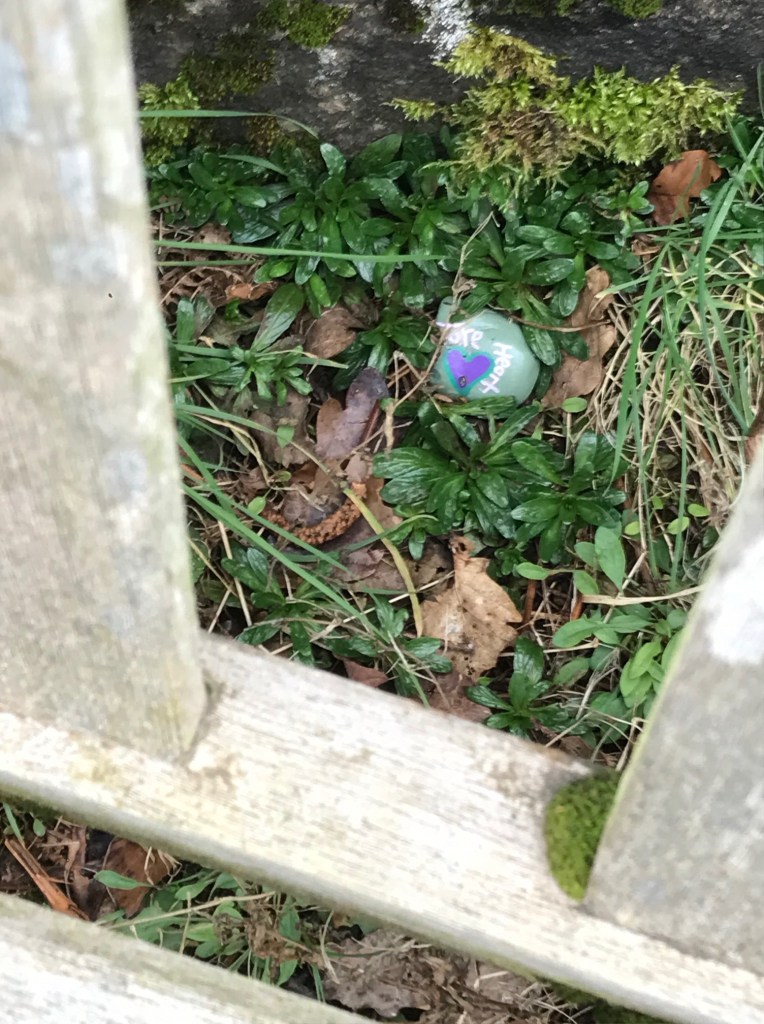
Painted stones have become a thing over the past few years, particularly over the Covid lockdowns. Bright, crafty messages of hope left around the place for people to find. It reflected perfectly the feeling I had received while sitting on that bench.
“Take heart” is one of those Biblical phrases that has found its way into common parlance. Psalm 27, in some translations, invites us to “Be strong and take heart, and wait for the Lord! (verse 14). When the woman who had been suffering from haemorrhages, touched the hem of Jesus’ cloak, Jesus turned and healed her with the words:
“Take heart, daughter; your faith has made you well.” (Matthew 9.20-22: NRSVA)
In John’s gospel when Jesus was preparing his disciples for the time when he would be taken from them and they would be scattered, he strengthened them with these words:
““I have told you these things, so that in me you may have peace. In this world you will have trouble. But take heart! I have overcome the world.” (John 16:33: NIV)
Much has been written about “taking heart.” In some translations the phrase is rendered as “take courage” or “be brave.” However, “take heart” is my favourite version: if we think of the heart being the seat of love within ourselves, an encouragement to draw upon the source of all love can be transformational.
For me, “taking heart” isn’t about trying to change emotions. Taking heart is an invitation to rest in the one place where rest can really be found; in the Lord. I expected to rest my aching feet on that bench, but was blessed by God’s rest too.


 The Loafing Pilgrim
Leave a comment